Week 45 | Fruit & Vegetable Carvings

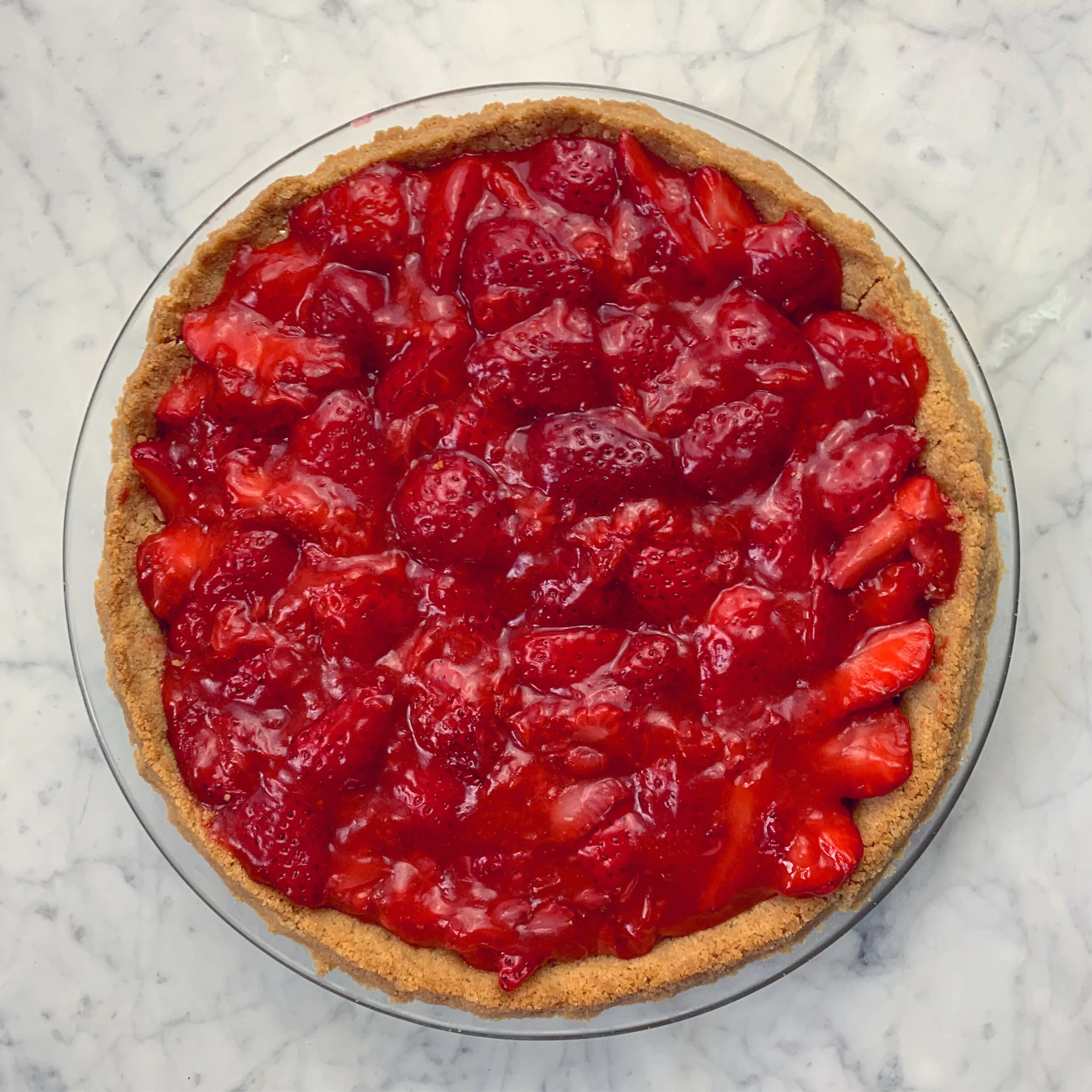
This week in Baking, we made apple pie! I struggle greatly with pie-making. I have made quite a few, and they never turn out exactly as I want. Pie is not my favorite dessert. However, this was by far the best-looking pie I've made to date. I think reading, writing, and making pie all week paid off. The crust was a butter/lard combination. I had more success rolling it out and baking it than I ever had. There was a bit of a gap in the top crust and the filling, which was frustrating. I think I like pies with just a bottom crust better anyway.

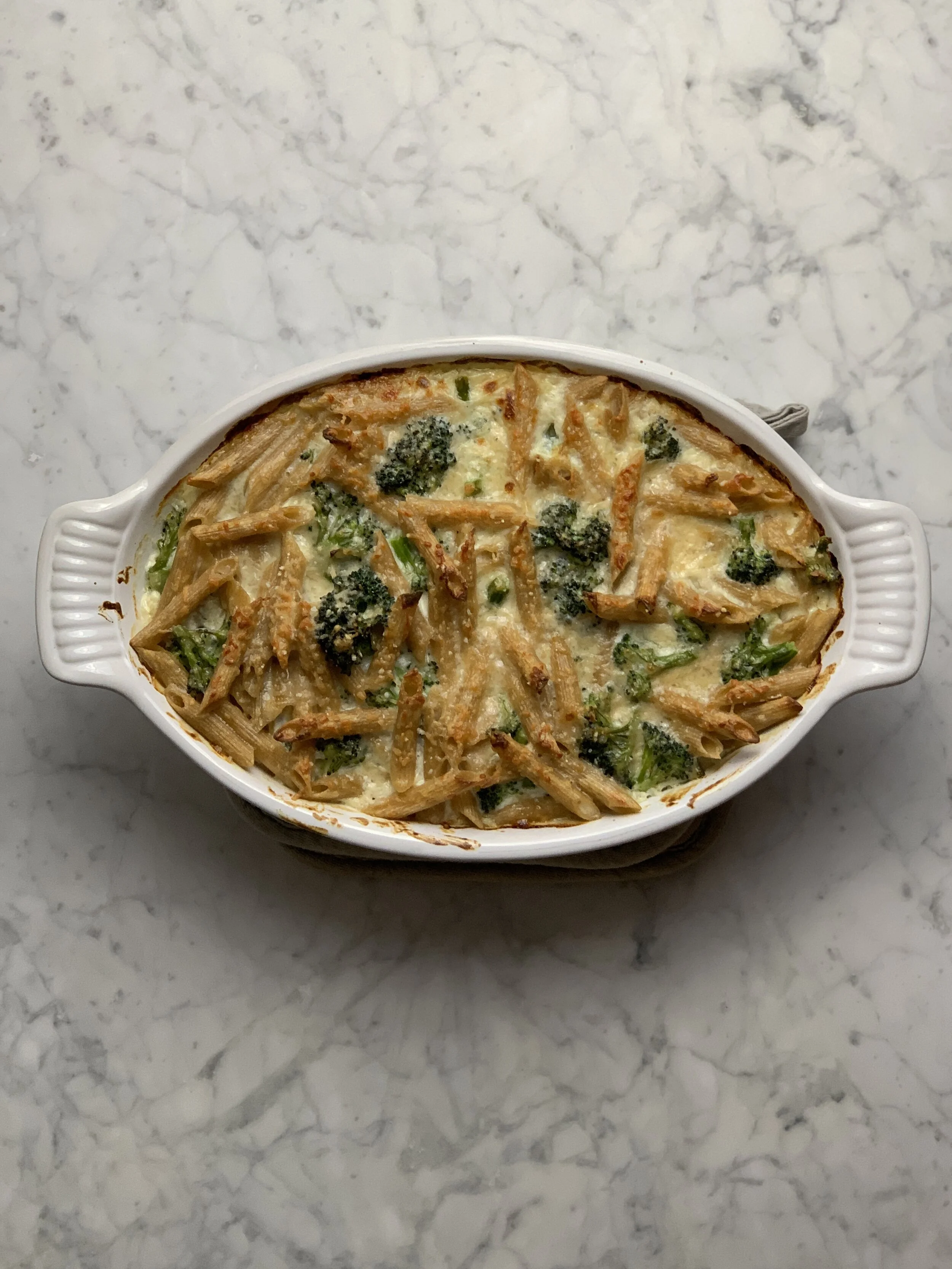
In Food Prep Two, it was pasta week! We didn't make fresh pasta, but we made a mini lasagna and alfredo sauce. I have made lasagna quite a few times, so this wasn't a challenge for me. However, the idea of making a mini lasagna! How haven't I thought of that before?!?! I never make lasagna because it's so much food for two people. But a mini lasagna was perfect. I made it in a bread loaf, and it served four. We also made alfredo sauce, which don't hate me, but I think it's a little too much. It yummy for like a bite or two, but then I think it's too rich. My wife loves it, though, and she liked this version.

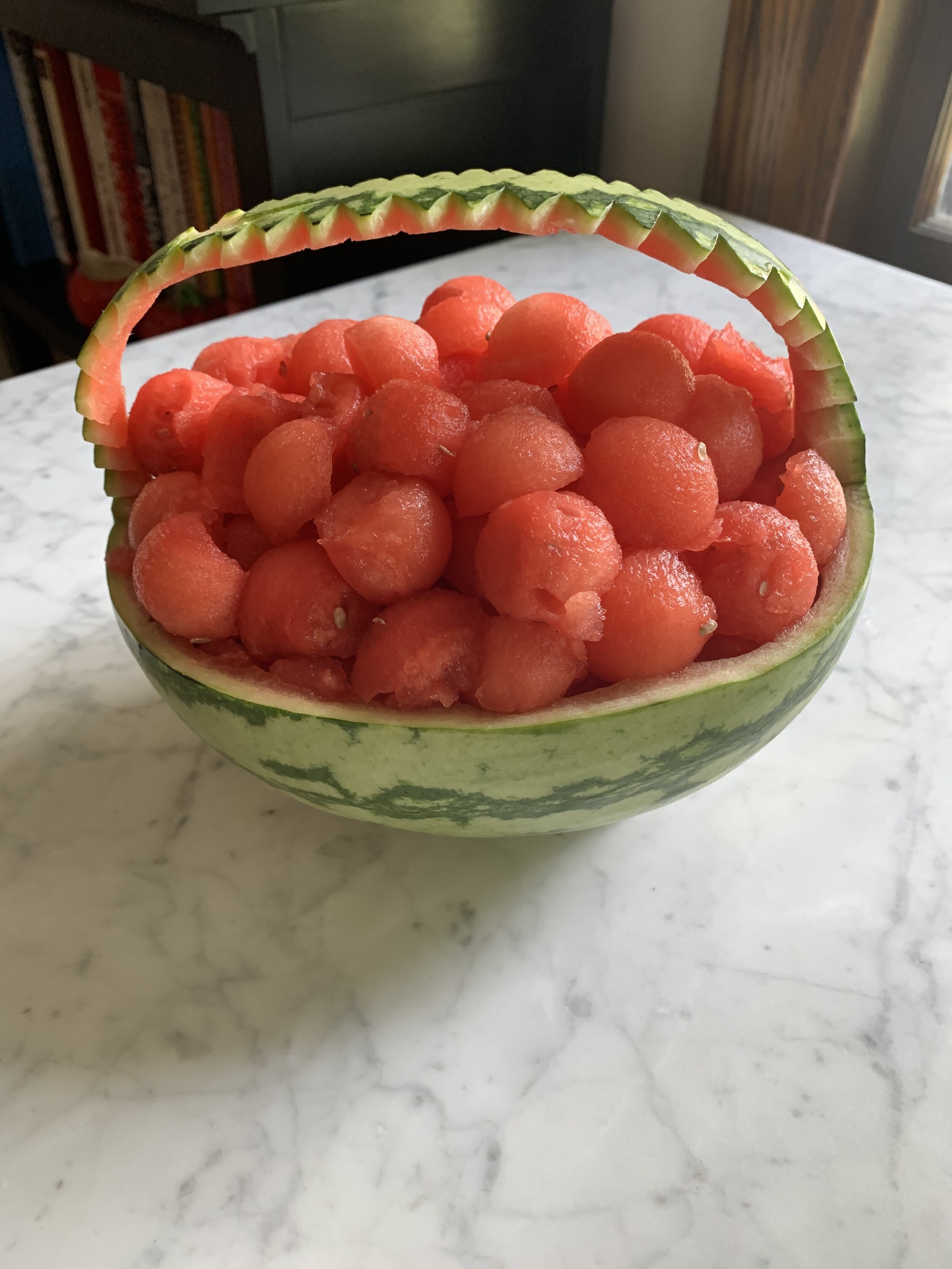
In Garde Manger, we worked on fruit and vegetable carvings. Fruit and vegetable carving is not my strong suit. I managed to get through it with only one minor knick on my finger. I did love the tomato roses. You take the peel of a tomato and roll it up. That's it! If you have a sharp knife, it's not hard to peel a tomato, so it's pretty easy. I think this word be so cute with apple or peaches too. I am pleased to have learned that technique and to be done with fruit and vegetable carvings.

Next week is our last week for online classes. I can't believe it. It's gone by so fast. We'll be back in the classroom the week of July 6. I'm a little nervous about being back at school physically, mostly because Covid-19 cases are on the rise in Iowa. We are required to wear masks, gloves, and we have to have our temperatures taken every day to enter the building. We also have to be spaced out 6 feet at all times. As long as everyone sticks to the safety precautions, I think it will be okay. I am excited to be back in a professional kitchen.
Week 44 | Focaccia

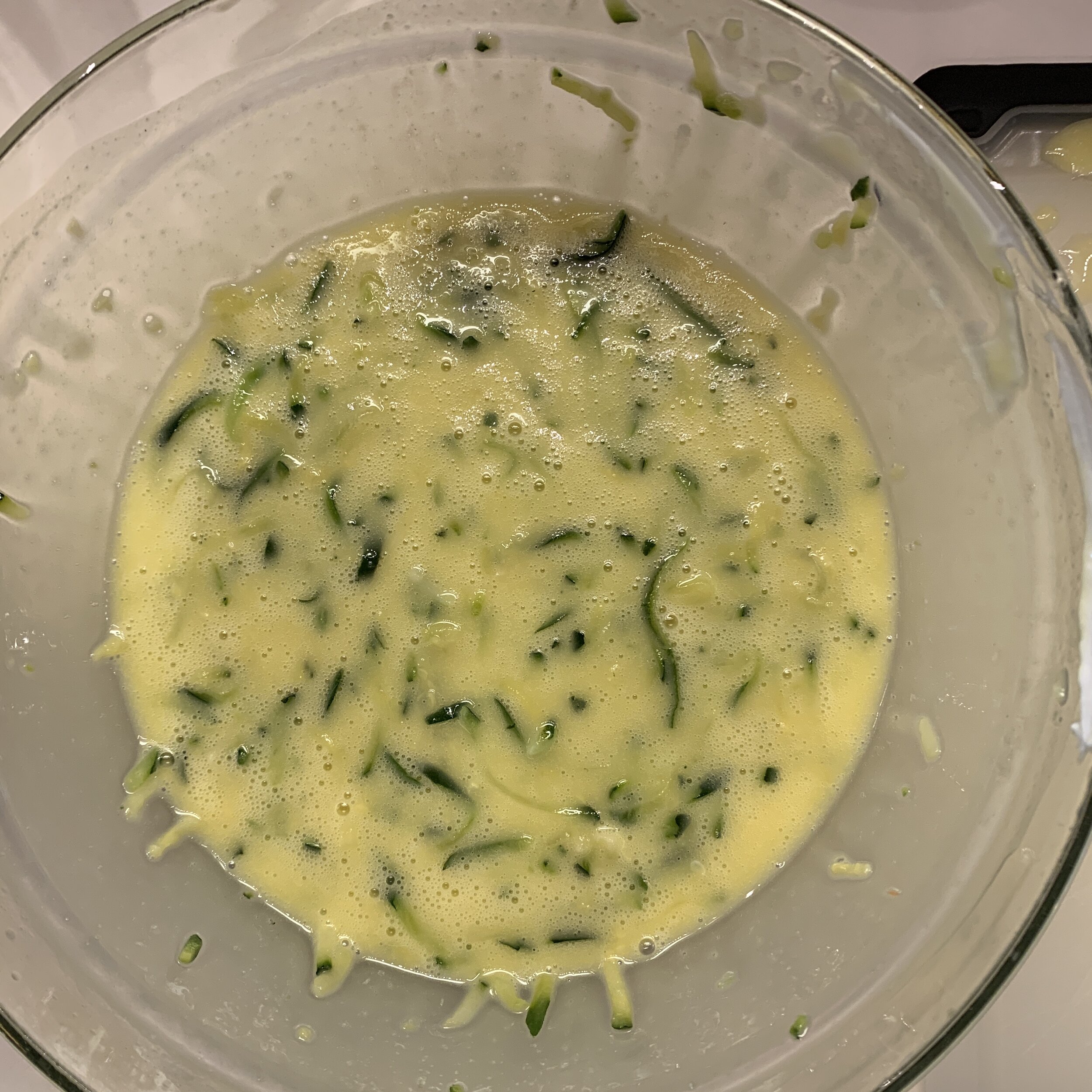
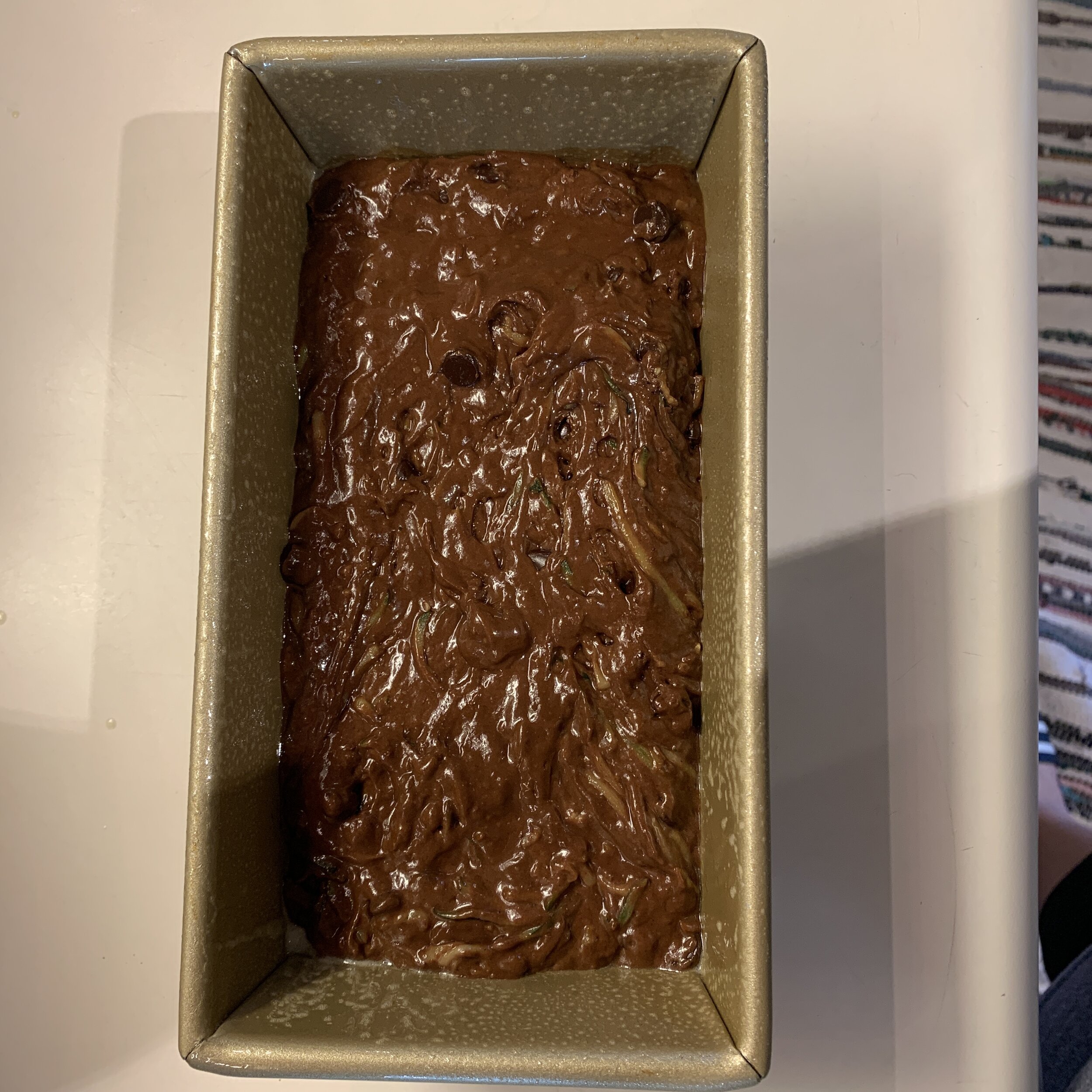
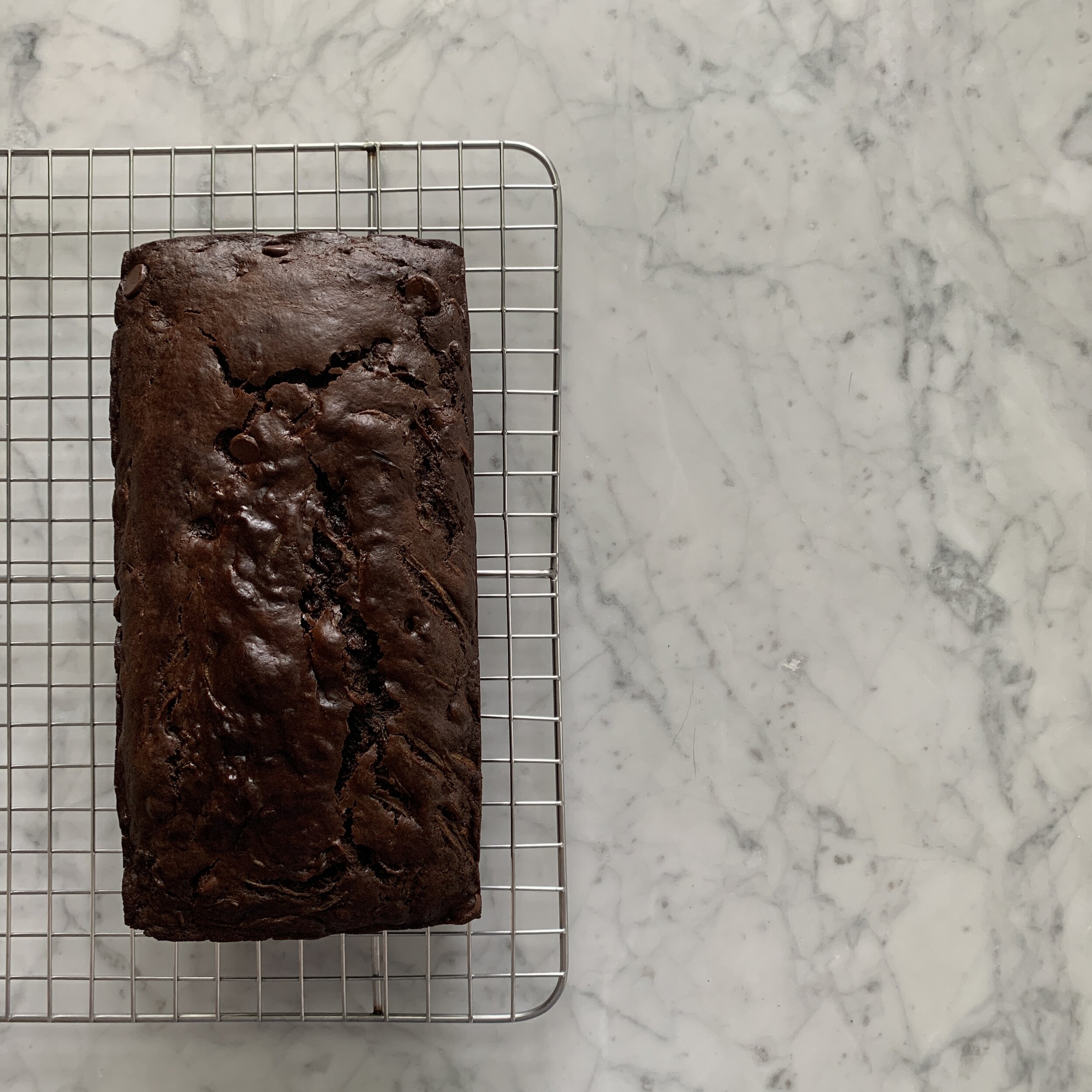
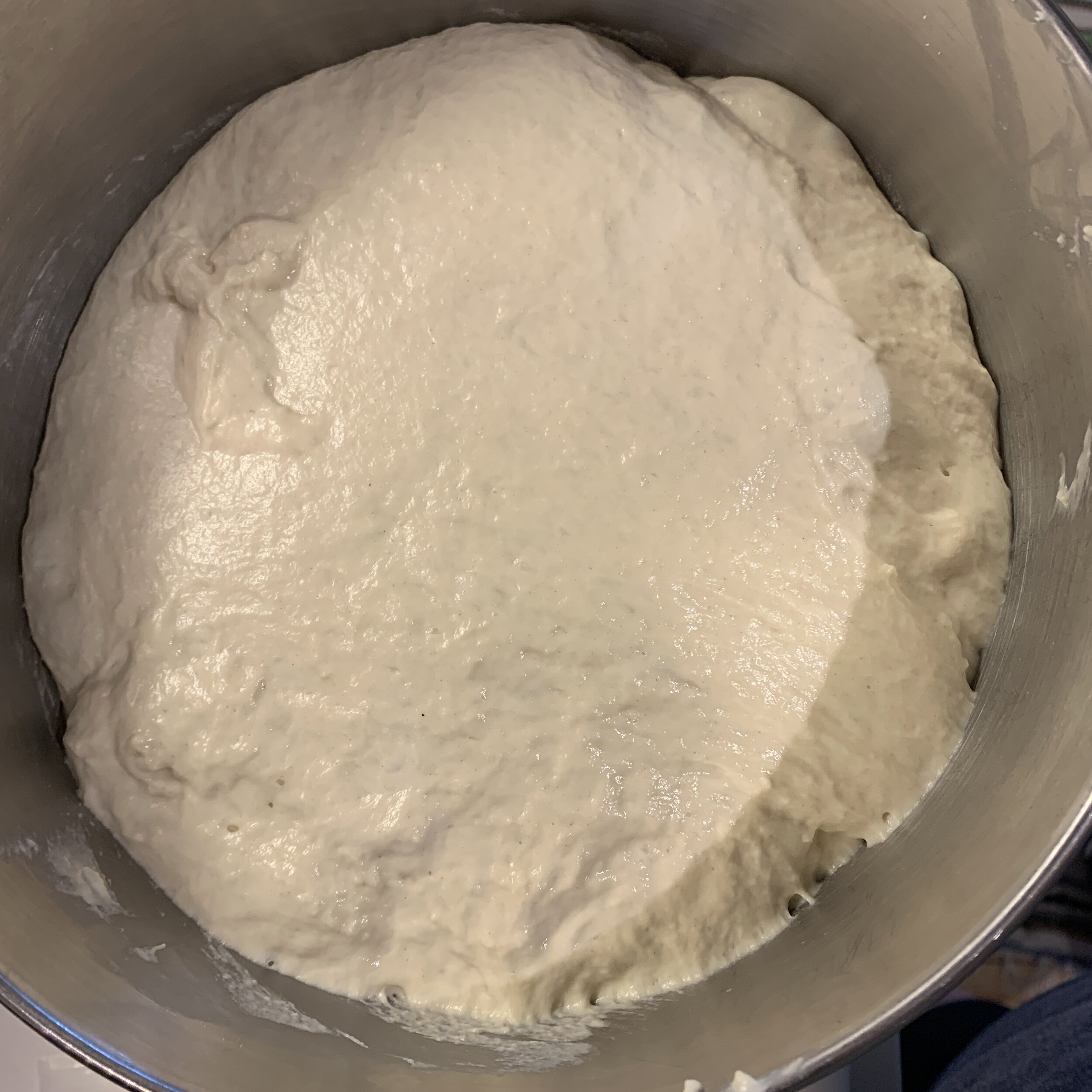
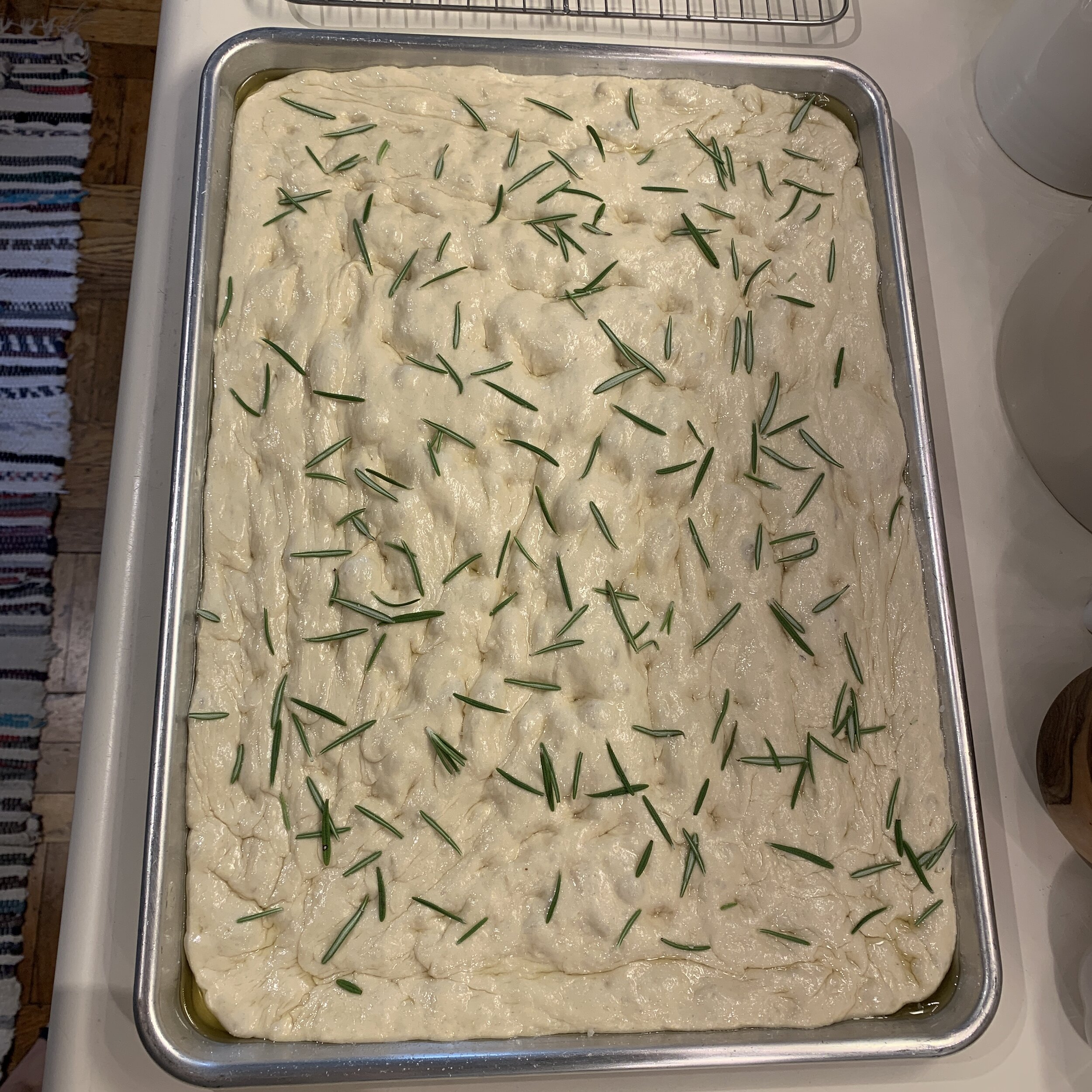
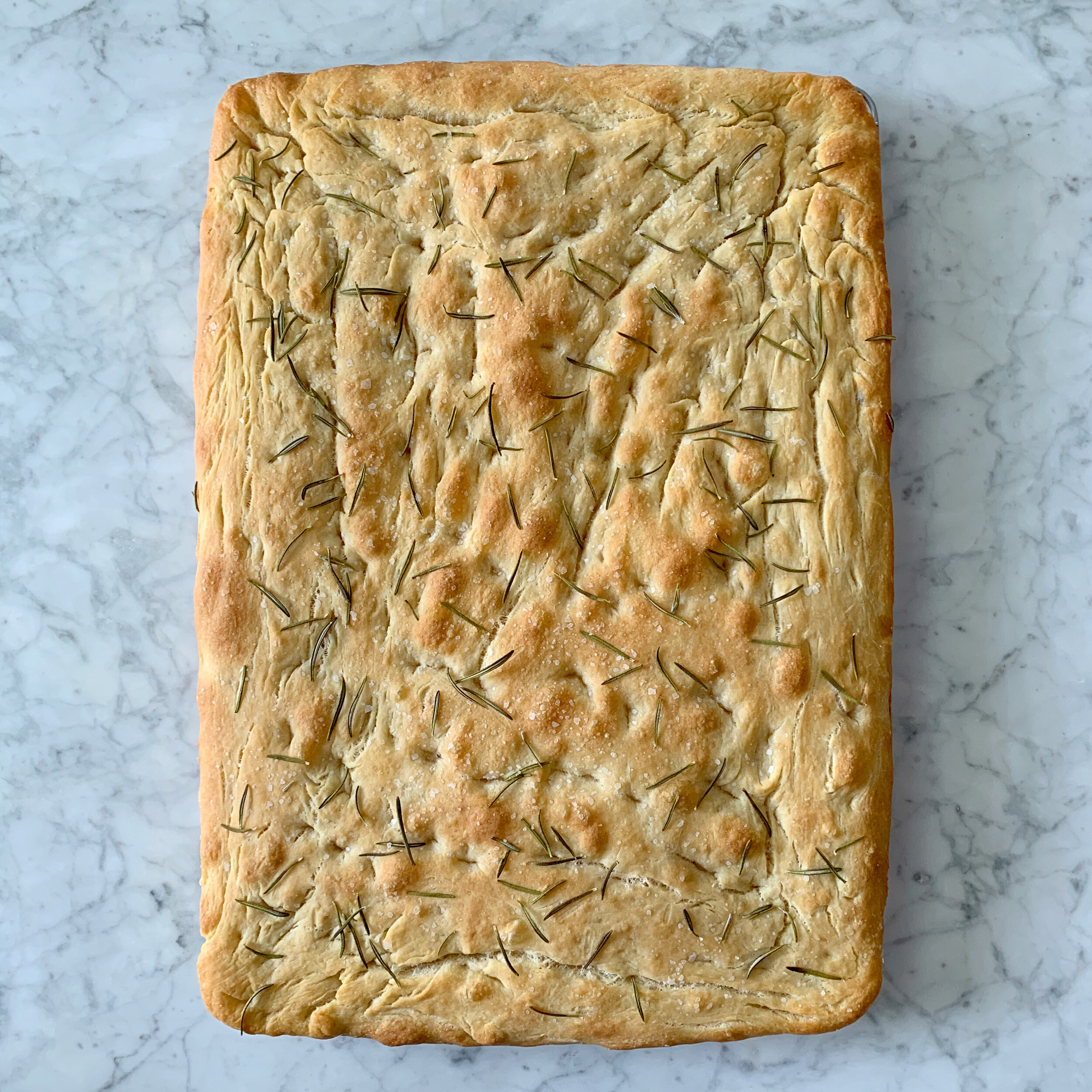
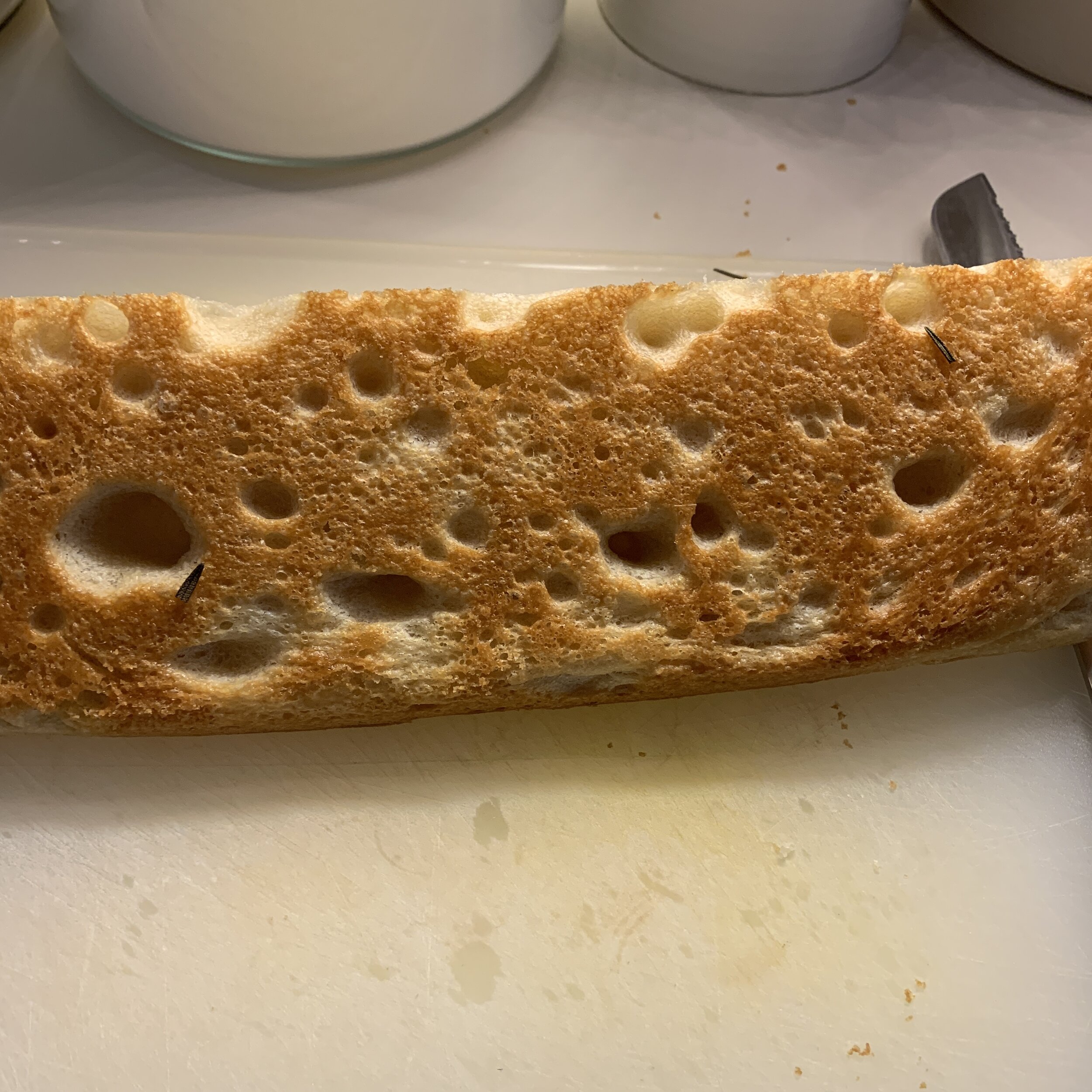
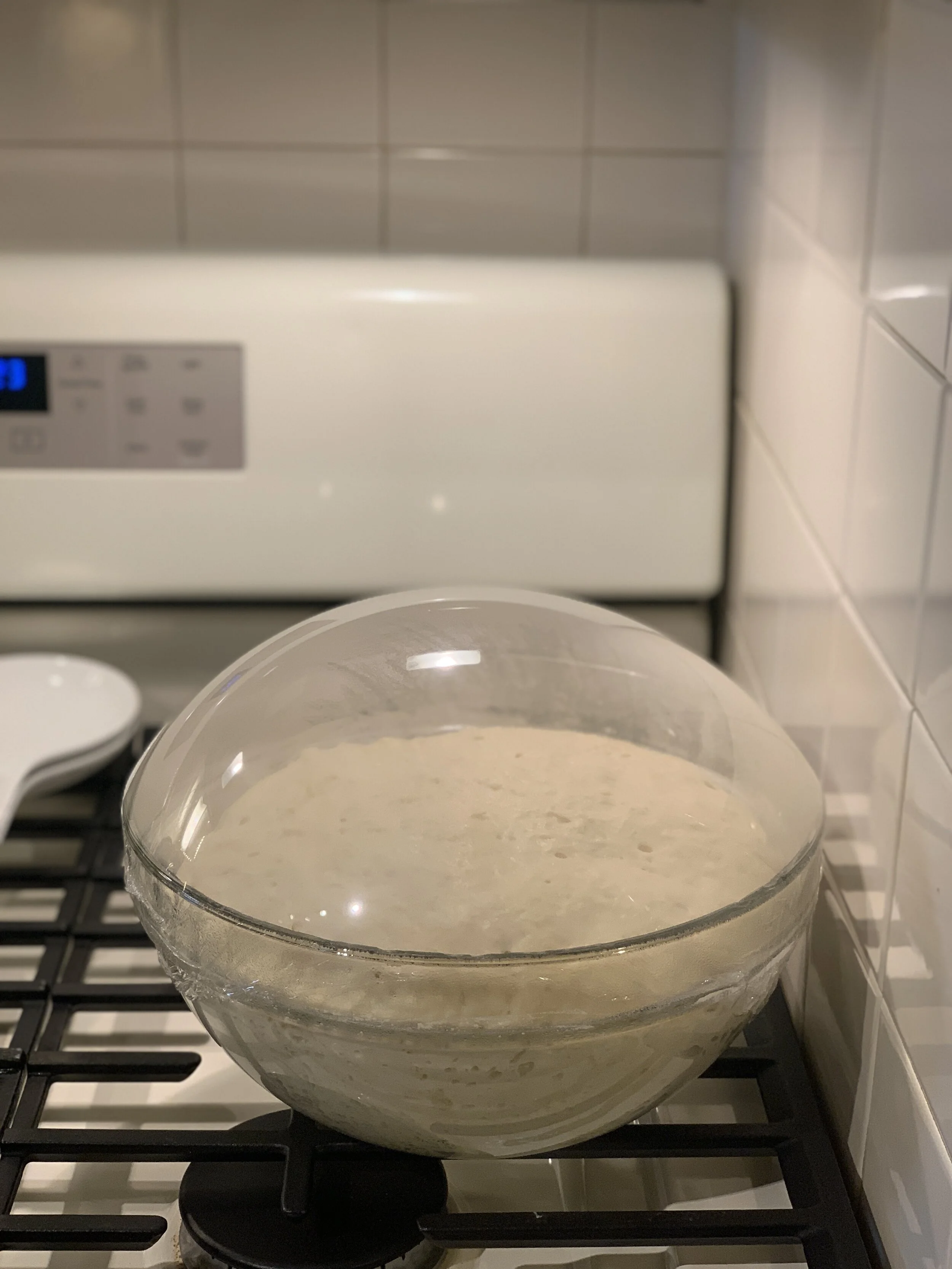
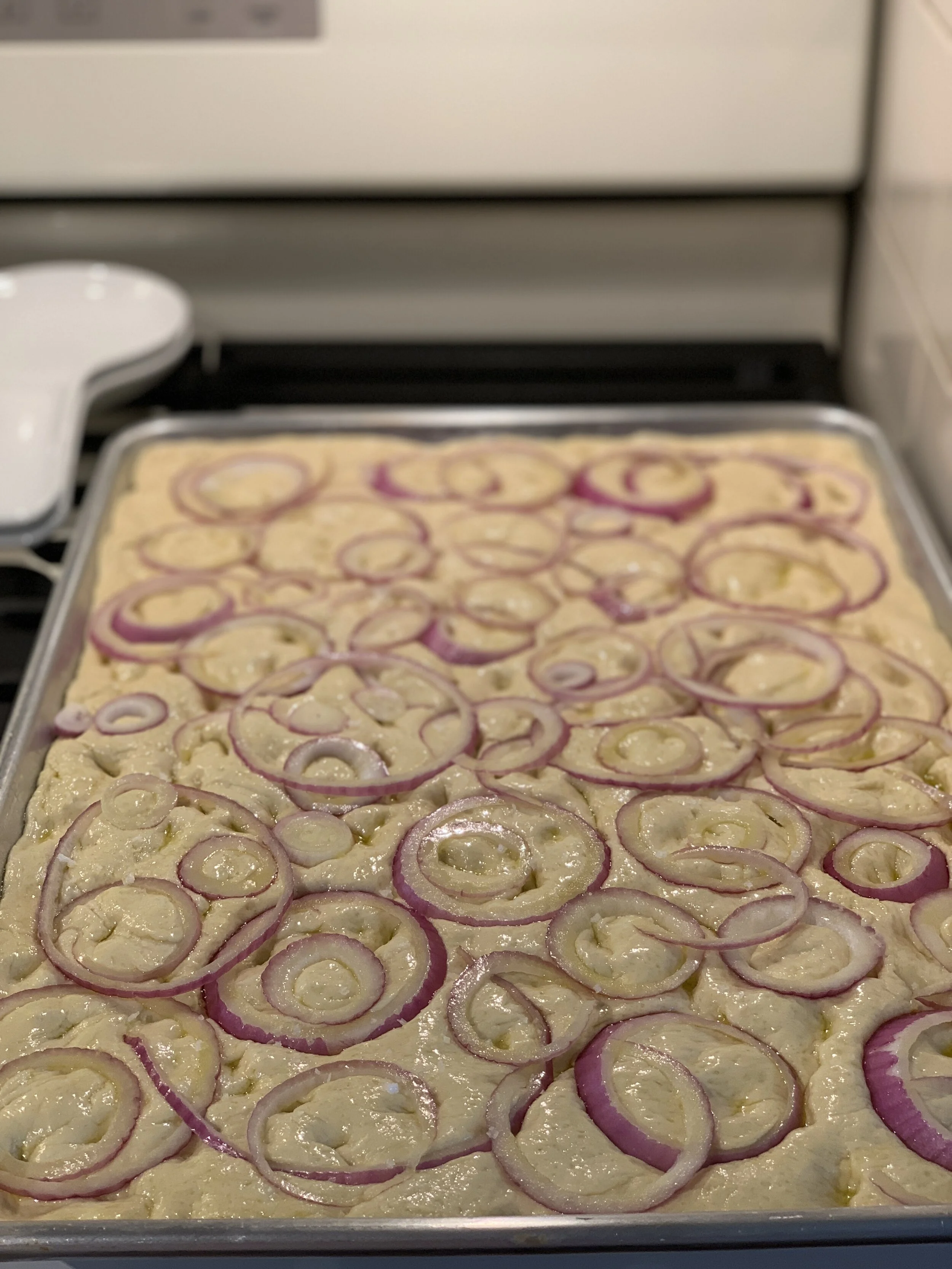
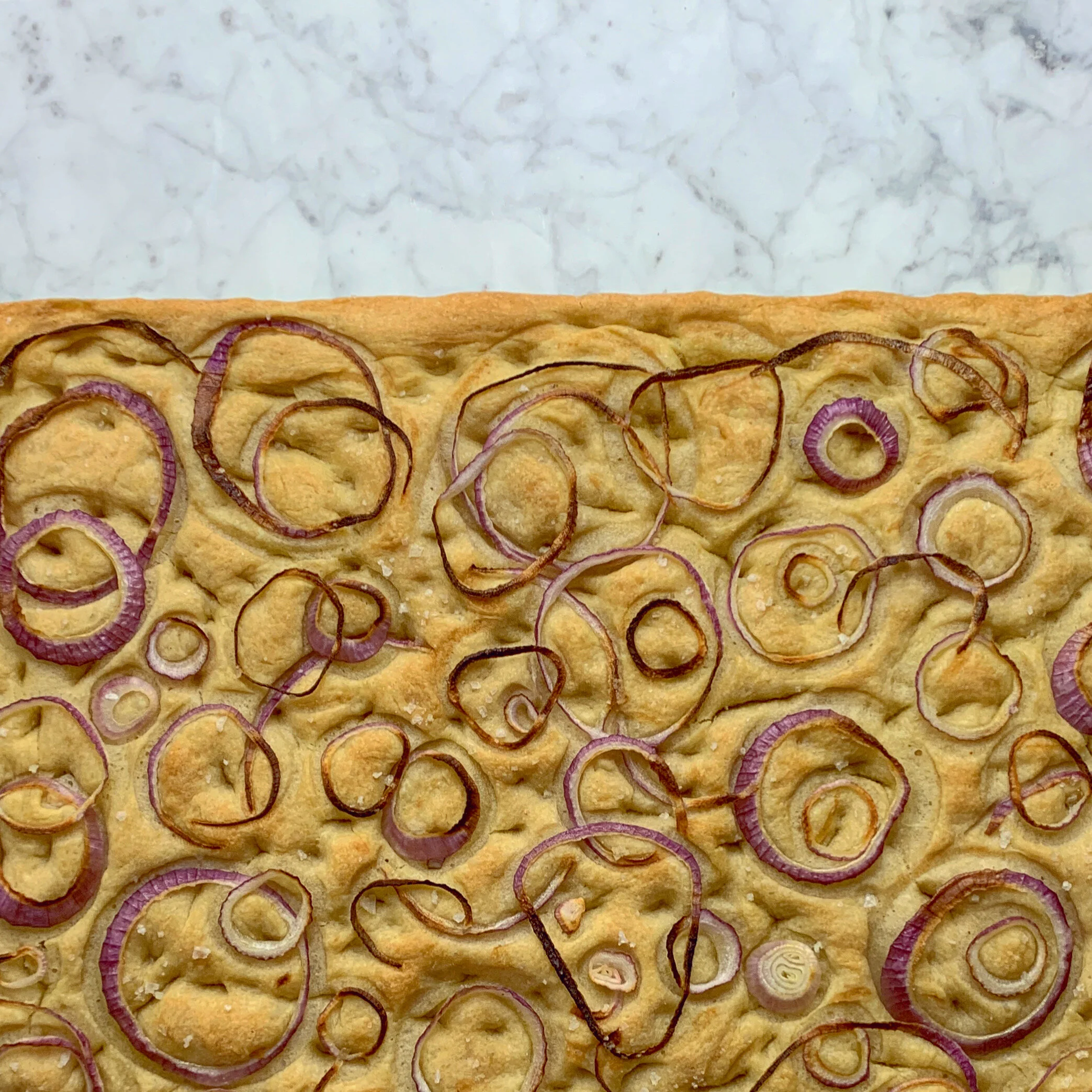
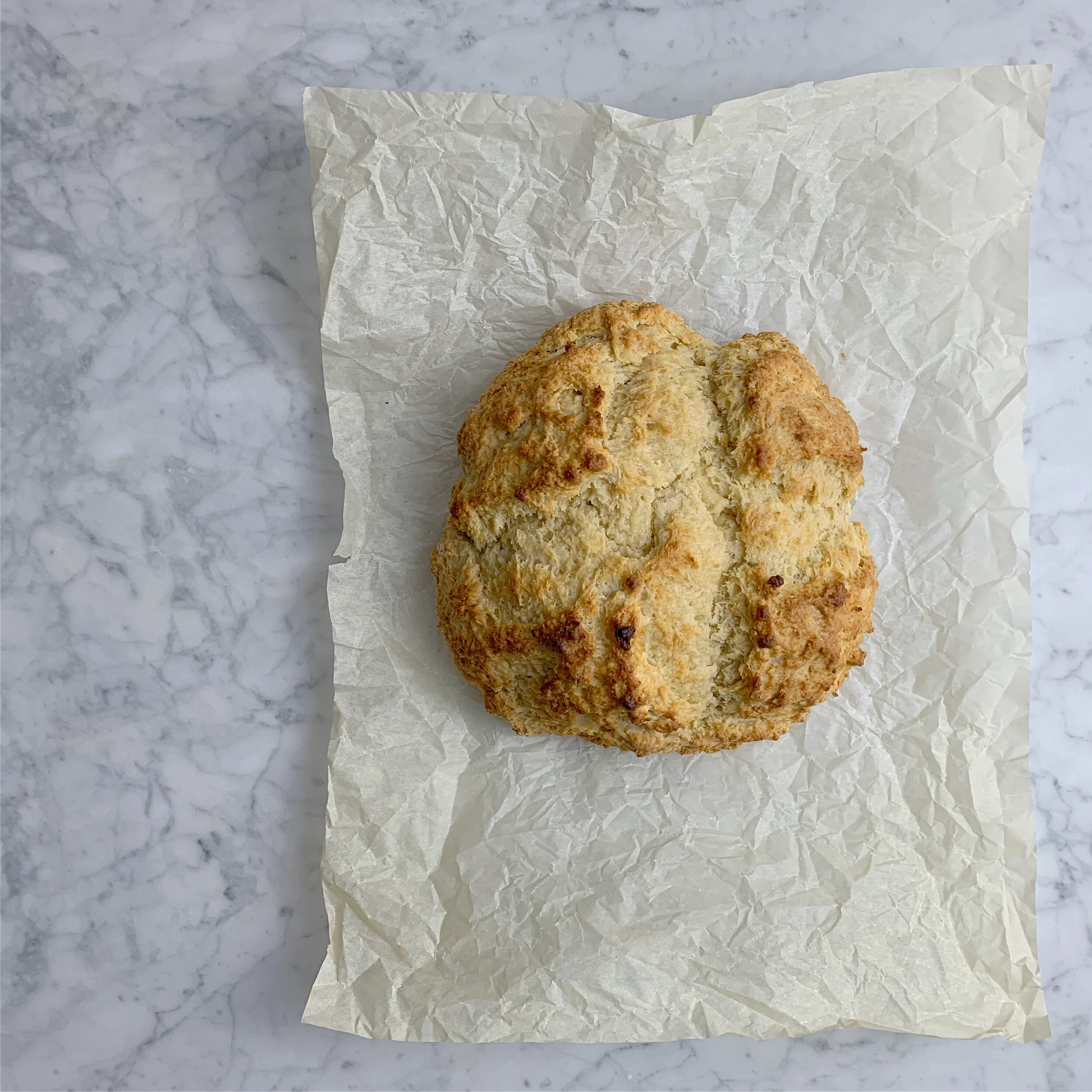
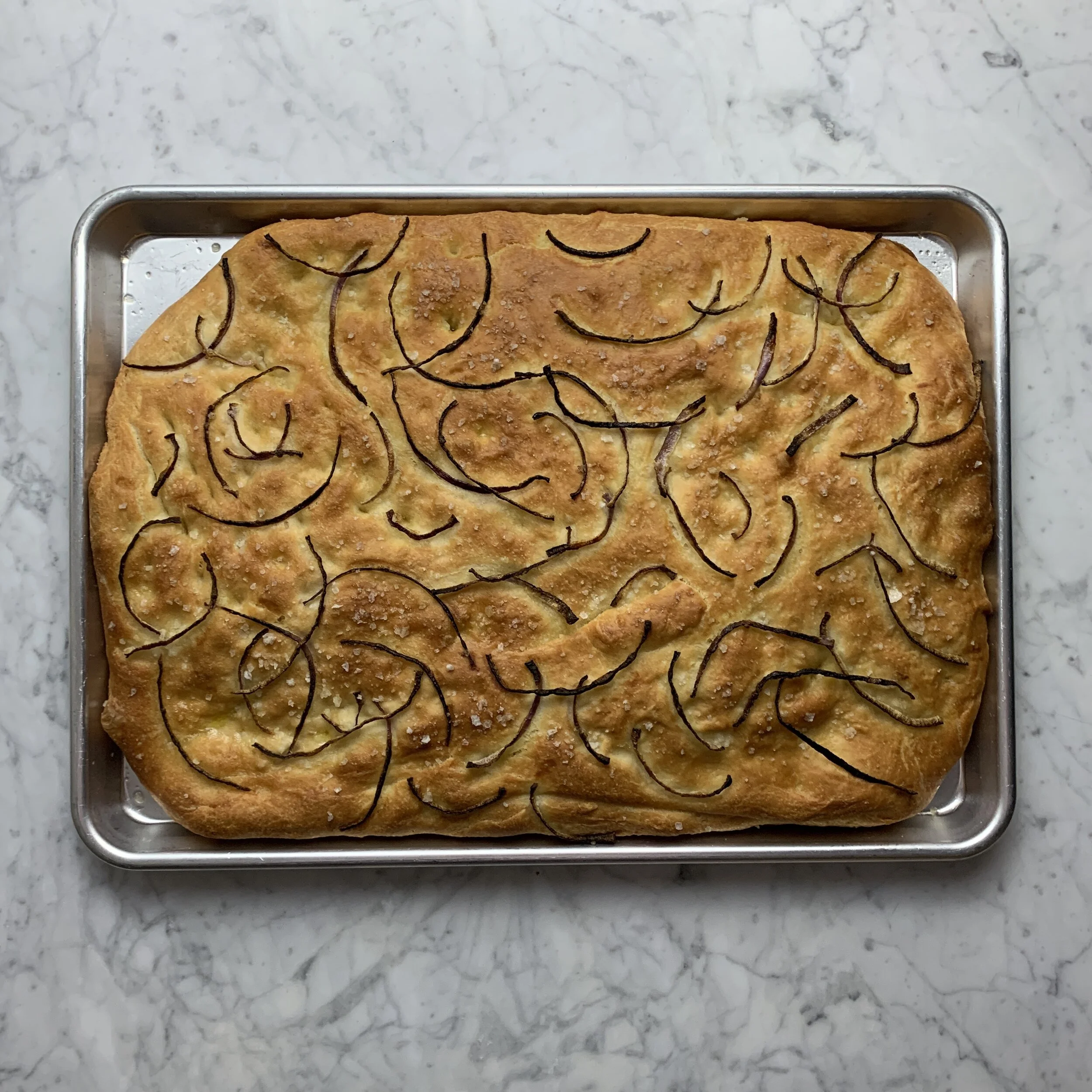
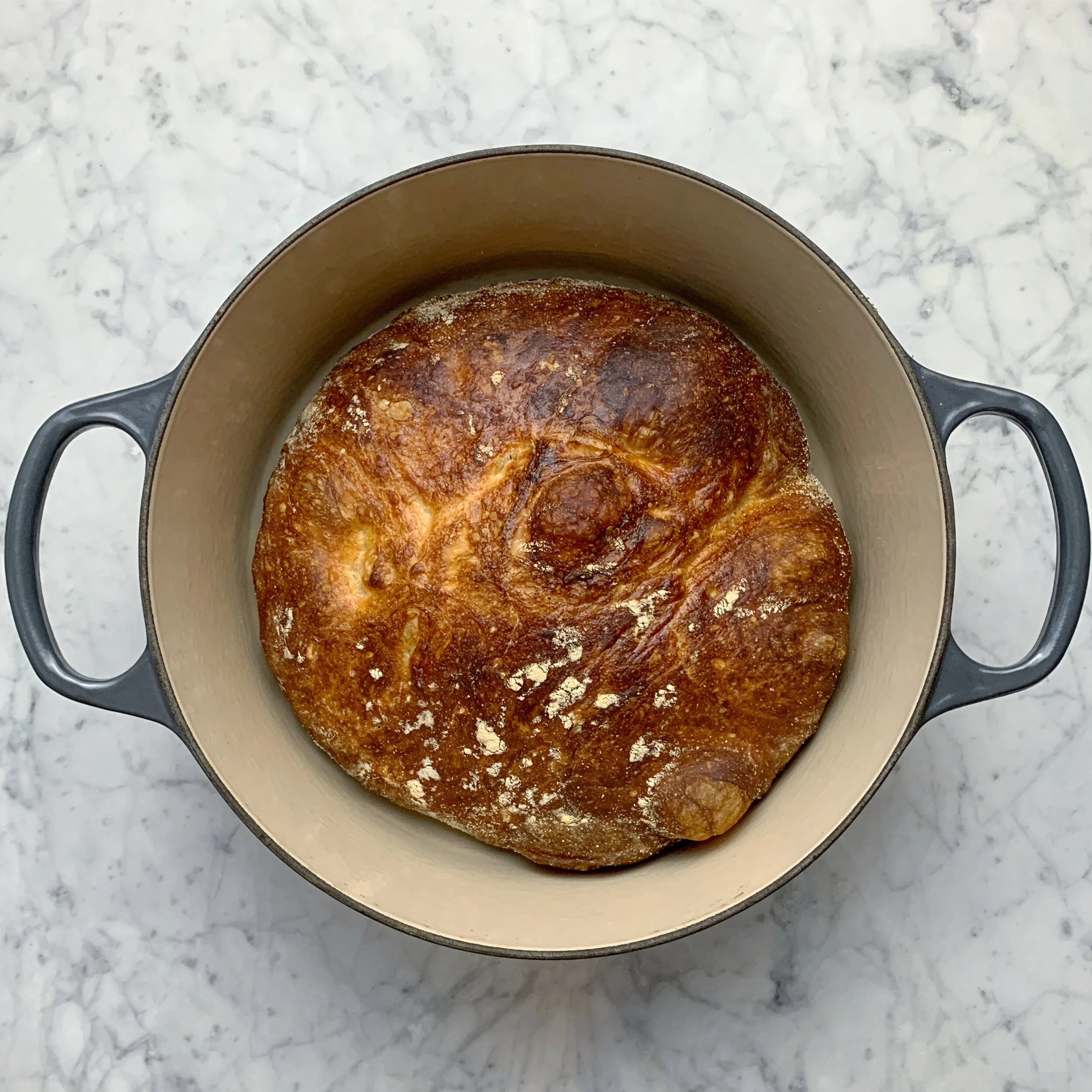
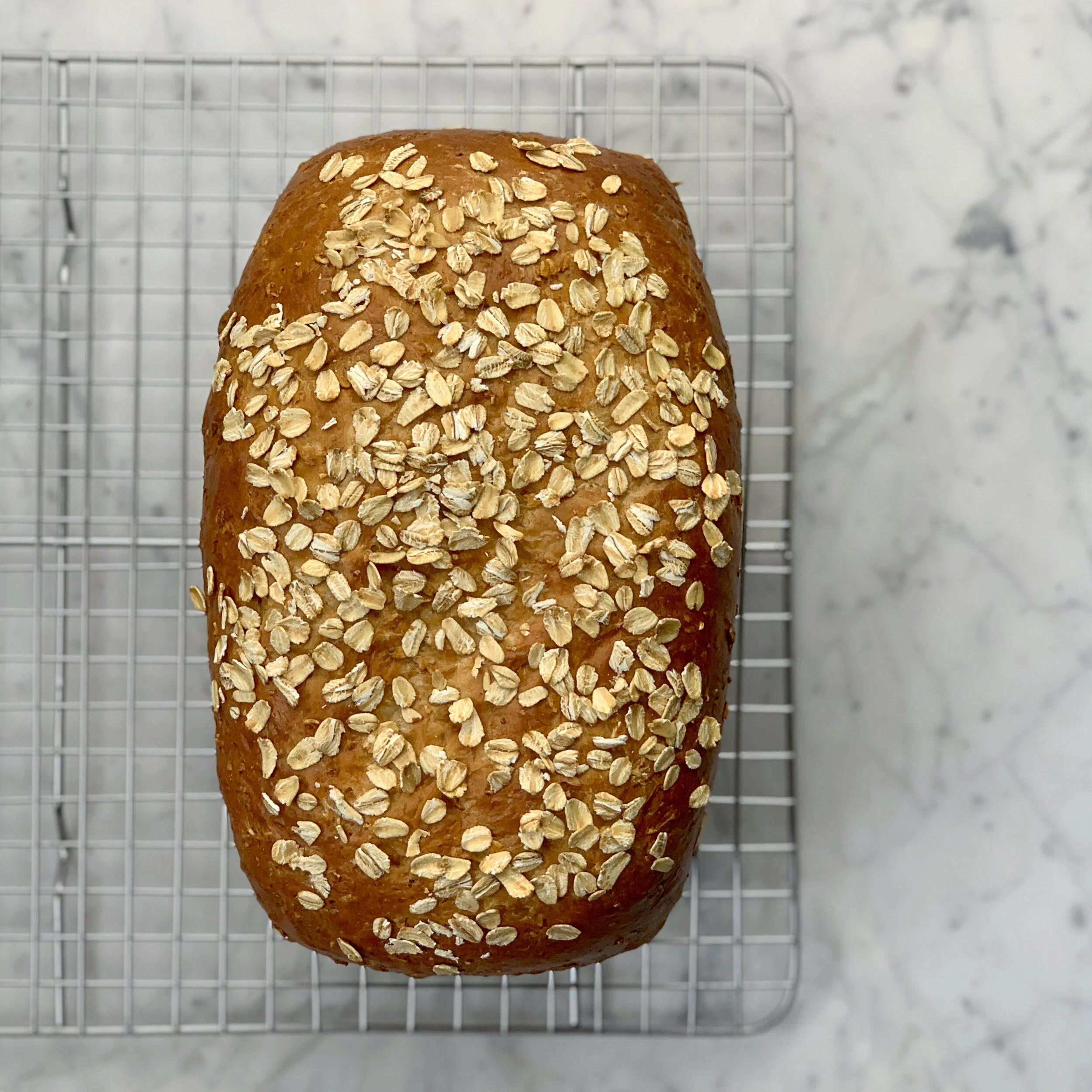
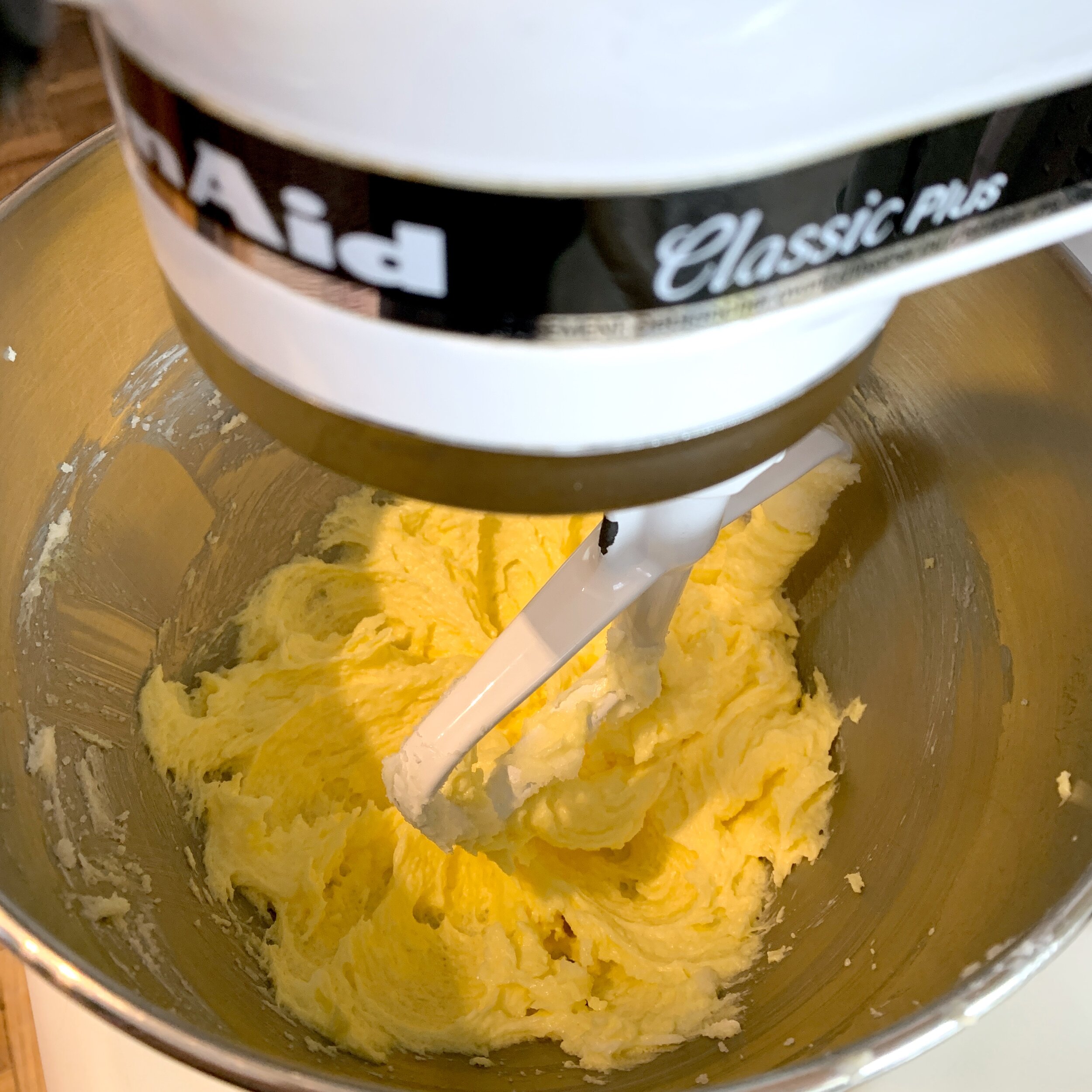
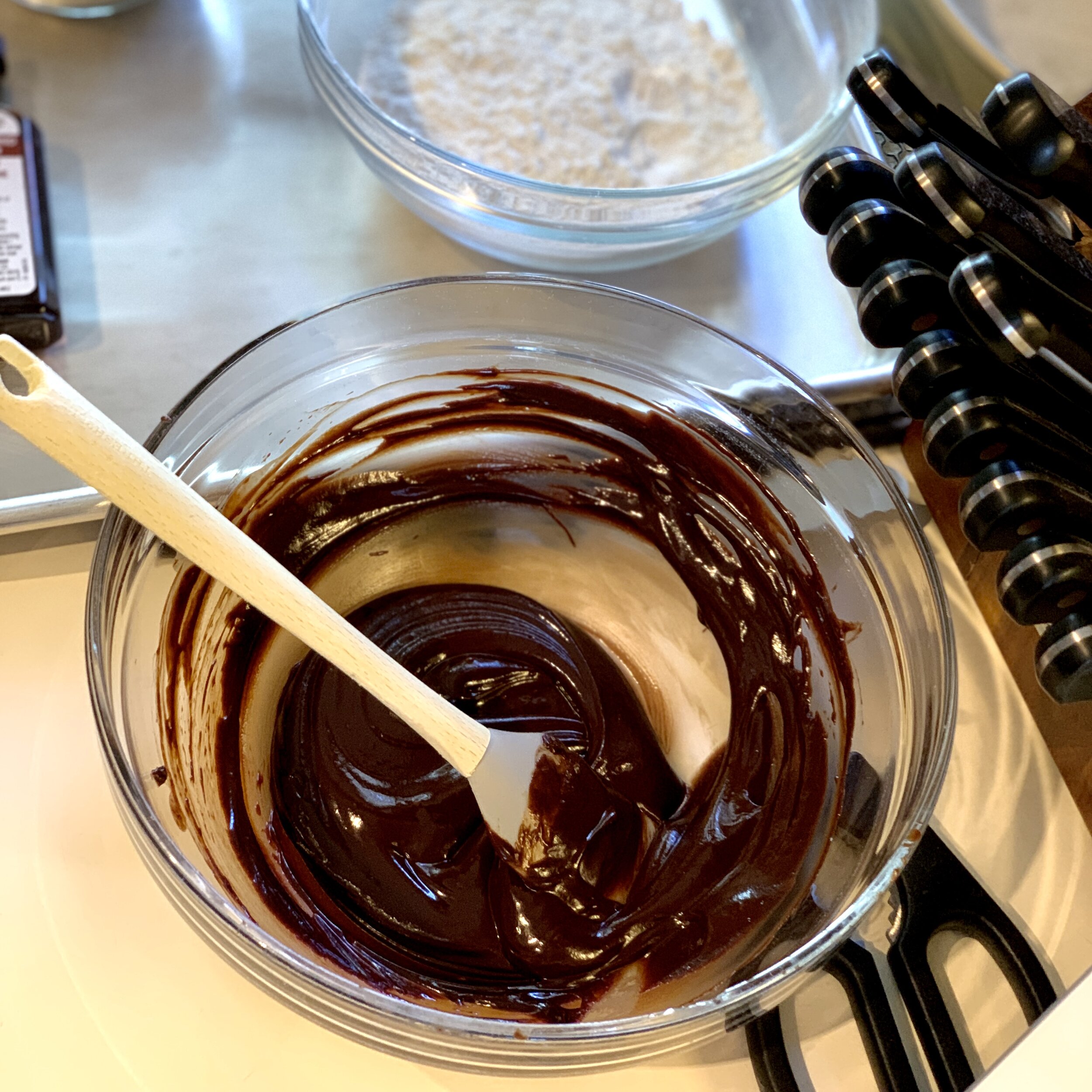
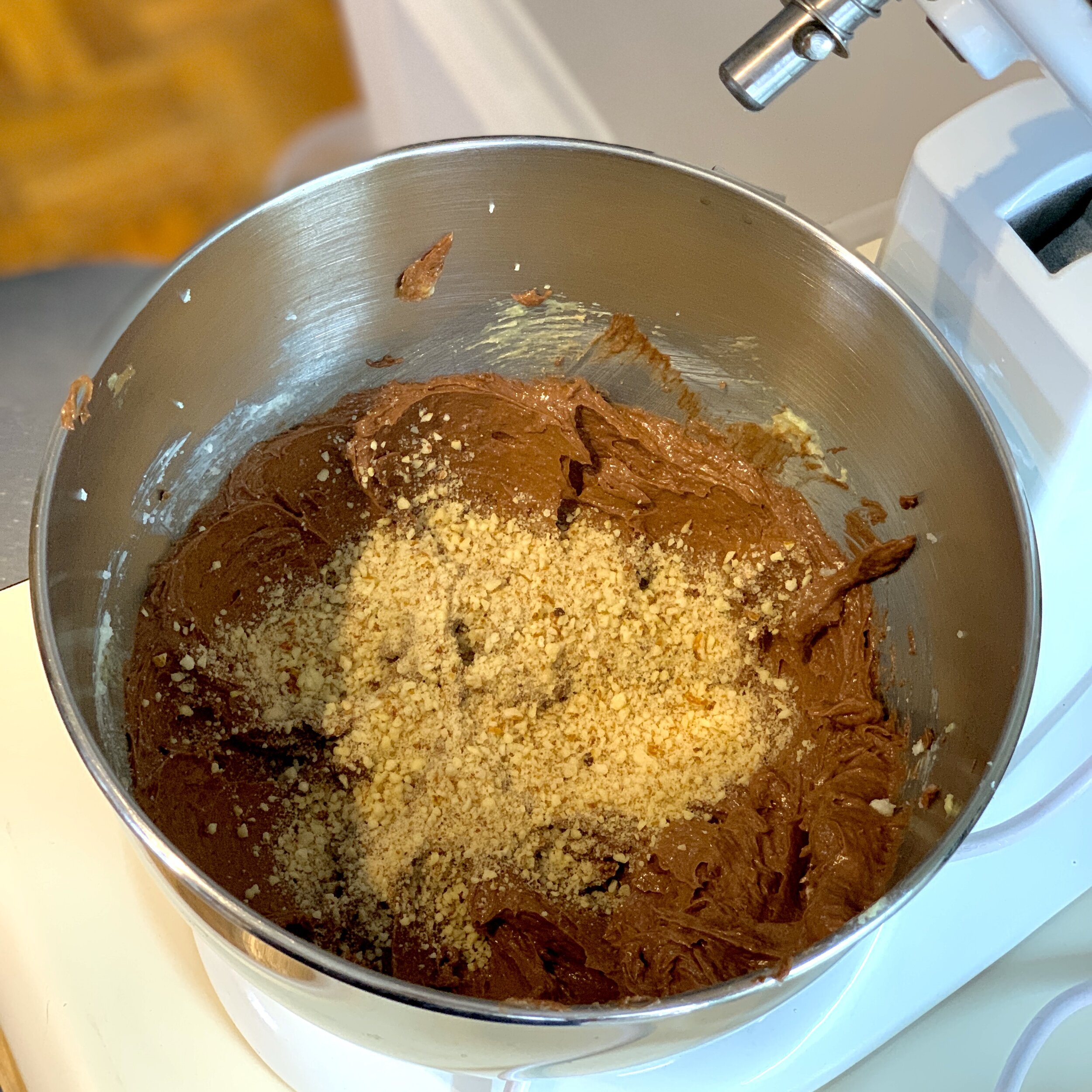
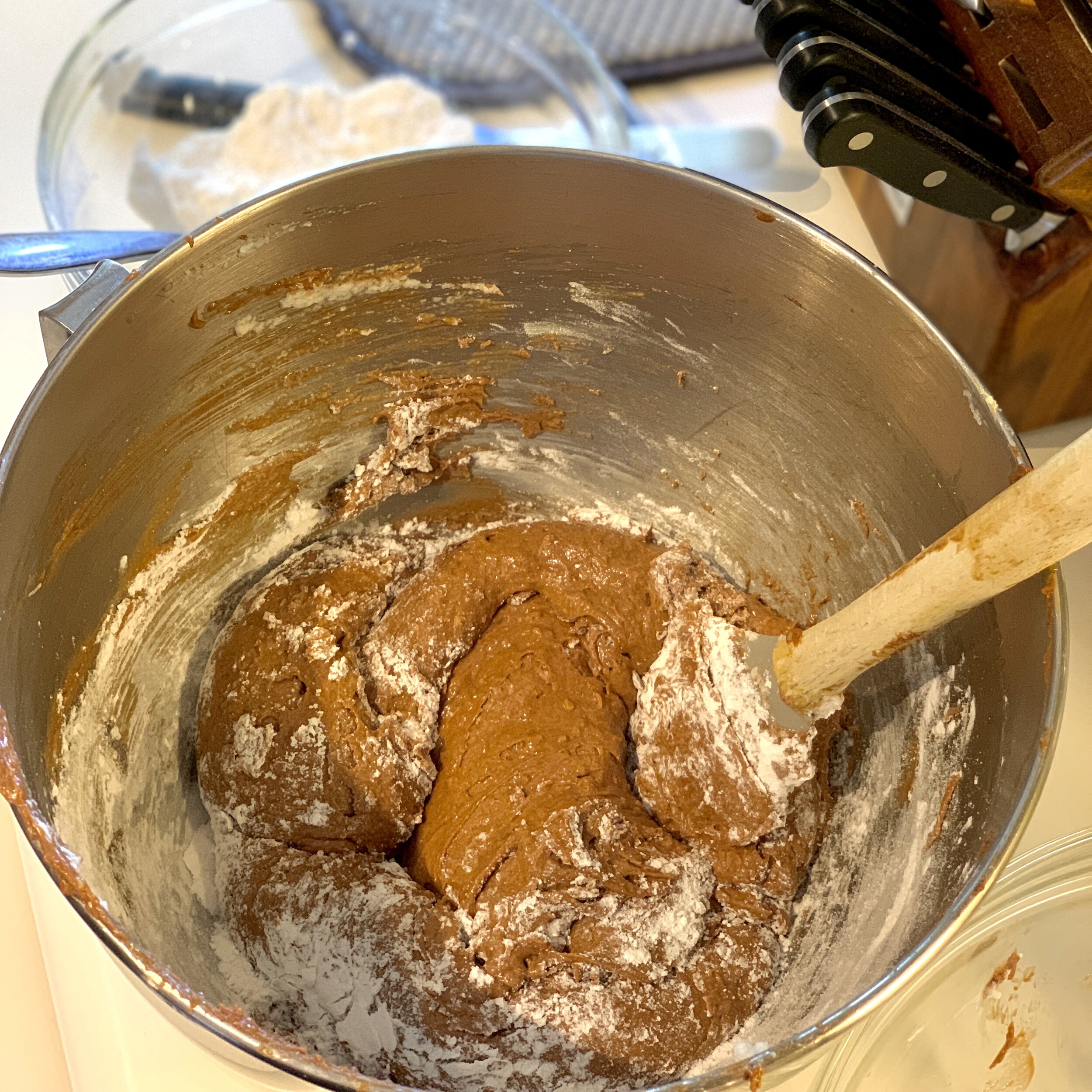
This week in Baking, we made focaccia bread and Double Chocolate Zucchini Cake. I have made focaccia bread before, but not using the starter method. It makes an enormous difference. There is so much more flavor. It's not harder, it just takes longer, but the hands-on time is the same. The starter needs to ferment for 12 hours. We also made a chocolate zucchini bread to practice the quick bread method. I gave this loaf to my friend for helping us with some estate planning. I didn't have any, but she assured me it was delicious. :-)

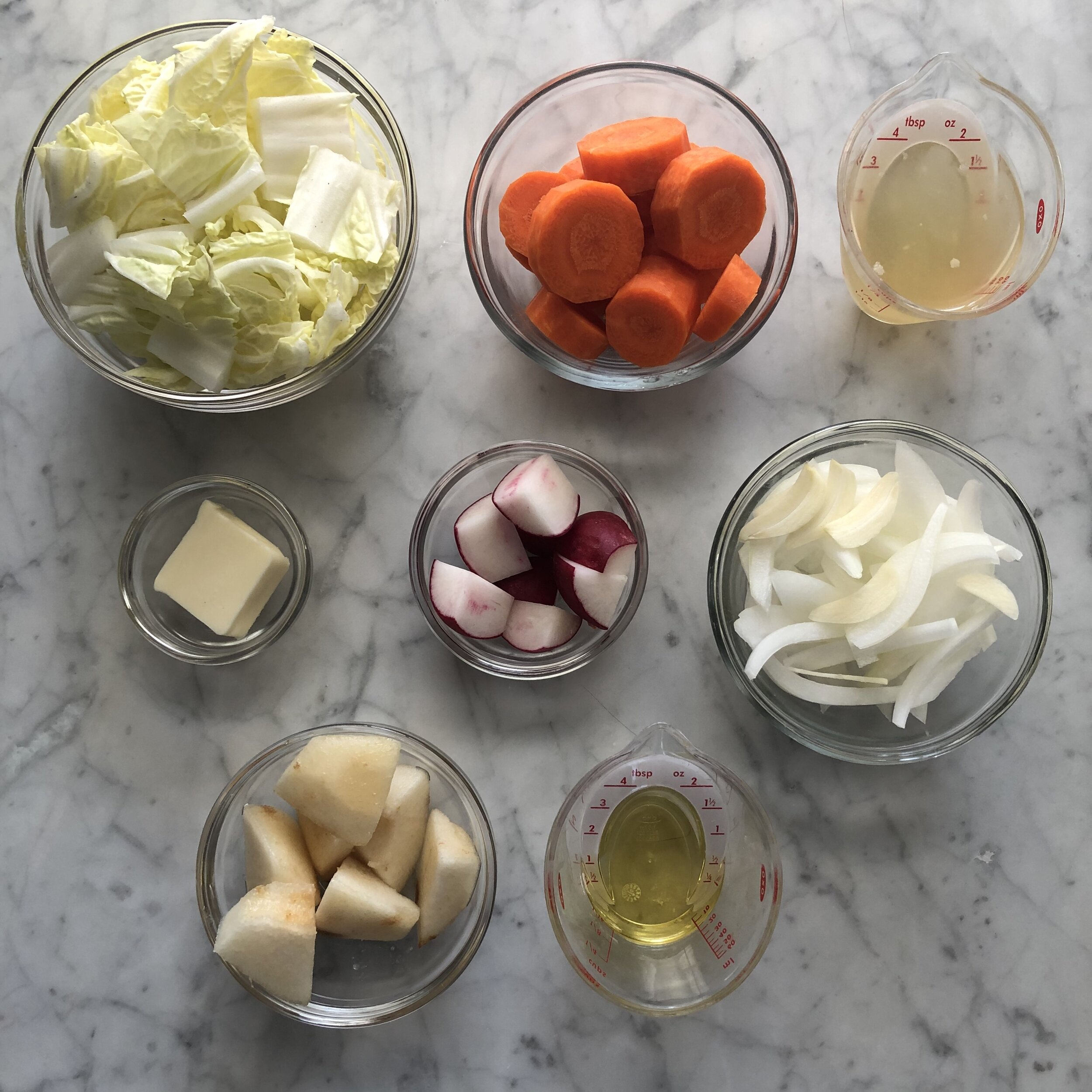
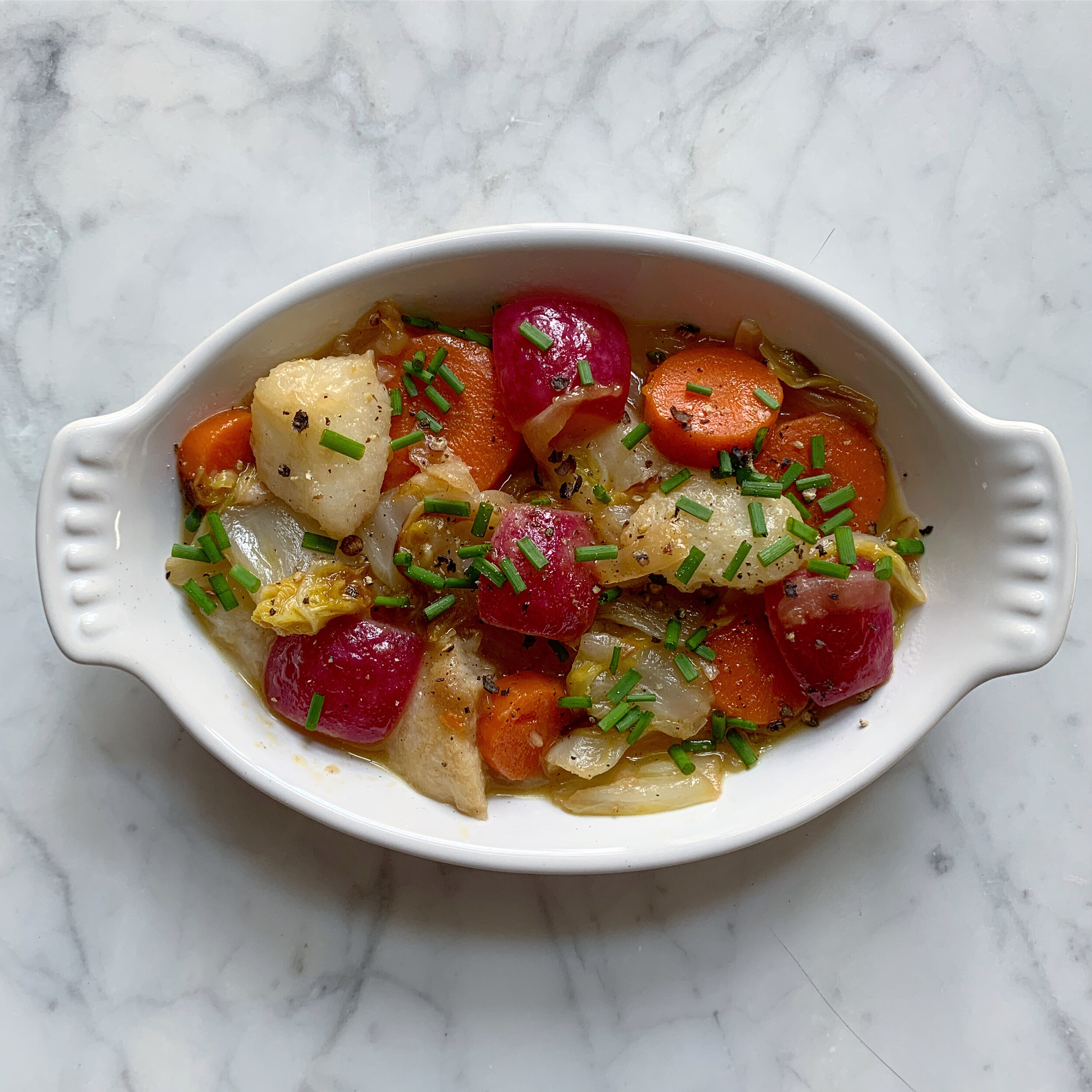
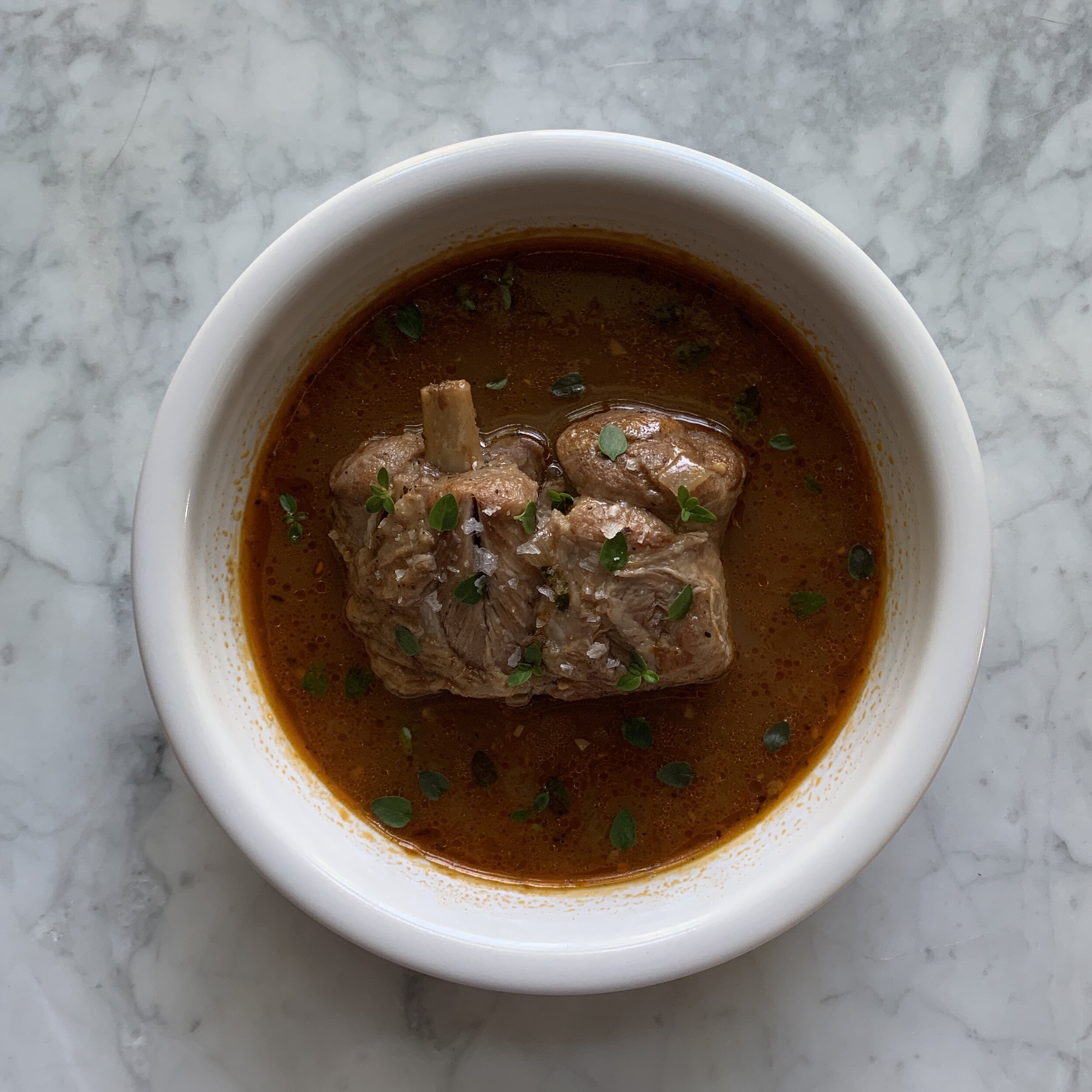
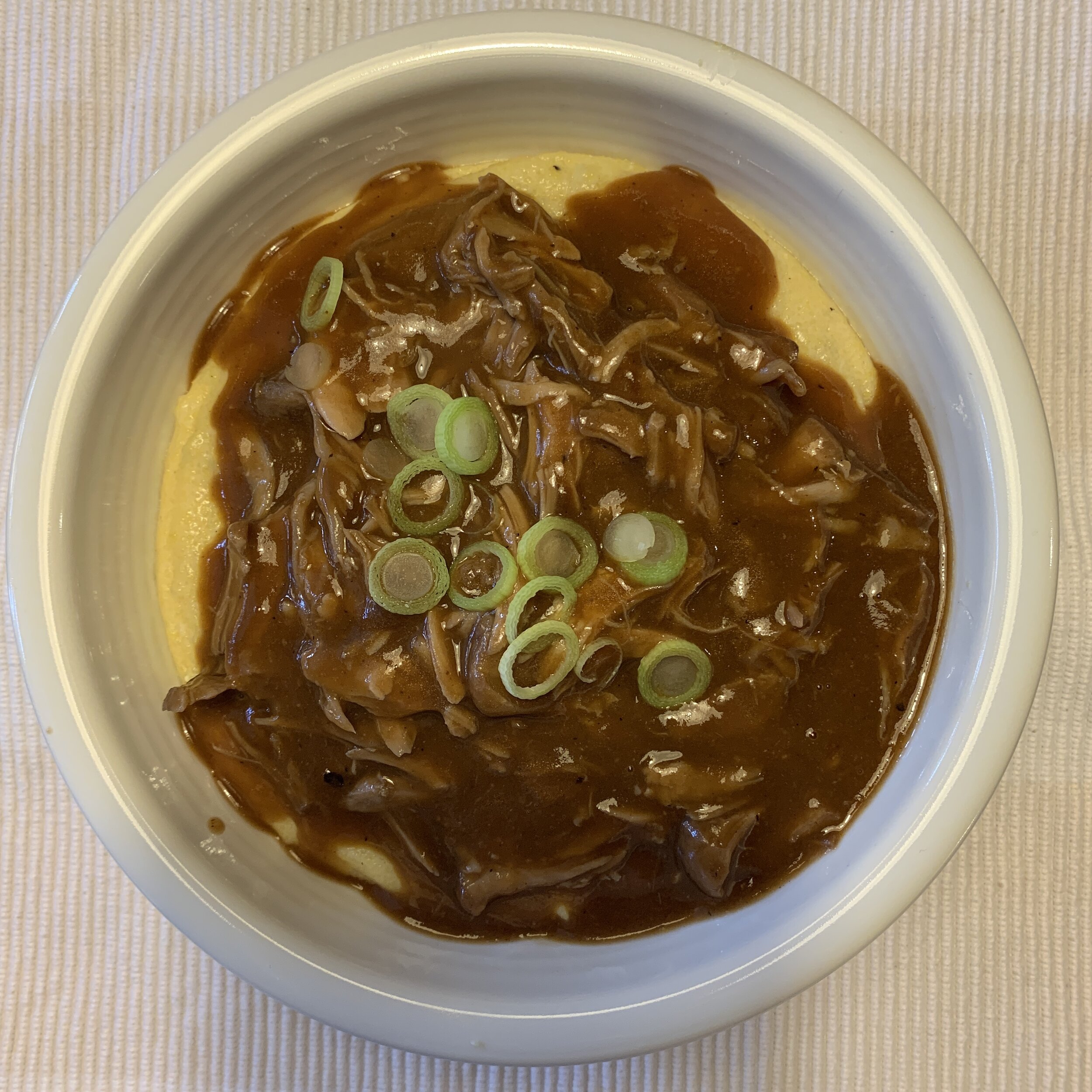
This week in Food Prep Two, we worked on braising. Braising is when you brown a whole piece of meat or vegetables and then cook slowly, covered in the oven in a significant amount of liquid. We braised vegetables in chicken stock, which turned out nice. We also made Osso Buco, which turned out amazing. I have never made Osso Buco. I didn't know exactly what Osso Buco was. We used a pork shank and braised it in an Espagnole sauce with red wine until it was fall off the bone tender. I strained the sauce and thickened it. I served the shredded pork shank and sauce over creamy polenta. It was sooooooo good! So much flavor. My mouth is watering just thinking about it.

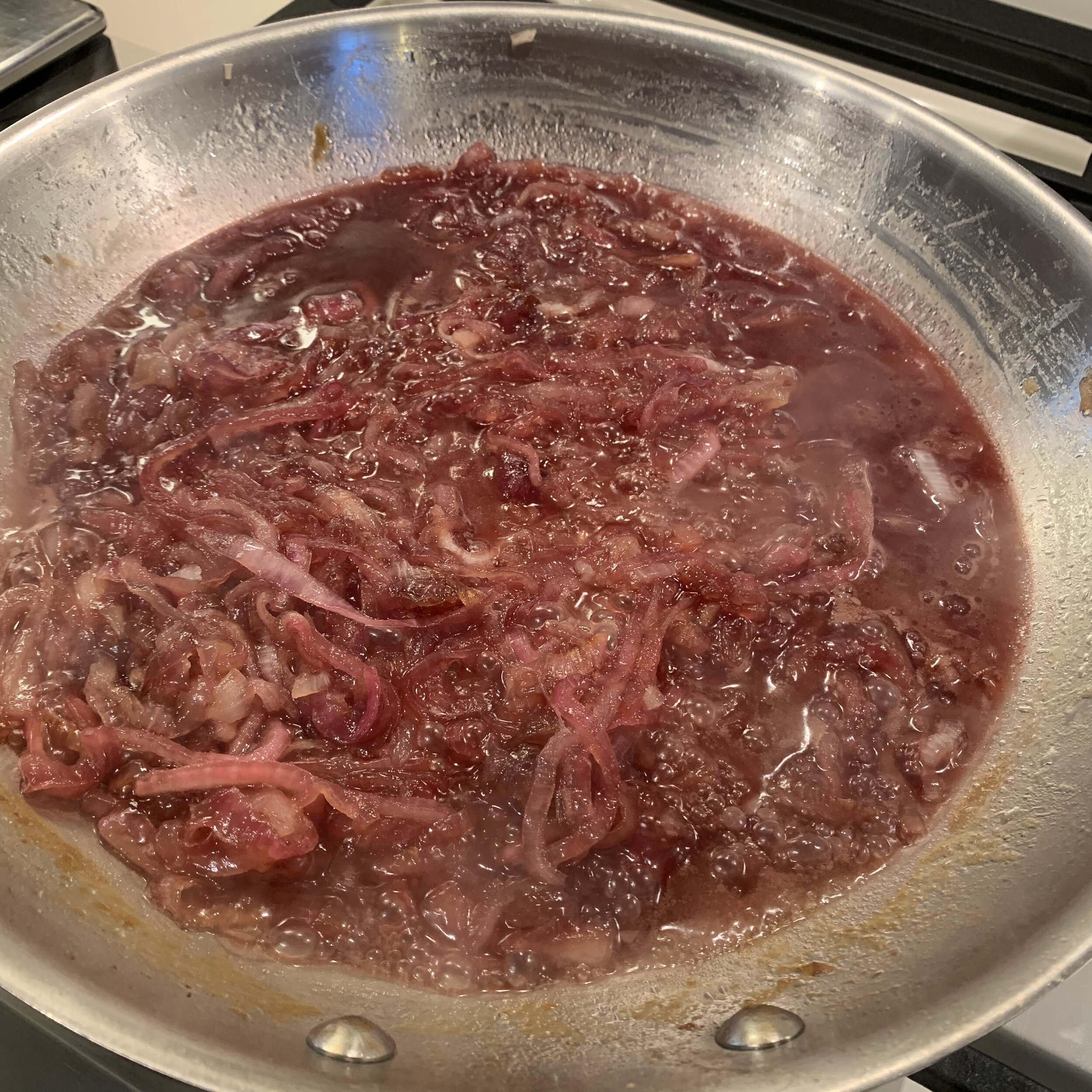
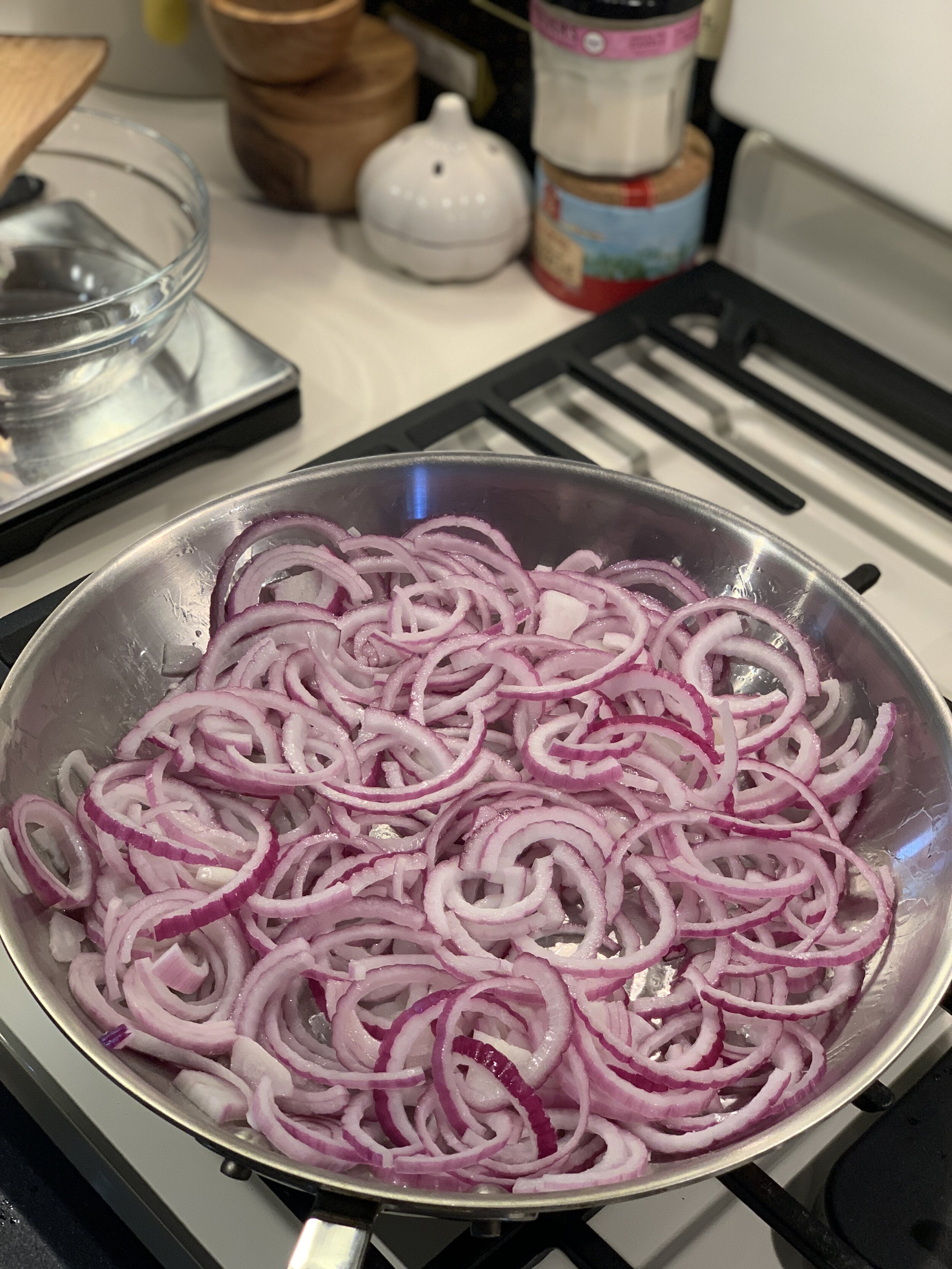
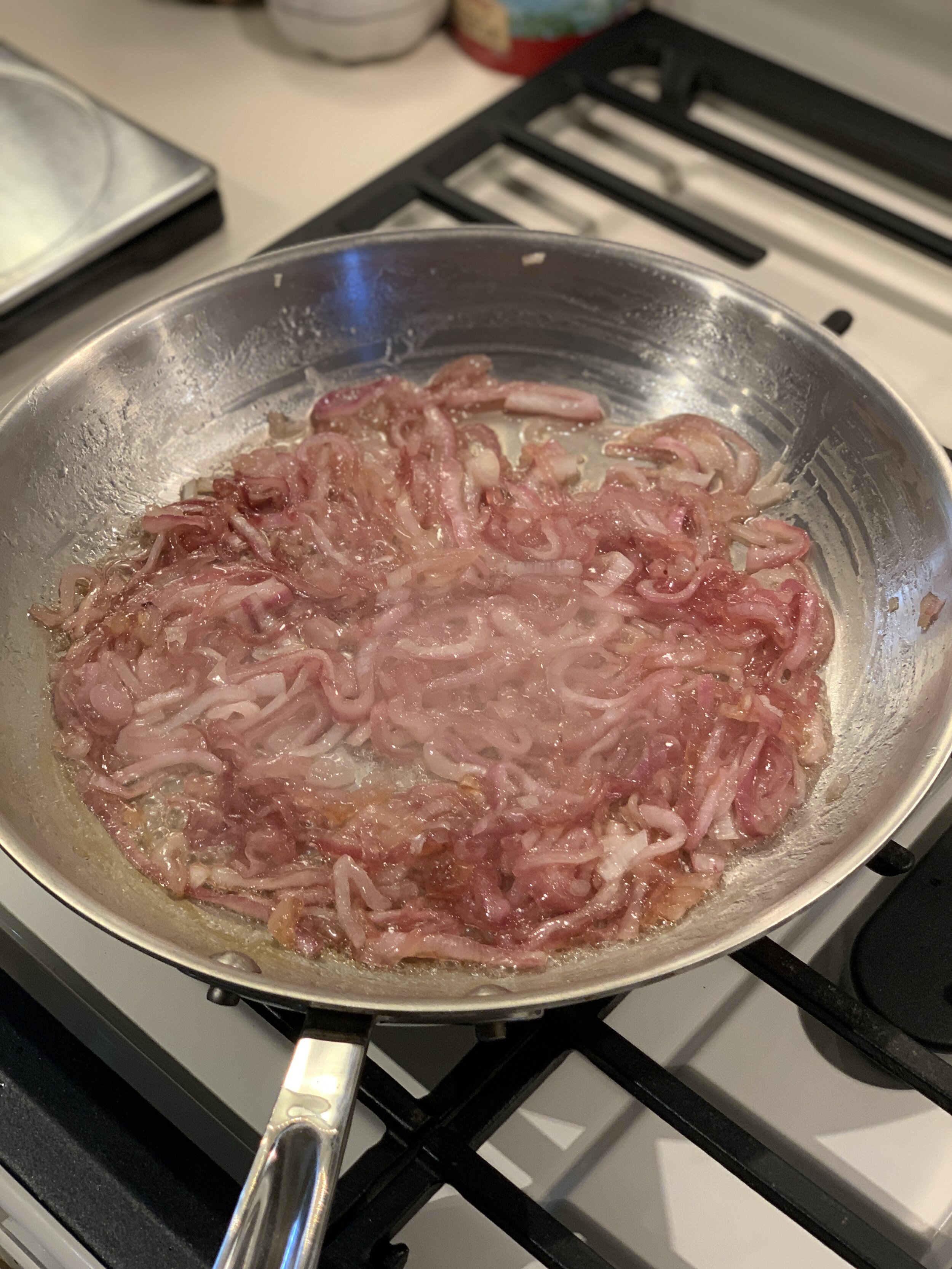
In Garde Manger, we made a red onion Confiture. Confiture means a way of preserving fruits or vegetables. You add red wine and red wine vinegar to caramelized red onions. It's kind of like an onion jam. They are so freaking delicious. I LOVE caramelized onions, but this is like caramelized onions times ten. I am saving them to eat on brats in a couple of weeks when the weather is nice enough to grill.

That's it for this week! Next week we'll be working fruit and vegetable carvings.

Week 43 | Braided Bread

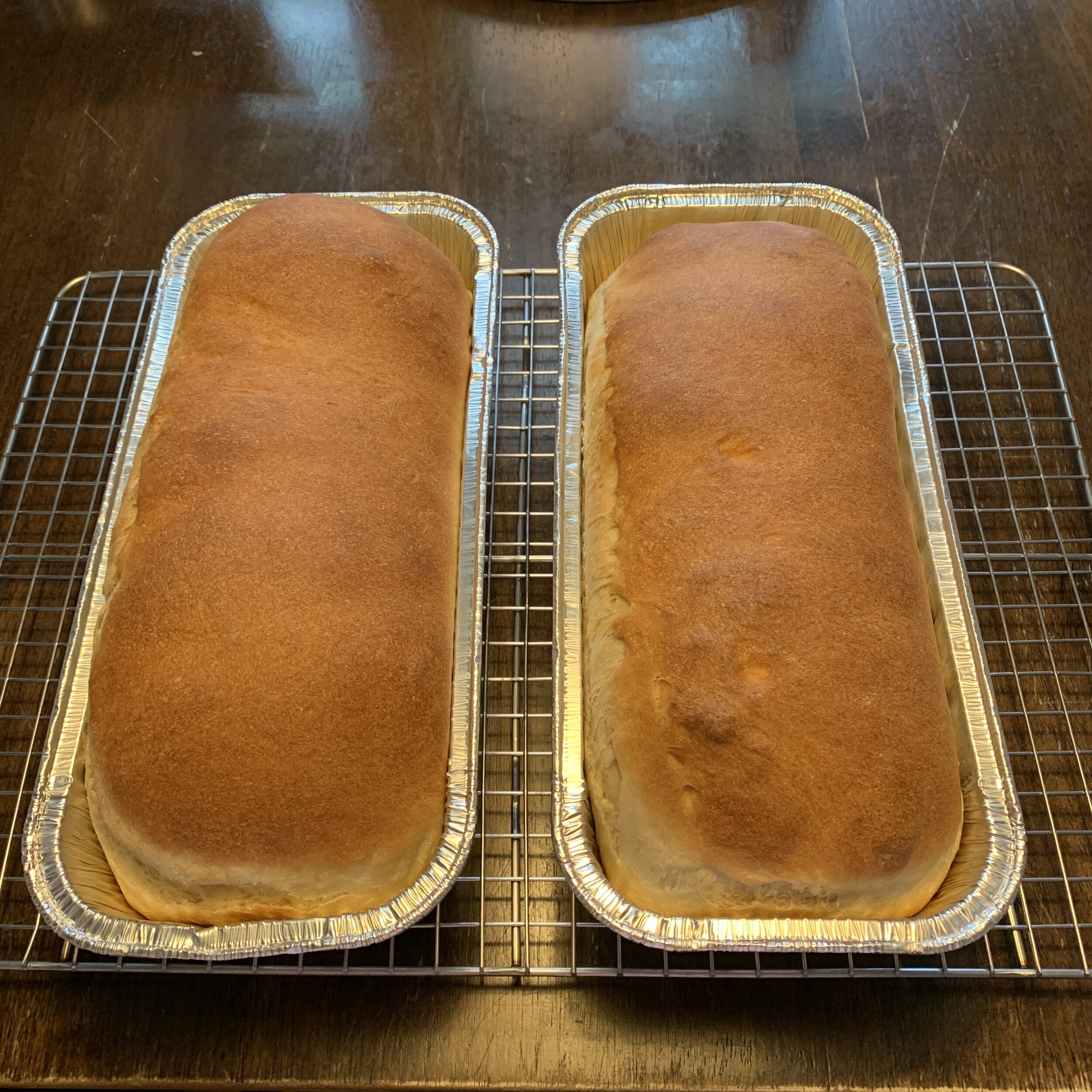
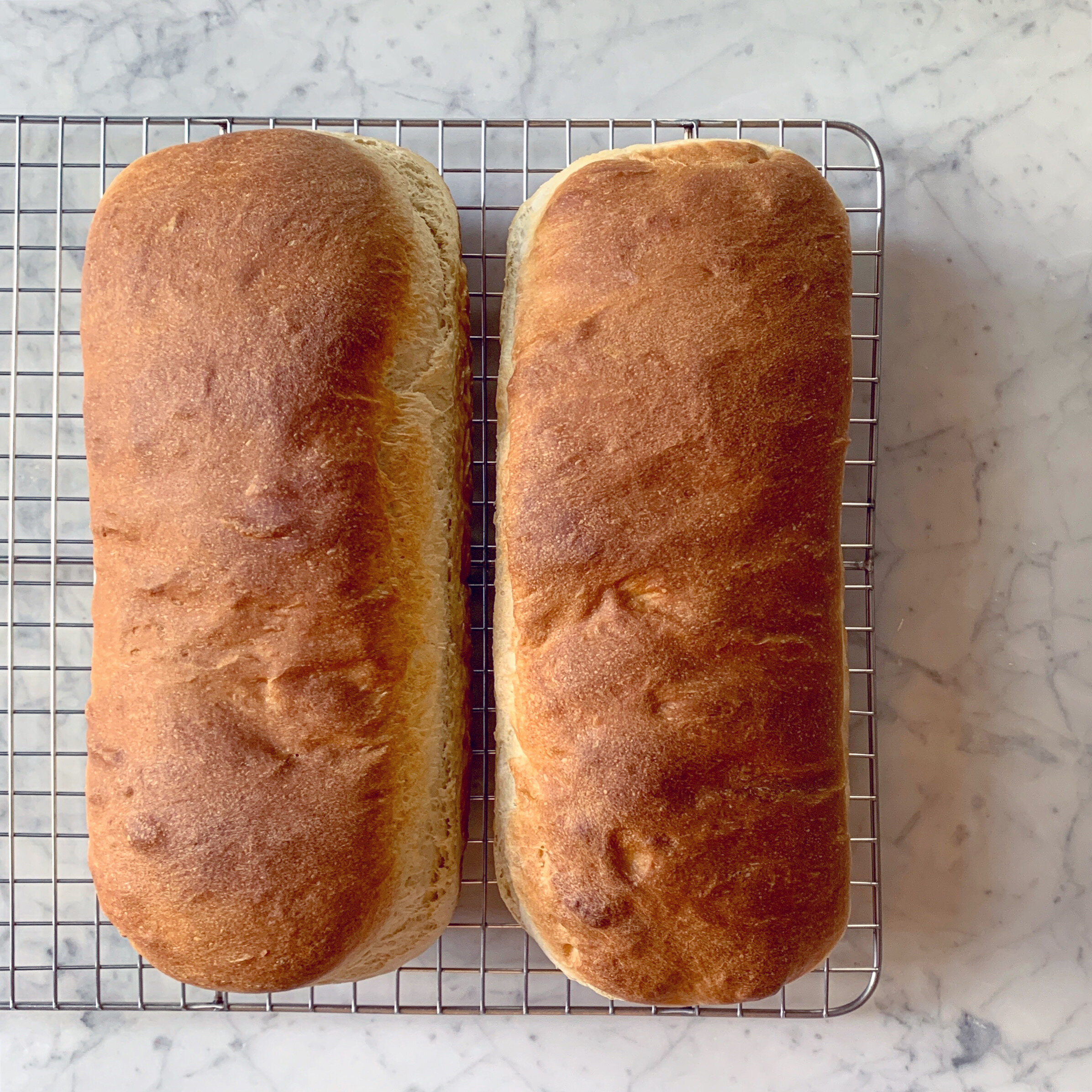
This week in Baking, we made White Pan Bread and Challah Bread. It was a TON of work and made a TON of bread. The White Pan Bread was a lovely, soft, flavorful bread. It used the starter method, which I have never done before. It takes a lot more time, but it creates a much richer flavor. It's what separates delicious professional bread from amateur bread. I'm excited to have learned this method. 

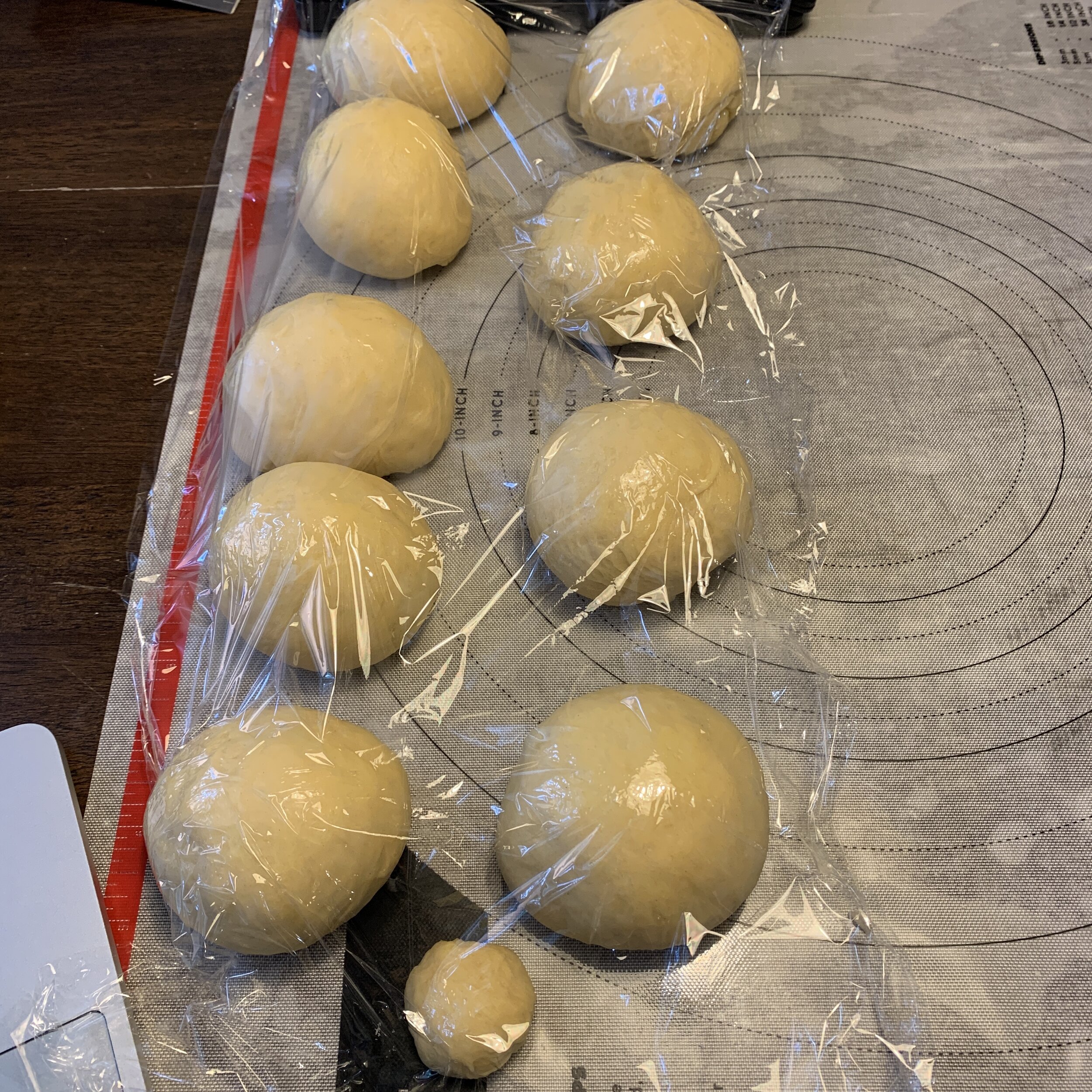
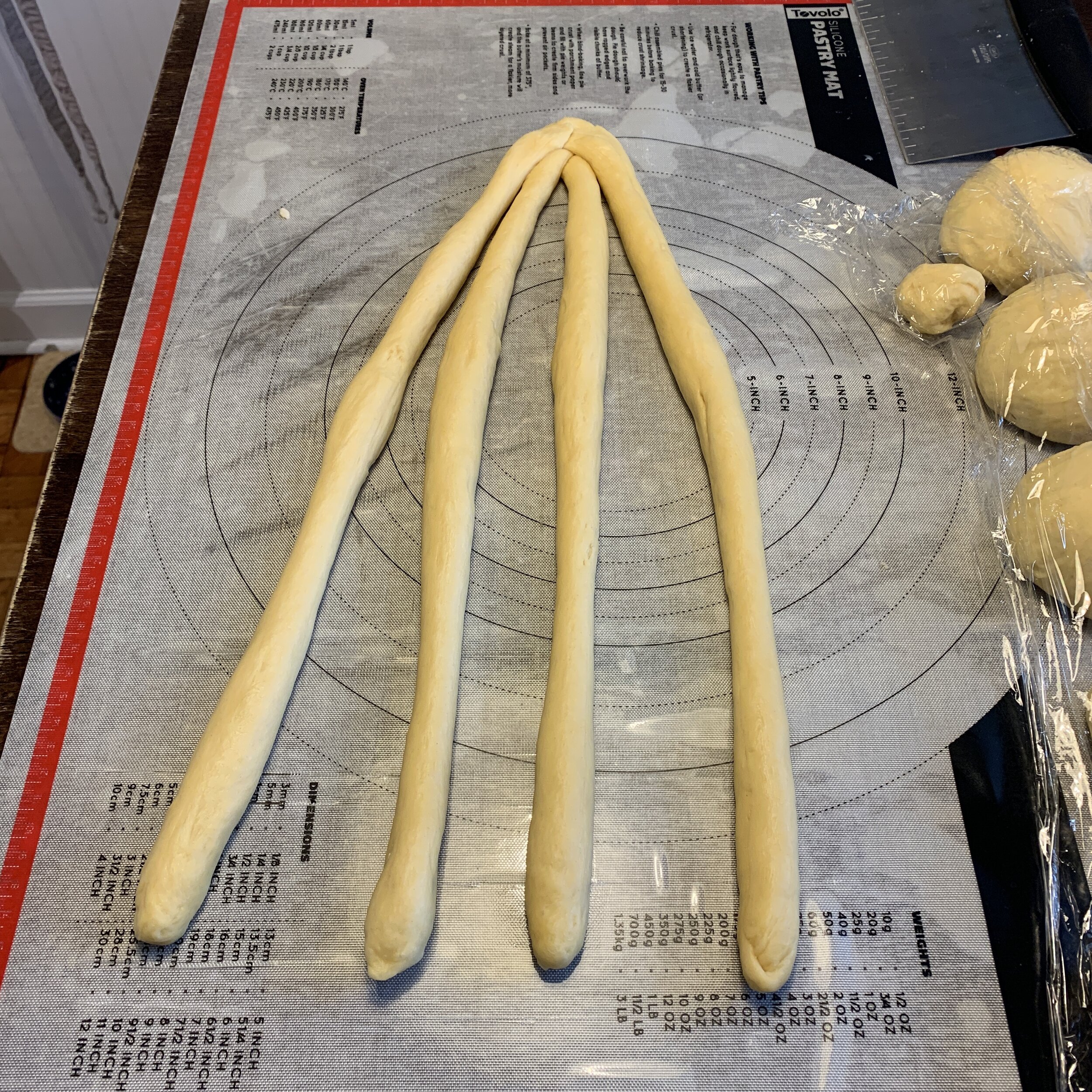
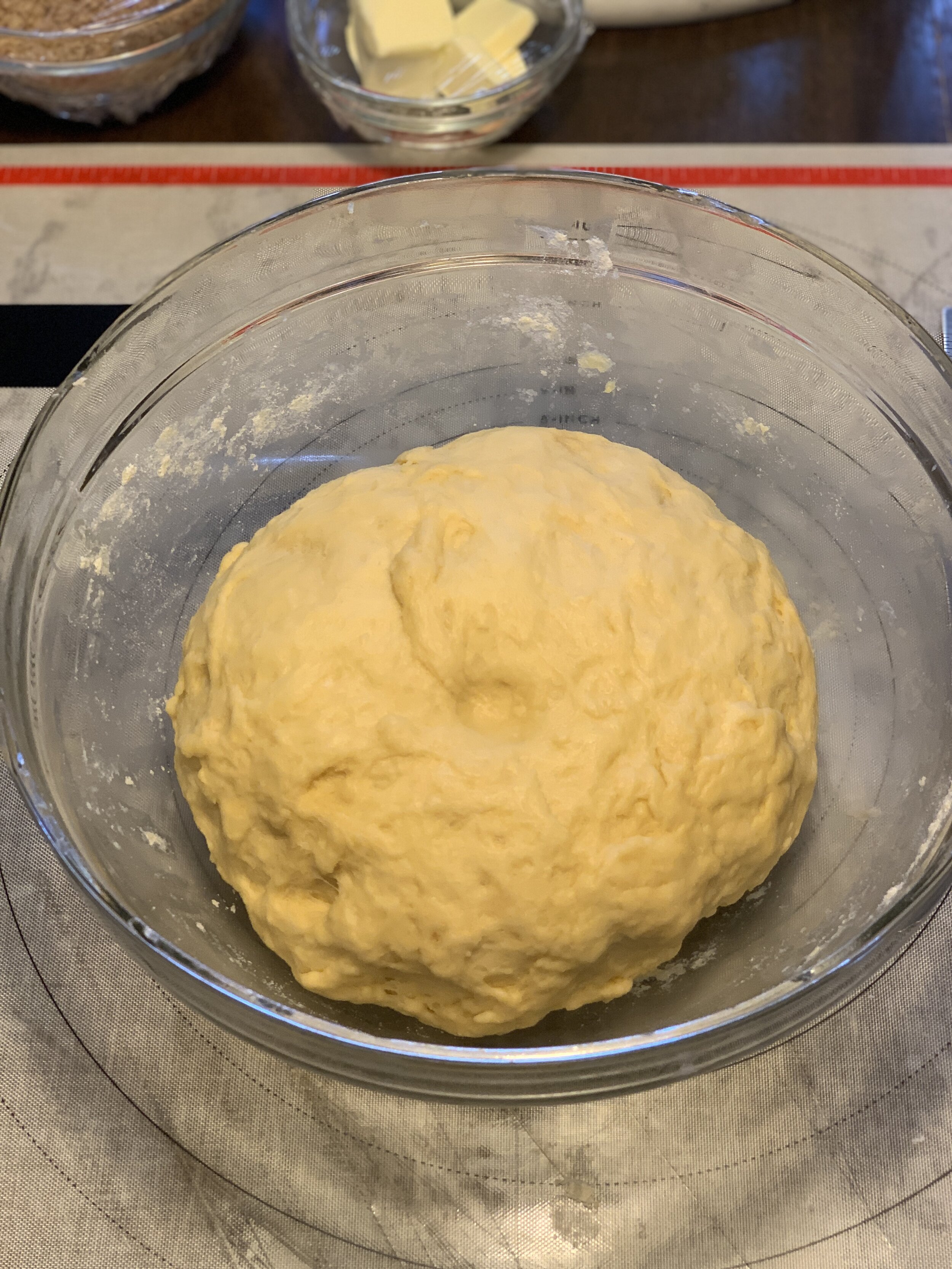
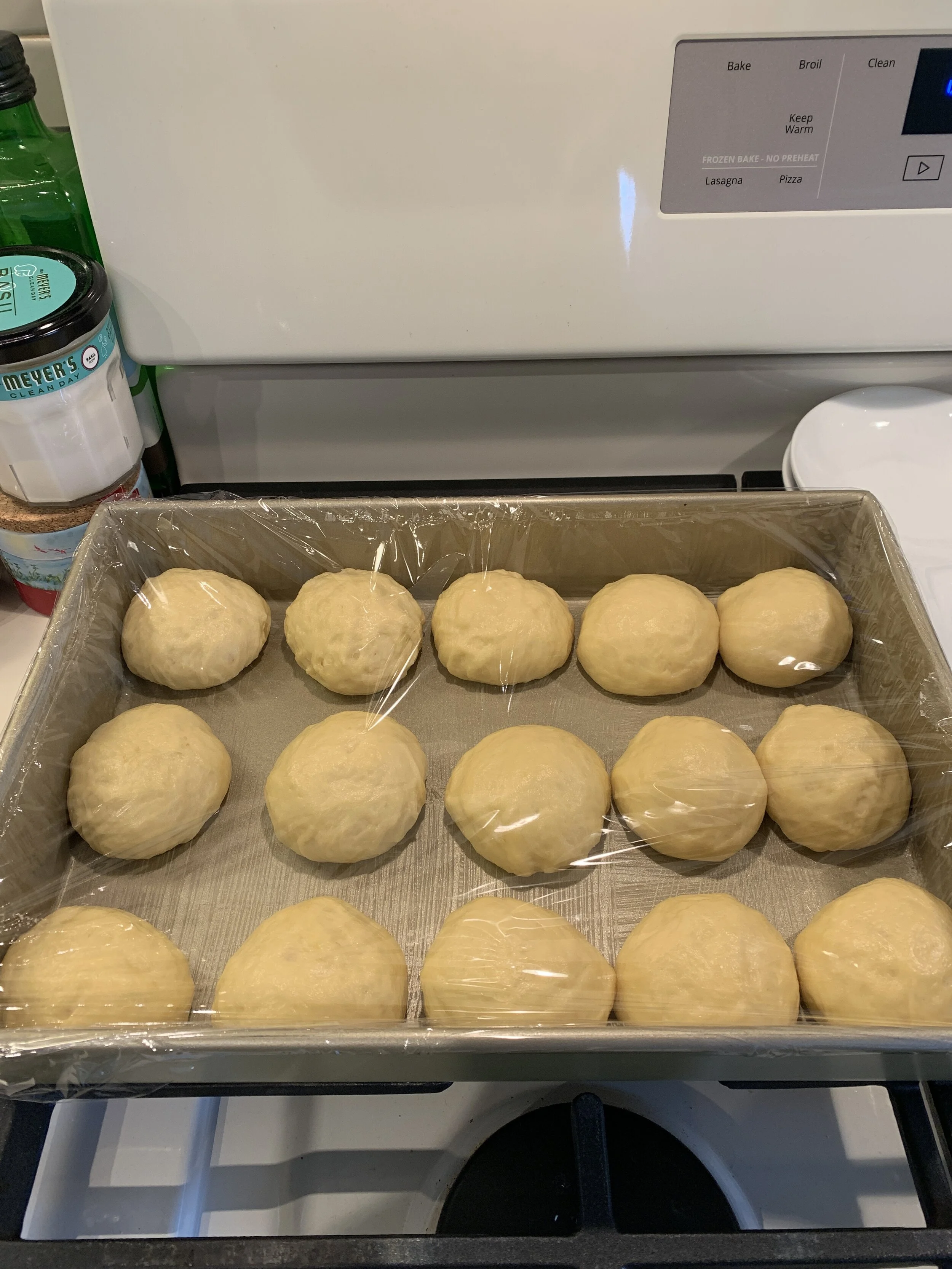
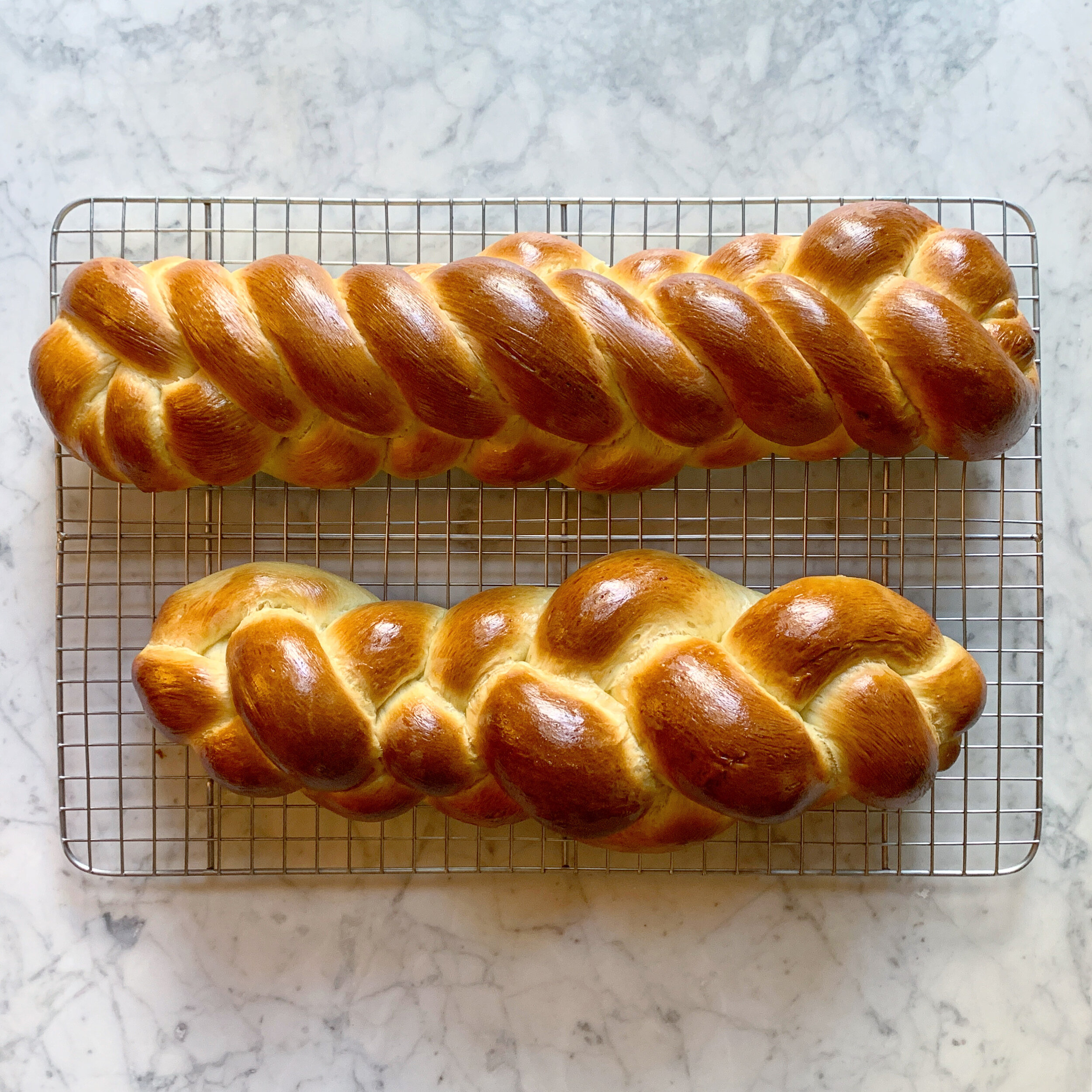
We also made Challah Bread, an enriched dough, which means it contains fat like milk, butter, and/or shortening. Enriched dough is wonderfully smooth and glorious to handle. I was nervous about braiding the bread, but it's much easier than it looks.

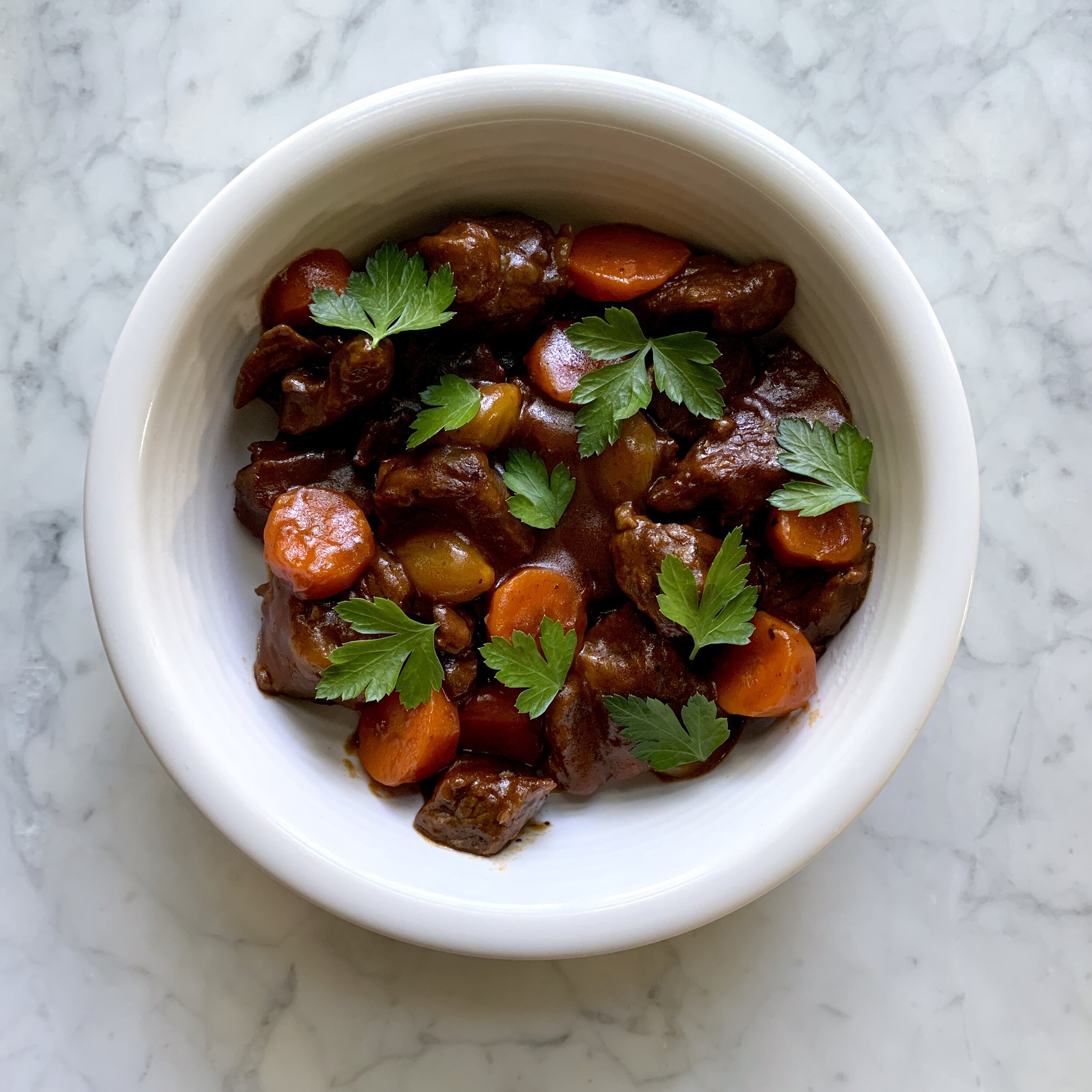
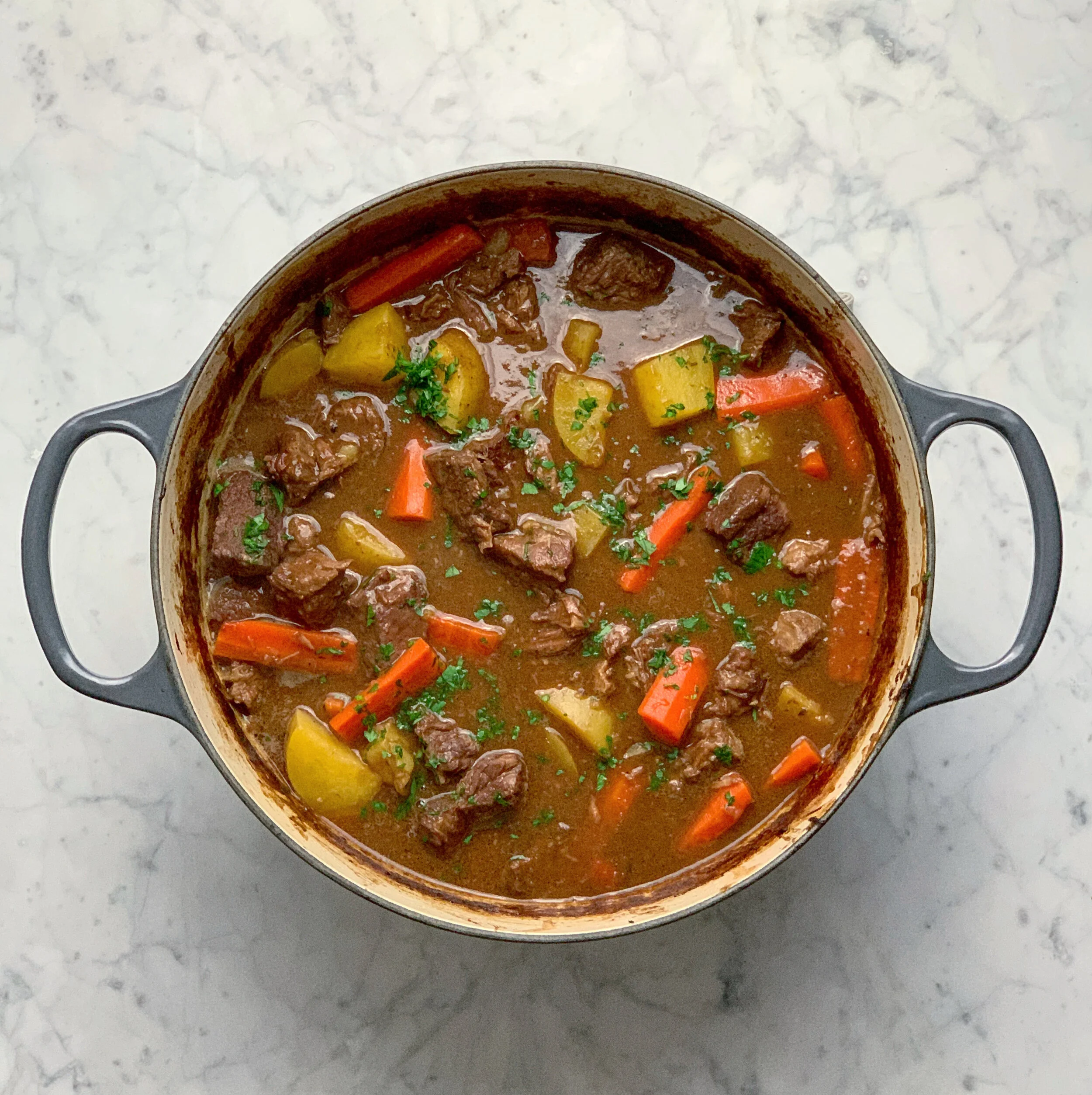
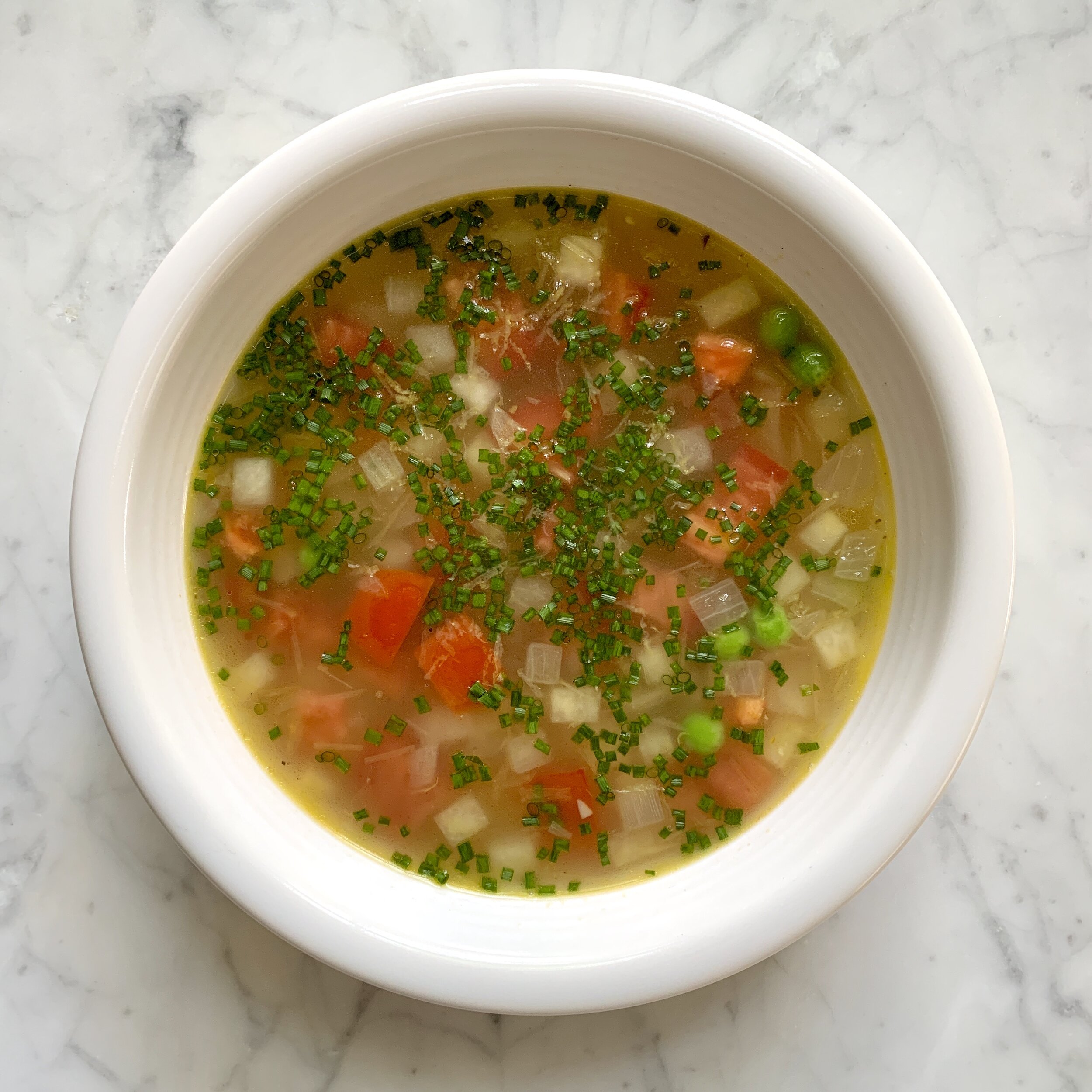
In Food Prep Two, we made Clear Vegetable Soup. It was good to practice more knife cuts. I'm getting better at my knife cuts, but not much faster. I'm very, very slow. We also made Beef Stew, which was awesome. It was the perfect cozy winter meal. Too bad we made it in the summer. Haha! No, it was excellent, and we enjoyed it for dinner one night. 

In Garde Manger, we made a Roasted Beet Salad. I have never been a fan of beets. I'm not too fond of their dry, earthy flavor. However, they were much sweeter when roasted and used a red wine vinaigrette, and it was a delicious, simple salad. We ate it as a side dish one night for dinner. 

That was it for this week. I am so amazed by the change that is already taking place in the country. We will no longer stand for people of color to be treated unfairly and unjustly. I will work every day to listen and learn. There is so much work to be done. 

“Do the best you can until you know better. Then when you know better, do better.”

― Maya Angelou

Week 42 | Knife Cuts

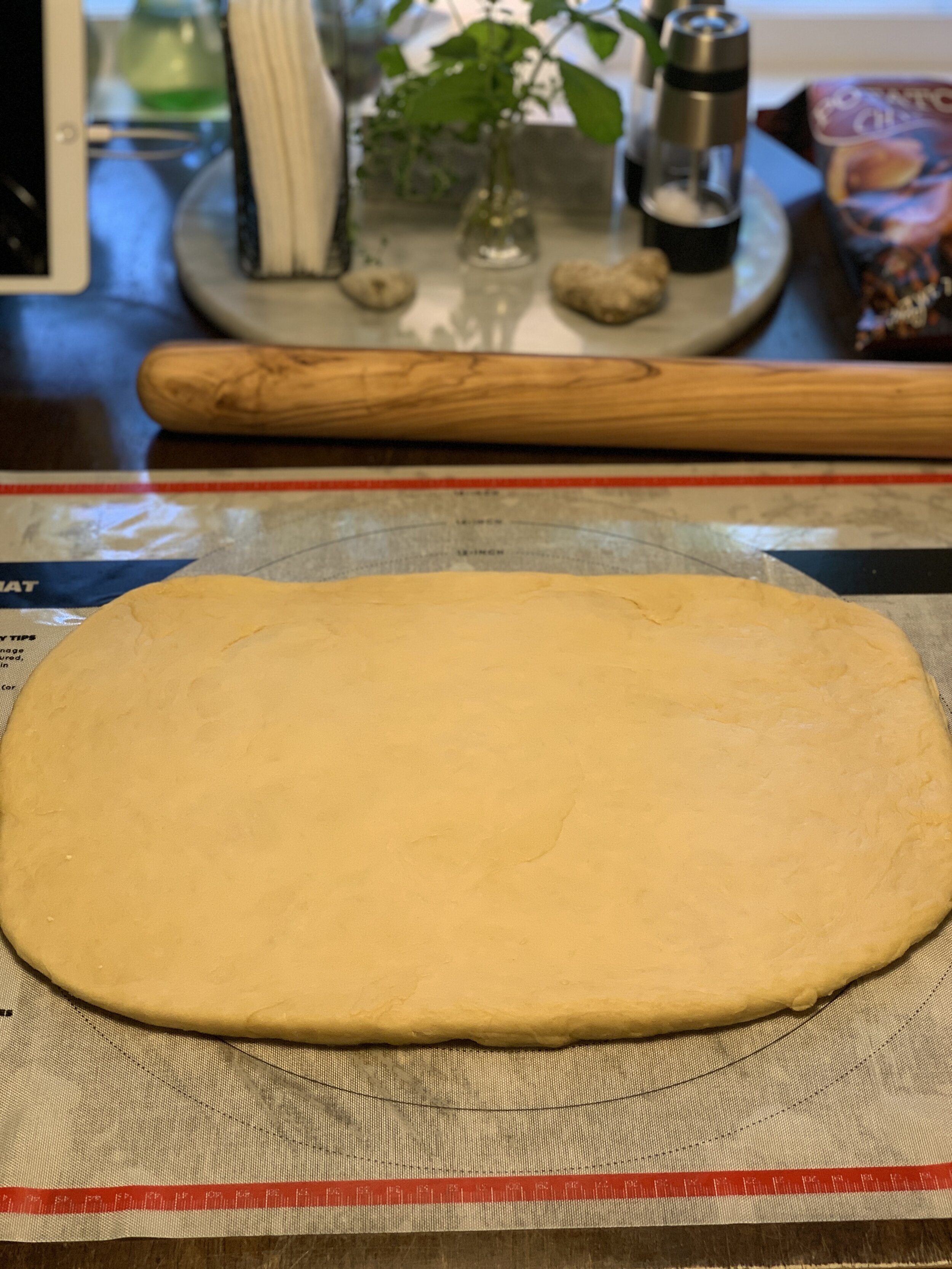
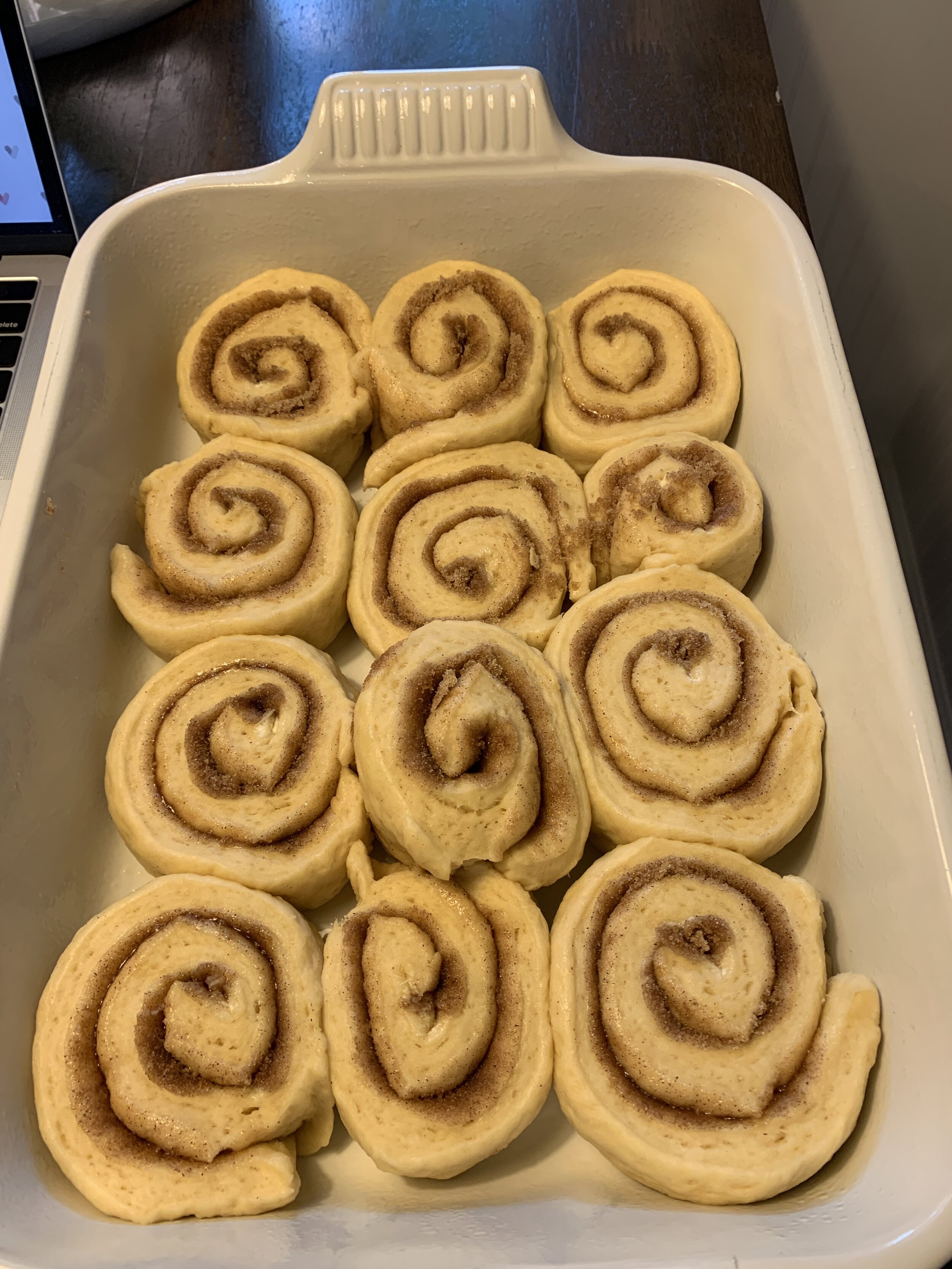
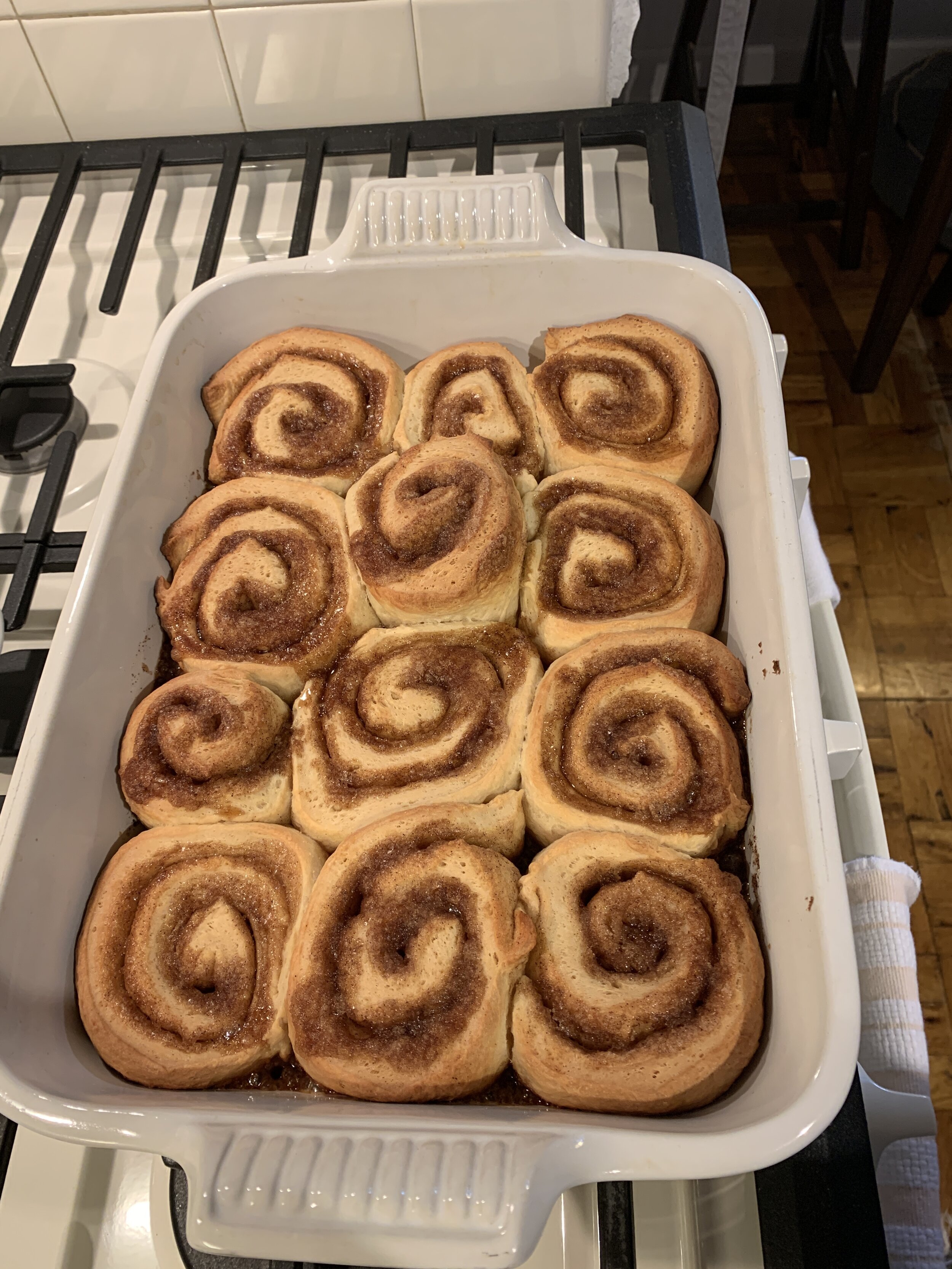
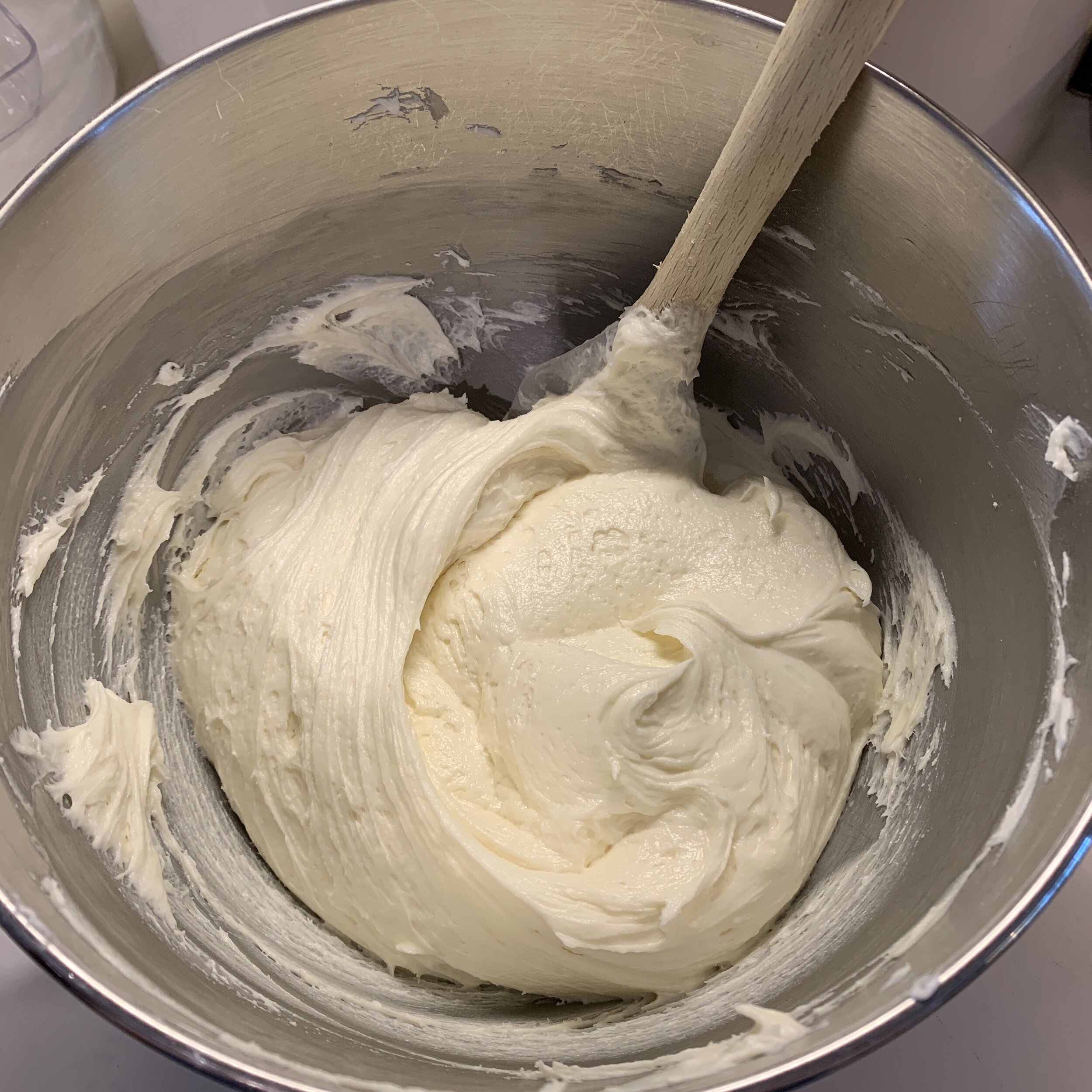
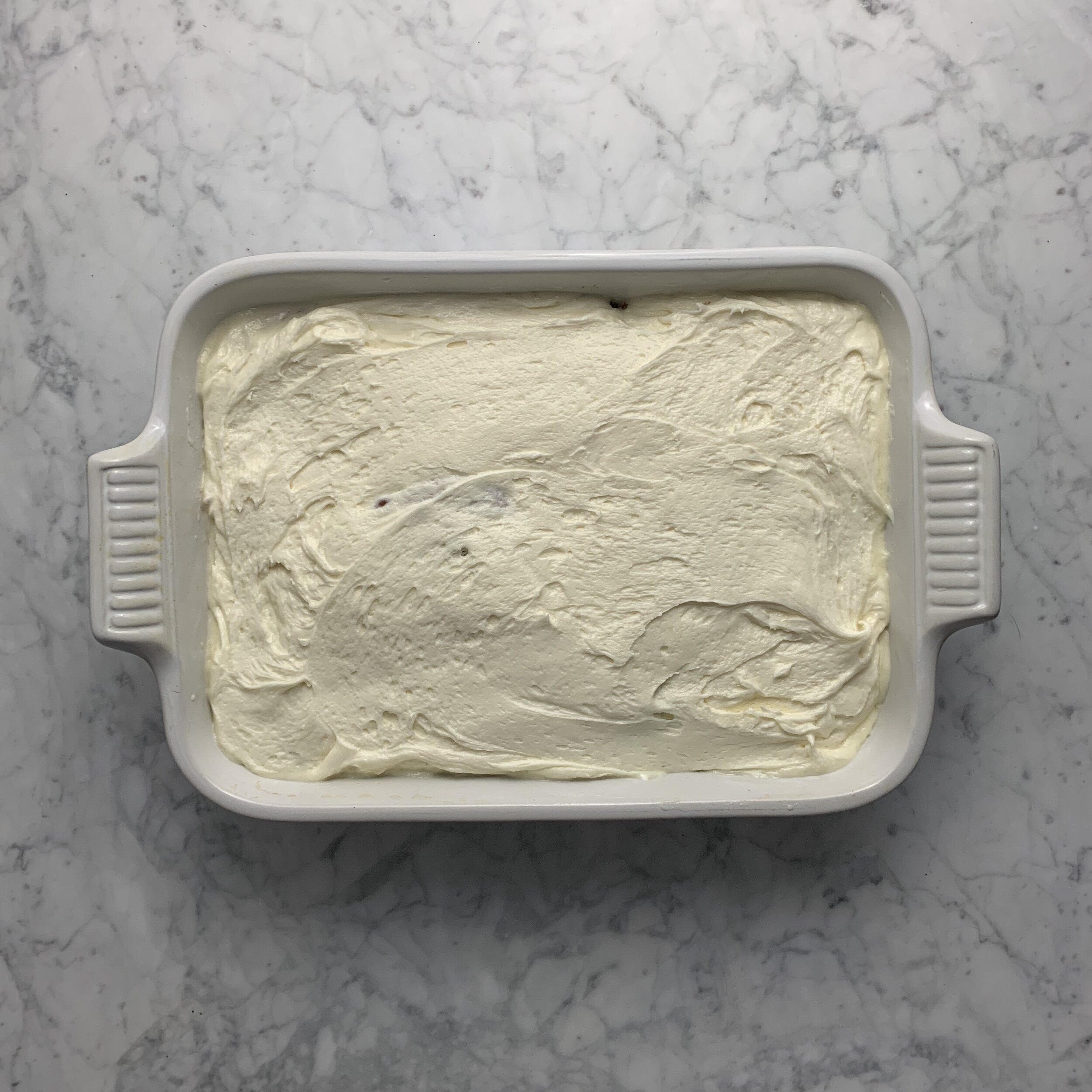
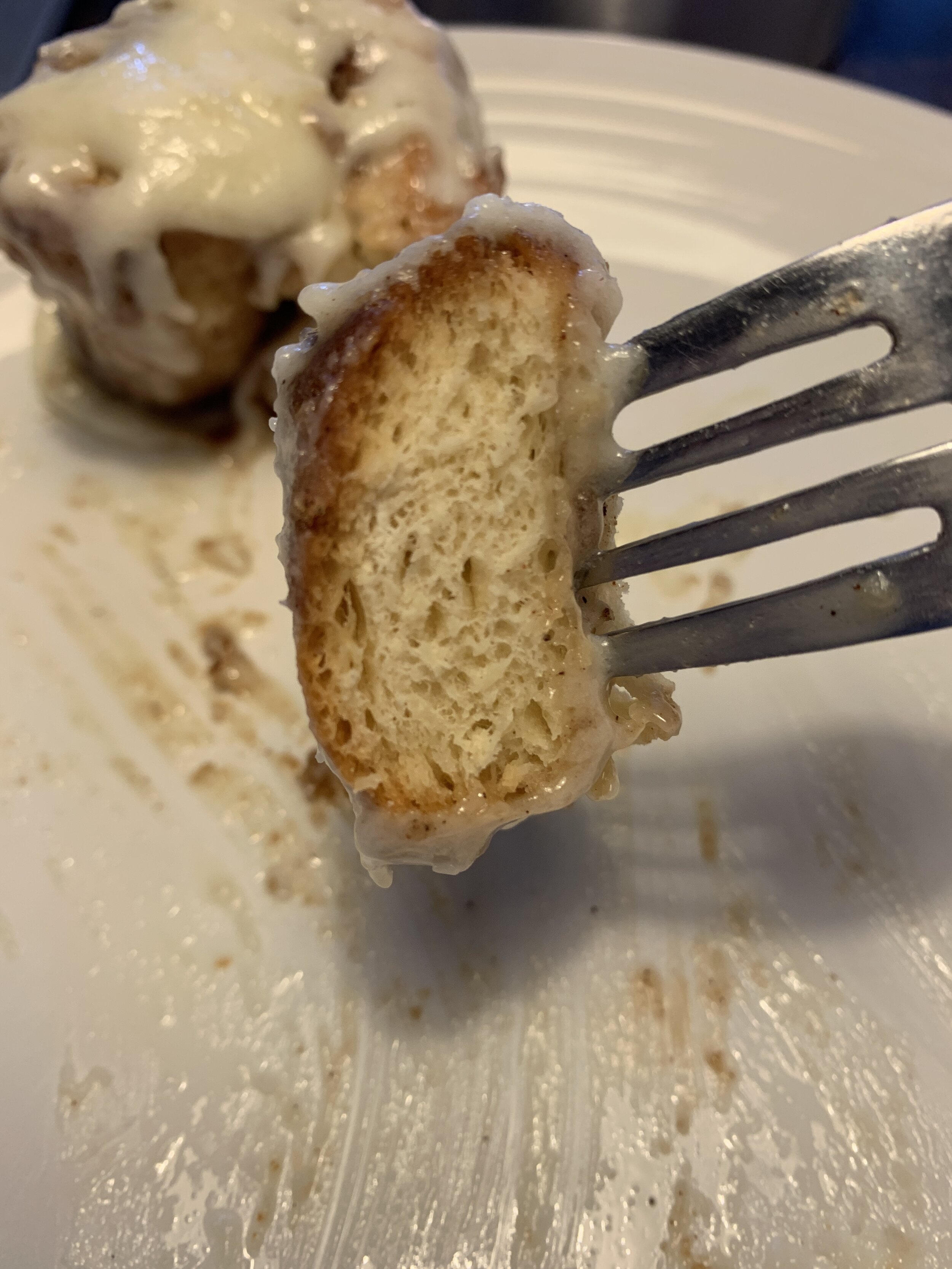
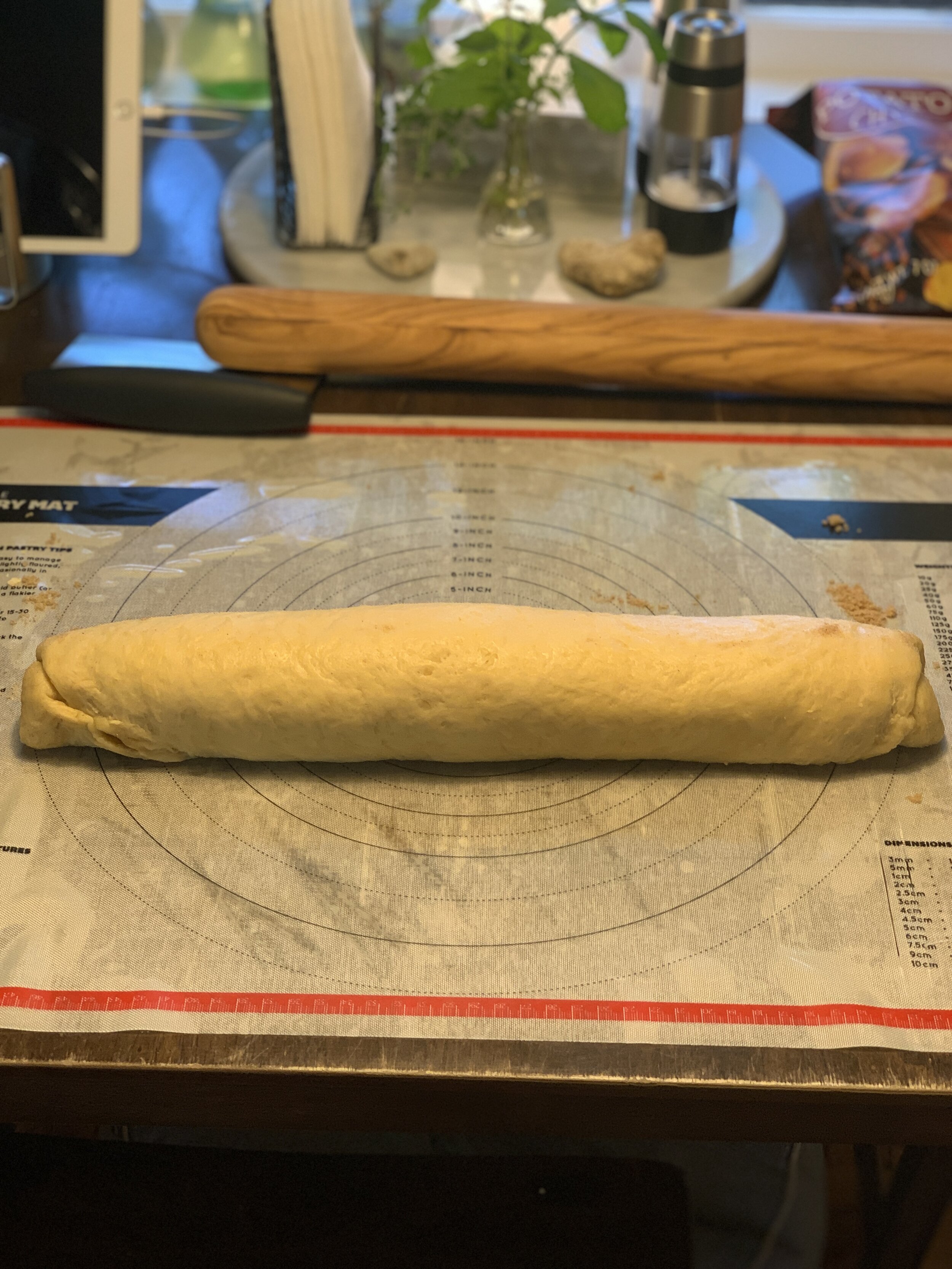
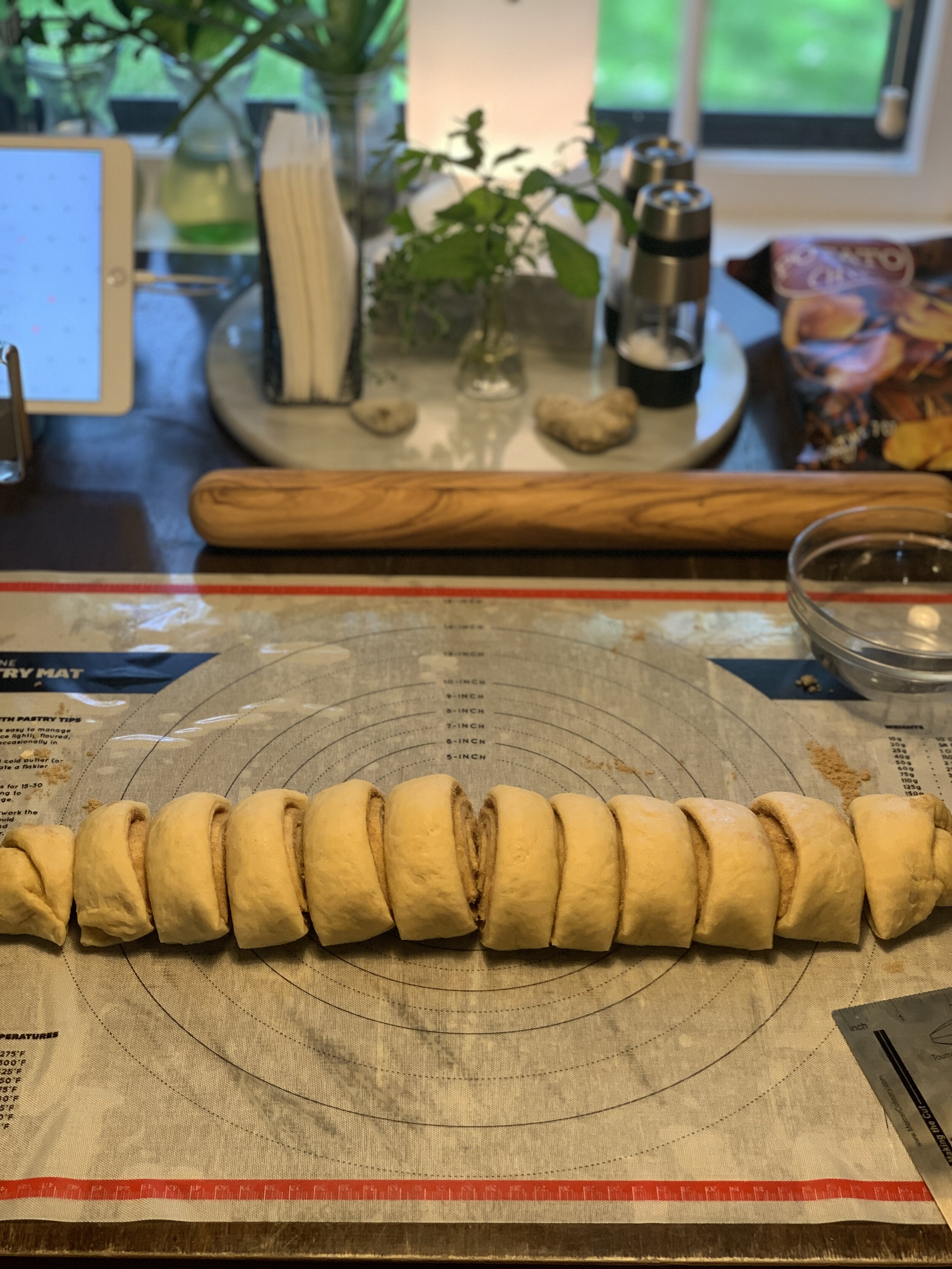
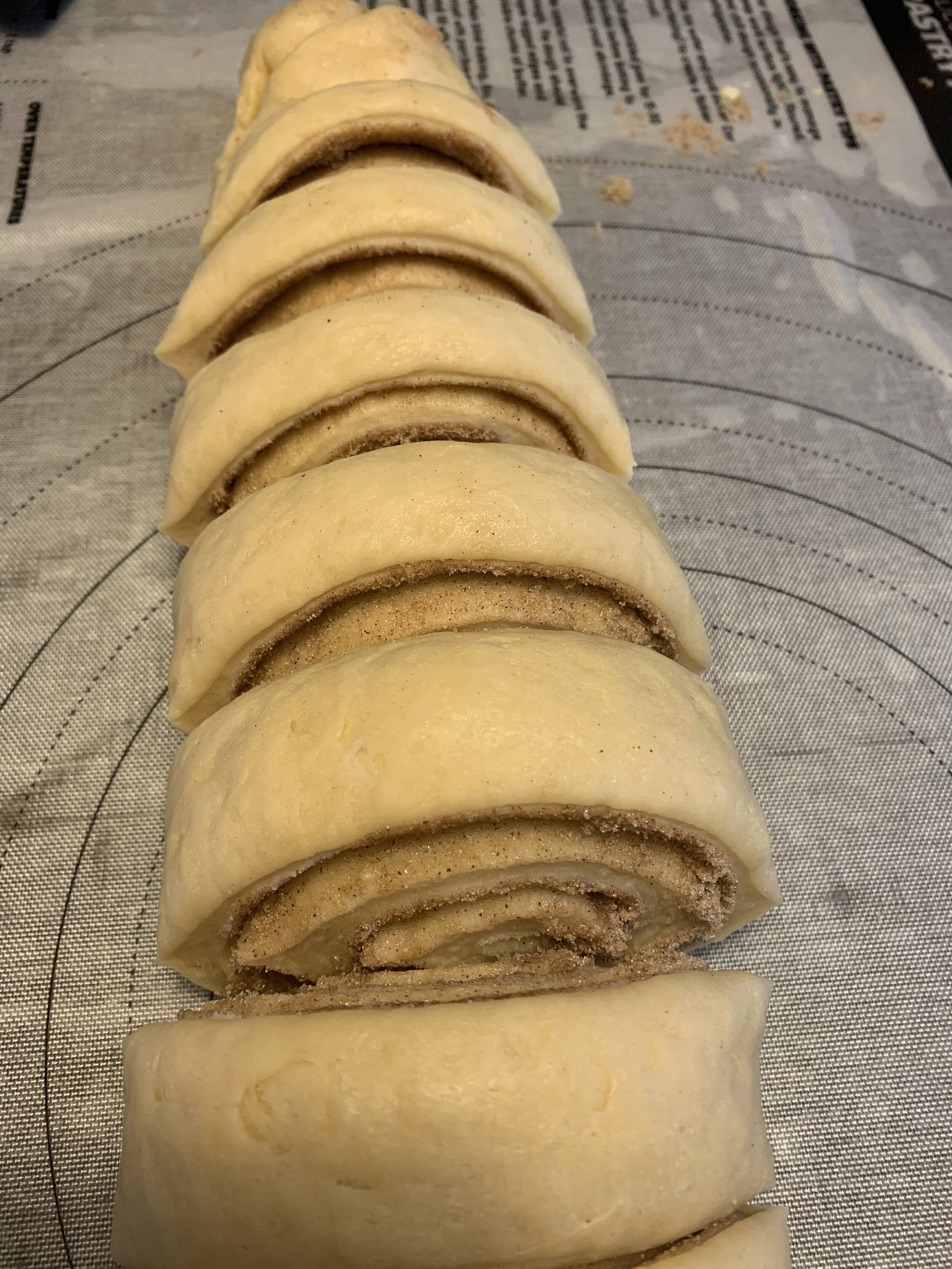
This week in Baking, we made Cinnamon Rolls, and they were even more amazing than they look. I have made rolls like this before; however, I filled them with raspberry jam instead of cinnamon and sugar. These were outrageous. They were huge and had so much frosting.

For Food Prep Two, we worked on knife cuts, made chicken stock, velouté, and Espagnole. One thing built off the last. We used our knife cuts in the chicken stock and then the chicken stock to make the velouté and Espagnole. I froze all of my sauces. I think I'll be more inclined to use them in the fall/winter. I saw a fantastic idea to use Espagnole to make poutine, so I have that on my list.

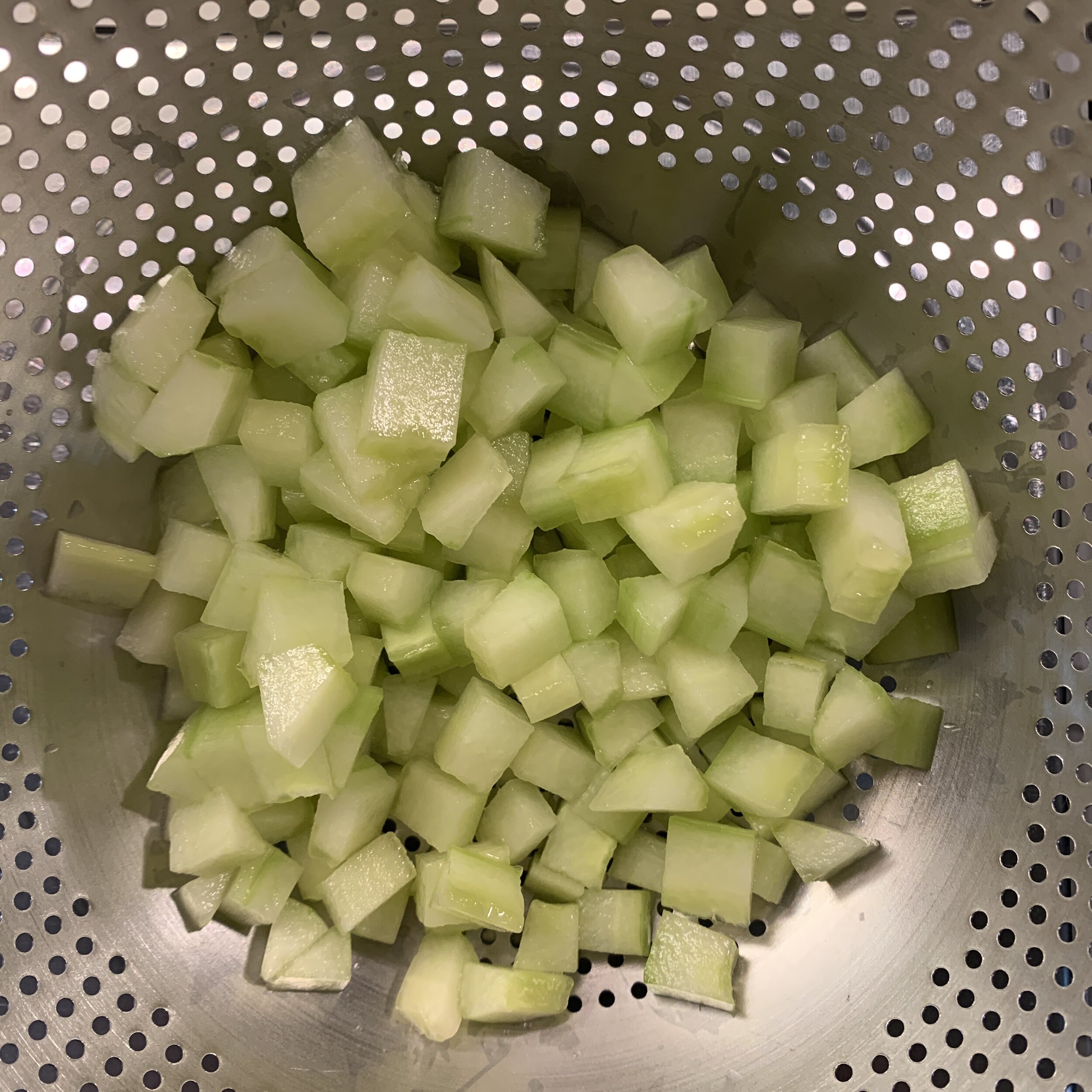
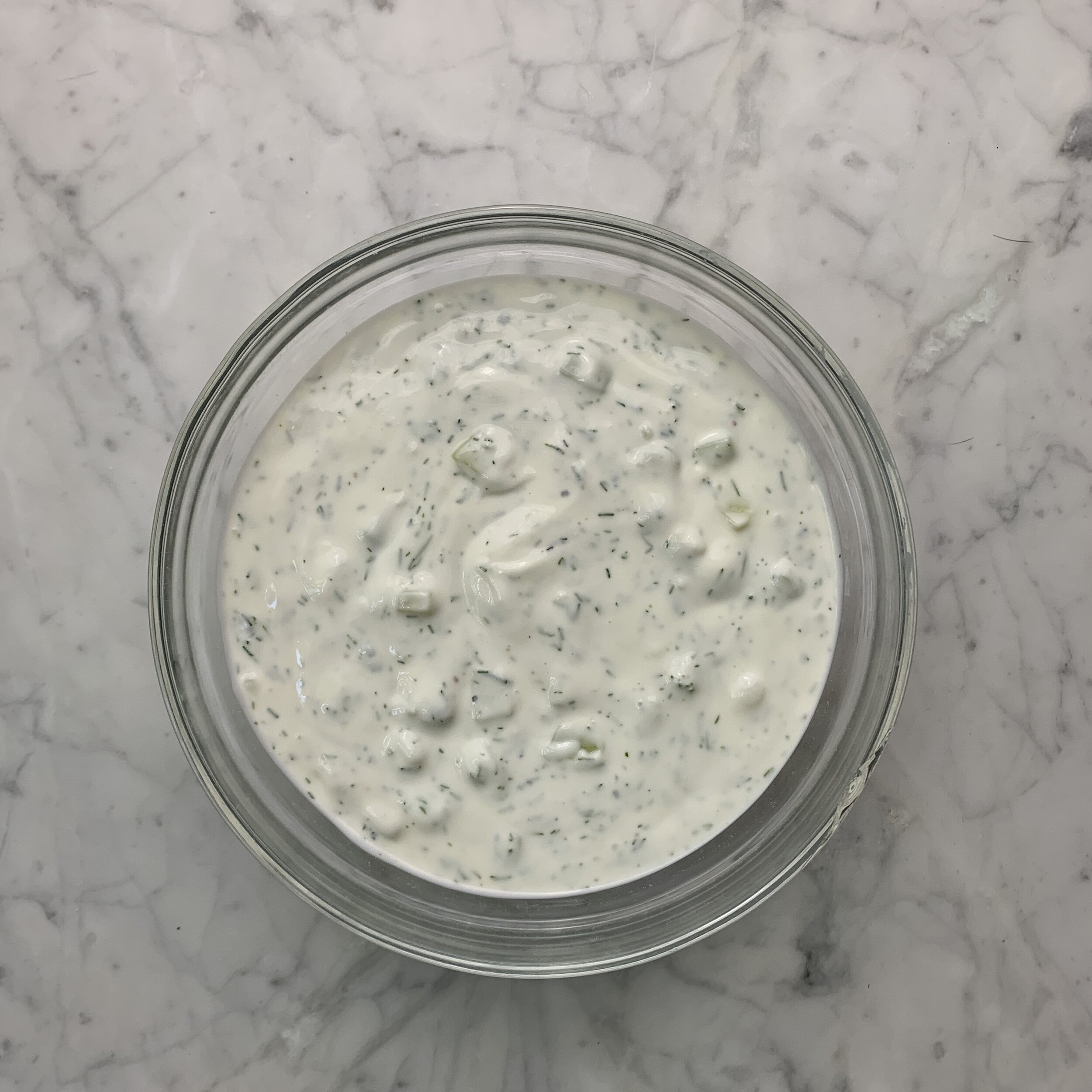
For Garde Manger, we made Yogurt-Cucumber Sauce. I added dill to the recipe and made tzatziki, one of my absolute favorite sauces of all time. I grilled chicken and vegetables, and we ate it with flatbread. It was delicious.

It feels so good to get back into a routine with school. I'm glad I am doing culinary school fulltime and am entirely focused on food all day every day. It feels good, and it feels right.

A note about what is happening currently regarding the George Floyd murder and the Black Lives Matter demonstrations. I believe Black Lives Matter. I'm embarrassed by my complacency and ignorance about the injustices in this country. I am committed to learning more and using my voice to help lift up people of color. There is no justice until we all have justice. Black Lives Matter.

Week 41 | Back to (online) School

The summer semester started this week. It's so good to be back at school. I wish we were able to be in class physically, but cooking from home is better than nothing.

Our lab classes meet for an hour in the morning on the day of our scheduled class, and then we spend the rest of the time cooking on our own. We have to drive up to school every Friday to pick up our ingredient kits, which contain everything we need to make our assigned recipes.

I am taking two lecture classes that meet on Mondays: Food Prep Two and Menu Planning. I am taking three lab classes: Baking, which meets on Wednesdays, Food Prep Two, which meets on Thursdays, and Garde Manger, which meets on Fridays.

I don't mind the online setup. I am pretty comfortable working online and managing my own time after 12 years of working from home. I have a well-supplied kitchen, so it's pretty straightforward. I know some of my classmates are struggling with the format, but I'm pretty happy cooking away in my kitchen. I do think being in a professional kitchen would be more of a challenge for me, so I'm looking forward to the day I can be back at school physically.
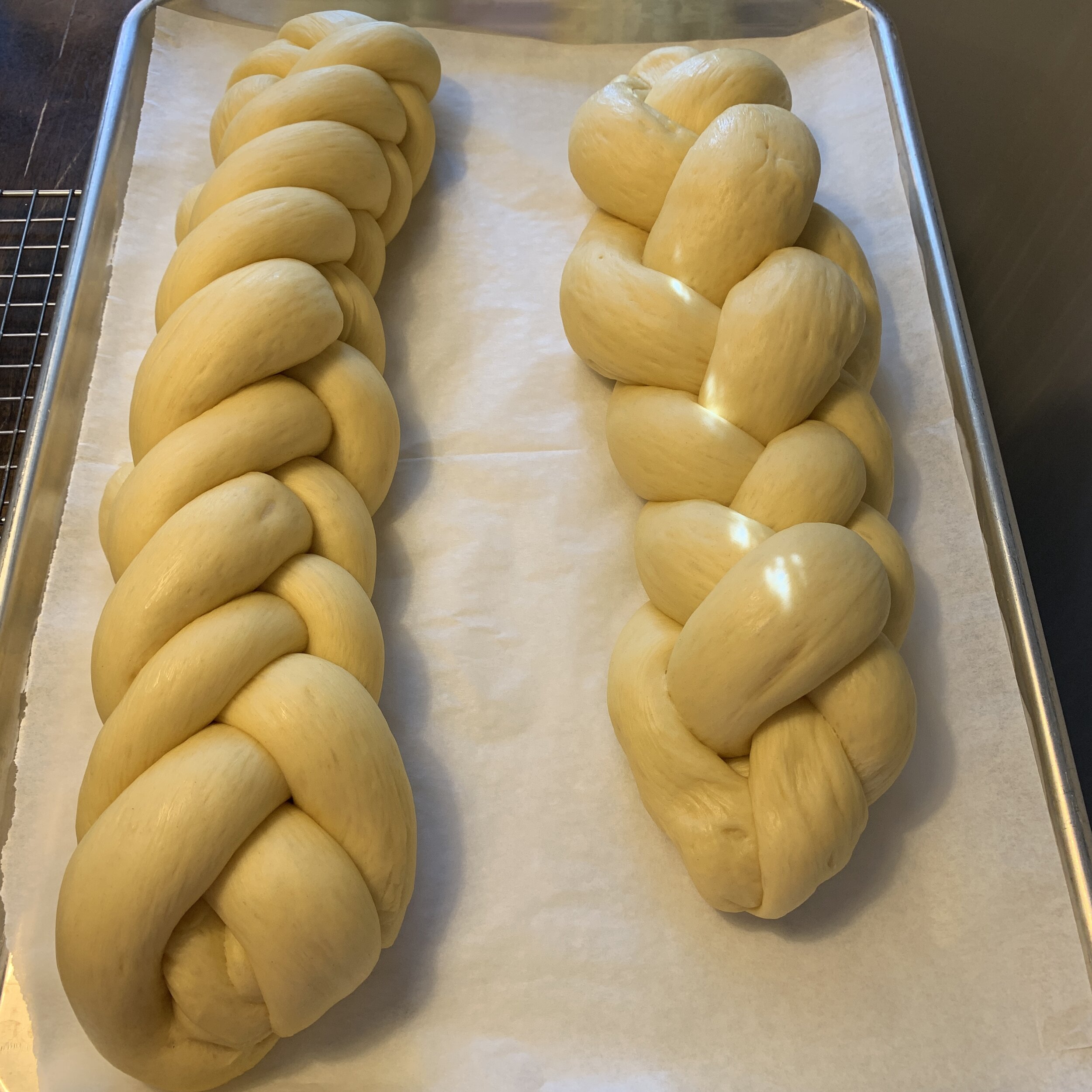
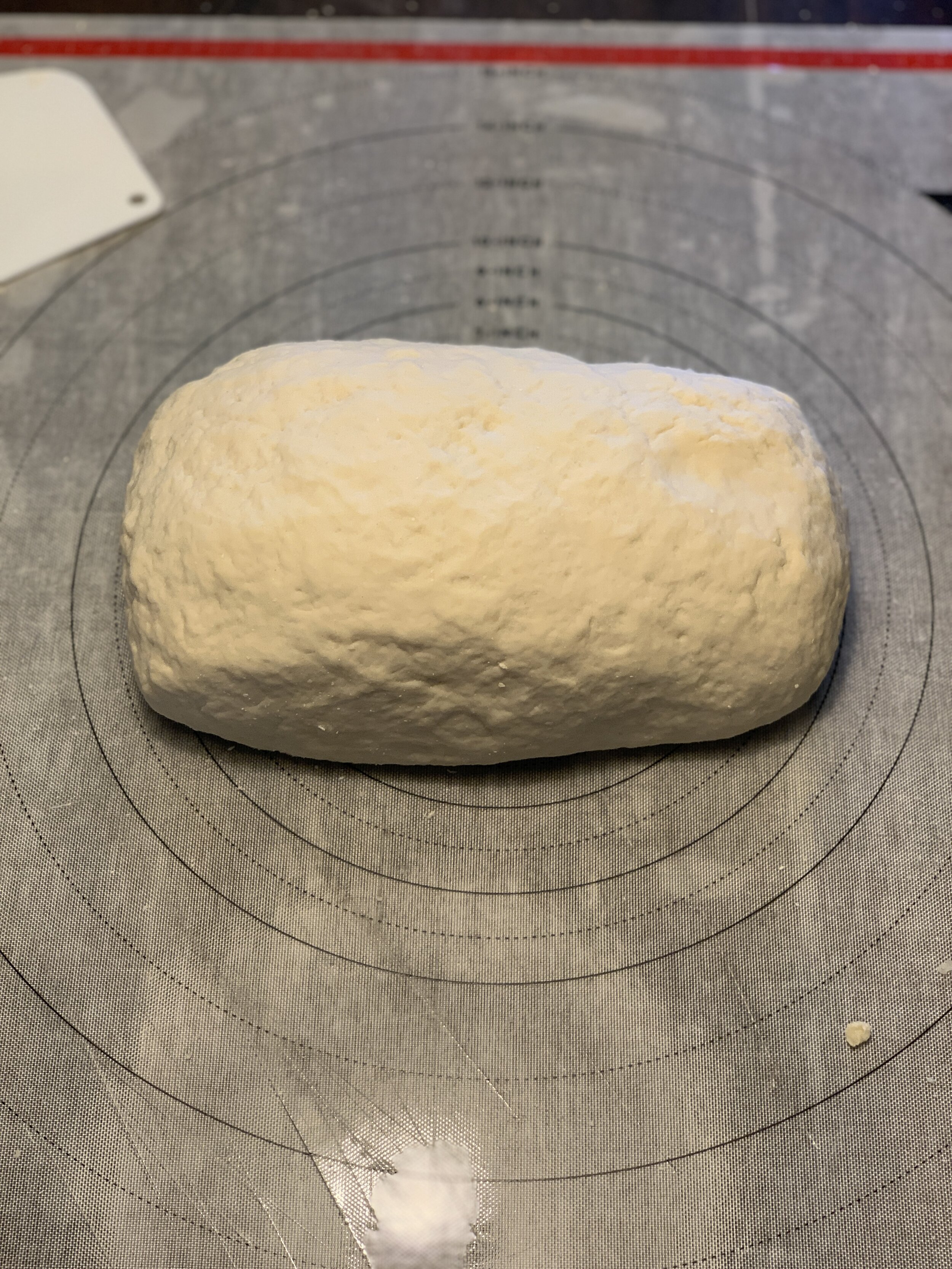
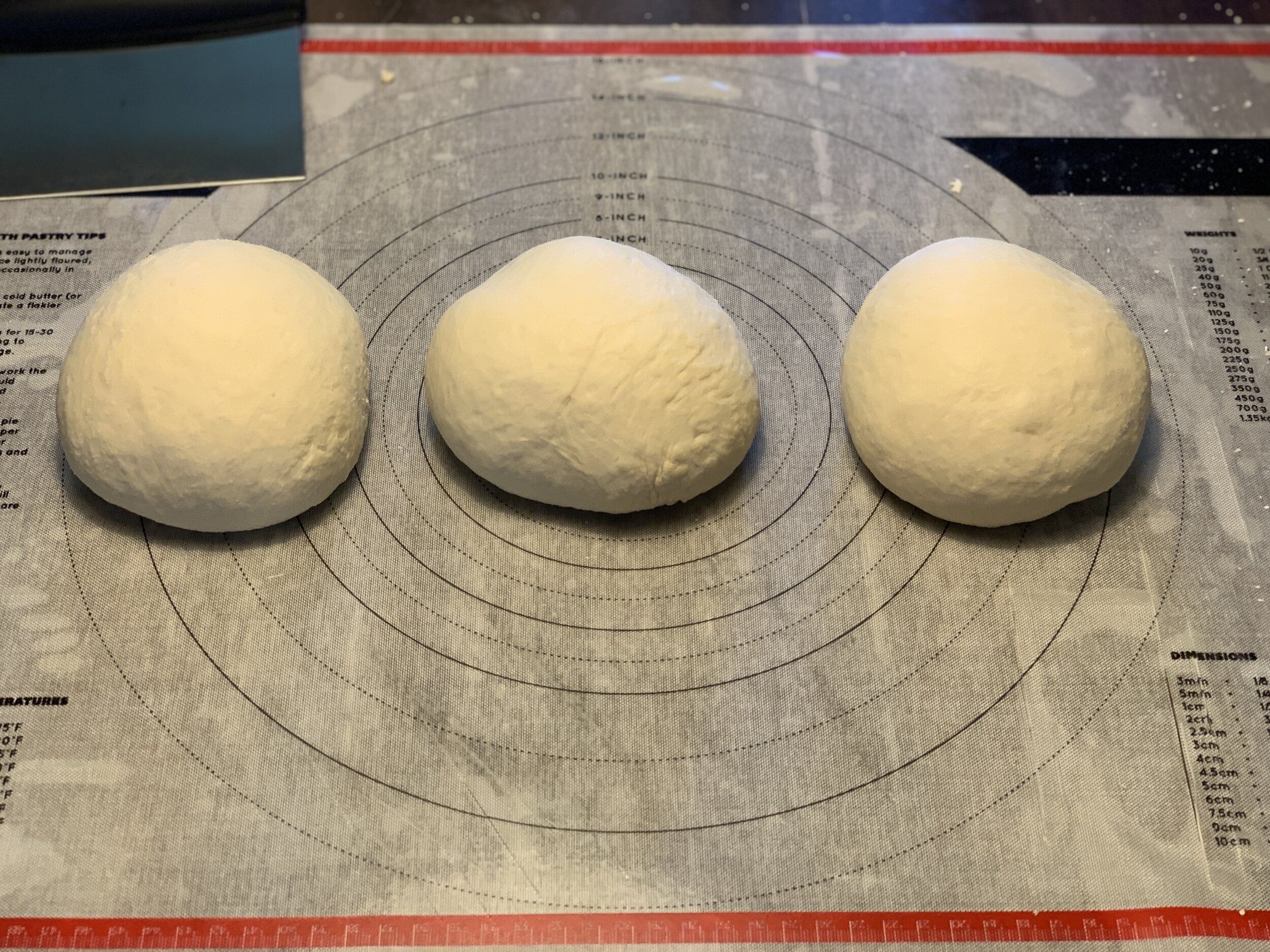
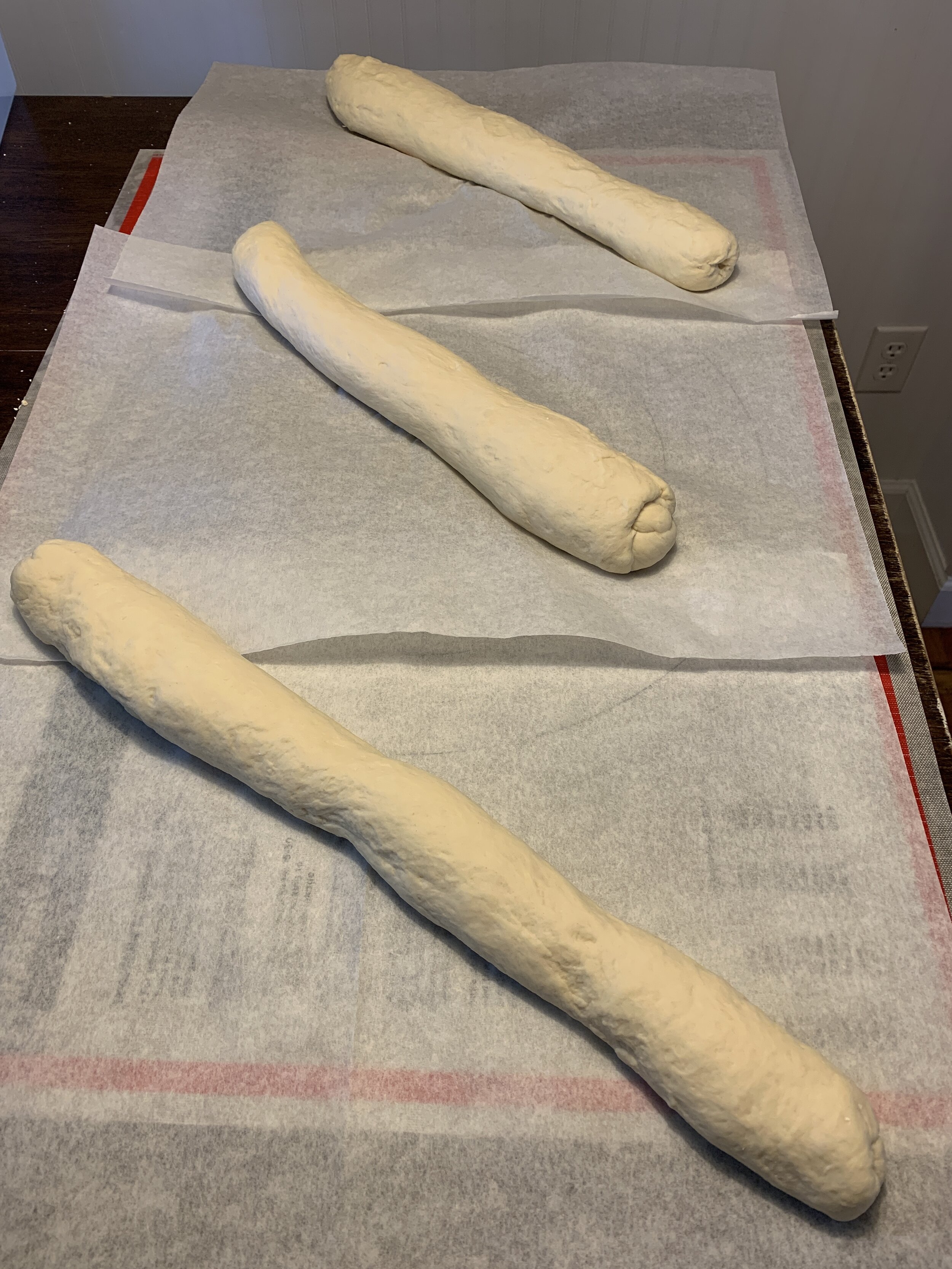
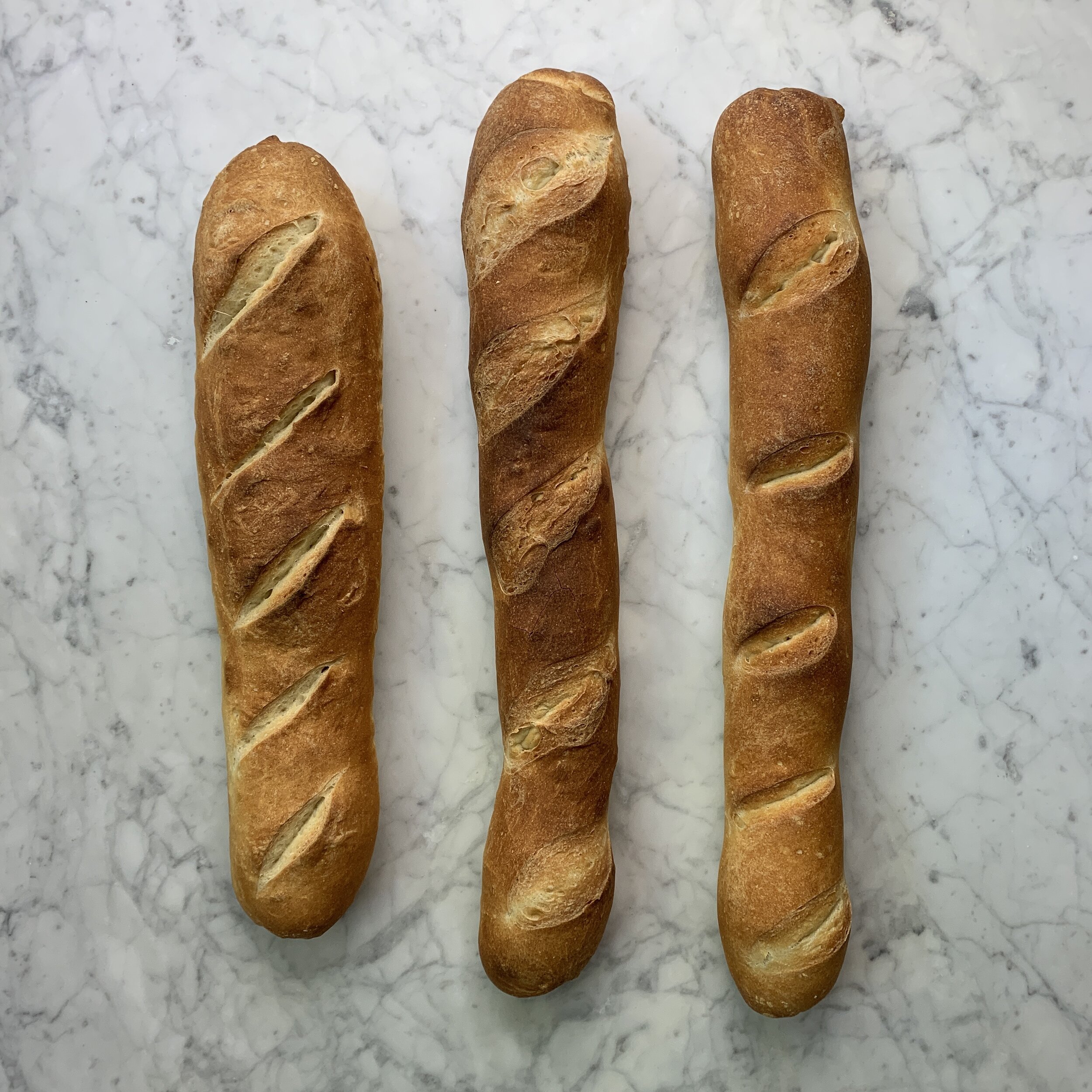
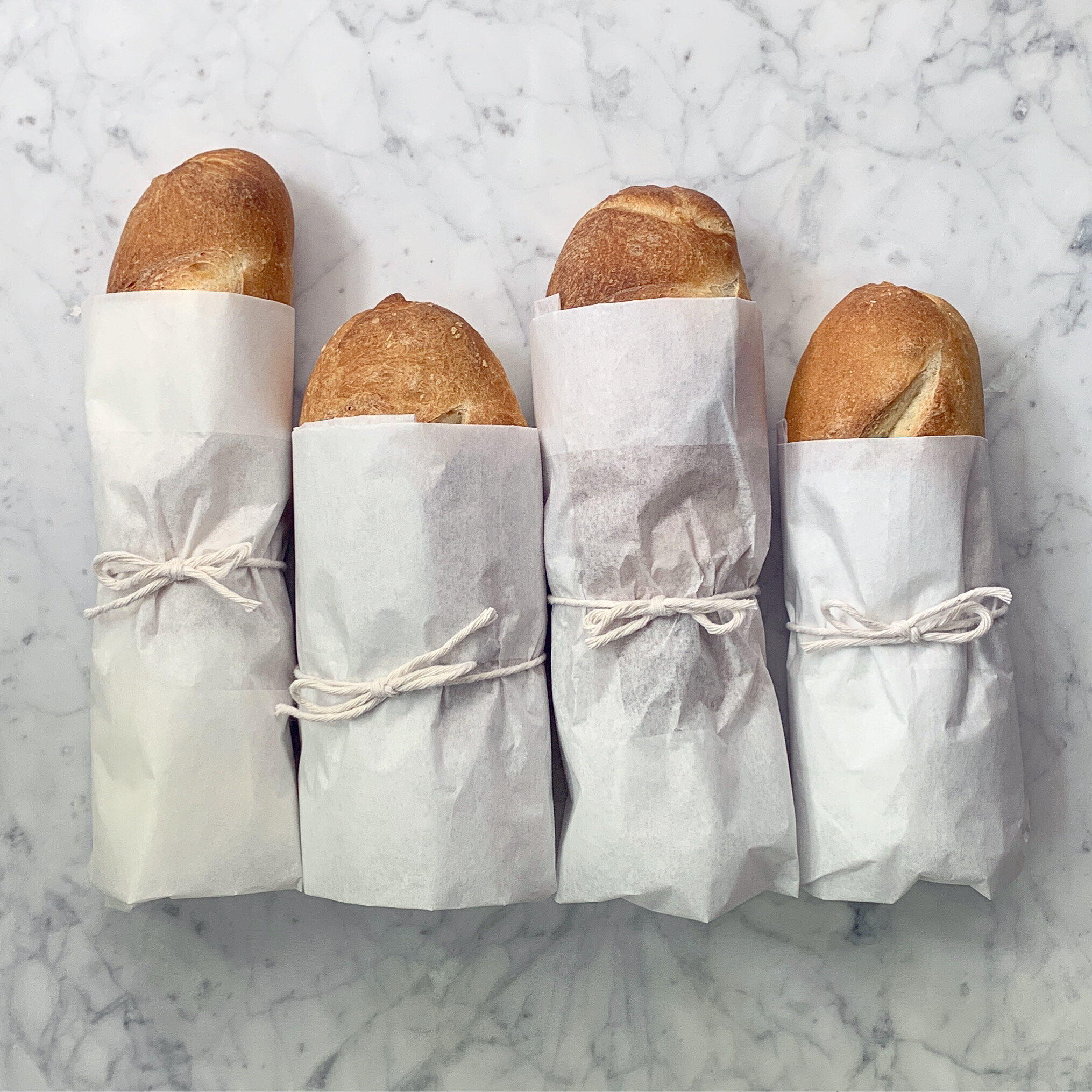
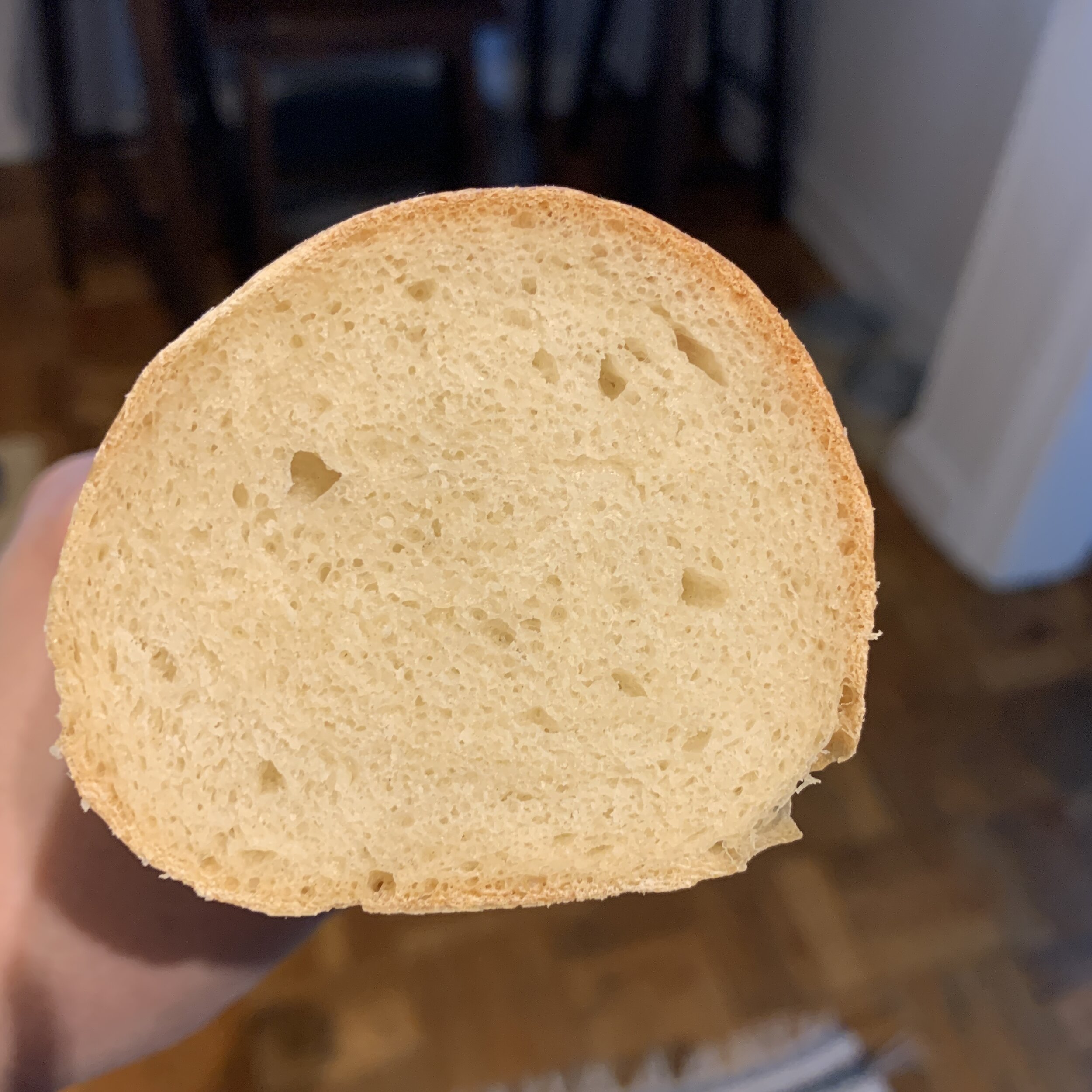
This first week we made French-style baguettes, entirely by hand. My baguettes turned out okay. The color was right on the outside, but the dough was a little overworked (surprisingly!). It was an excellent exercise to learn how bread is made without machines. I'm looking forward to all the bread making!

Week 40 | Quarantine Cooking Part Three

This week was more of the same, more staying home and more cooking. No complaints. I am delighted to be at home and cooking. I have the best time with our little family: one awesome wife, two cute dogs, and two somewhat weird cats.

We did venture up to Nevada, IA a couple of weeks ago to see my Mother-in-law for Mother's Day. She has a great rhubarb patch and was very generous with me. I made Rhubarb-Brown Butter Bars from BonAppetit. They were really gooooooood! I recommend.

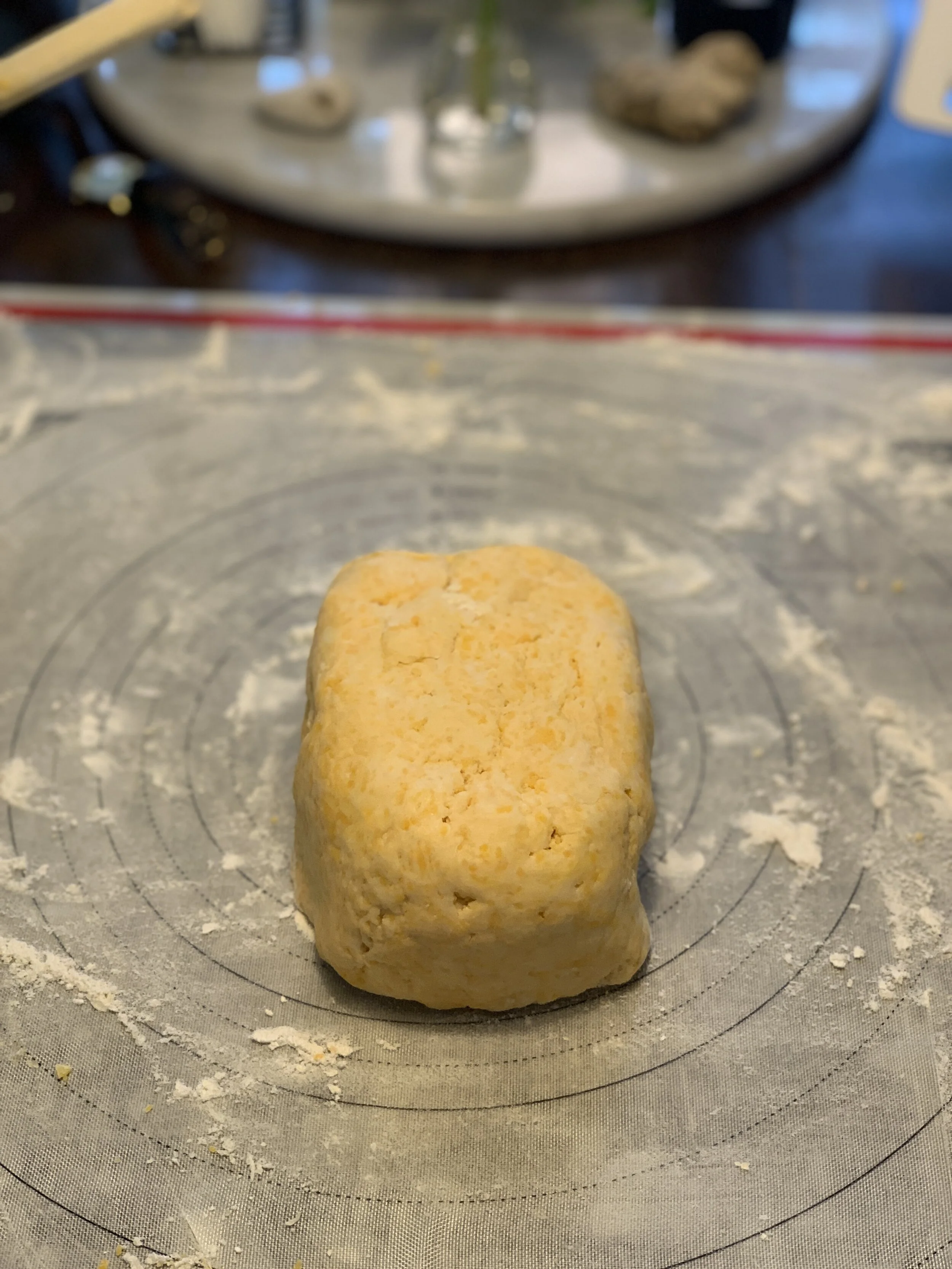
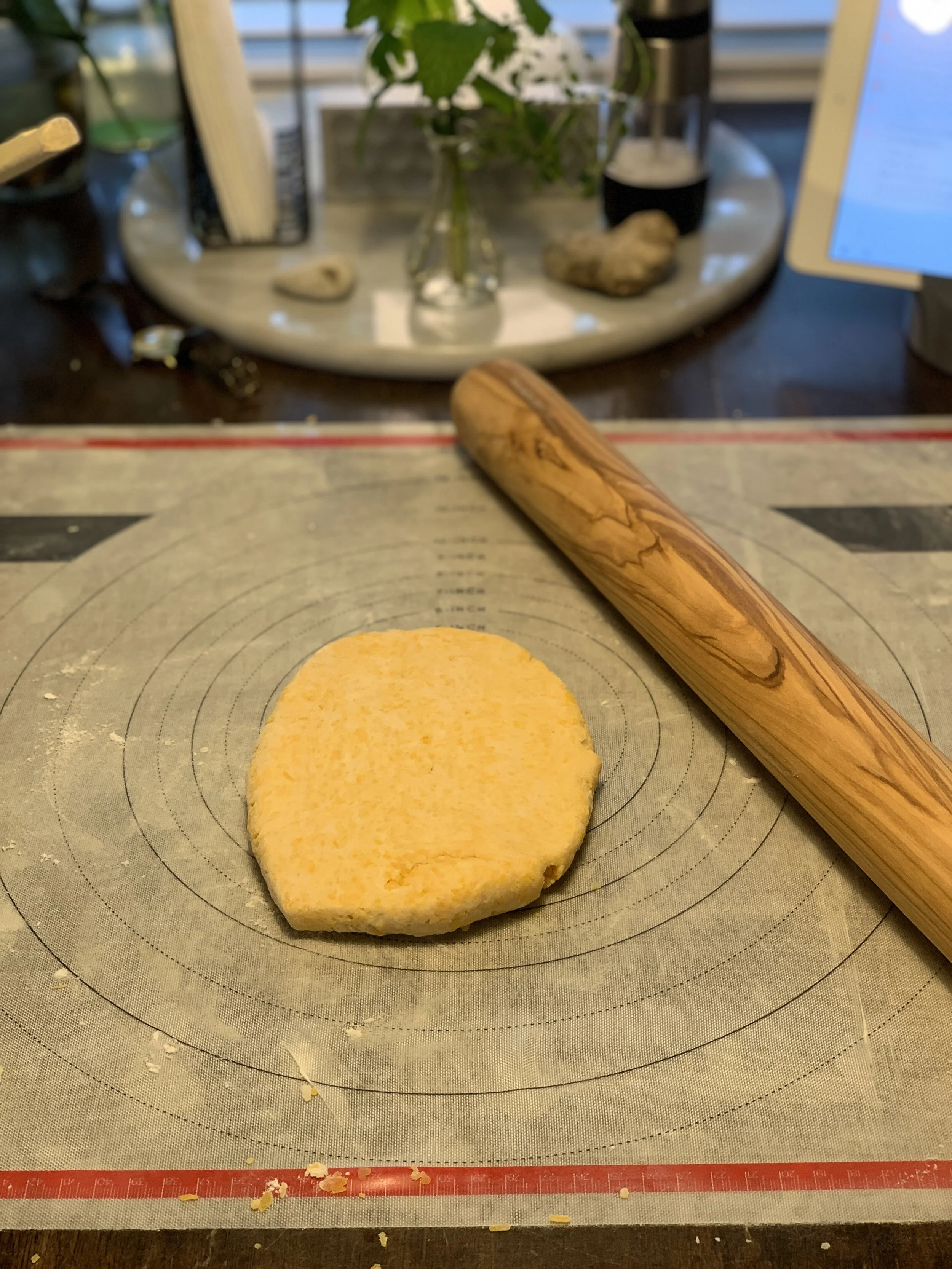
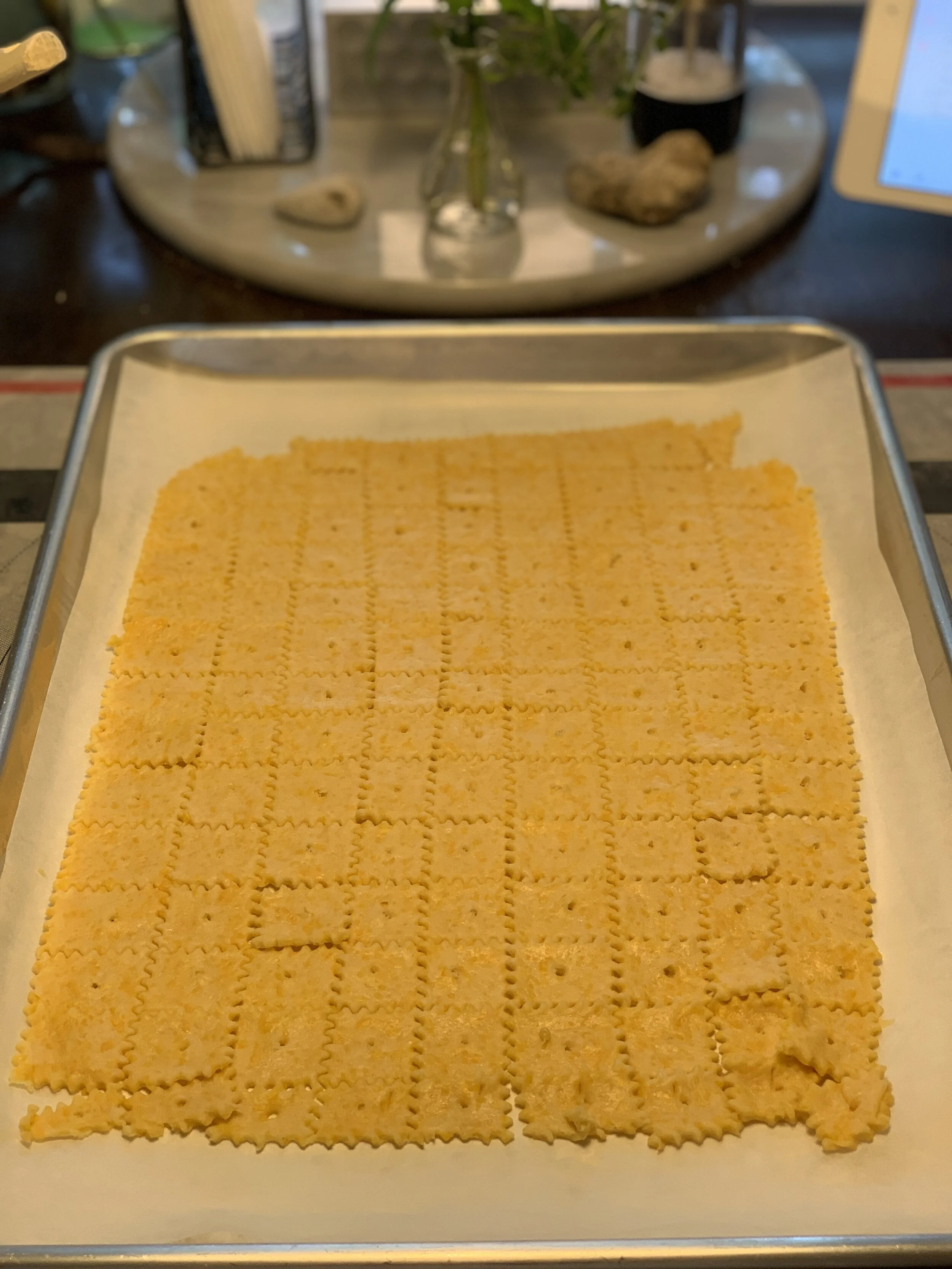
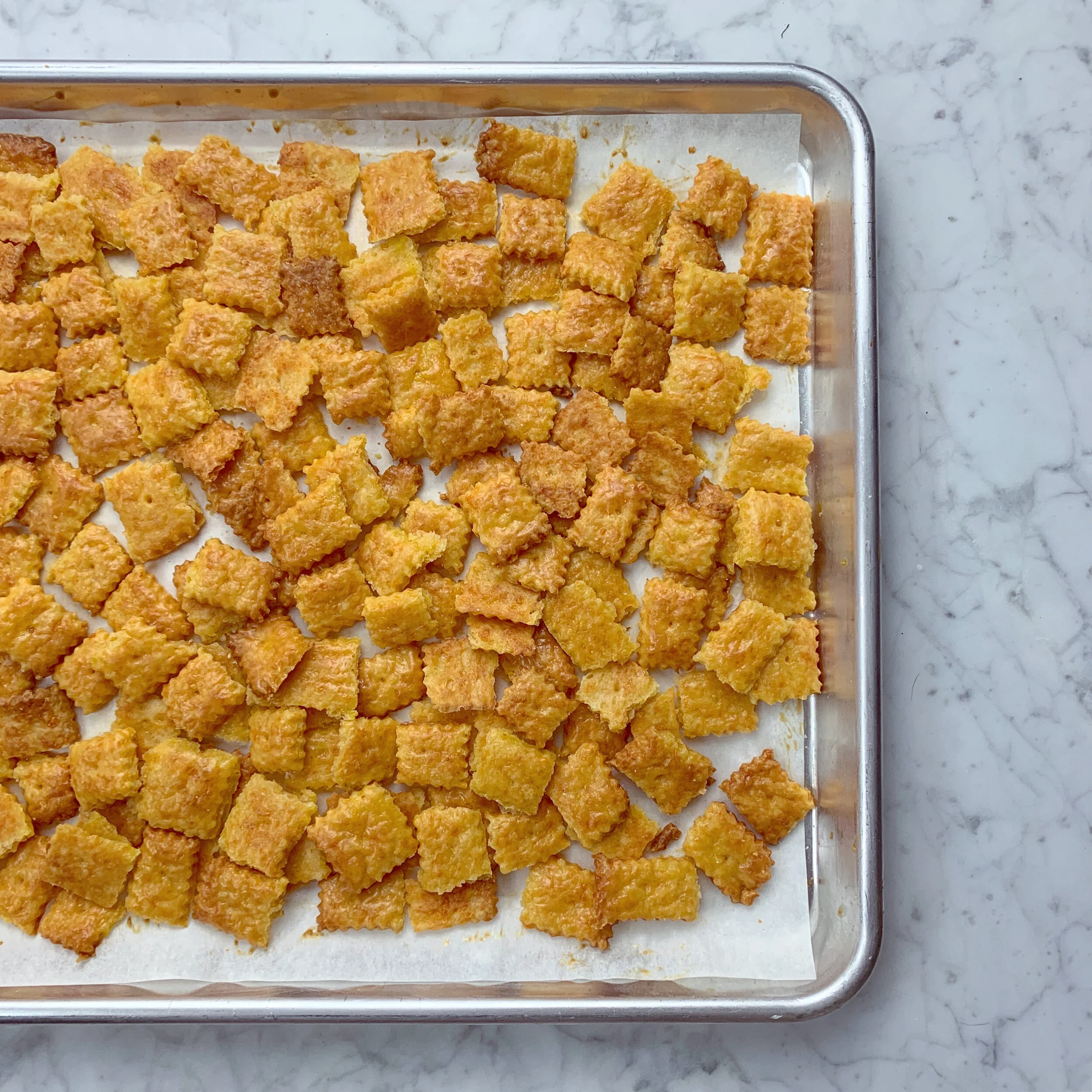
I also made Pork Noodle Soup with Ginger and Crispy Shallots, an adapted recipe from the New York Times. There was pasta with pancetta and fresh tomato sauce. And the most exciting thing, Homemade Cheez-Its! These are much cuter than they taste. They are delicious right out of the oven, but they don't stay crispy when stored. Or at least not for me.

Next week I'll be back at school. For now, it's online-only, but I'm looking forward to it!

Week 39 | Quarantine Cooking Part Two

This week marked 60-days of quarantining. However, my bubble is growing slightly. This week I made a trip to the grocery store, Starbucks, and delivered carrot cake cupcakes and focaccia bread to my family.

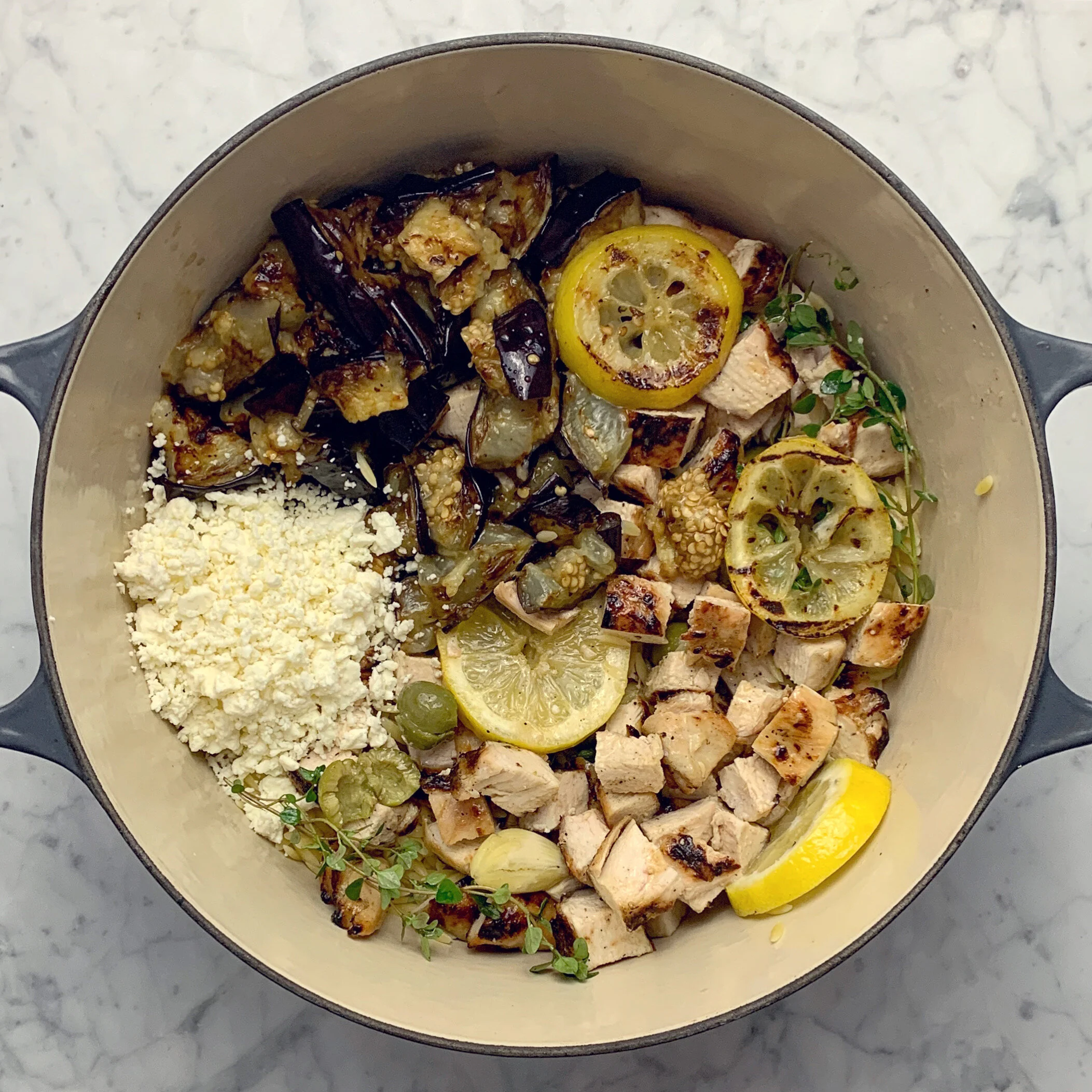
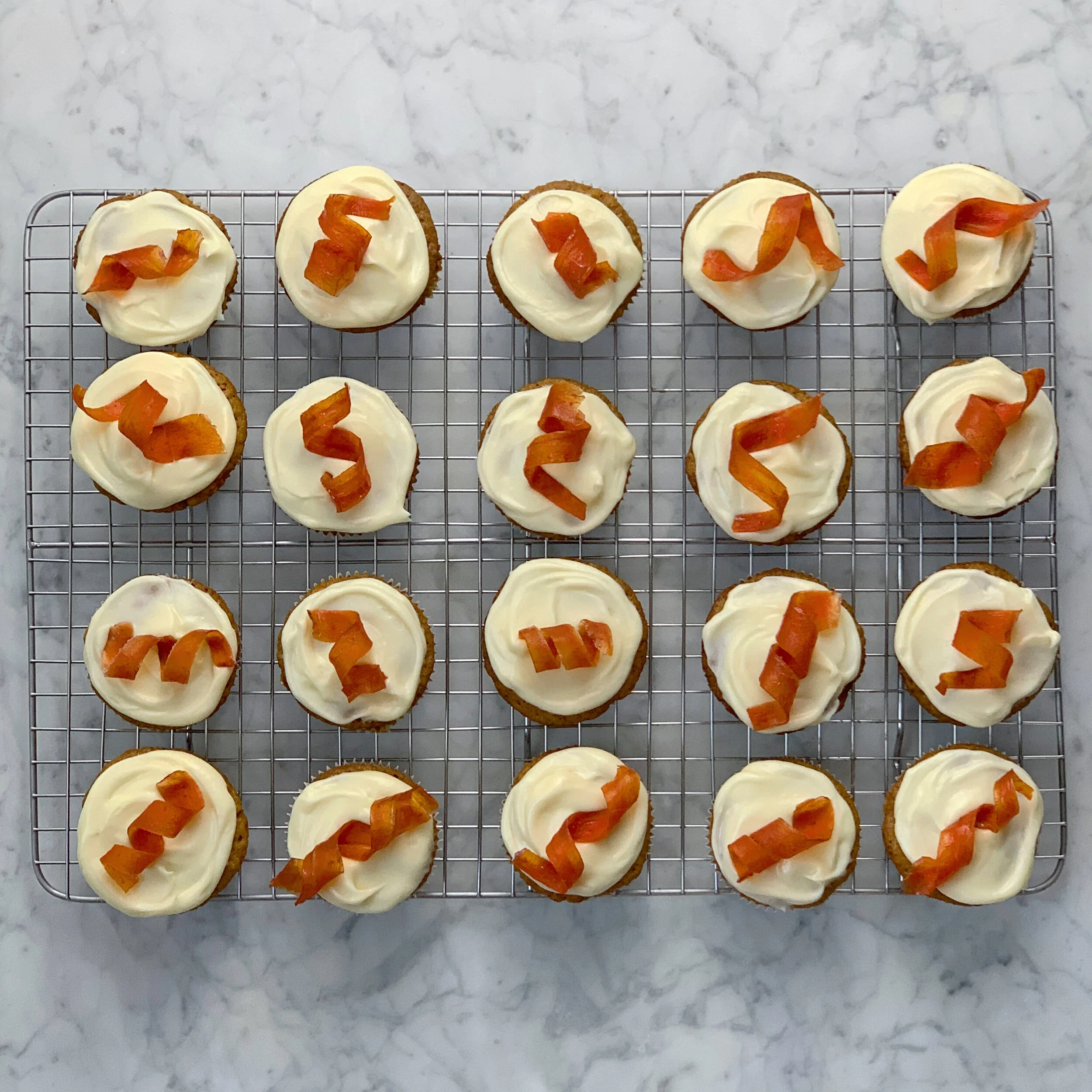
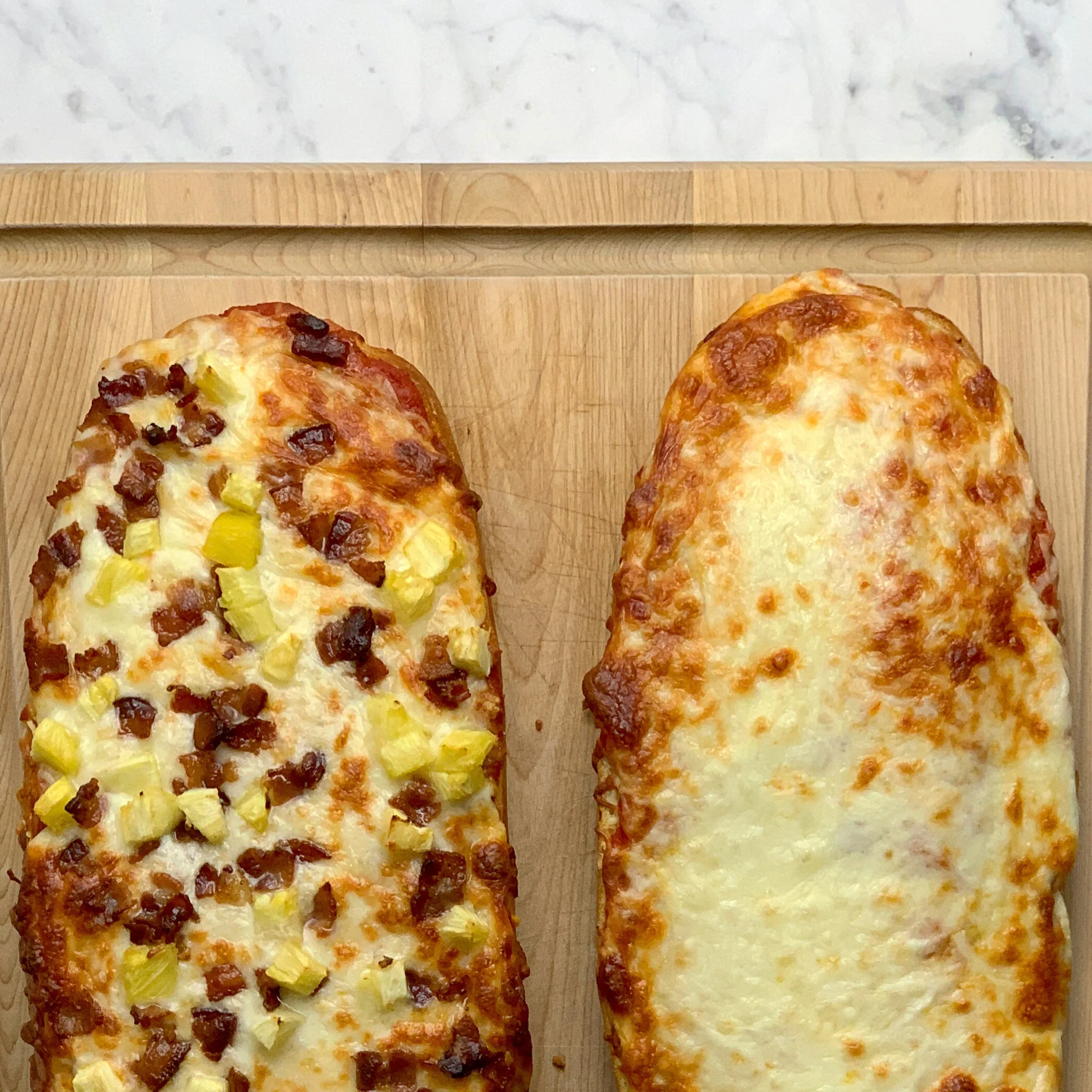
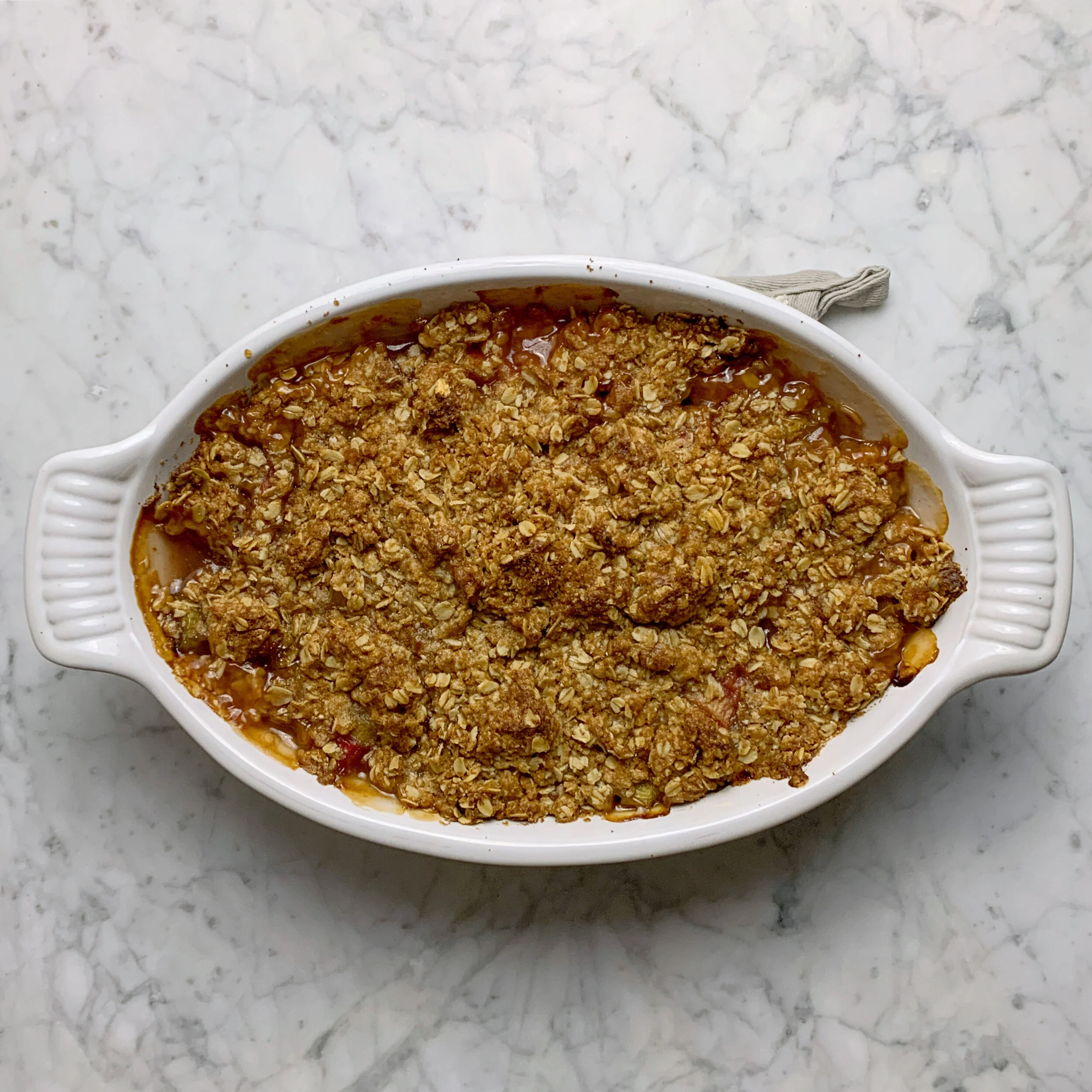
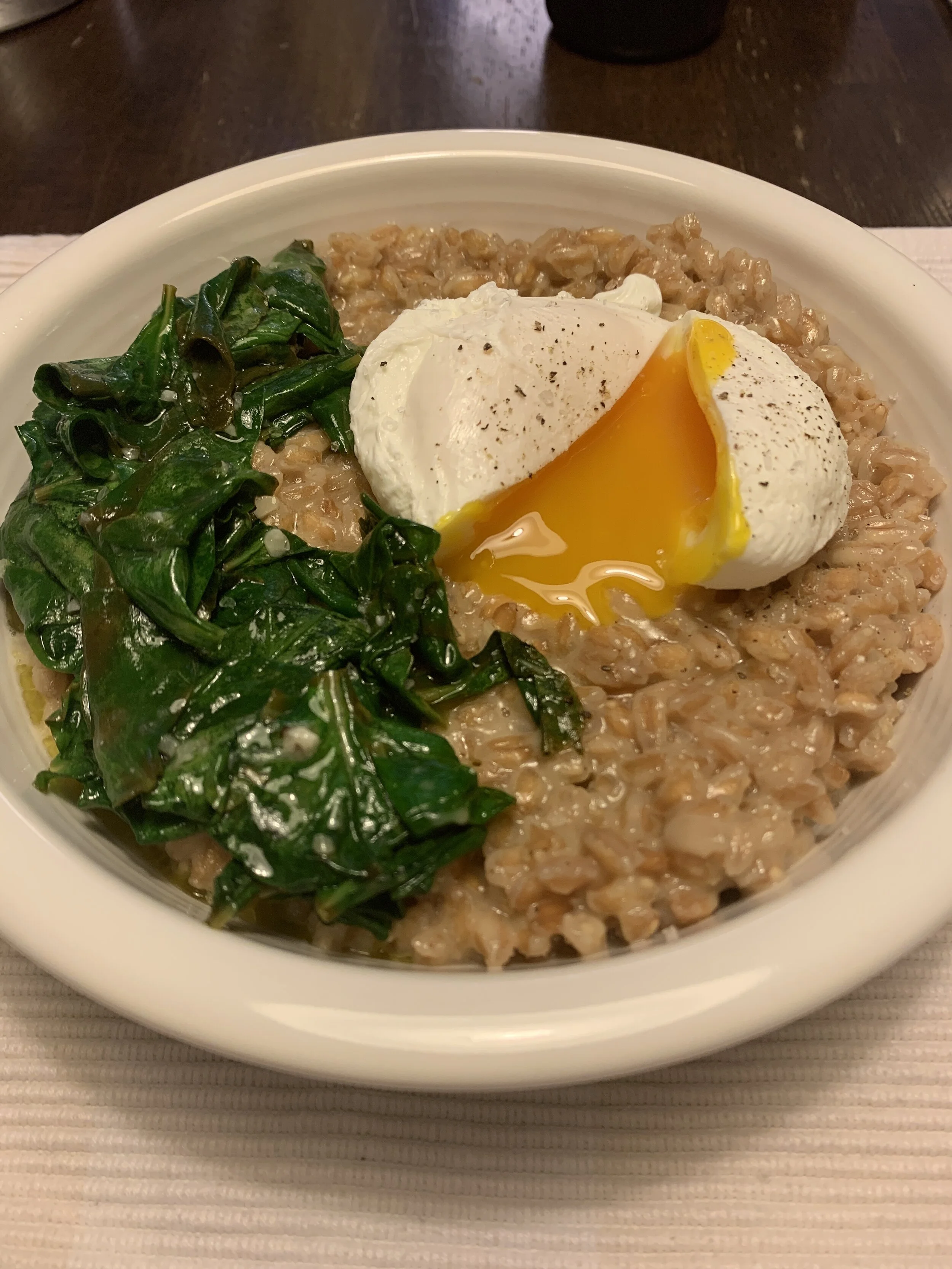
This week I made a bunch of yummy recipes. I grilled lemon chicken, and we had it with grilled eggplant, orzo, and feta. I made carrot cake cupcakes for Mother's Day, and we delivered them to some of the moms in our lives. I made chicken parmesan and didn't take one picture. It was soooooooooo good, though. I made pizza boats and rhubarb crisp. I was able to get rhubarb from my mother-in-law on Mother's day. I made tomato-y beans and focaccia bread. Focaccia bread is easy and fun to make. I am one hundred percent on the bean train. They are cheap, delicious, and nutritious. And finally, I made creamy farro with garlicky spinach and a poached egg. This has become one of our favorite dinners, and I have been making it about once a week. I posted a photo on Instagram stories, and I had a lot of people ask for the recipe. This meal started with Bon Appetit's recipe, Alt-Grain Porridge with Garlicky Greens.

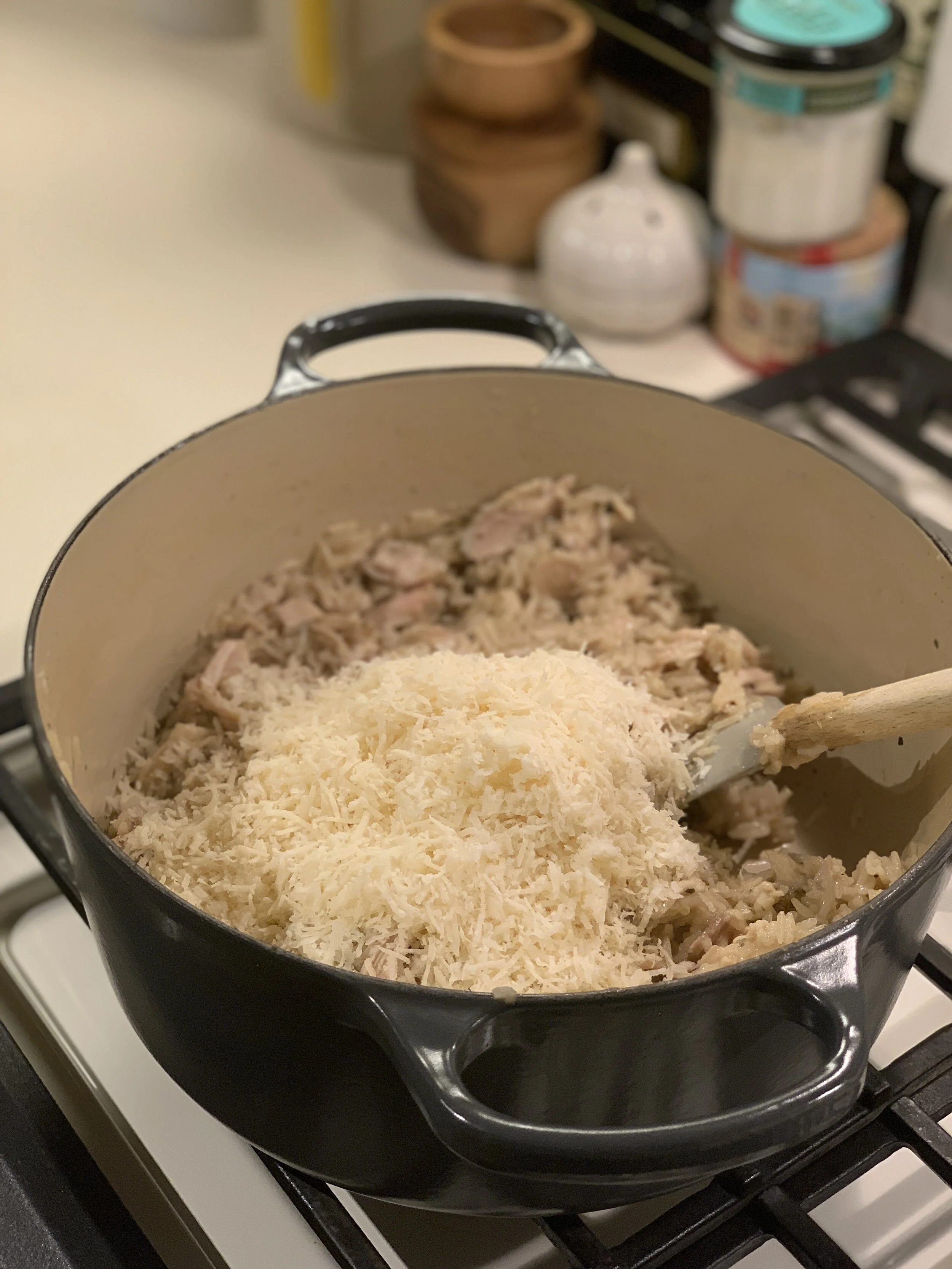
I have been using Trader Joe's 10-Minute Farro. I cook the farro in chicken stock instead of water. It gives it a pleasant savory flavor. Once it's cooked I add butter, parmesan cheese, and salt + pepper. I like for there to be a little moisture left once the farro is done cooking. If it's too dry, I add a bit more stock or water. I think this is one of the most critical steps. You need the moisture to create a creamy sauce. I sauté a box of fresh spinach with garlic, olive oil, and lemon juice, and I add a poached egg.

The creamy farro almost tastes like mac and cheese. The farro has a good texture. It's not crunchy, but it's not soggy. It's a little firm. The Bon Appetit recipe says to pulse the grains in a food processor. I skip that step. I have never done it, so I don't know if it would be better, but I like this to be a quick and straightforward meal. I make the poached eggs in the same pot as the farro. I make the eggs before I make the farro. I cook them slightly under where I want them and let them sit on a cutting board covered with a paper towel. They will continue cooking somewhat after you pull them out of the water.

I recommend giving this recipe a try. It's so delicious and a great way to eat some whole grains.

Next week is my last week of break before the summer semester begins. I am looking forward to classes, but I am trying to relax and enjoy my time off.

Weeks 37 and 38 | Quarantine Cooking

On March 13, I finished a job at a company I had worked for, for the previous 13 years. It felt scary to leave, but I was so sure and ready. I was eager to start thinking about what my life might look like after culinary school. I was scheduled to start a new job on March 18. To say I was about to start my dream job might be a little short sited. However, I believed it was the first step on my new path. I was going to be working as an assistant in the Meredith Test Kitchen. I was nervous and excited, and then the unimaginable happened: the entire world shut down.

I understand that people everywhere have lost so much. I know people who have Covid-19, died from Covid-19, had family members pass away alone, had funerals postponed, had weddings rescheduled, pay cuts, and lost jobs. I have friends that are health care workers and can't stay home. My friends and family are parenting full-time while working full-time at home all day, every day. It's a hard and horrible time. This is my story and how Covid-19 has affected me.

We decided to start staying home on March 15. On March 16, my new job started to get postponed about two weeks at a time until indefinitely. At this time, I don't know when or if my position will resume.

It was a huge deal for me to start culinary school. I had a good job, with all the responsible adult things like a 401k, PTO, and stock options. I am almost 40 years old. When I decided to start culinary school, I wasn't expecting it to be in the middle of a worldwide pandemic. My initial reaction was, how could this be happening to me. I uprooted my whole life, and an indefinite quarantine was NOT part of the plan.

The first couple of weeks were incredibly scary and overwhelming. I had no idea if I was going to be able to finish school or start my new job. I struggle with anxiety in an ordinary world. I manage my anxiety with lists, calendars, spreadsheets, and Lexapro. So, I started making grocery lists and meal plans.

I knew one thing, we had to eat dinner every night. I could manage that. I have cooked every single day since March 15. This is not a brag or a statement to make anyone feel less than. For me, it's how I'm coping with unemployment and loss of control.

I quickly realized that school is going to look different; work is going to look different. I was going to have to figure out a way to be ok with the unknown. I was going to have to take it one meal at a time. I was going to have to trust that I can get through this. I am smart, capable, and I am doing what I love. I made the right choice for my life: pandemic or no pandemic. My goals don't have to change because a job I really wanted fell through. I am in control of my choices in any situation. I choose to show my love for the world through food.

Week 36 | Reine de Saba

This week I made a Reine de Saba cake, which translates to Queen of Sheba. It was the first French cake Julia Child ever ate. It felt like the perfect cake to make from Mastering the Art of French Cooking and my last recipe of this series.

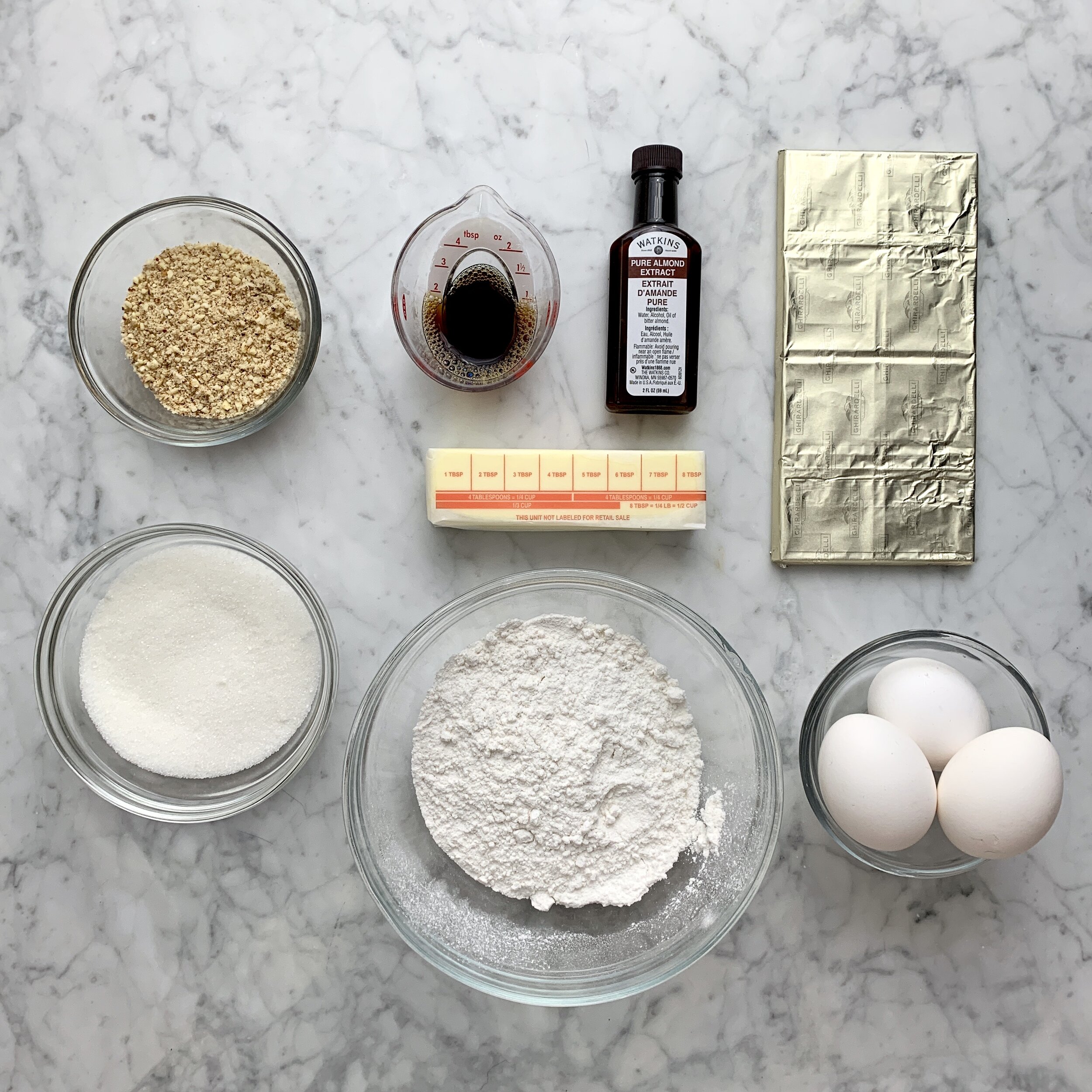
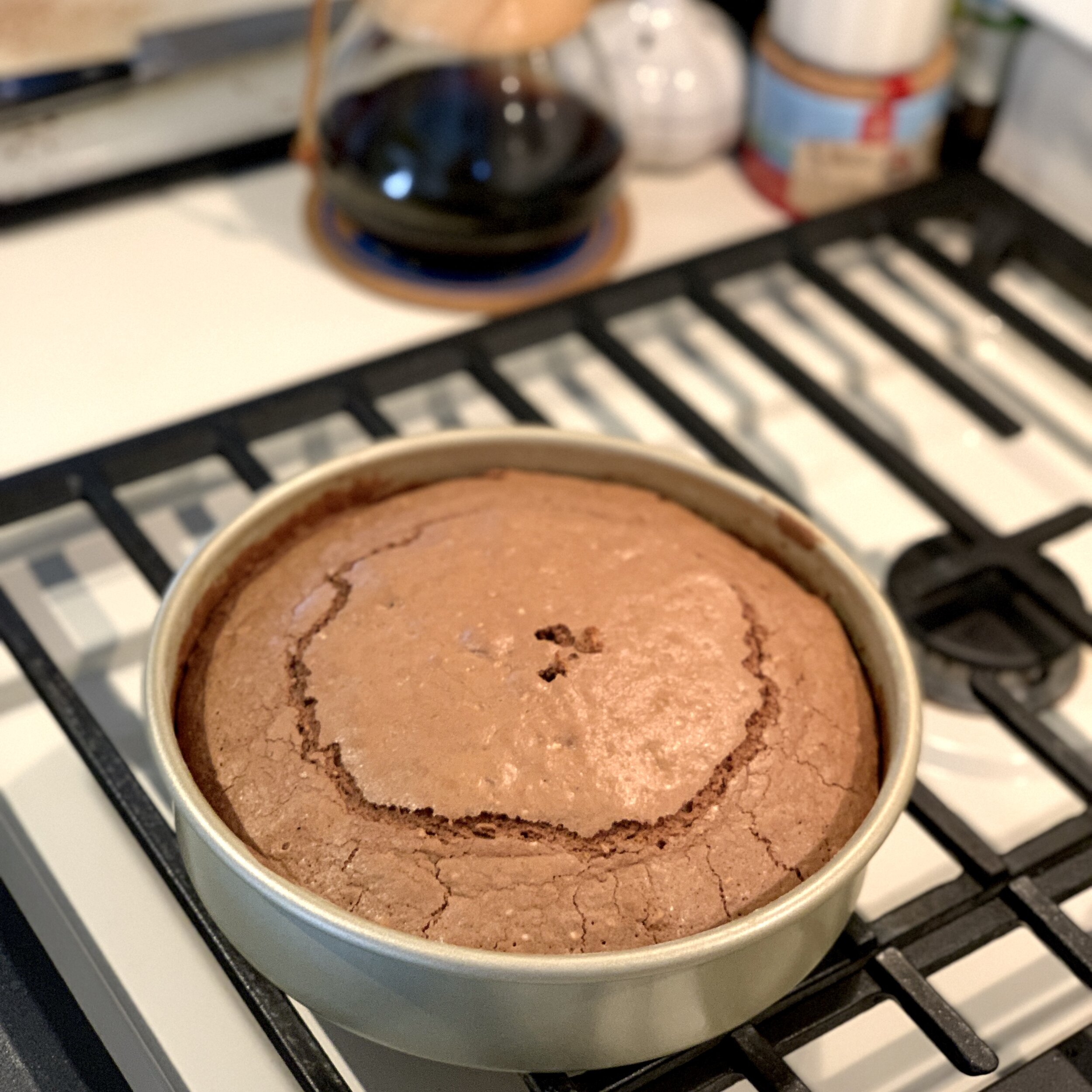
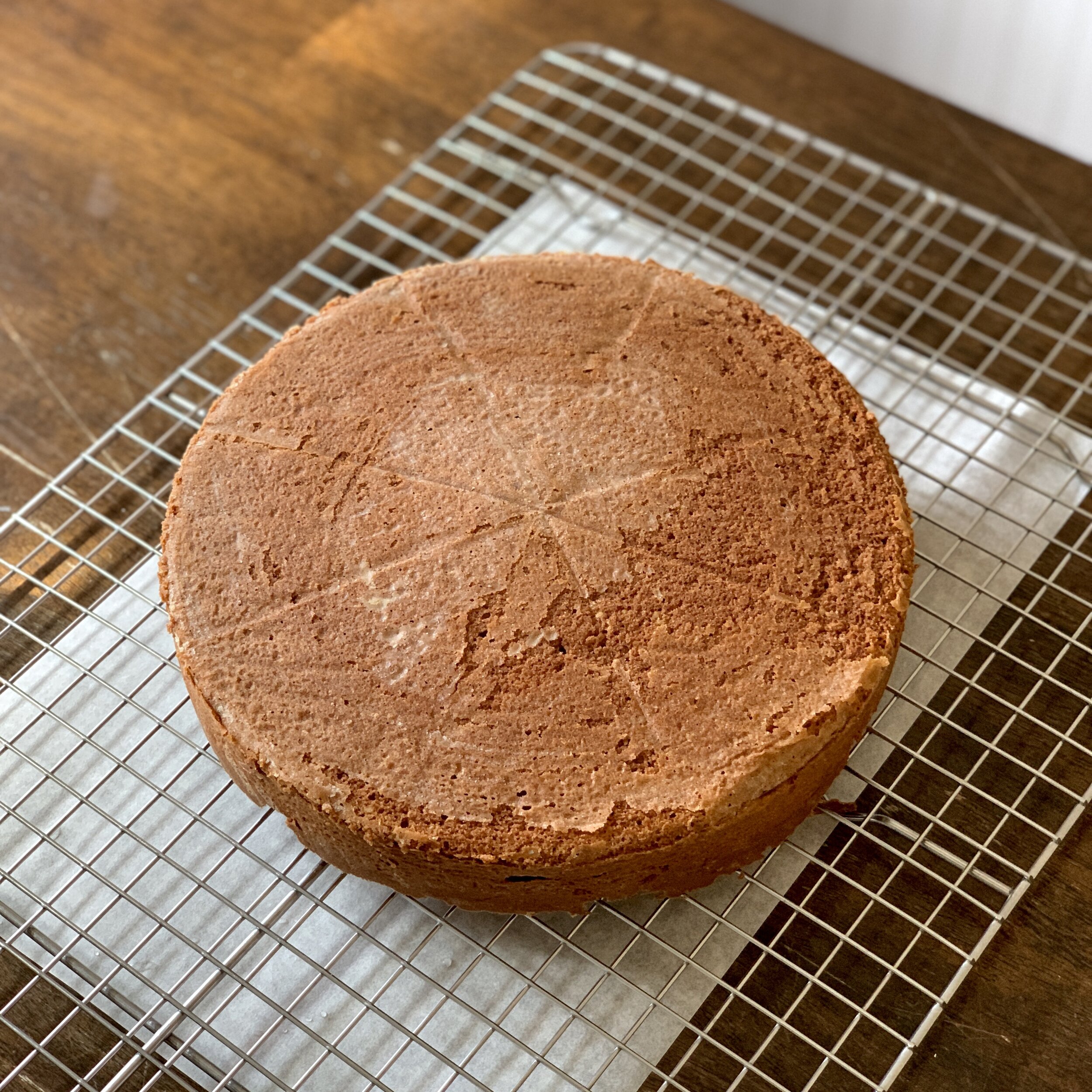
I started by beating butter and sugar, like most cakes, and then added the egg yolks. I then whipped the egg whites to stiff peaks with a little sugar. The egg whites are the only leavener in this cake, so it's essential to get them correct. I folded in melted chocolate, brewed coffee, and finely ground almonds into the butter mixture. Once all of that is well incorporated, I alternated folding in flour with the egg whites. It's important to be very gentle. You don't want the eggs white to deflate, and you don't want for gluten to develop. Once everything was well combined, I baked the cake in an eight-inch cake pan until puffed and gently set in the center.

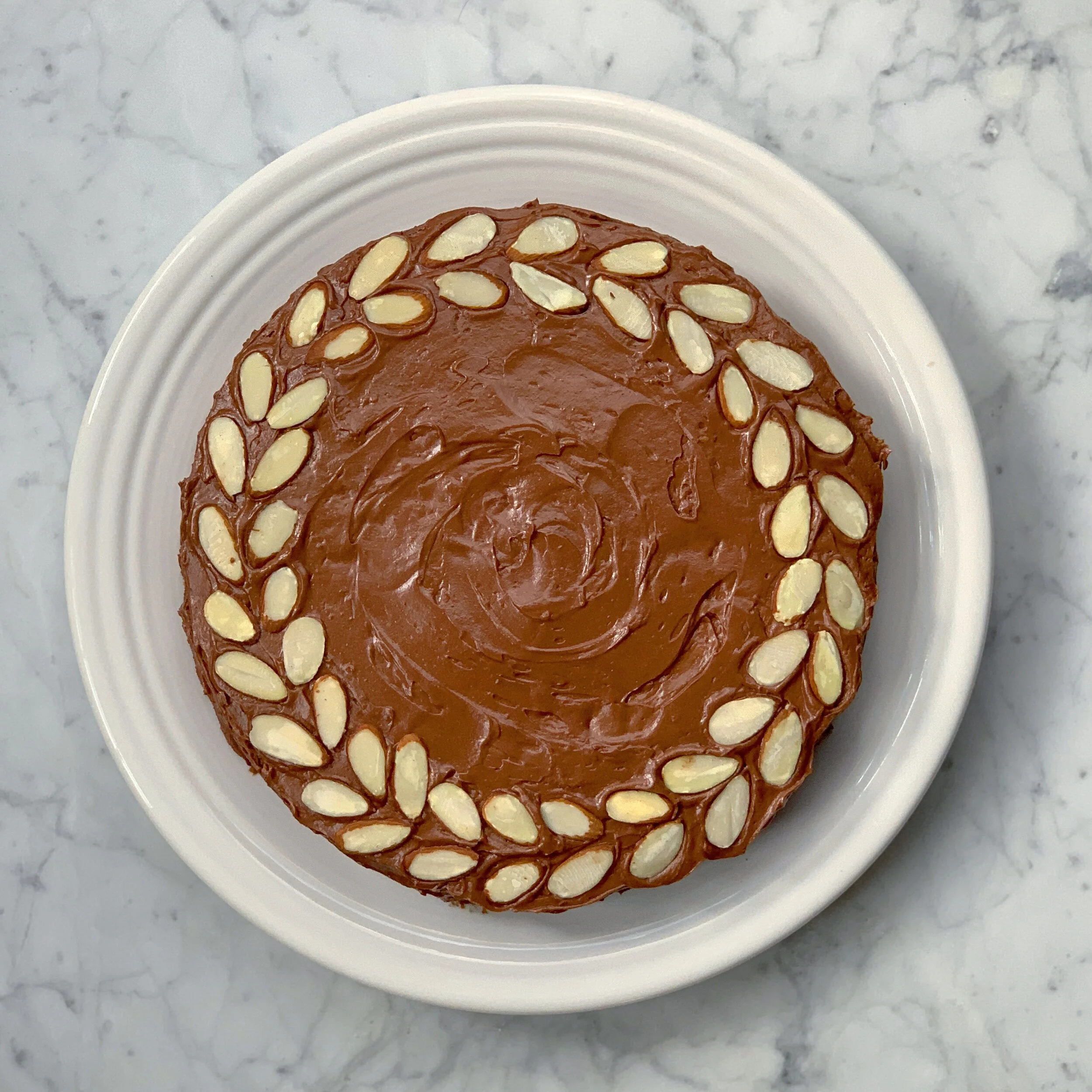
Once cool, I made the buttercream frosting, a combination of melted chocolate, brewed coffee, and of course, butter. I melted all ingredients and then cooled them by whipping the frosting in an ice bath. I decorated the cake with sliced almonds. Bon Appétit!

As I mentioned before, this is the last recipe from the series: Mastering the Art of French Cooking. I decided to do this project this semester since I didn't have any classes in the kitchen. I had no idea when I started that it would help provide me with focus and purpose during a global pandemic. I have loved everything I have made this semester, and I learned so much.
I have a few weeks off from school before the summer semester starts. There will be plenty to blog about once the summer semester begins. Almost all my classes are lab classes, so I'll be baking and cooking a ton. Until then, I am going to do a short series about #quarantinecooking. Cooking has provided me with so much focus during this incredibly uncertain and rapidly changing time. I want to share everything I have cooked and learned.

Week 35 | Crêpes Suzette

This week I made Crêpes Suzette from Julia Child's Mastering the Art of French Cooking. I said I would be making Ratatouille, but after some recalculating, I realized I only had two weeks left in the semester to cook for this project. So I had to skip ahead to dessert. It was important to me that I make a couple of recipes from the dessert section of the cookbook. I wanted to make crepes because I have never made them. I also wanted to make Reine De Saba, which is a chocolate-almond cake and a classic Julia Child recipe. So, that's how I ended up at Crêpes Suzette. 

As I mentioned, I have never made crepes. I was more nervous about making them than any other recipe in the book, besides maybe the souffle. I made the batter in the blender. The crepe batter starts by blending eggs, whole milk, sugar, and vanilla extract until smooth and frothy; then I added the flour and salt and mixed until just combined. I stored the mixture in the refrigerator for an hour. It is essential to wait at least an hour before making the crepes. The time allows the flour to absorb the liquid, creating a more tender crepe. 

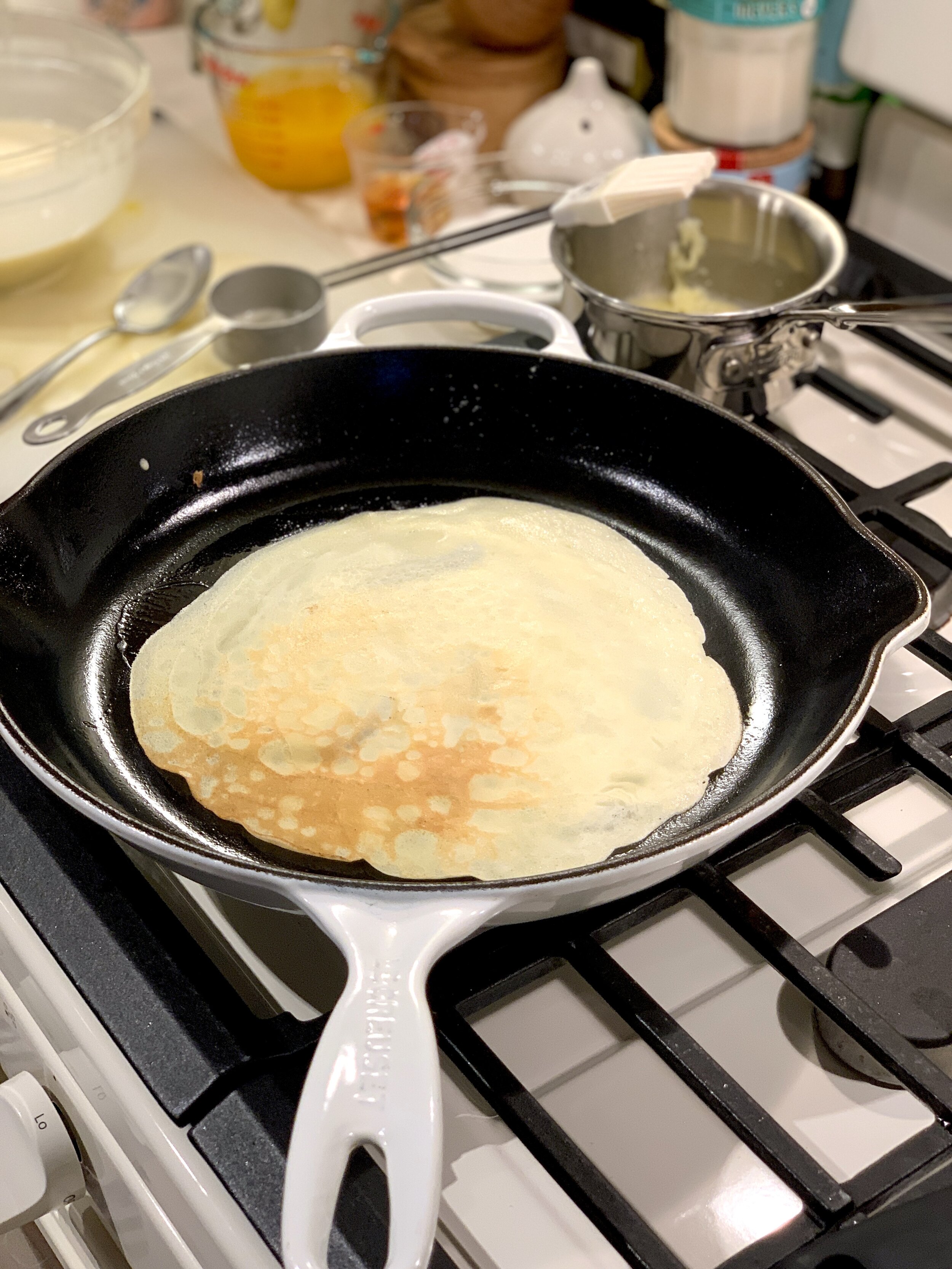
Once the batter was ready, I started cooking them. I used a 12" castiron skillet. Everything I read said to use a nonstick skillet or even a crepe specific pan. I don't have a large nonstick skillet, and I certainly don't have a crepe pan. I'm not a big believer in recipe specific equipment. I like to keep things as minimal as possible in my kitchen. I don't have much storage. I used my cast iron skillet, and I was fully prepared for the crepes to stick. Why would I ever doubt my castiron skillet?!?!??! Of course, it cooked the crepes perfectly. Using the larger size gave me enough room to flip them easily. I used a spoon to spread the batter out evenly in a nice circle. The crepes were much sturdier and easier to make than I expected.
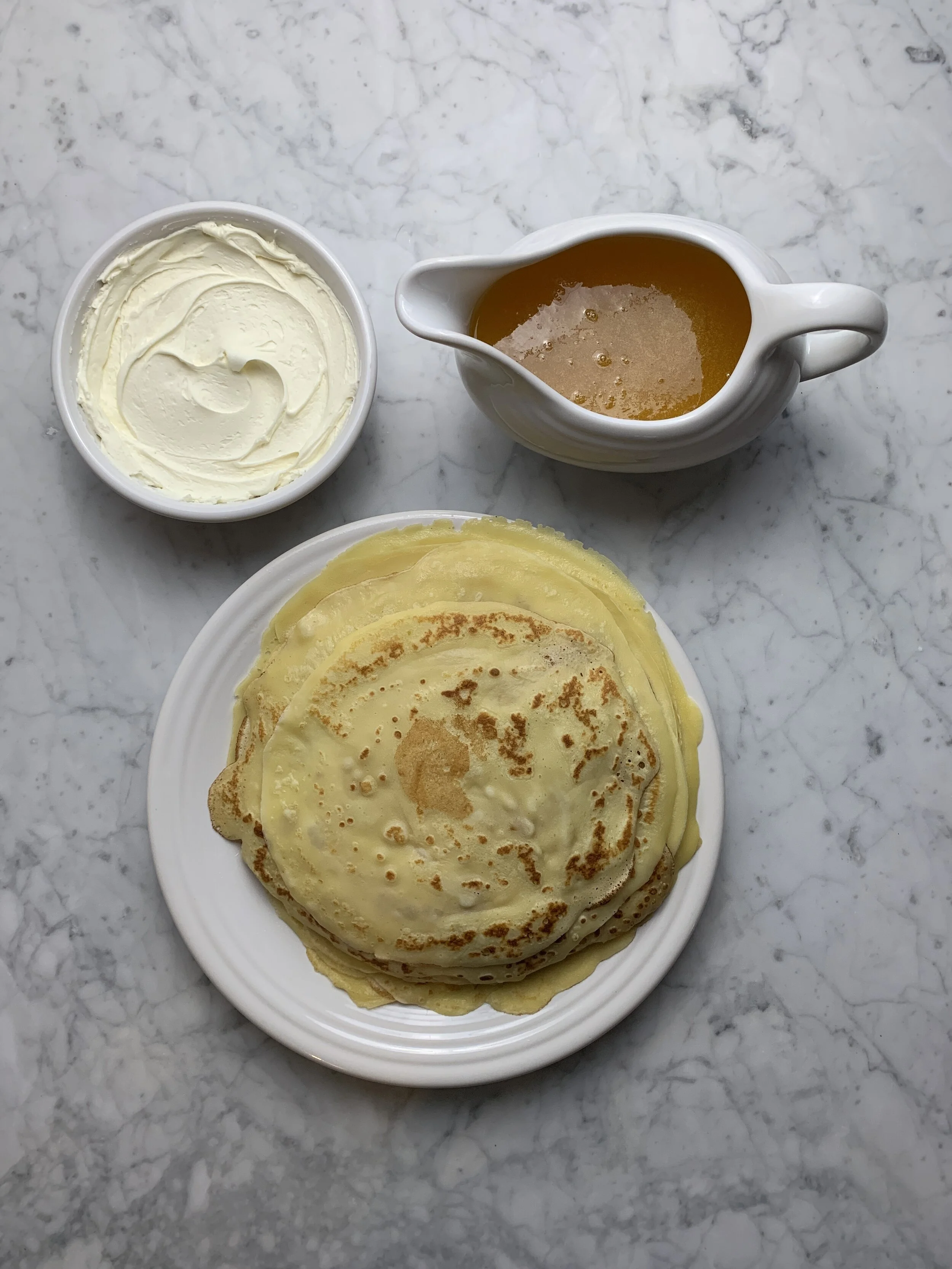
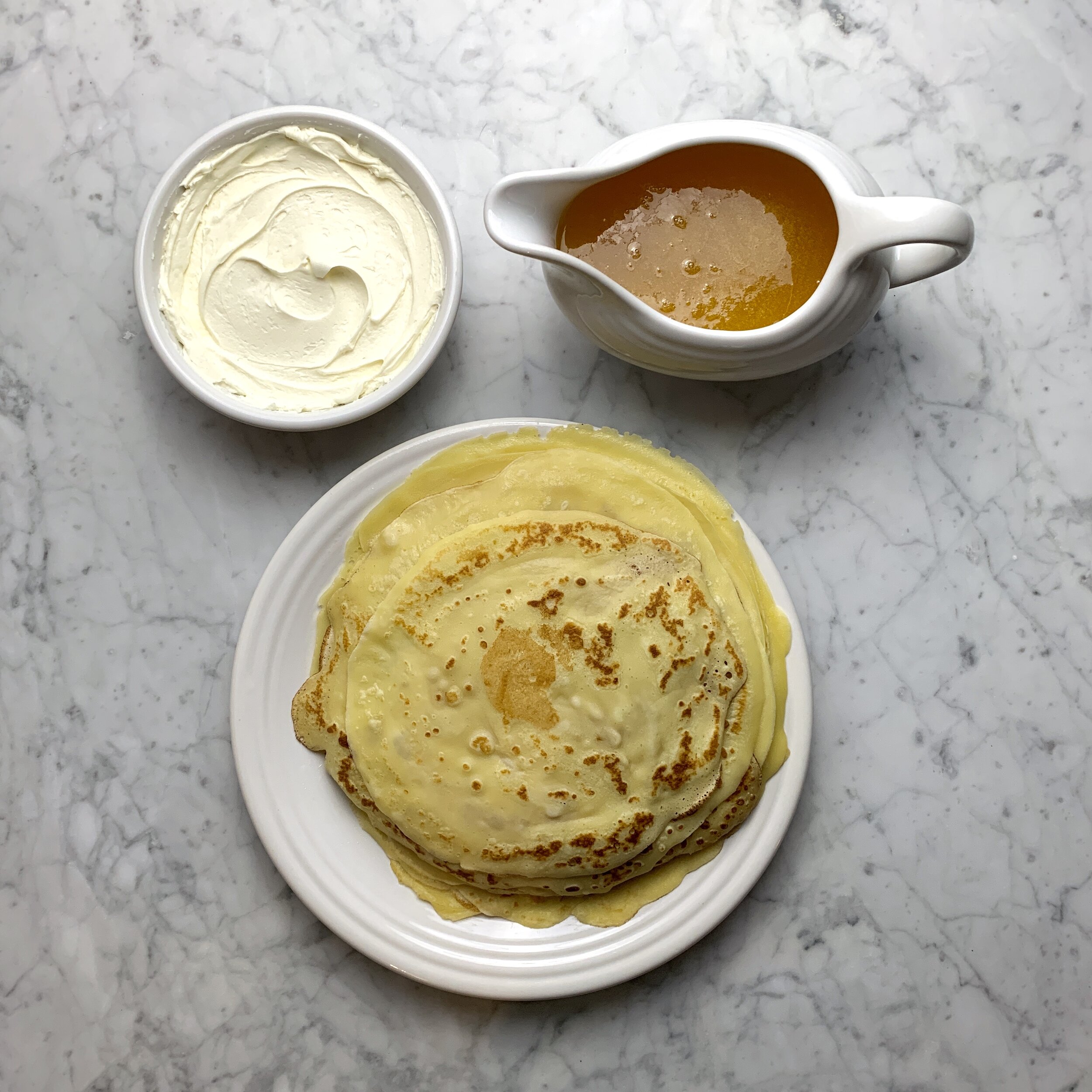
I kept the crepes warm on a plate with a piece of foil. I made ricotta whipped cream, which is just ricotta cheese whipped with a little bit of cream. I left it unsweetened because the crepe batter had sugar as well as the Suzette Sauce. 

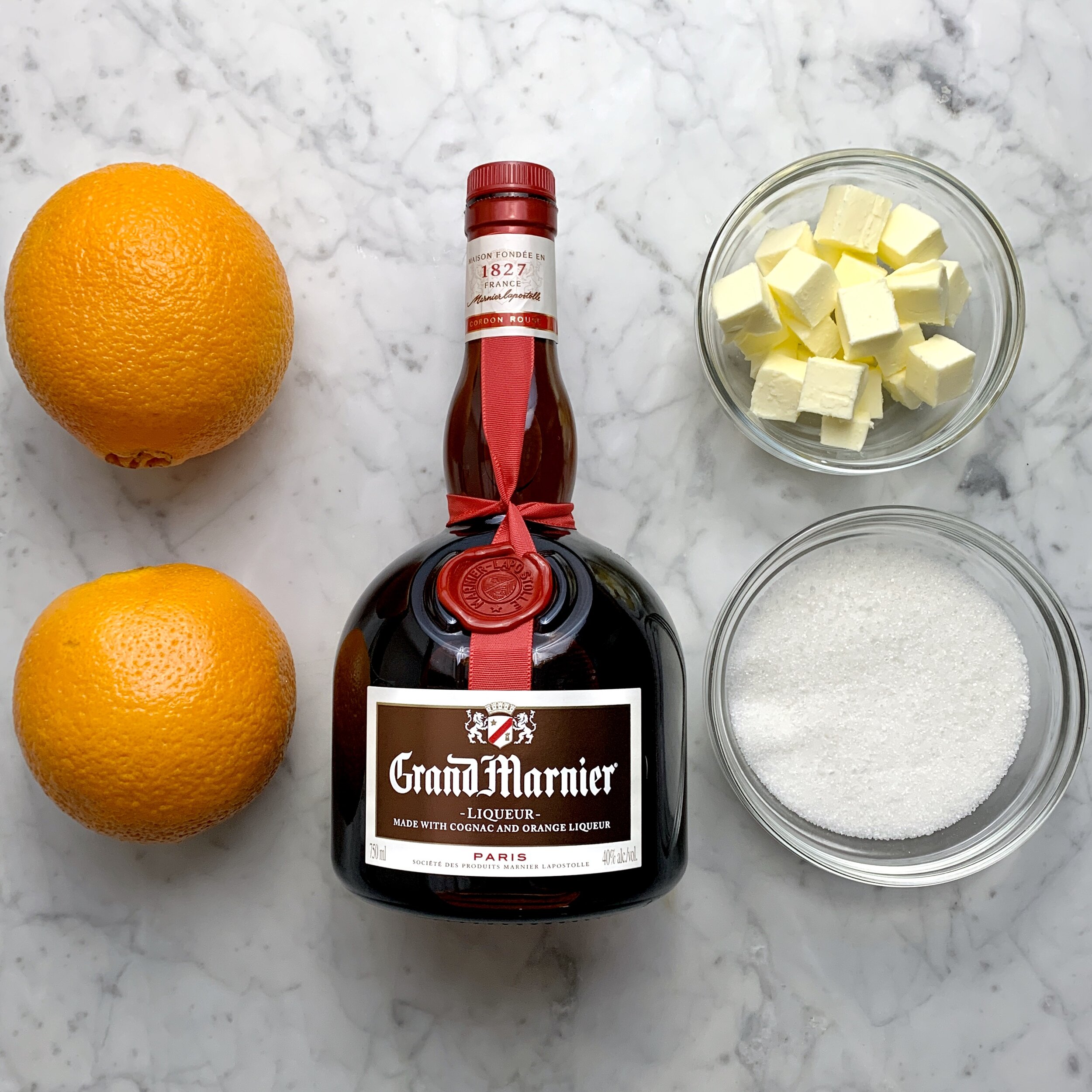
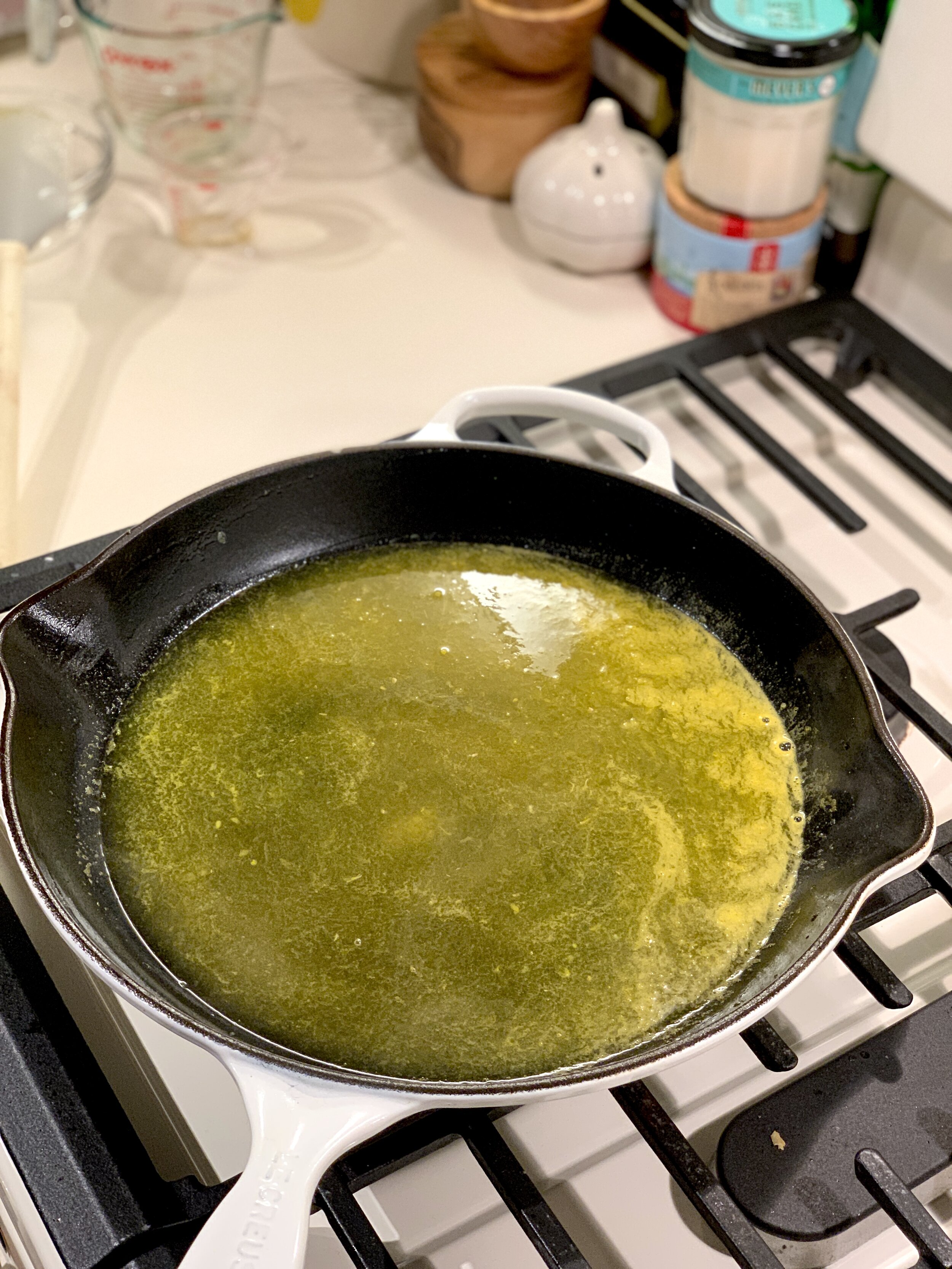
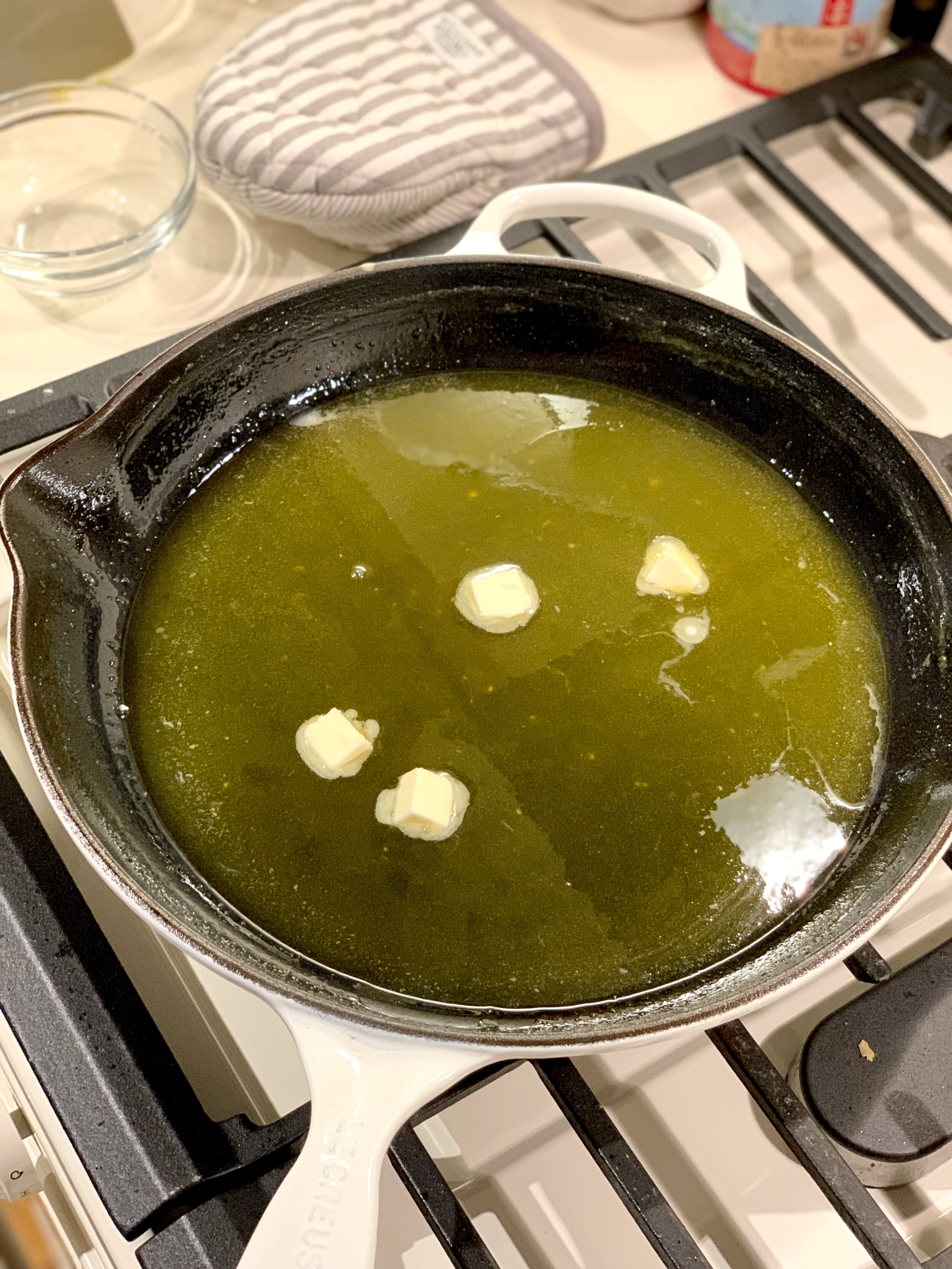
The Suzette Sauce. Man-o-man. It was marvelous. It was equal parts of orange juice and sugar plus Grand Marnier, which is an orange-flavored cognac. I boiled the three ingredients until the sugar dissolved and then added small pieces of cold butter until creamy and thickened.

I put a little bit of the whipped ricotta and Suzette Sauce on half of the crepe and folded it in half, and then in half again, making a little triangle. Added a small dollop of the whipped ricotta and Suzette sauce on the top, and that was it. We had this meal for dinner. I served it with some bacon to balance the sweetness. It was heaven. 
The crepes were incredibly tender and light. The sauce had so much flavor and richness. The whipped ricotta added the perfect balance to the sweetness and acidity of the crepes and sauce.

Next week I will be making Reine De Saba, which is a chocolate almond cake. And that will be the last recipe from this project. I can't believe it. I am not sure what my focus is going to be next, but I think I'm going to dive a little deeper into bread making. 🥖  

Week 34 | Côtelettes de Porc Braisées à la Sauce Tomate Fraîche (Pork Chops Braised in Fresh Tomato Sauce)

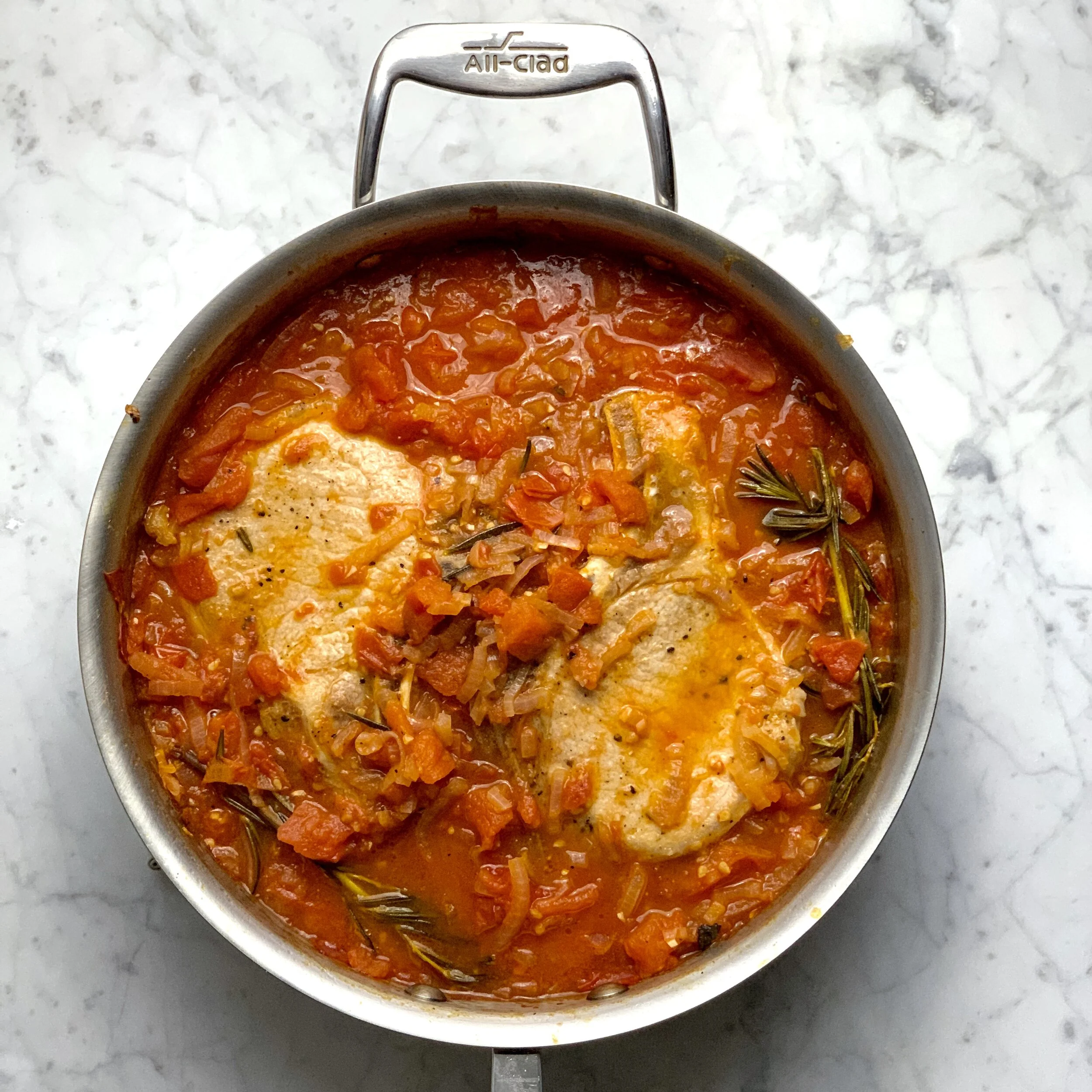
The week I made Pork Chops Braised in Fresh Tomato Sauce from Julia Child's Mastering the Art of French Cooking. I wasn't particularly excited about this recipe. I love pork, and I love tomato sauce, but I wasn't too enthusiastic about braising the meat. I have done it before without great success.

I was WRONG. The pork was excellent. It was tender, and the sauce had so much flavor. I used a a recipe from Melissa Clark at the New York Times, Braised Pork with Chops with Tomatoes, Anchovies, and Rosemary. The recipe was similar to Julia Child's but more straightforward and updated.

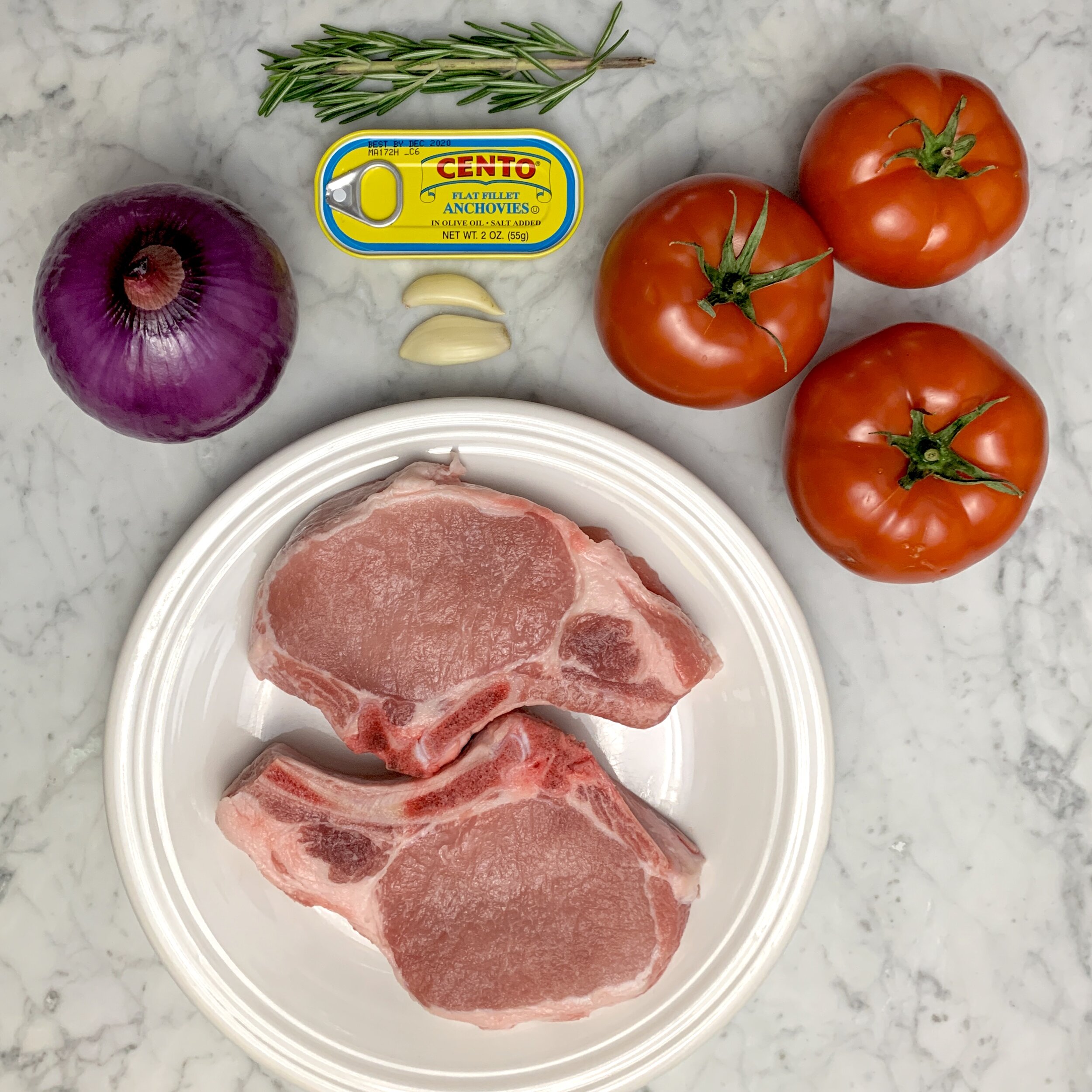
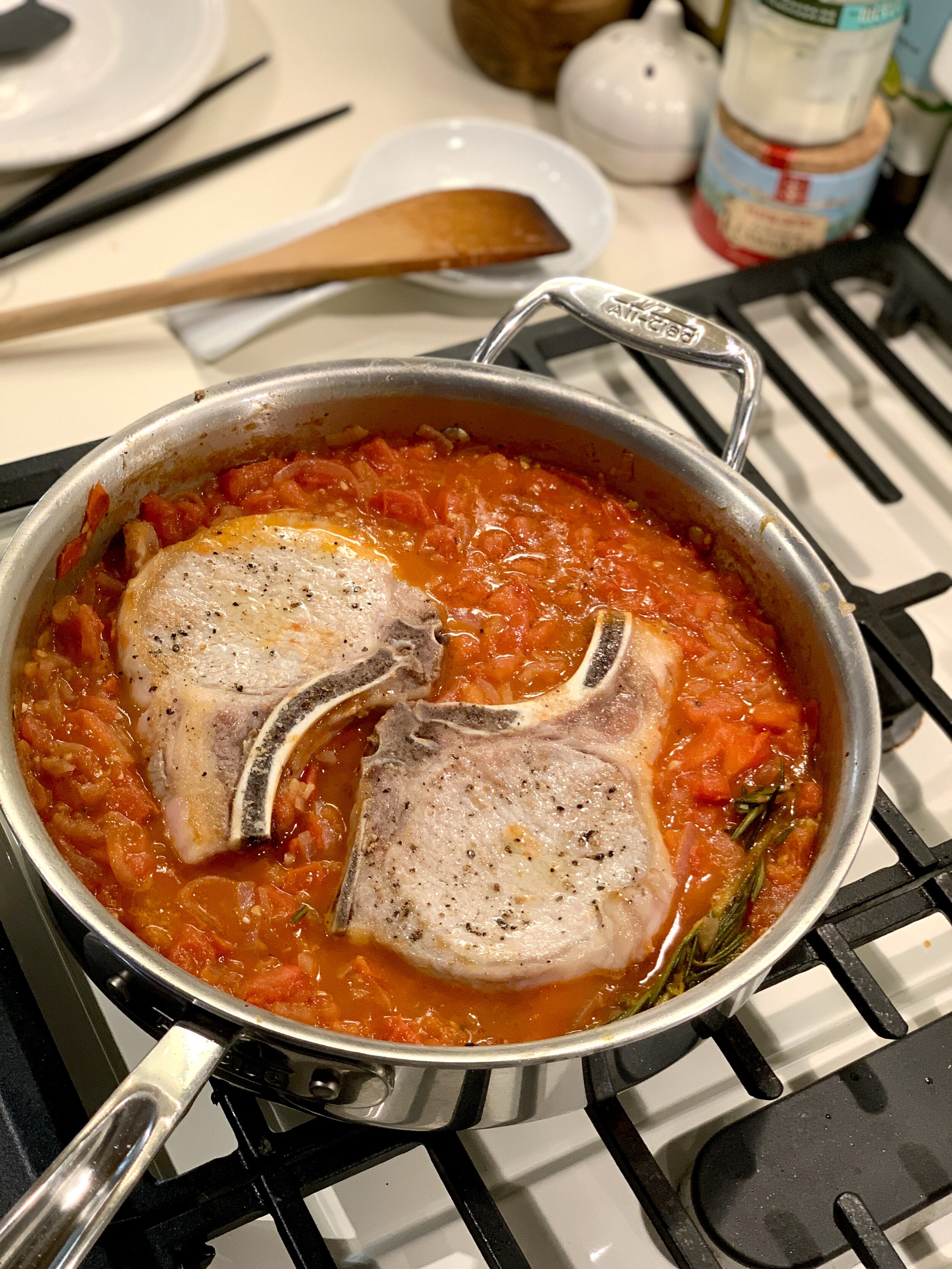
I started by searing the two pork chops. I wish I had gotten more color on the pork chops at this stage. My pan wasn't hot enough. I removed the pork and set aside on a plate.

I sautèed a whole red onion that I halved and thinly sliced with three sprigs of fresh rosemary. I cooked these for a long time over low heat until the onion was very tender. I added some minced garlic and cooked until fragrant.

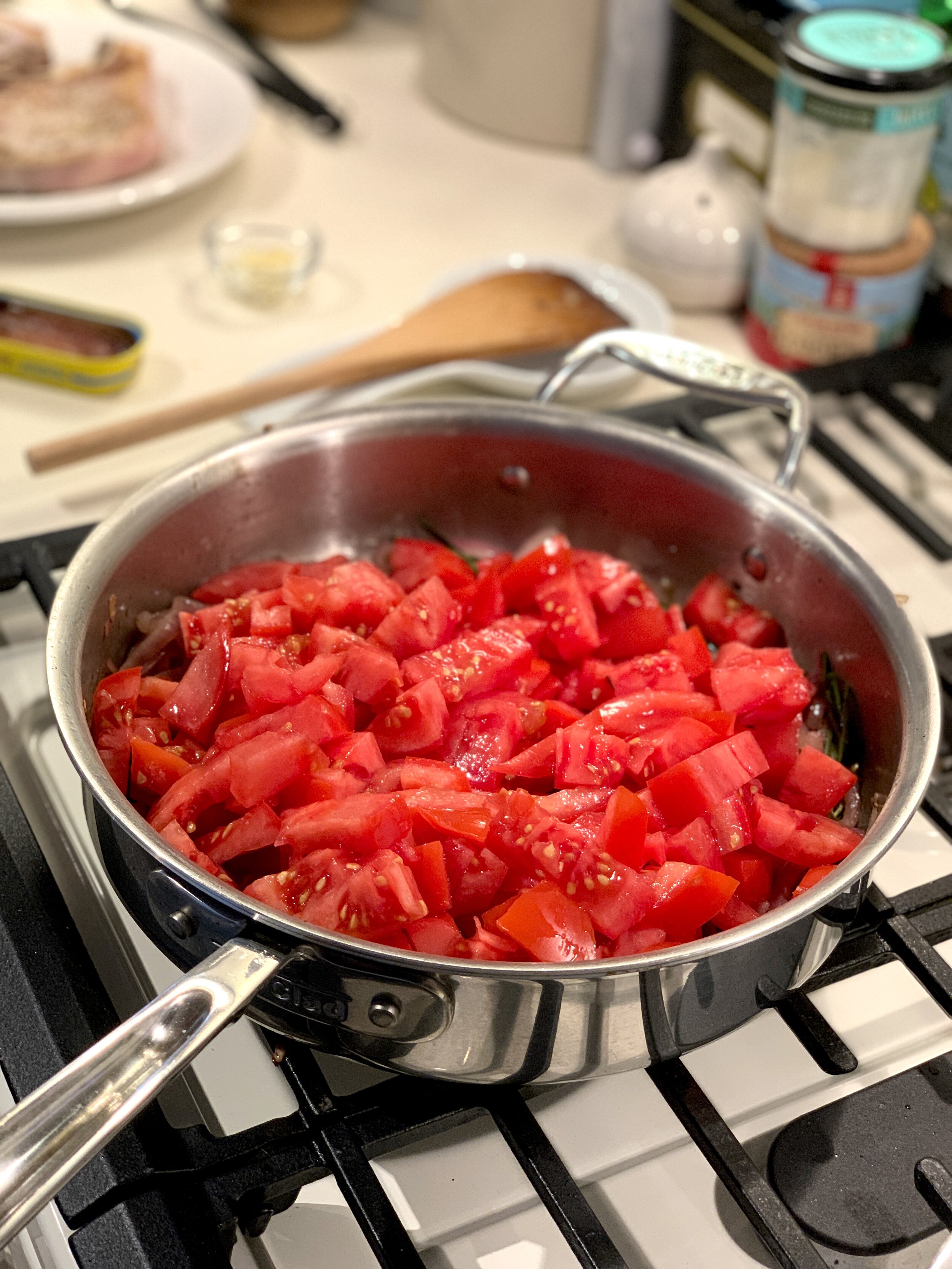
I added two pounds of fresh tomatoes, roughly chopped. I was lucky and able to get some lovely local greenhouse tomatoes, which had a surprising amount of color and flavor for this time of year. Had I not been able to find great tomatoes, I would have added some tomato paste to the onions before adding the fresh tomatoes to give the sauce a sweet tomato-y flavor. I added the anchovies at the same time as the tomatoes. The anchovies gave the sauce depth. It doesn't add a fishy taste, but rather a richness. The anchovies break down entirely in the sauce. I cooked the tomatoes on low heat until the mixture was saucy.

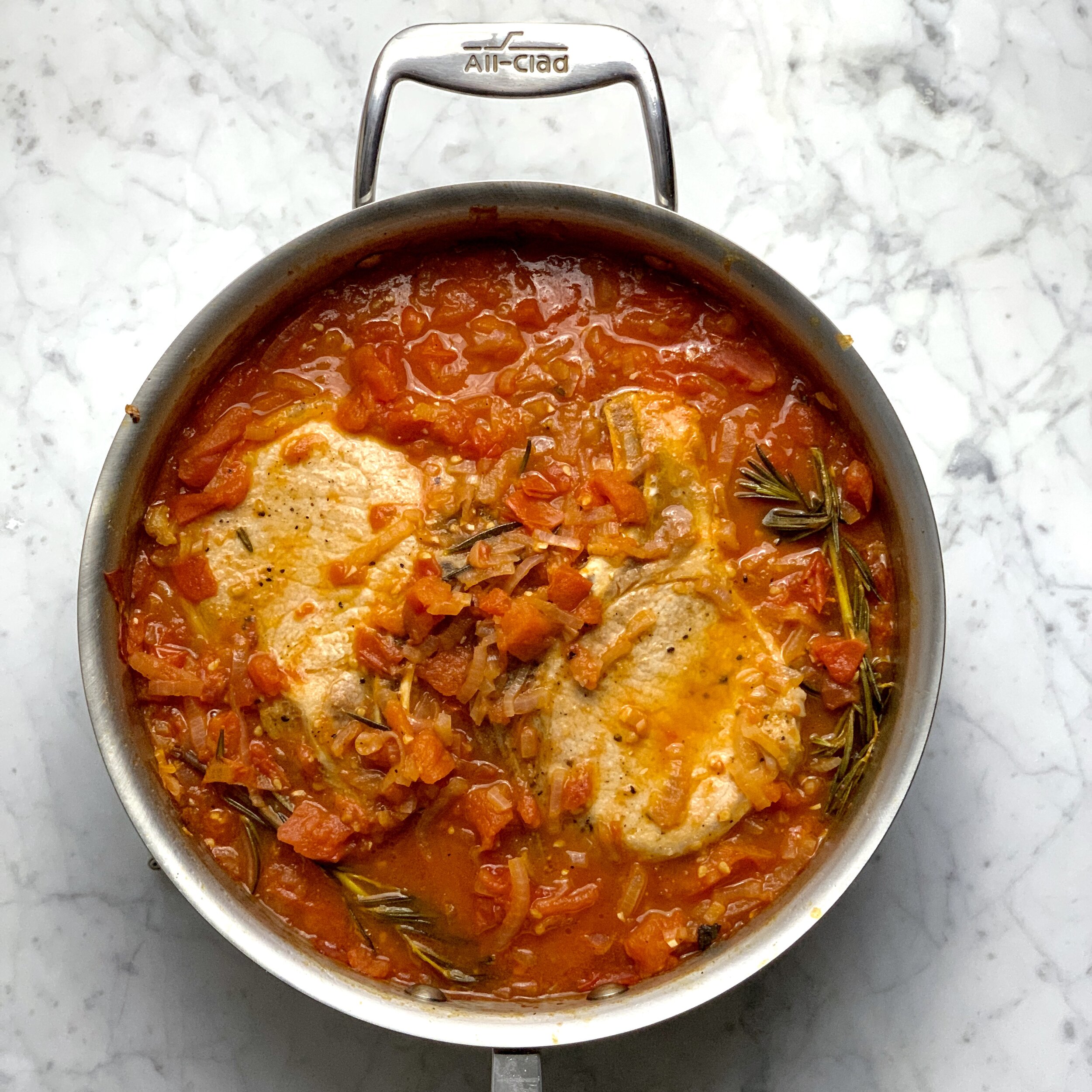
Once I made the sauce, I added the pork back to the pan and covered the pork with the tomato sauce. I covered the pan and put it into a 350˚ oven and cooked it until the pork registered 145˚. I then let it rest in the pan for about 5 minutes after cooking.

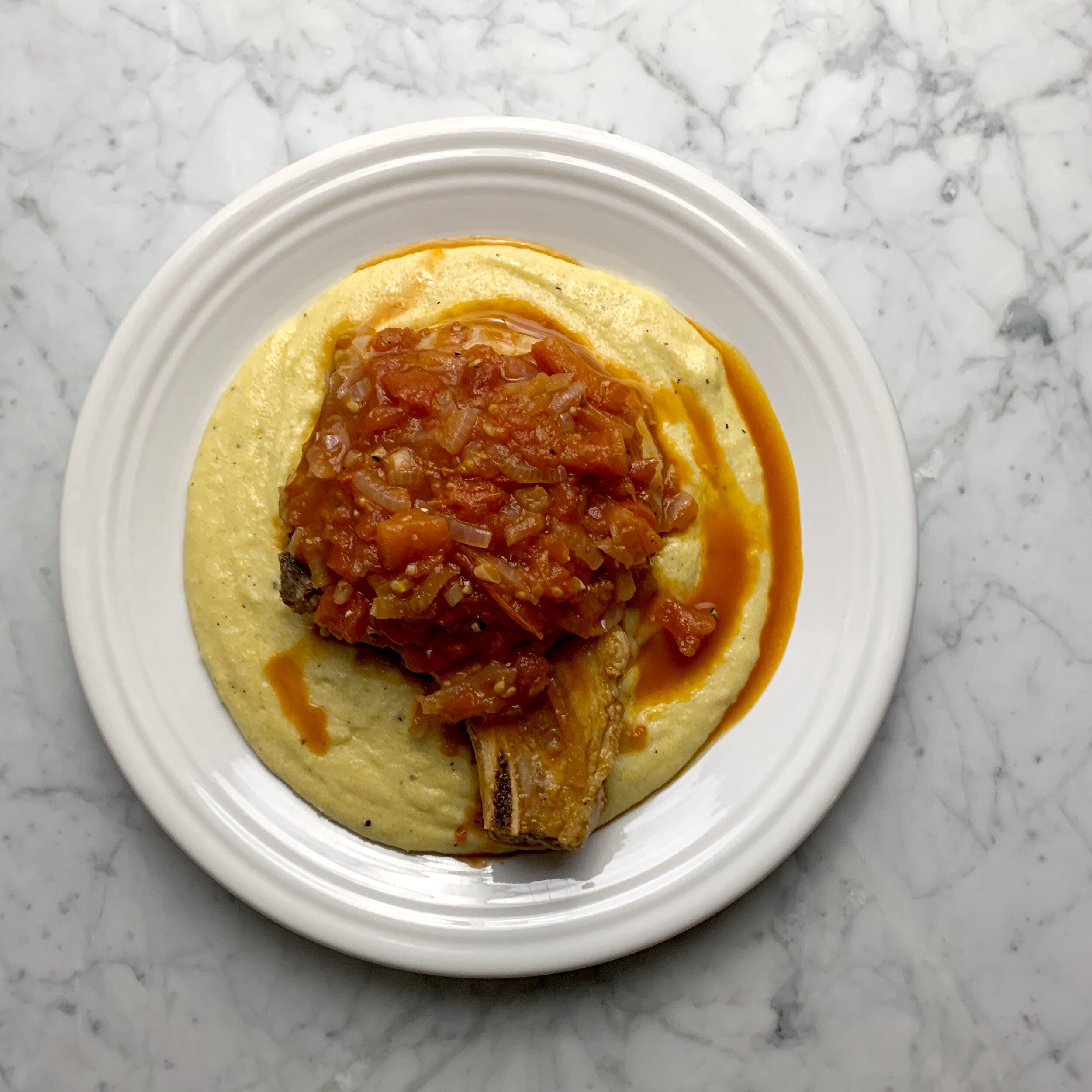
I served the pork and tomato sauce over creamy polenta with a spinach salad. The pork was so tender, and the sauce had so much flavor. There was quite a bit of leftover sauce. I've been eating it with garlic bread for lunch. It's delicious.

Next week I'll be making Ratatouille. There are a million recipes for Ratatouille and I have never tried one. I'm excited to see how this shakes out.

As far as quarantine goes, I am doing well. We're currently on day 26, and I have only left the house a couple of times to get groceries. I wore a mask for the first time this week when I went to the grocery store. It was surreal. It made me feel a little sad and scared, but I did it anyway. I am trying to do my part to help get this virus under control so life can resume sooner rather than later. I hope everyone is staying healthy and safe!

Week 33 | Biftecks en Fonte avec Beurre aux Herbes (Cast Iron Steaks with Herb Butter)

This week I made cast iron steaks with herb butter from Julia Child's Mastering the Art of French Cooking.

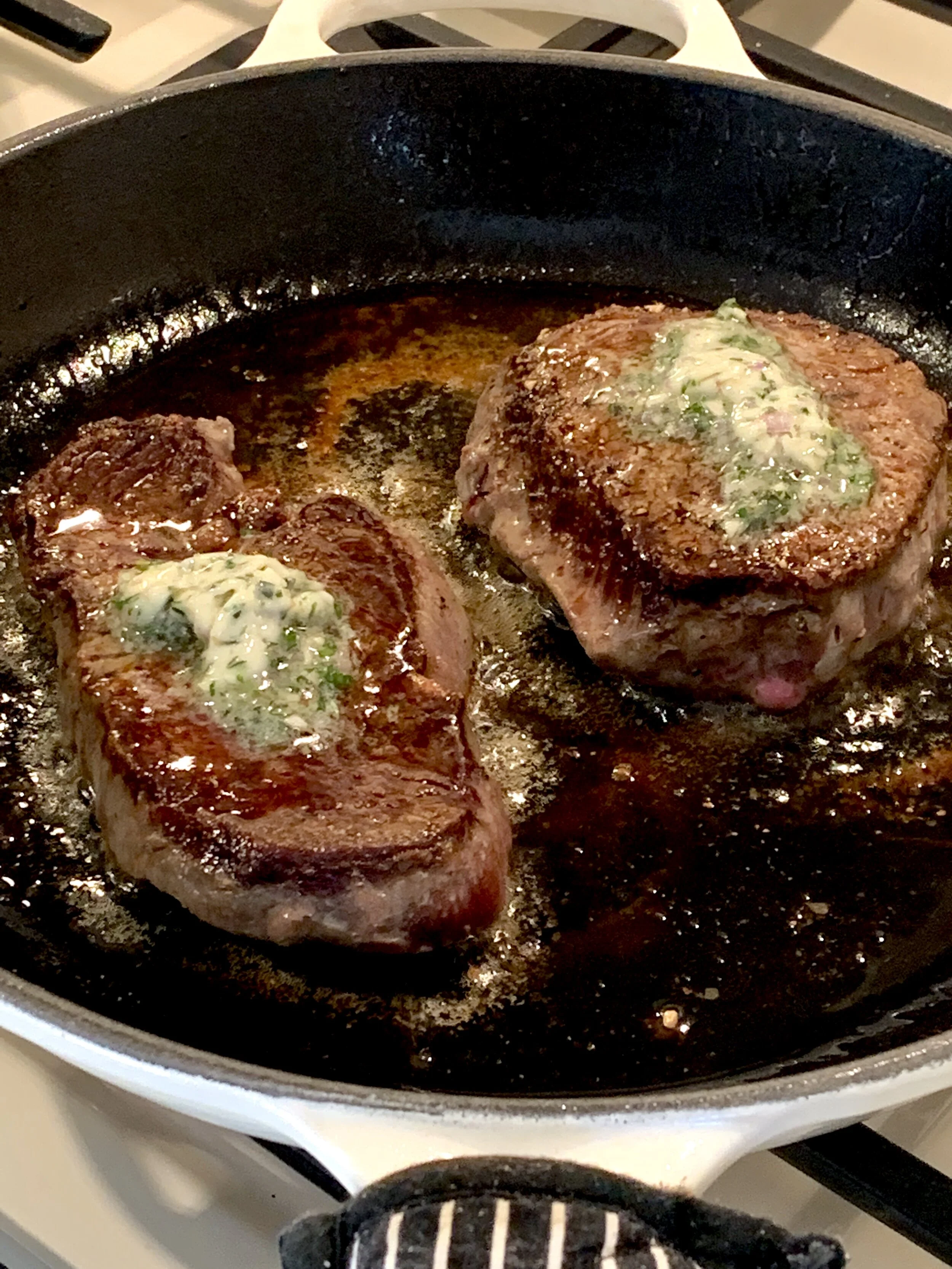
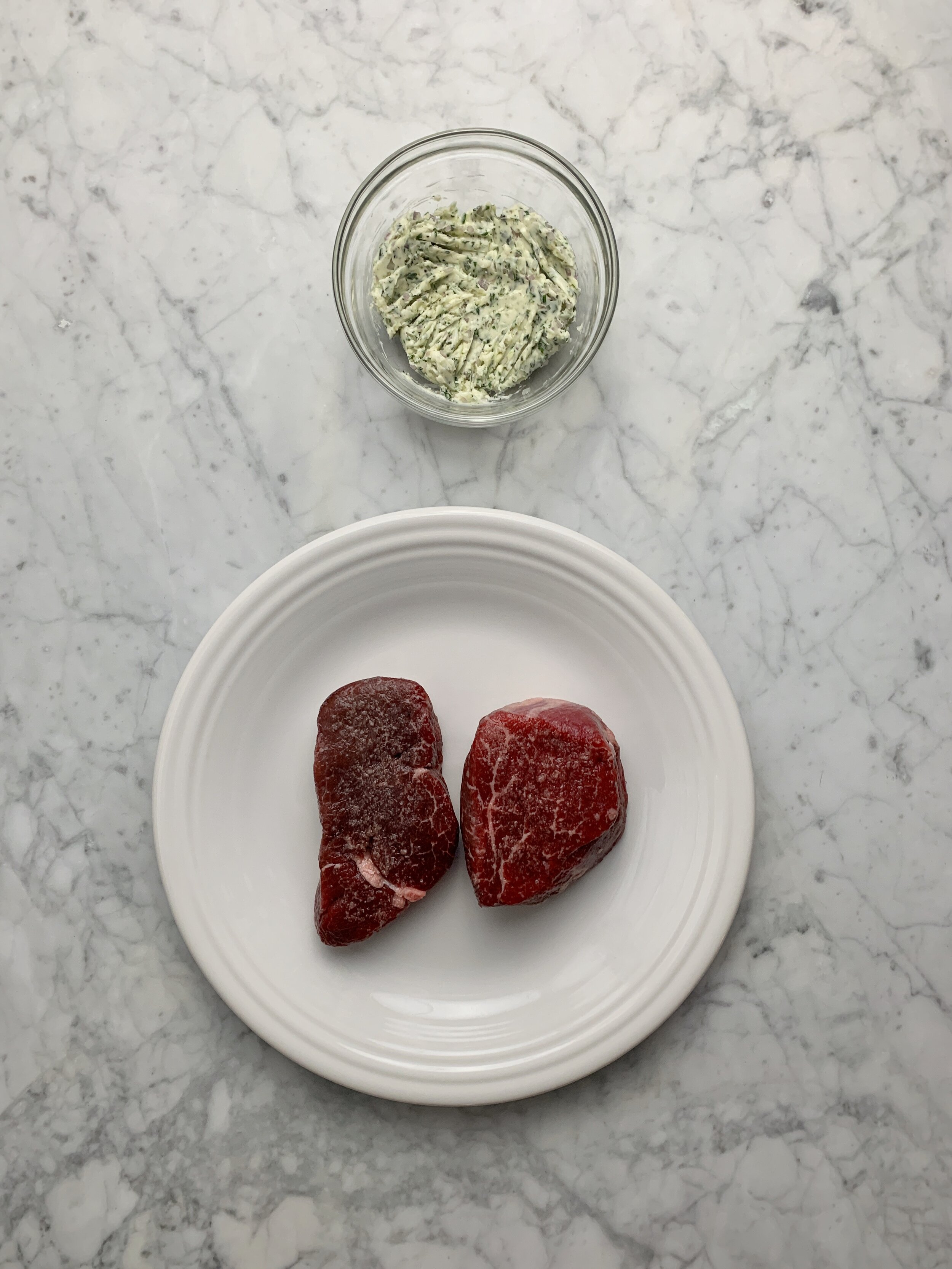
I started with the herb butter. I made this a few hours before I start cooking the steaks to let the flavors meld. I use room-temperature, unsalted butter. I add shallots, parsley, thyme, minced garlic, salt, and pepper to the butter. You can use any herbs you have on hand or prefer. I combine everything with the butter and put it back into the refrigerator until I am ready to use it. It's that easy.

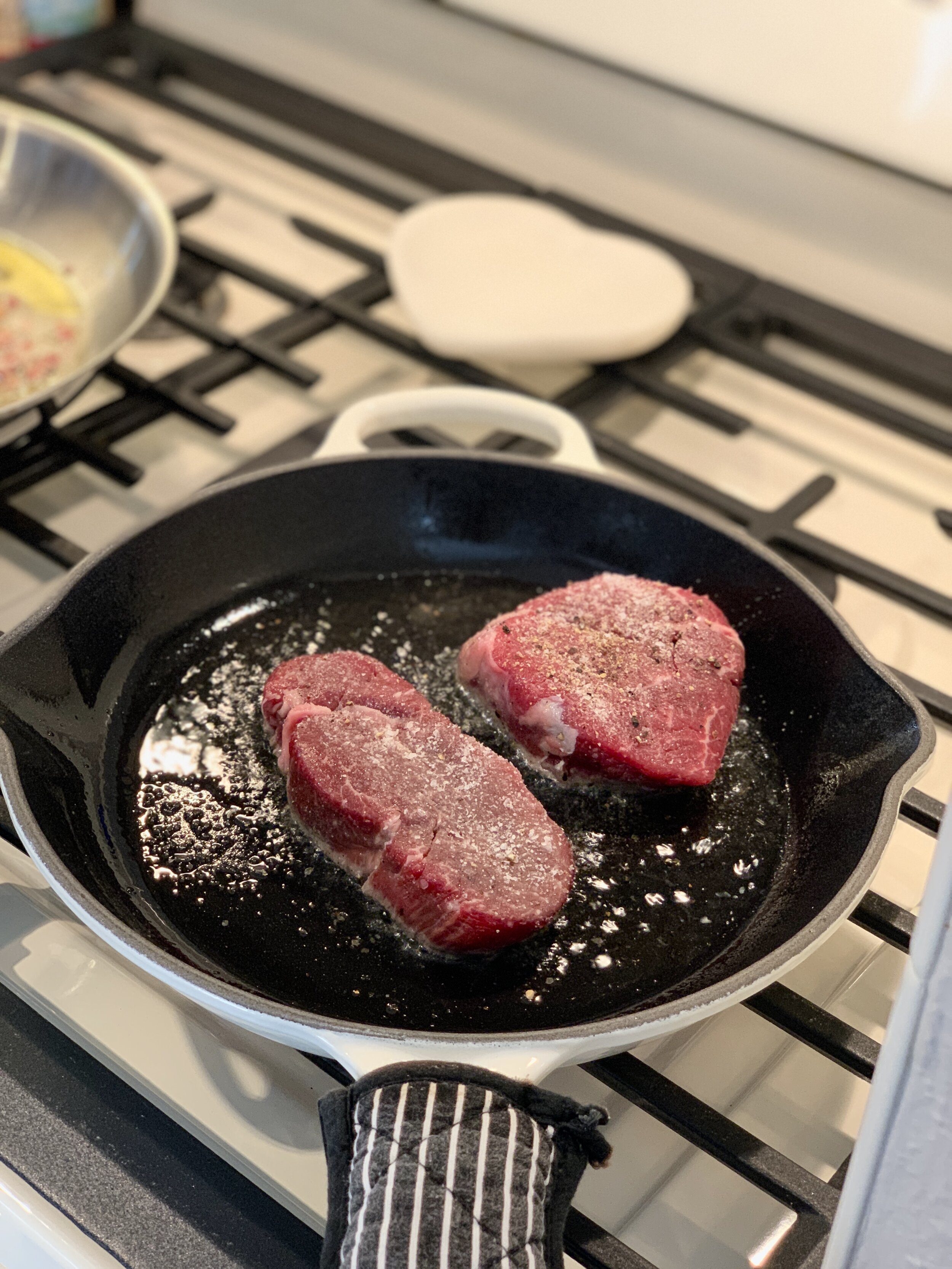
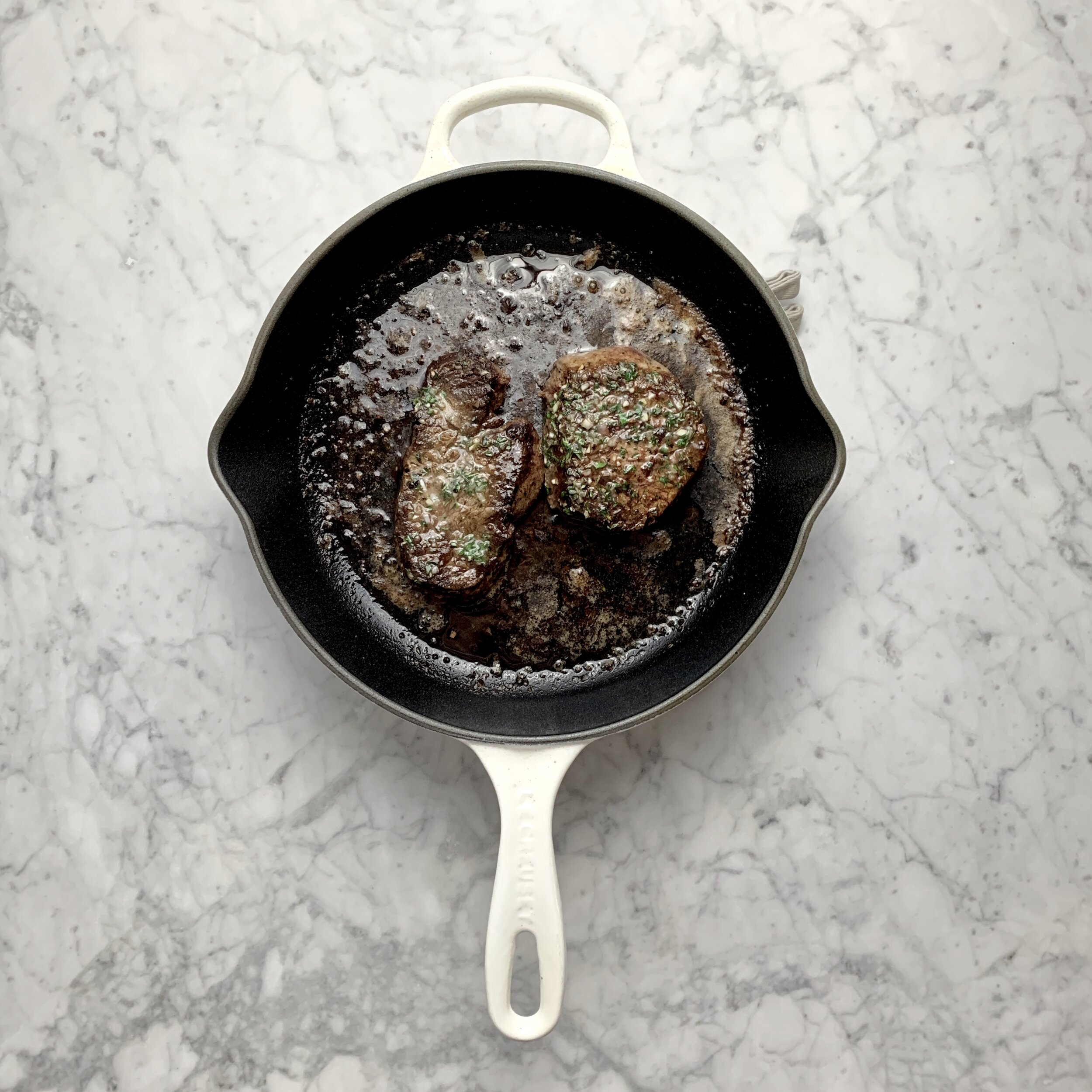
For the steaks, I used two 5 ounce filet mignons. I chose such a luxurious cut of meat because it felt special and fancy. We've been living off pantry and freezer items for the majority of the pandemic. About 30 minutes before I'm ready to start cooking, I placed my 10" cast iron skillet in the oven and turned the heat to 500˚. Hot! I do this to get the pan very evenly hot. I seasoned the steaks generously on all sides with kosher salt to pull out any moisture. After a half-hour, I dry the steaks thoroughly and season them with freshly ground pepper. It's crucial to get them dry. Moisture is the enemy of browning.

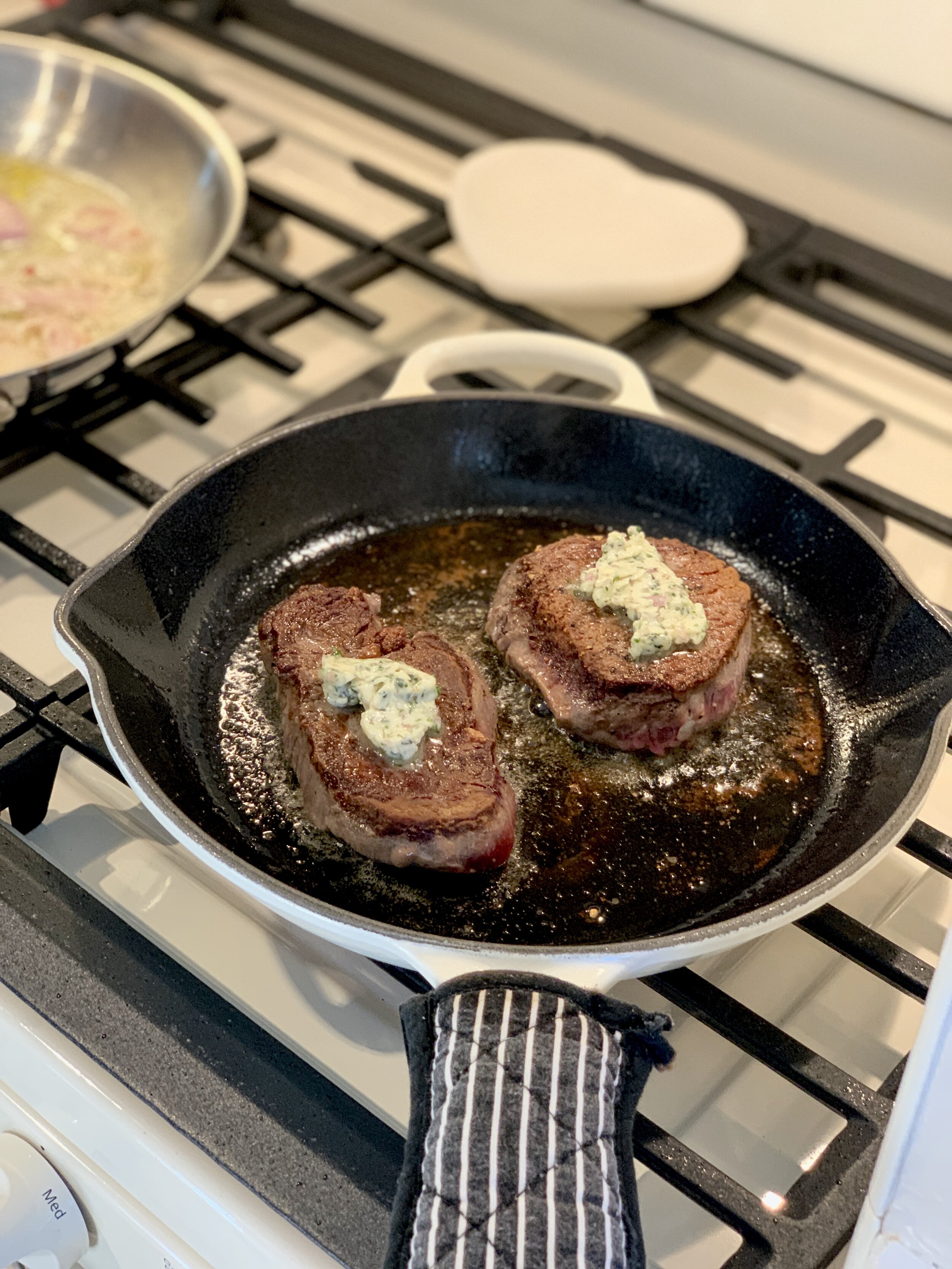
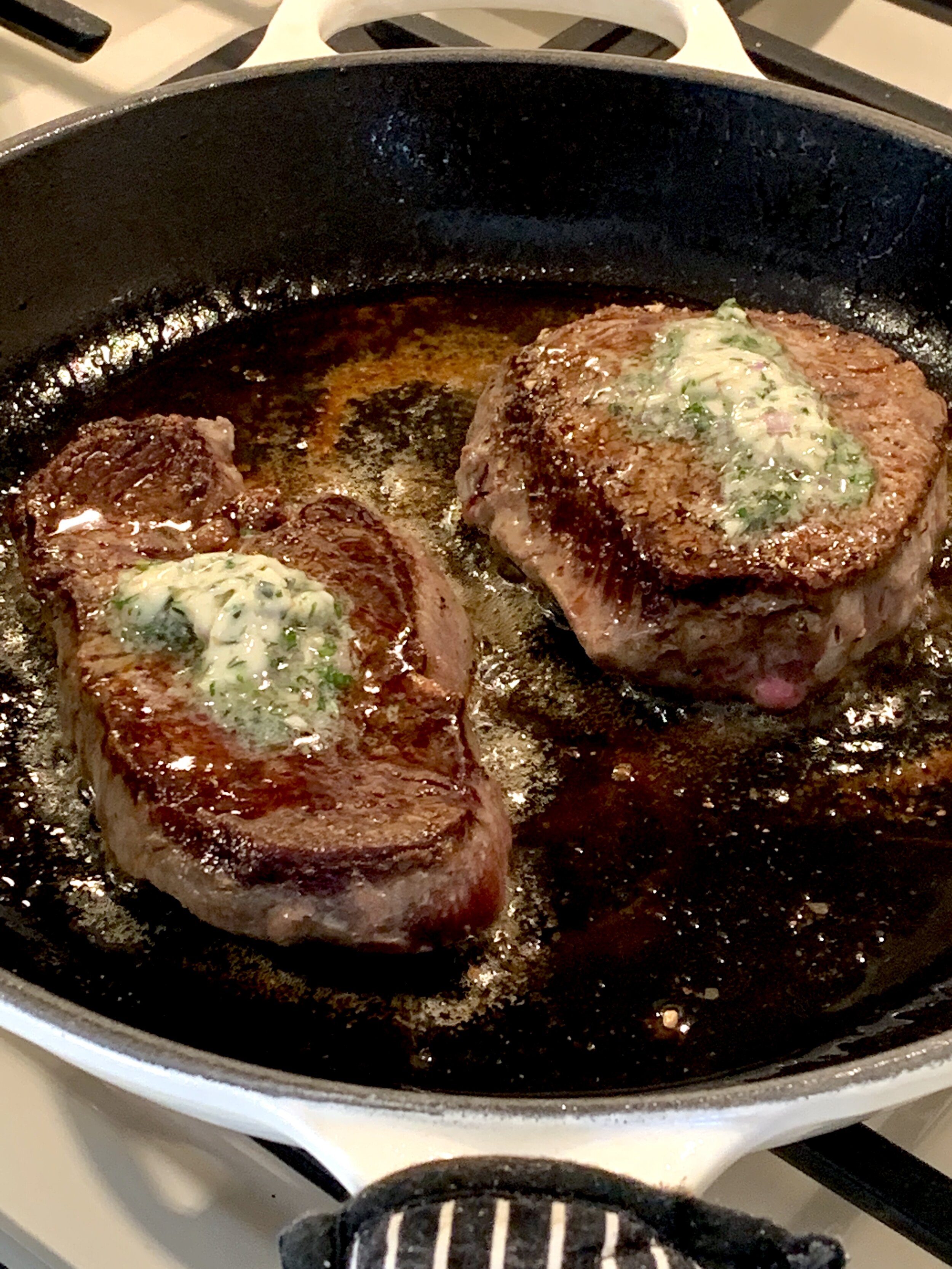
I removed the cast iron skillet from the oven. Don't forget the handle is insanely hot. I use a little cover thing because I always forget. I add a couple of tablespoons of vegetable oil to the cast iron skillet. I use vegetable oil because it has a higher smoking temperature than olive oil, so it does well in a super hot cast iron skillet. Once the oil is just smoking, I add the steaks and cook them for a couple of minutes. It depends on the thickness of the steak. Once I flip them, I add a dollop of the herb butter. After a couple more minutes, I flip them again, adding another dollop of butter and then put them in the oven for about a couple more minutes. I like steak medium-rare, so I cook them until the internal temperature reaches 120˚ - 125˚. Depending on how you want your steaks cooked will also determine how long to cook them on each side. I try to keep each side and oven time equal. So, three minutes, three minutes, three minutes, or whatever.
I then place them on a cutting board with another dollop of butter, tent lightly with foil and let them rest for 10 minutes. This is, without a doubt, my favorite way to prepare steak. It's not a healthy meal. It's red meat, albeit lean red meat, with a ton of butter. I make these steaks maybe once or twice a year, usually for special occasions like birthdays, anniversaries, or worldwide pandemics.

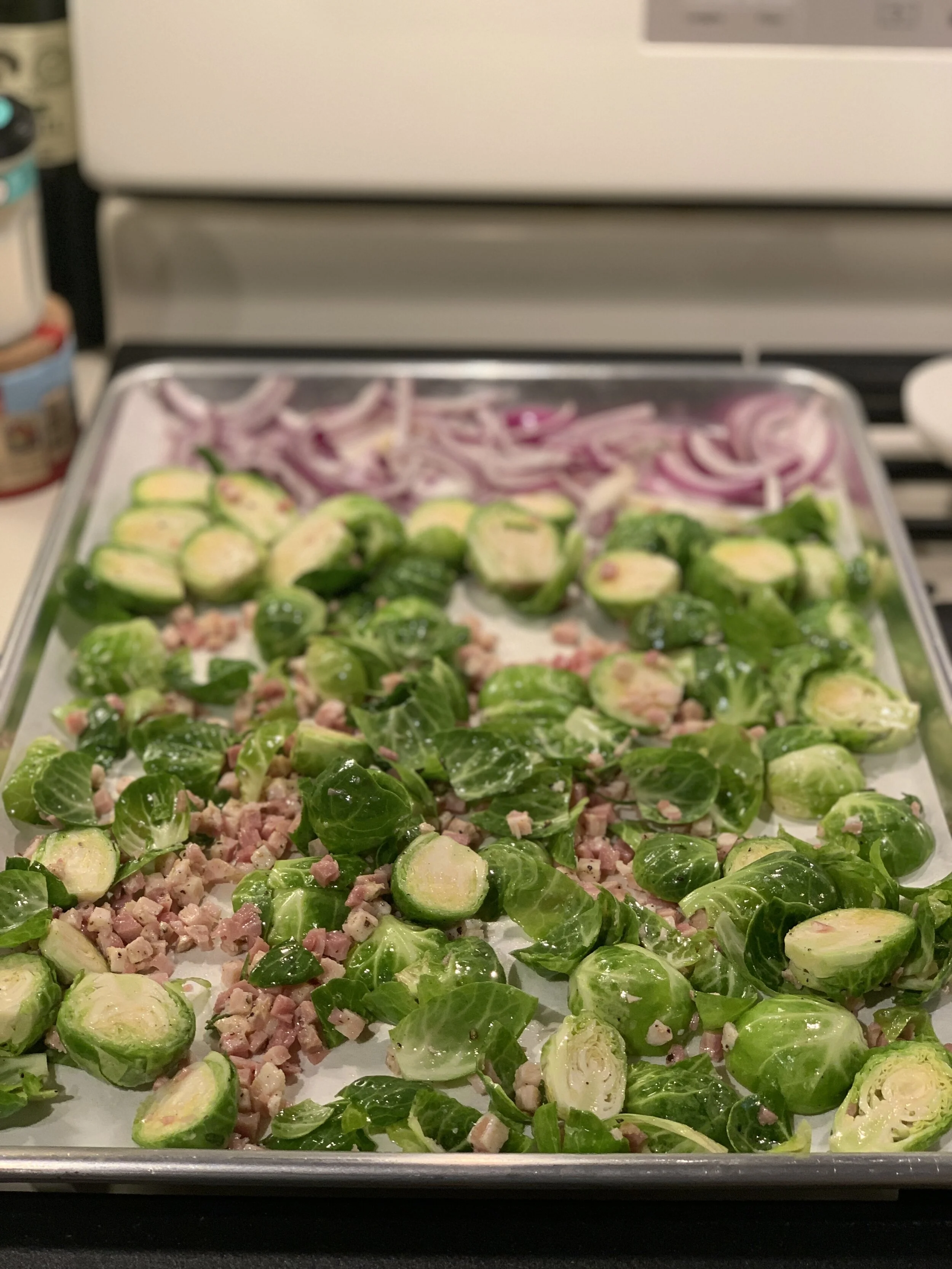
And that's it! You really will not believe how much flavor these steaks have. They are salty, herby, crunchy, and tender. I usually serve the steaks with something green. This time around, I made Shaved Brussels Sprouts with Pancetta.
Next week I'll be making pork chops braised in fresh tomato sauce, so that should be yummy.

I hope everyone is staying healthy as we enter week four of quarantine. We're fortunate because we're able to work and attend school from home. I am trying to keep to a routine. We are walking and doing a lot of video calls with friends and family. We're trying to make the best of the situation and enjoy our time at home together.

Week 32 | Suprêmes de Volaille à la Milanese (Milanese Style Chicken Breasts)

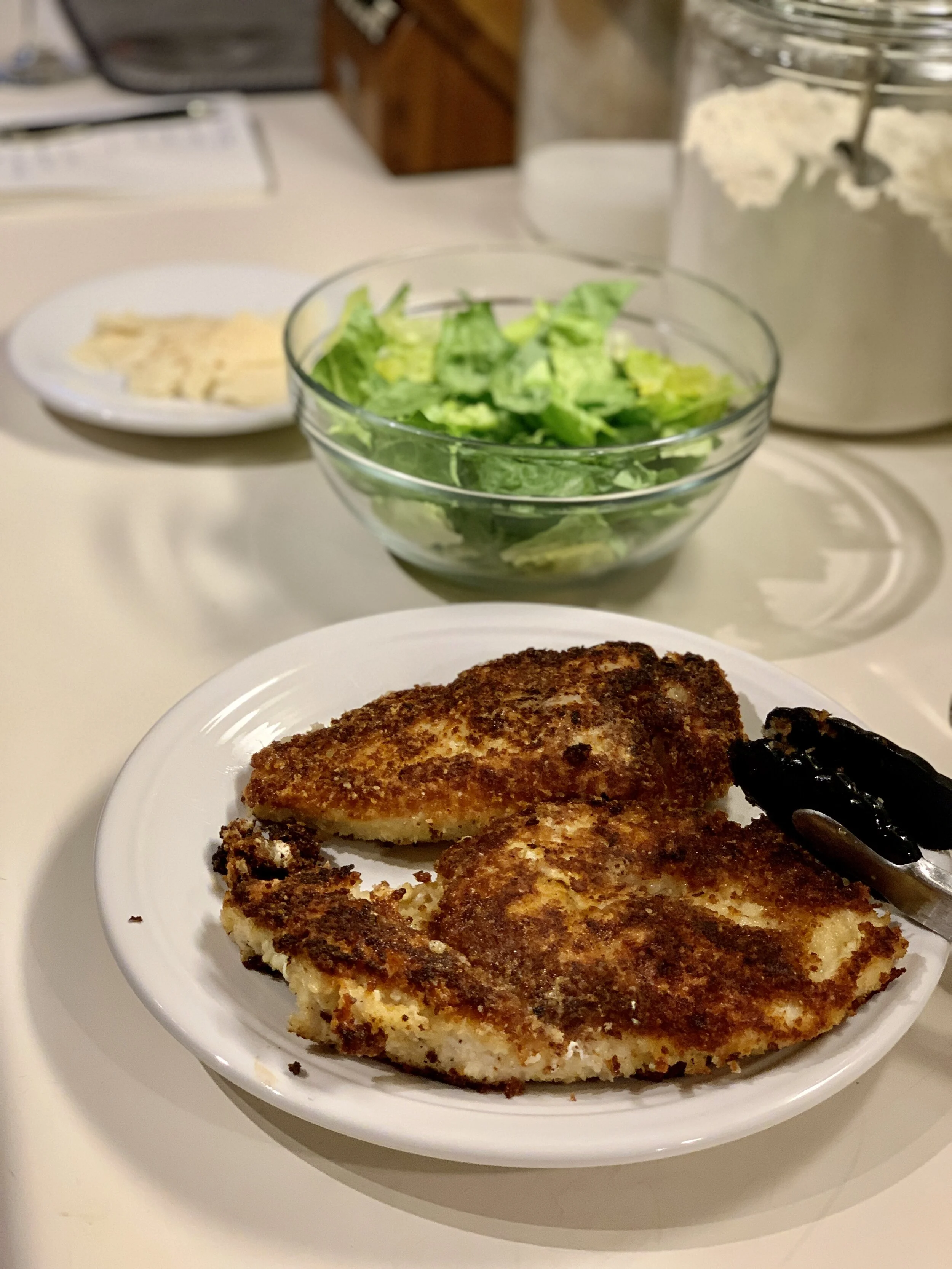
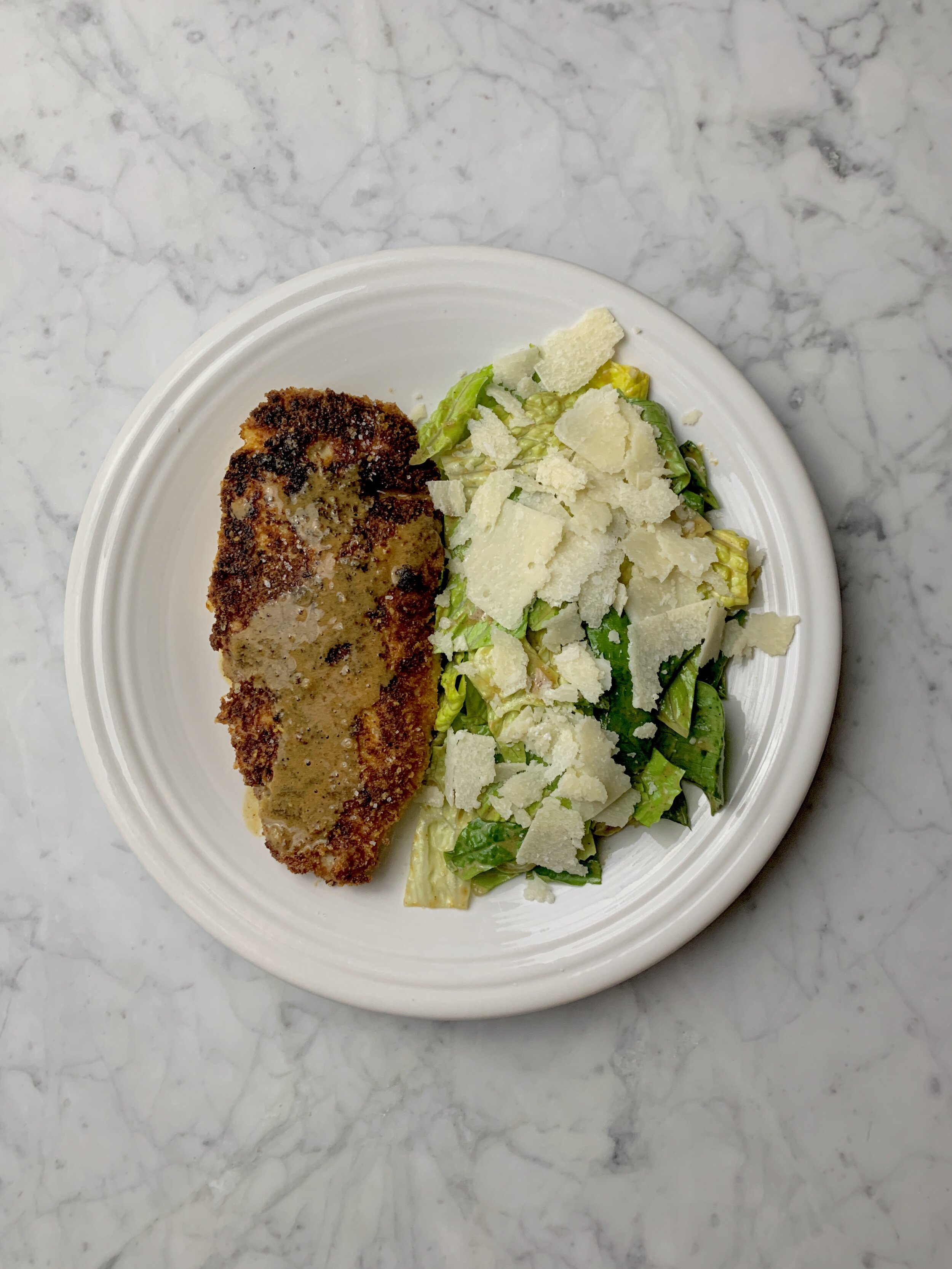
This week I made Milanese Style Chicken Breasts, which is one of my favorite ways to prepare chicken breasts. They have so much flavor and texture. Milanese is defined as a characteristic of the Italian city of Milan. So, this is an Italian dish, from Julia Child's Mastering the Art of French Cooking. Preparing something Milanese means to dredge thin slices of meat in egg and seasoned bread crumbs and frying it, which is precisely what I did.
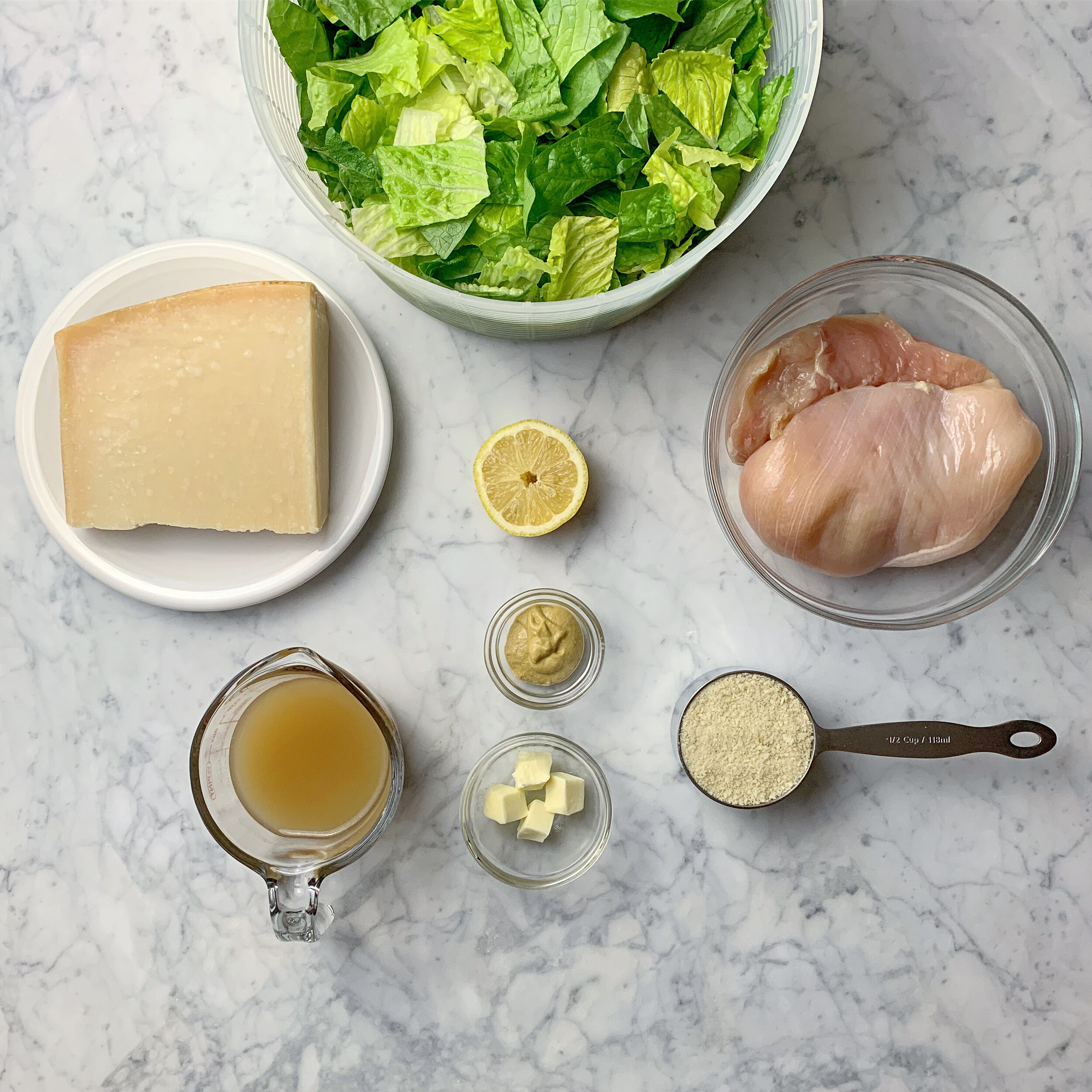
I make this dish a lot. It's a great weeknight dinner. I don't use a recipe, but I did turn to MTAFC for guidance. I started by brining the chicken breasts for 30 minutes. Chicken breasts get a bad wrap because they don't have as much flavor as chicken thighs. However, I love love chicken breasts. They are lean and can be really flavorful and delicious if prepared well. I think brining them is critical. It takes 30 minutes, and it's relatively hands-off. I use two tablespoons of kosher salt and two tablespoons of granulated sugar, dissolved in about one and a half cups of water. I submerge the chicken breasts in the brining solution and put them in the fridge while I prep the rest of my dinner.

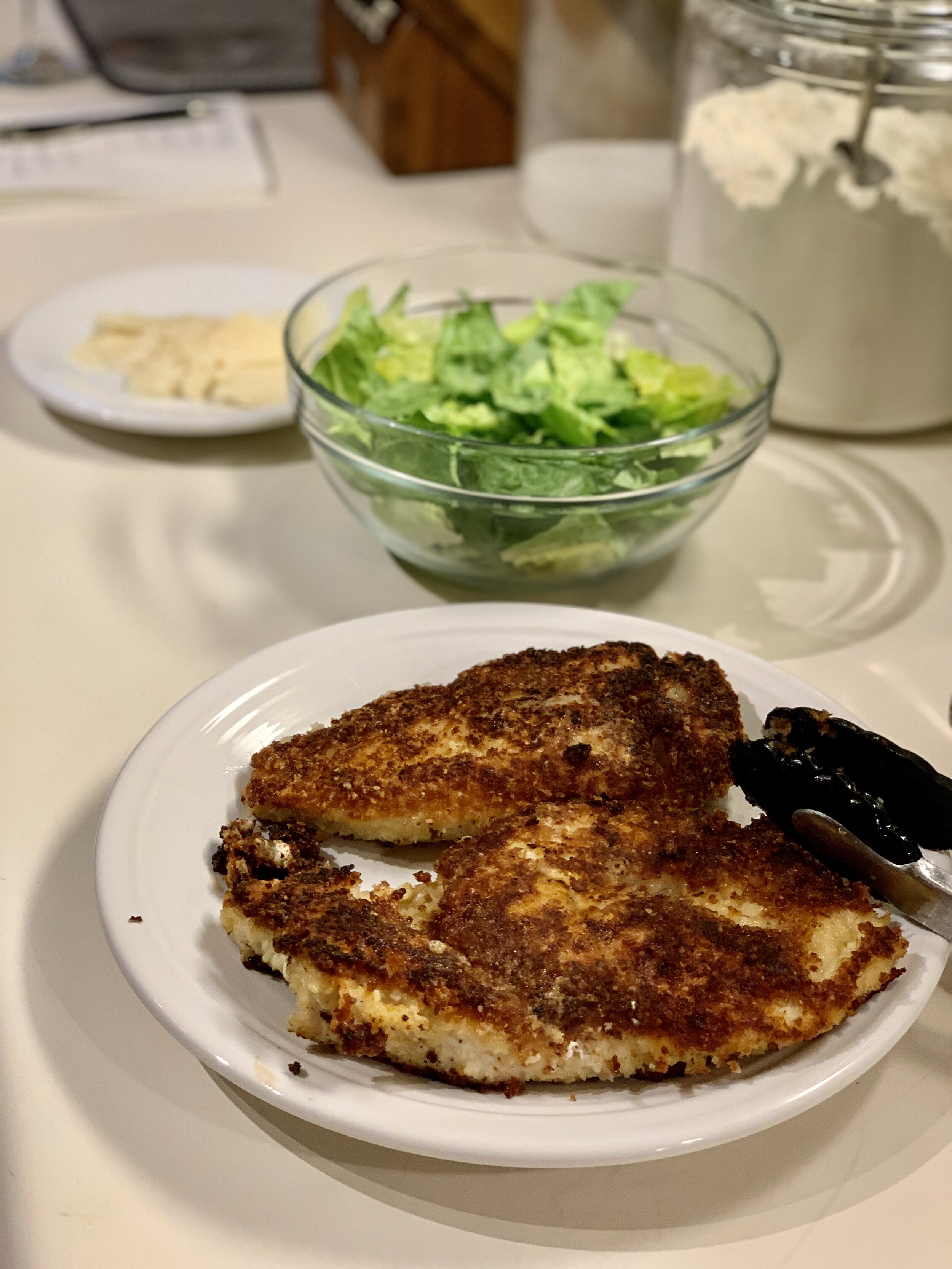
Once the chicken is brined, I dry it off thoroughly and pound it out to about ¼ of an inch thick. I season it with salt and pepper. I dredge the chicken breasts in flour and then an egg. For the final coating, I use a 1:1 combination of Japanese breadcrumbs, Panko, and finely grated Parmesan cheese. The Parmesan Cheese adds terrific flavor and texture when fried. Once the chicken is well coated, I pan fry in a cast-iron skillet with olive oil until the internal temperature of the chicken reaches 160˚.

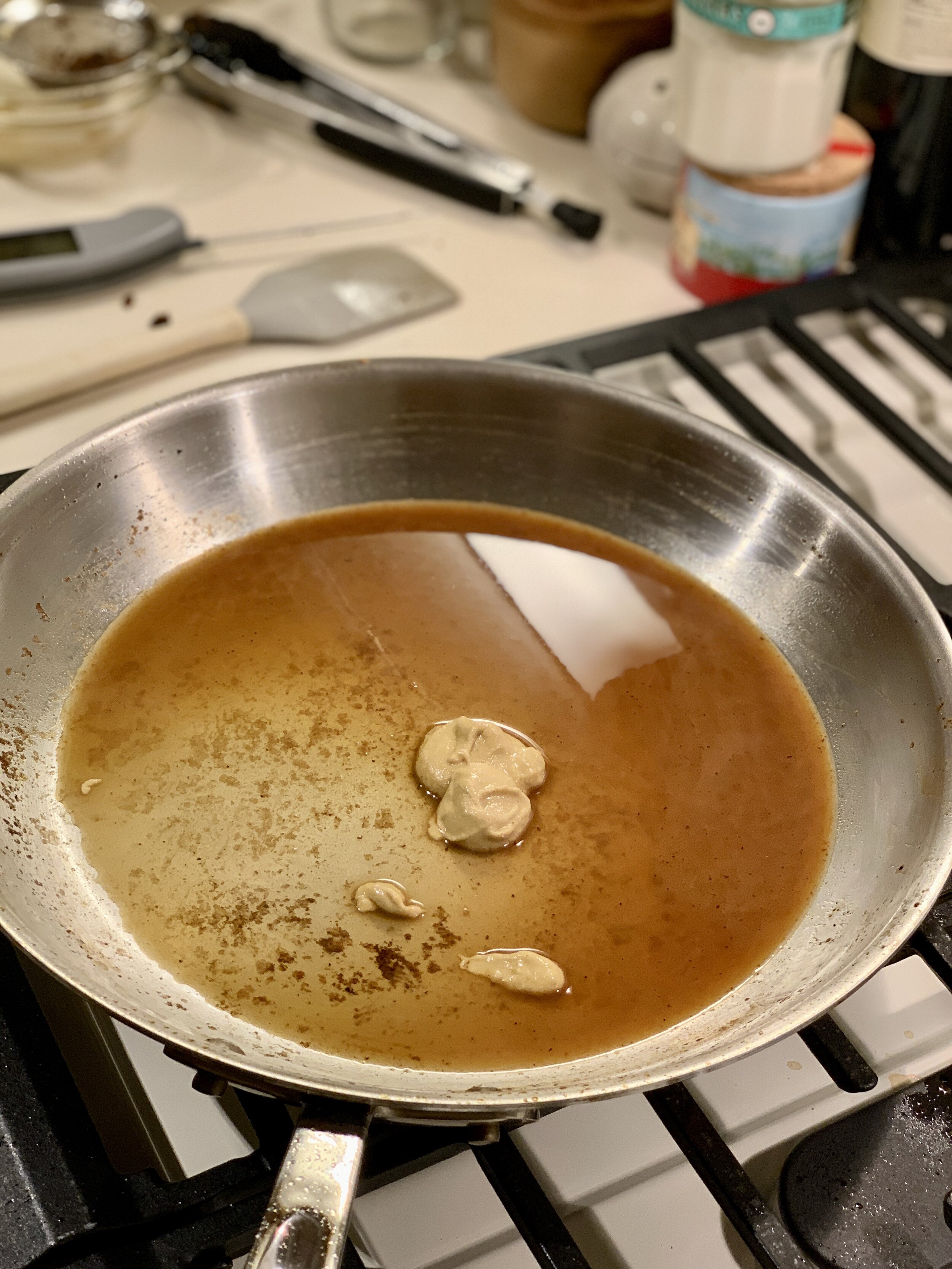
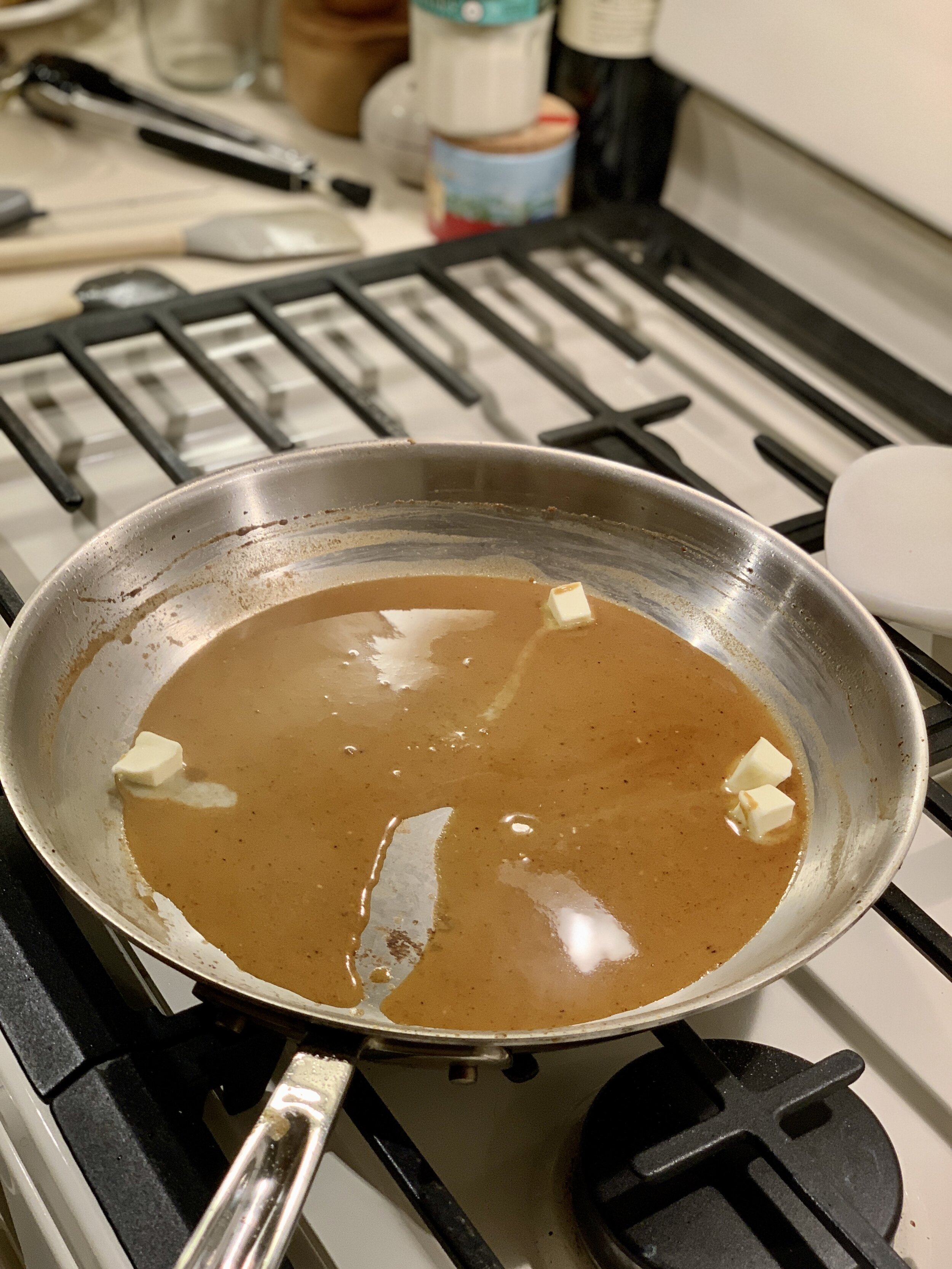
I keep the chicken breasts warm in a low oven on a baking sheet with a rack to maintain the crispy texture while I prepare the sauce. For the sauce, I use chicken stock and lemon juice to deglaze the pan. While the sauce cooks, I scrap up any browned bits that have stuck to the bottom of the pan. I also add dijon mustard and whisk until well combined and smooth. Once everything is homogenous and reduced by about half, I strain the sauce, wipe out the pan, and return the sauce to the pan. I add cold, small diced butter and swirl until combined. The butter helps thicken the sauce slightly and creates a velvety texture. I use the sauce to coat washed, dried, and chopped romaine lettuce. I top the salad with thin slices of parmesan cheese. I use any remaining sauce to top the chicken breasts. And that's it! It's so delicious and is a great weeknight dinner.

Next week, I'll be making Cast-Iron Steak! It's going to be delicious, for sure!

A note about COVID-19, my family is quarantined and has been for the last couple of weeks. We're getting out for walks around the neighborhood, but that's about it. As far as classes go, I haven't had any yet, but they will resume next week online. The week of March 16 was Spring Break, and the week of March 23, ICI was closed to give the instructors time to prepare for online classes. Right now, we're just taking life one day at a time, trying to remain grateful and hopeful, while also feeling anxious and scared for this new world.

Week 31 | Poulet Rôti (Roast Chicken)

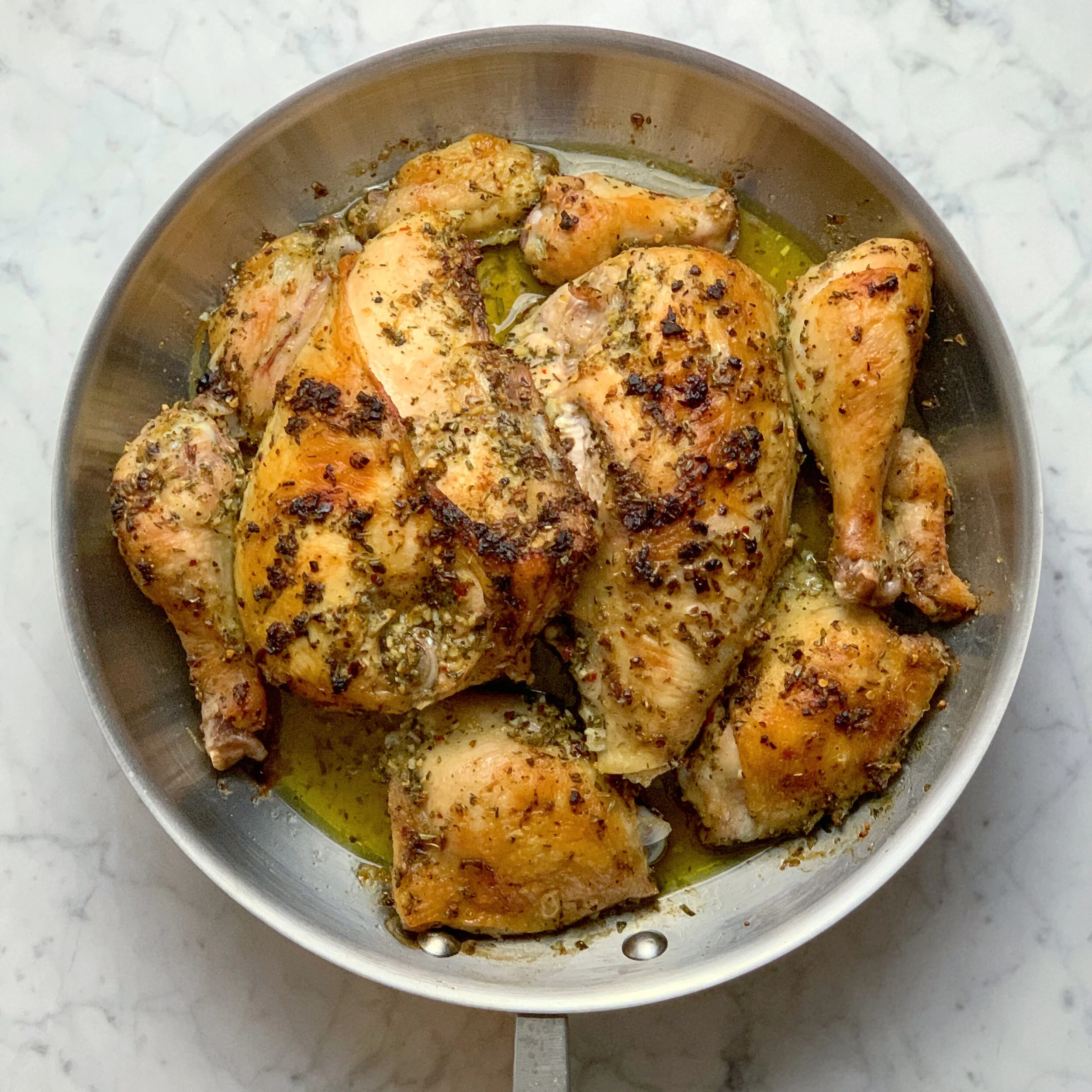
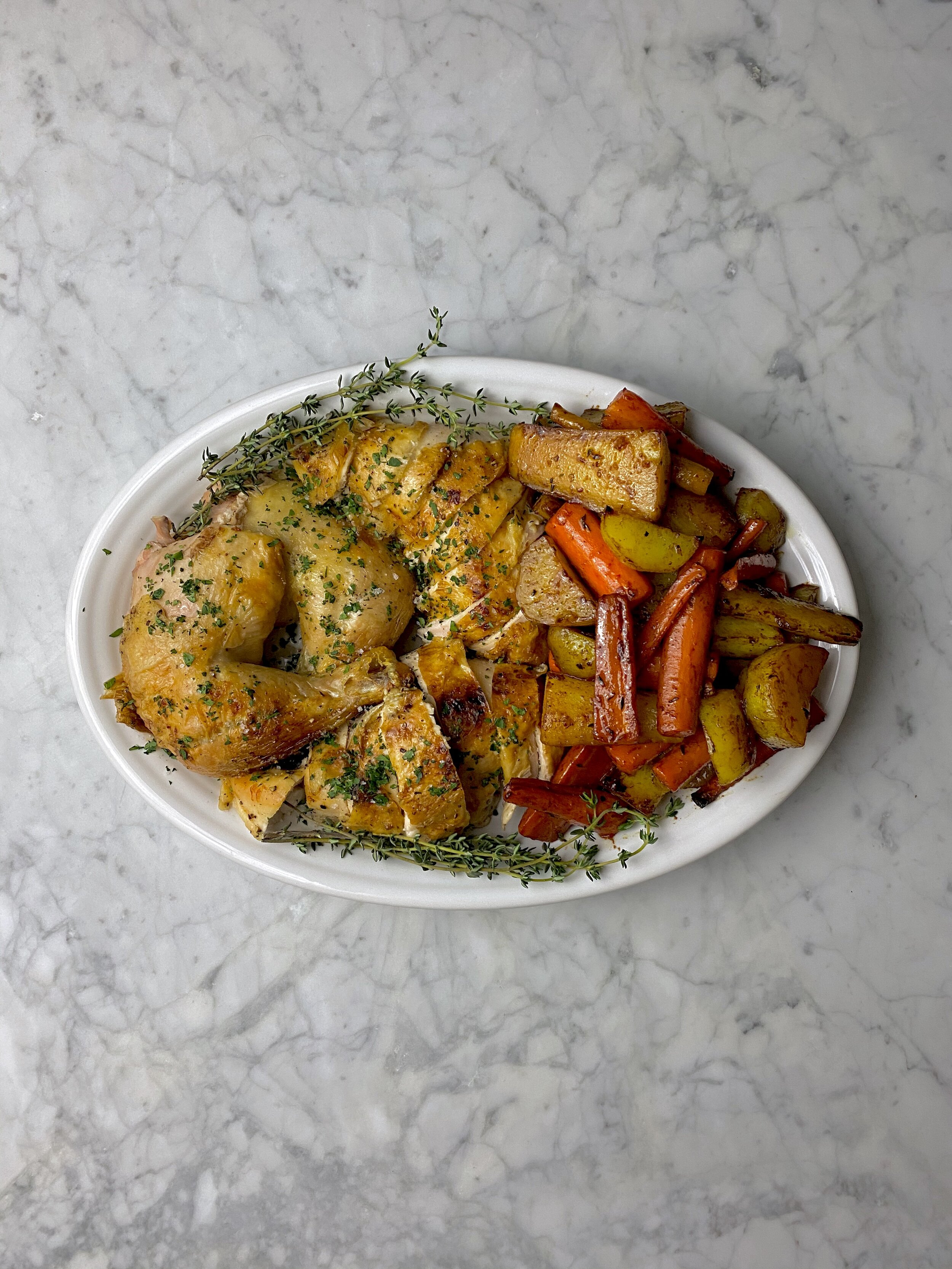
This week I made poulet rôti or roast chicken. There are a million recipes for roast chicken. I have tried most of them, and they are all great if you love roast chicken, which I very much do.

Julia Child's recipe for roast chicken suggests roasting the chicken with your favorite root vegetables. I decided to make my absolute favorite version of roast chicken, which is from Cooks Illustrated. I usually only make it once or so a year, because it's fussy. You cook the chicken and the vegetables separately, which allows you to cook them perfectly.

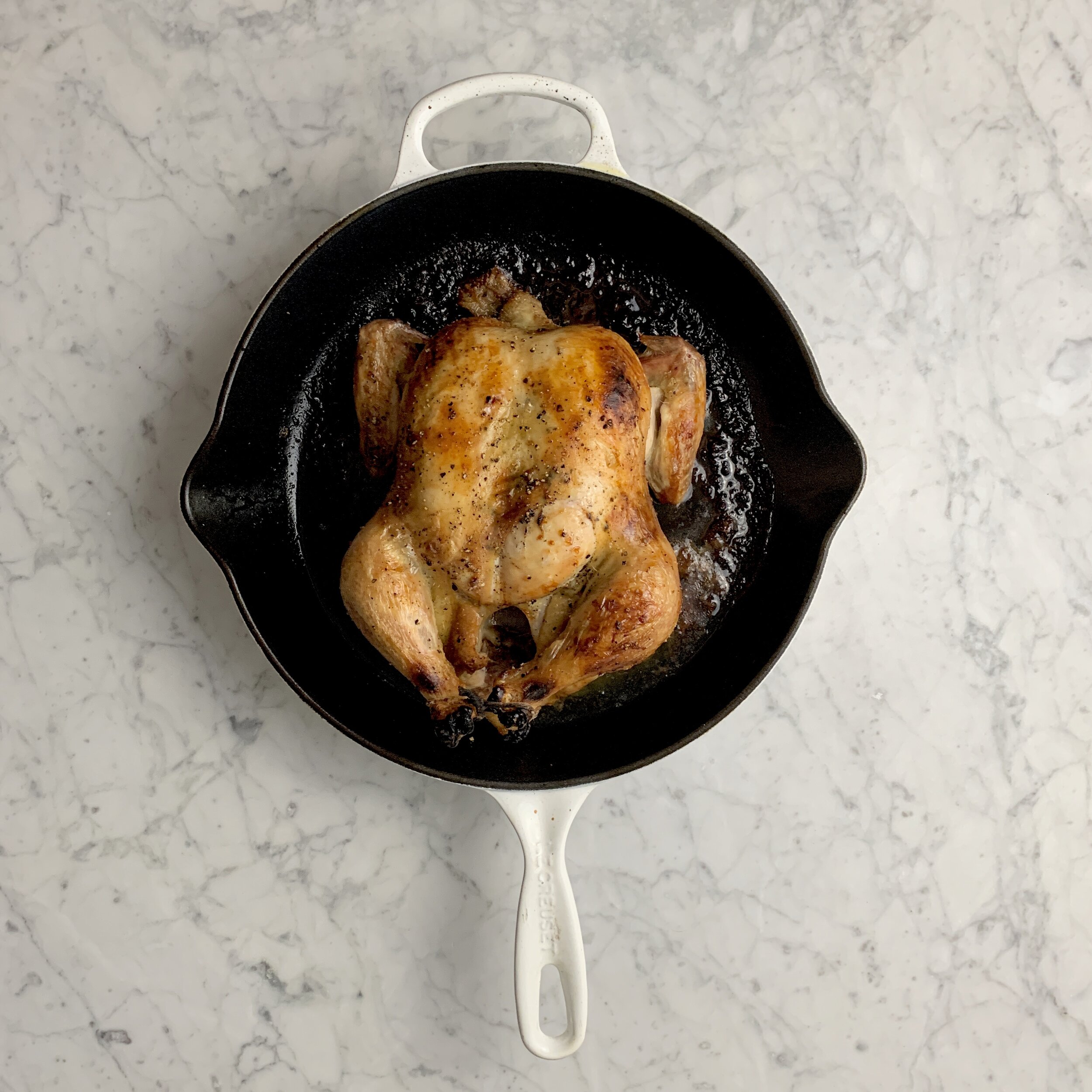
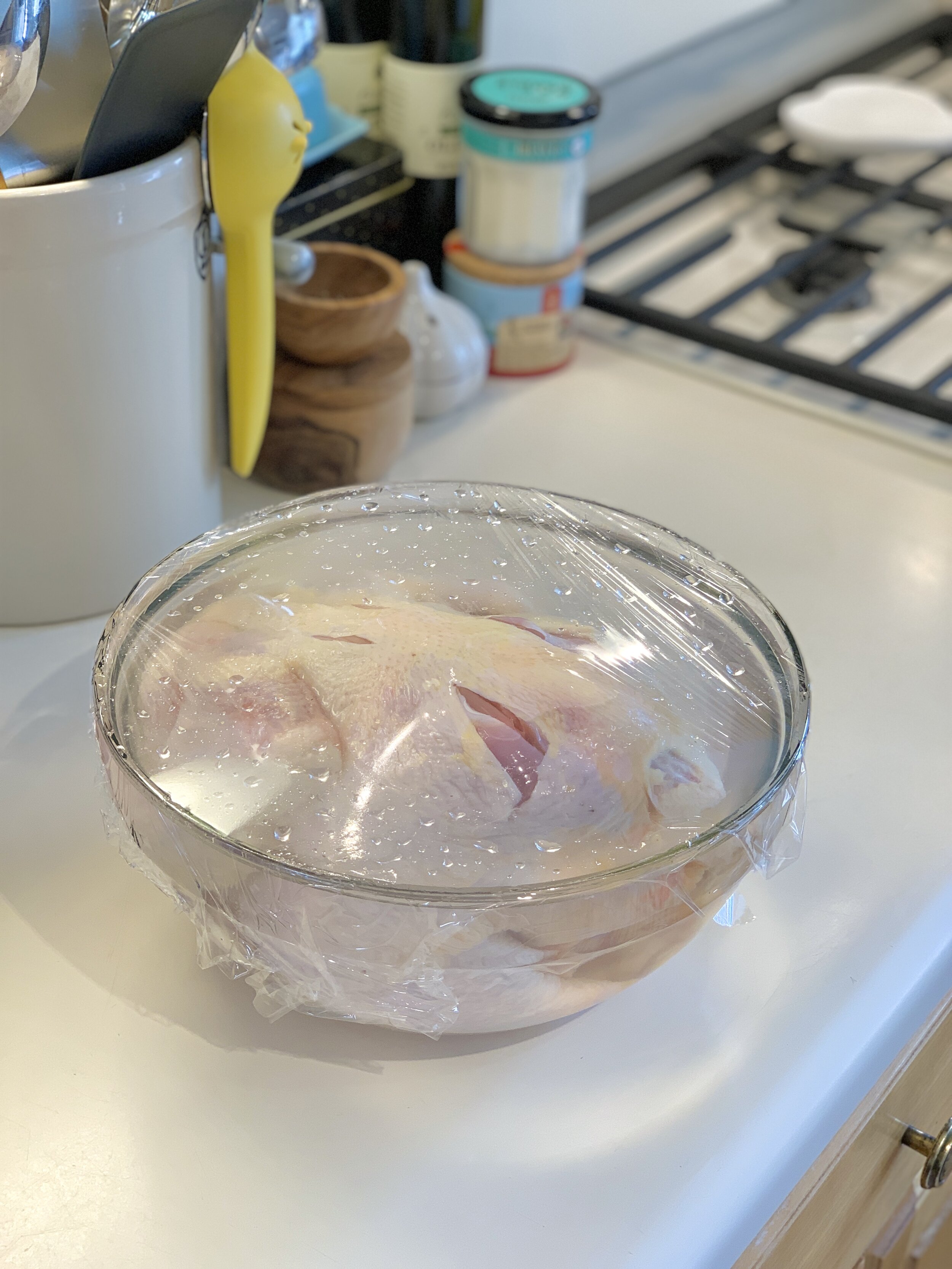
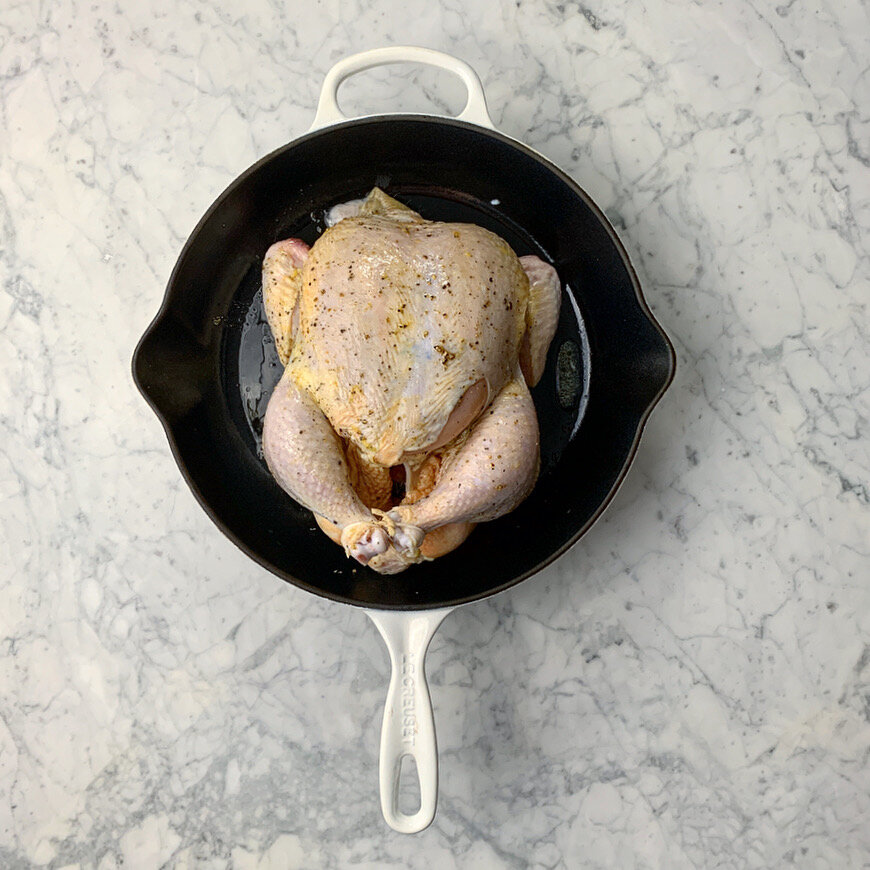
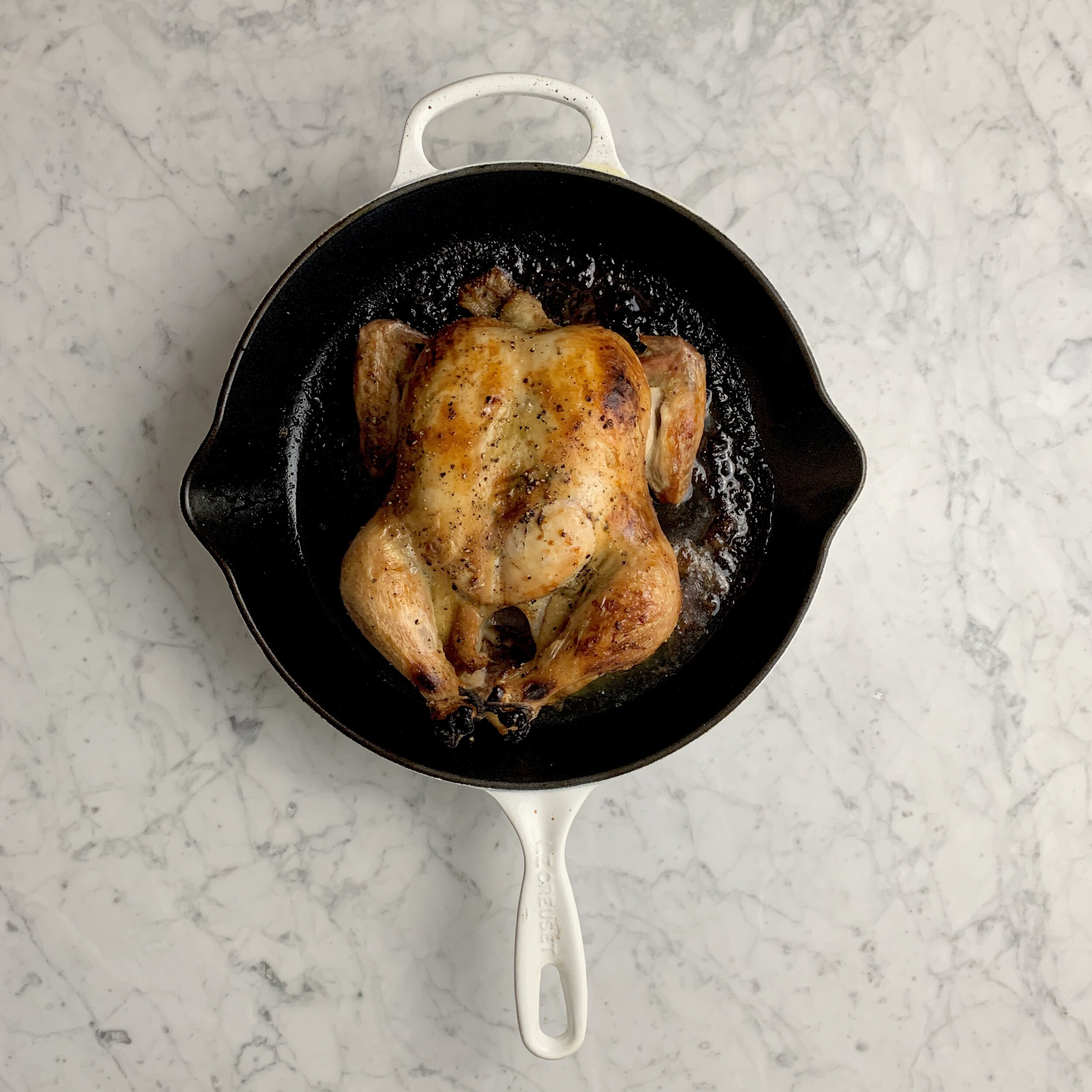
I started by brining a whole roaster chicken (3½ - 5 pounds) in two quarts of water with ½ cup of sugar and ½ cup of kosher salt for about an hour. Near the end of the hour, I preheated the oven to 450˚, and I placed a 12 inch cast iron skillet in the oven about 15 minutes before the chicken finished brining.

It's crucial to dry the chicken thoroughly before seasoning it liberally with olive oil and freshly ground pepper. Then I placed the chicken, breast side up, in the cast iron skillet and roasted it for 30 minutes.

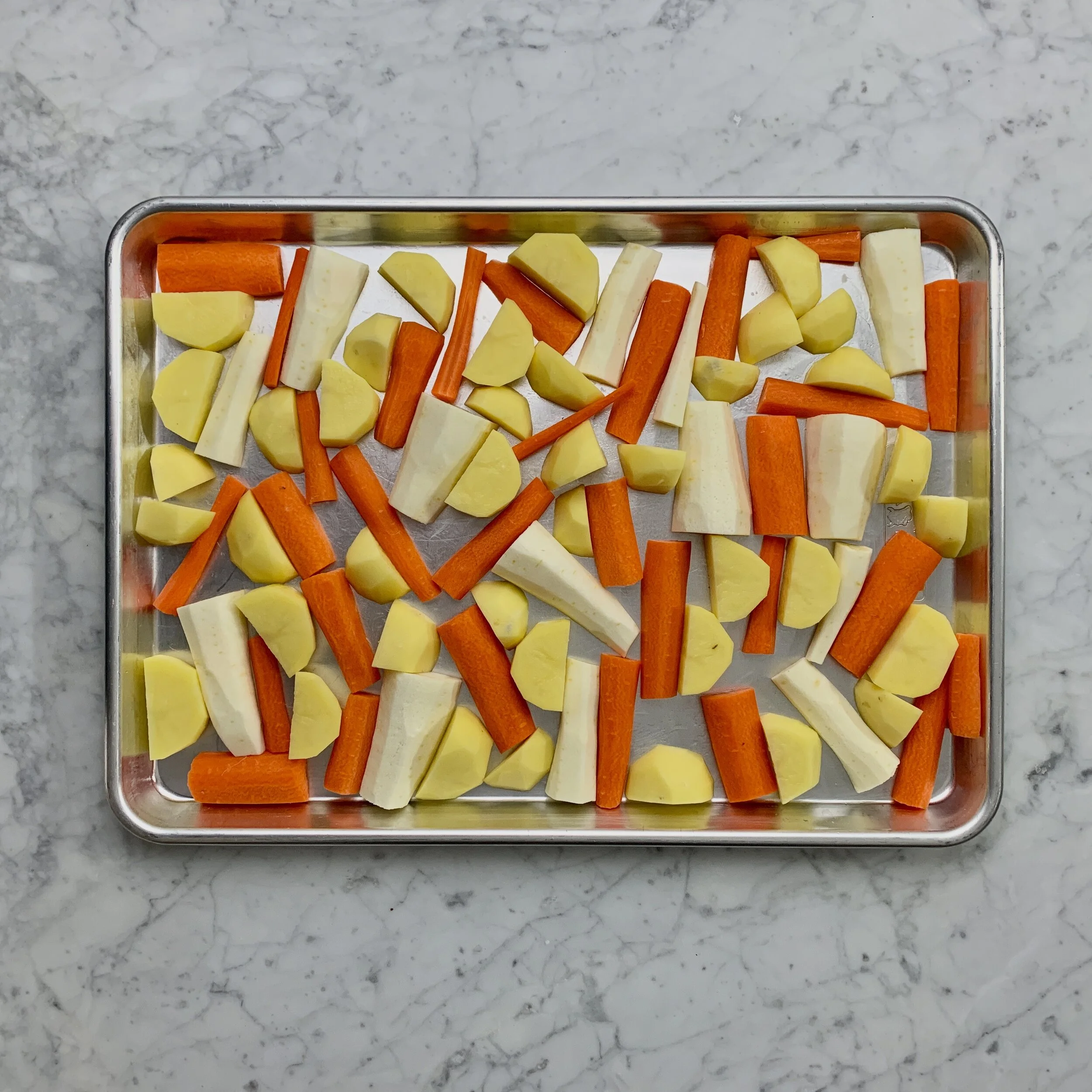
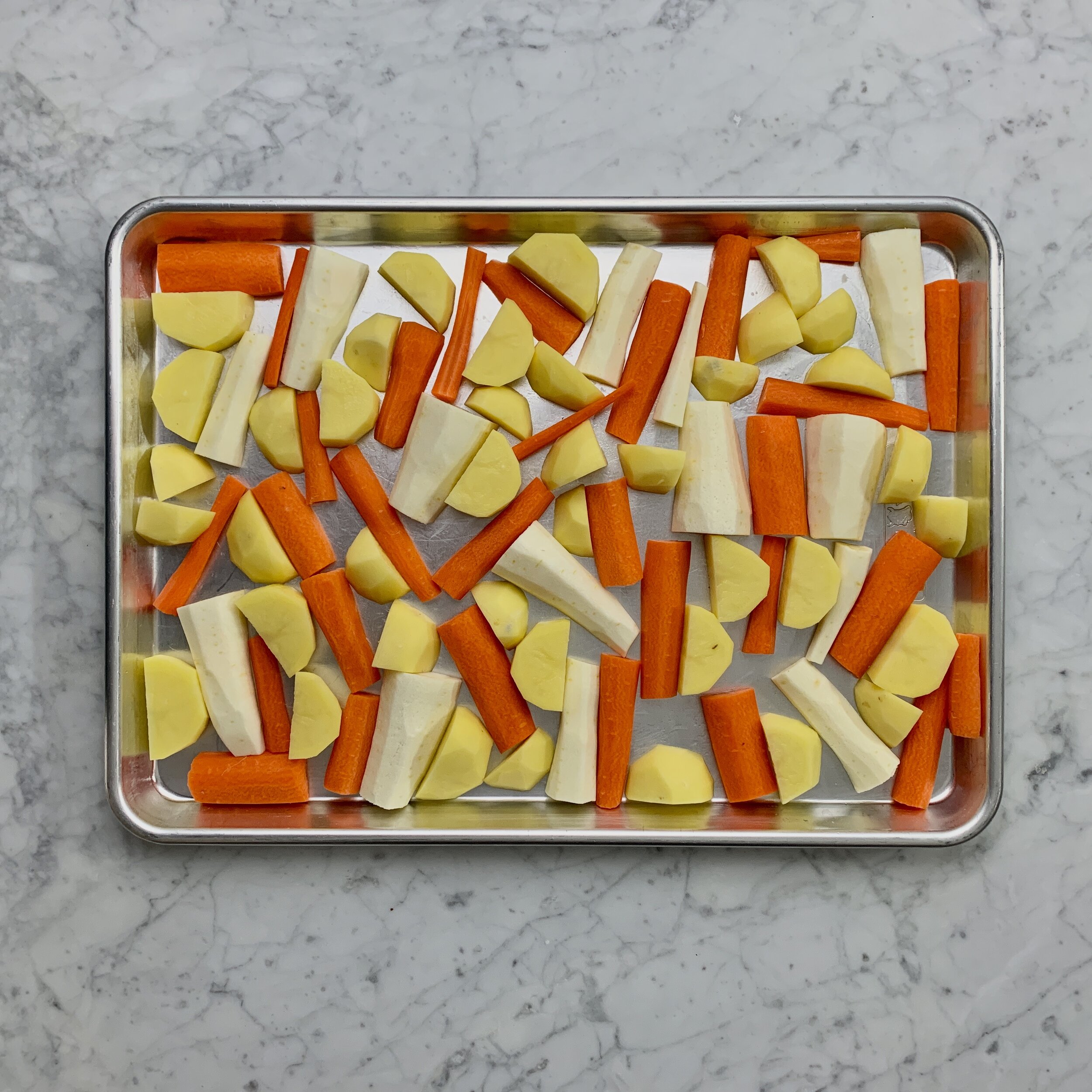
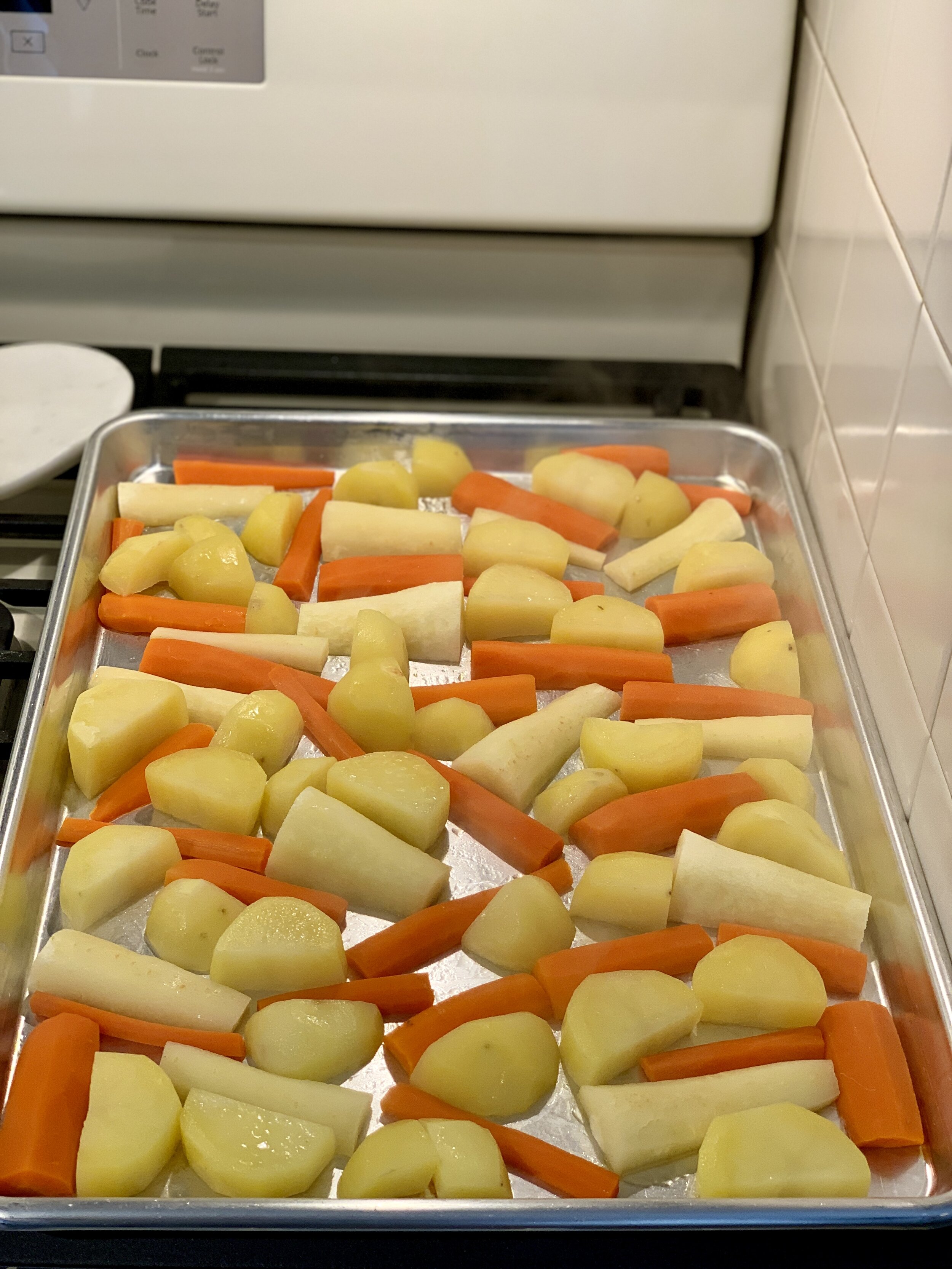
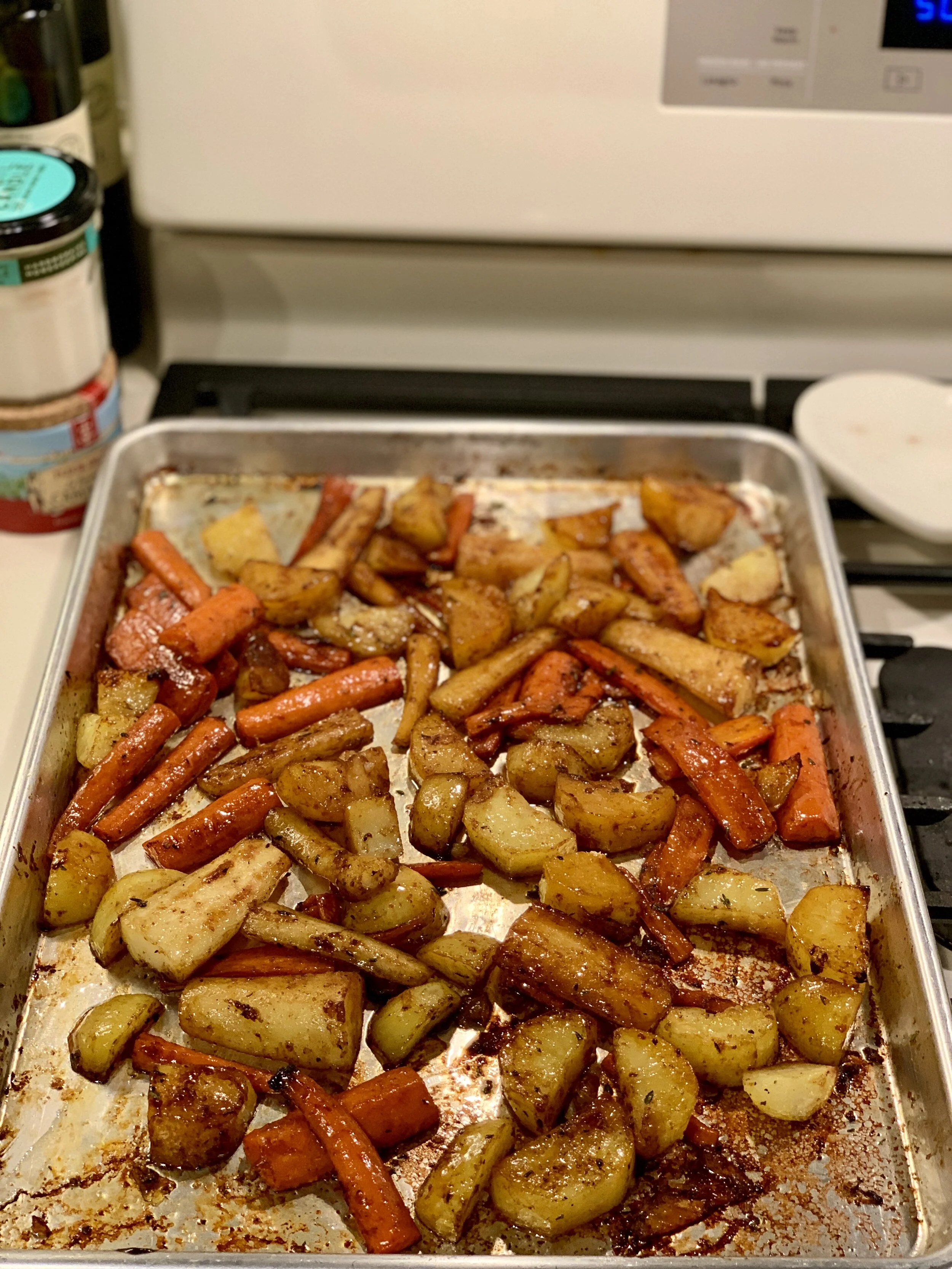
Meanwhile, I prepared carrots, parsnips, and Yukon gold potatoes. I cut them to similarly-sized chunks and spread them out evenly on a baking sheet. Then I wrapped the baking sheet tightly with foil. I then placed the sheet pan in the oven for 30 minutes, at the same time as the chicken.

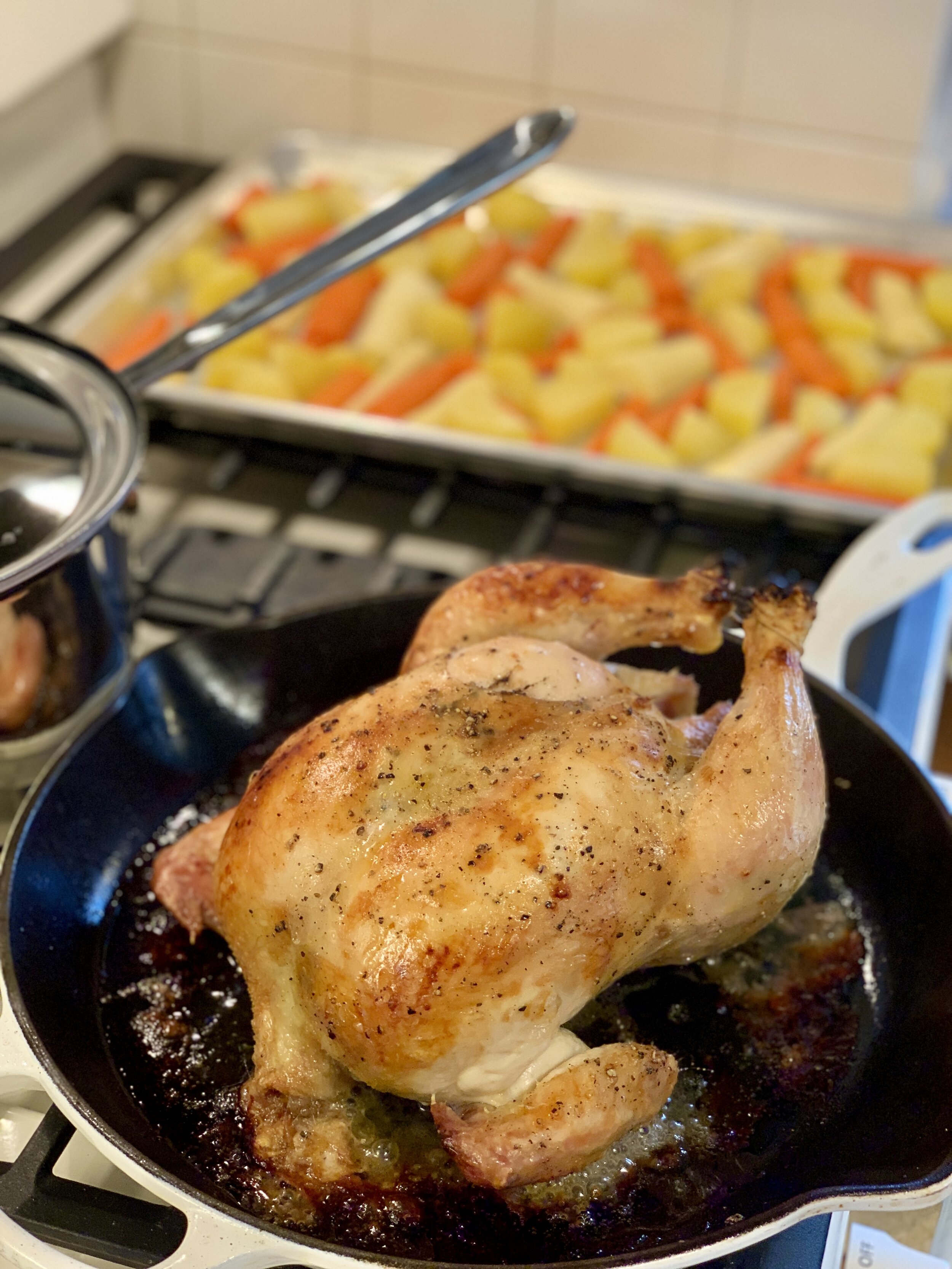
After 30 minutes, I removed the vegetables from the oven, removed the foil, and set them aside. I placed the chicken back into the oven and roasted it until the breast meat reached an internal temperature of 160˚. It takes about 15 - 30 additional minutes, depending on the size of the chicken.

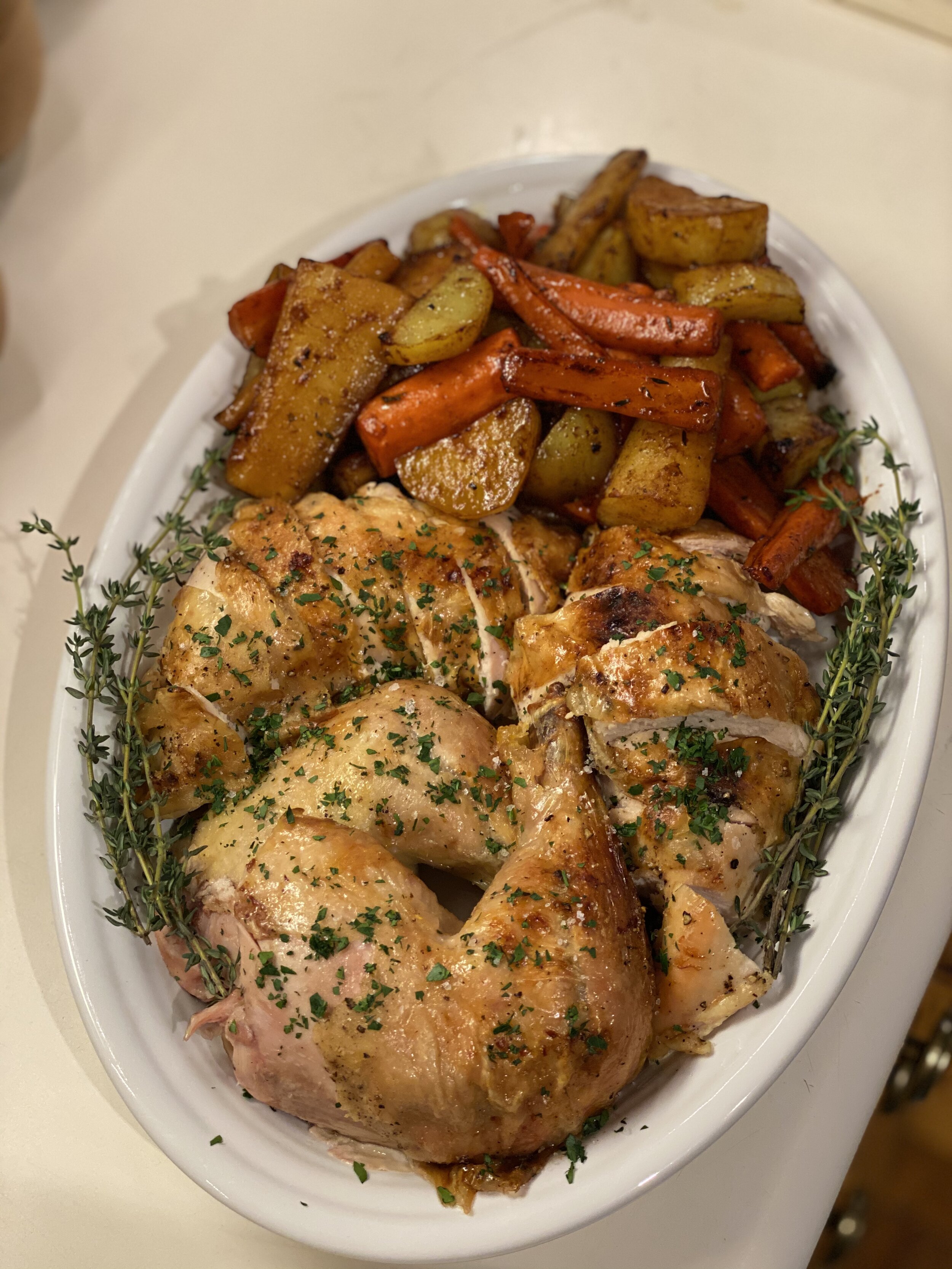
Once the chicken finishes cooking, I let it rest, uncovered on a carving board, for 20 minutes. It will stay hot, don't worry. Keeping it uncovered will help the skin to stay crispy. I then poured ¼ cup of water into the cast iron skillet and scraped up the brown bits. I strained the sauce and let it sit for 5 minutes and skimmed three tablespoons of fat off. I used the chicken fat to coat the vegetables on the sheet pan and reserve the sauce.

I then put the vegetables back into a 500˚ oven, tossing occasionally. Once nice and brown, I coated them with the reserved sauce and cooked for another five to ten minutes. The sauce gets nice and thick. When the vegetables cook in the oven, I carved the chicken.

As I mentioned, this recipe is a little fussy, but it's worth it. The vegetables are so flavorful, and the chicken is so moist. I served the chicken and vegetables with Parmesan Rice, but it would be a complete meal on its own. The chicken and vegetables are also great leftover.

Next week I'll be making a crispy parmesan chicken. Now, I know I said that roast chicken was my favorite meal, but crispy parmesan chicken might be my favorite weeknight meal.

Week 30 | Filet de Poisson Poché aux Herbes

This week I made Herb-Roasted Fish en Papillote. It's fish steamed in parchment paper and a delicious and light method for cooking fish.

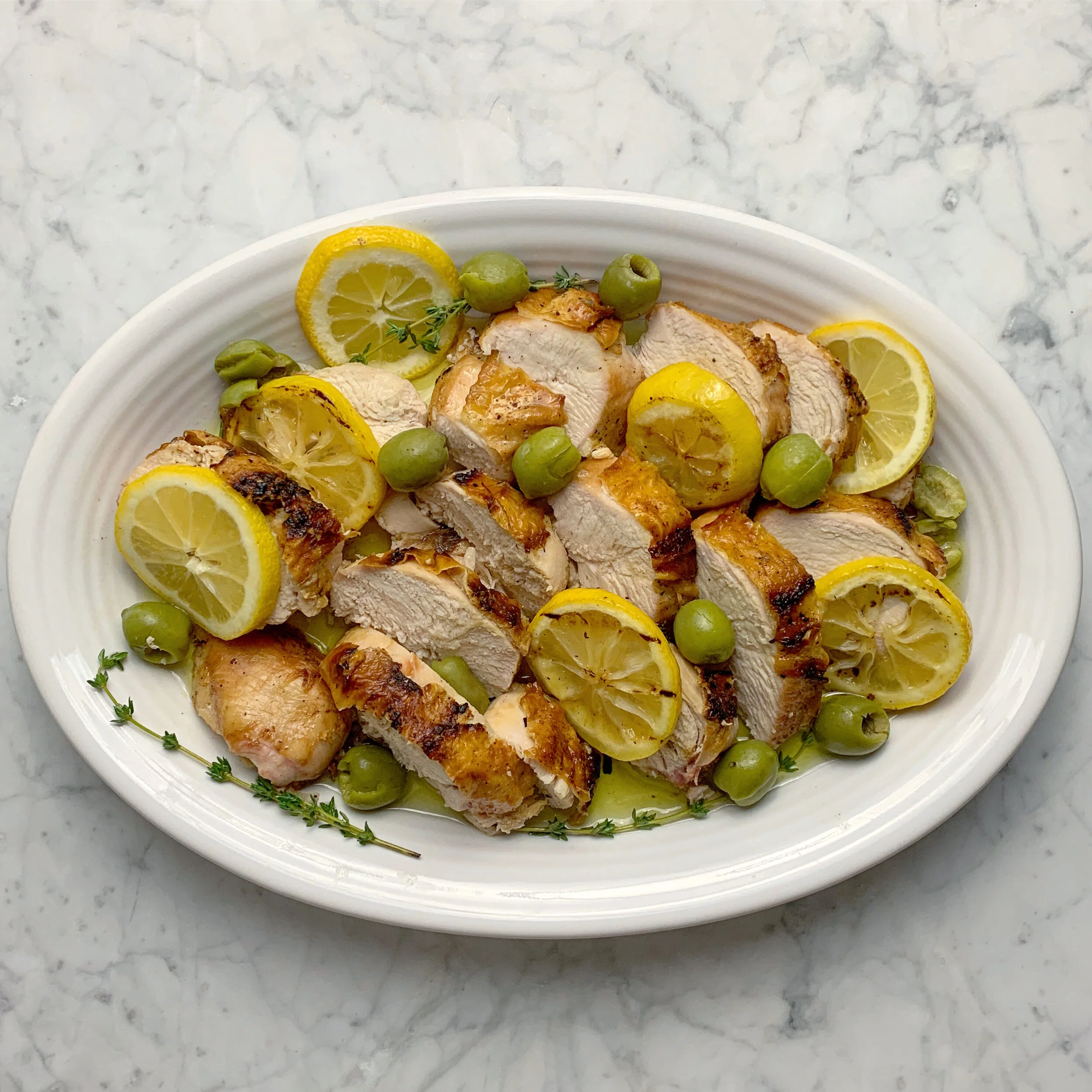
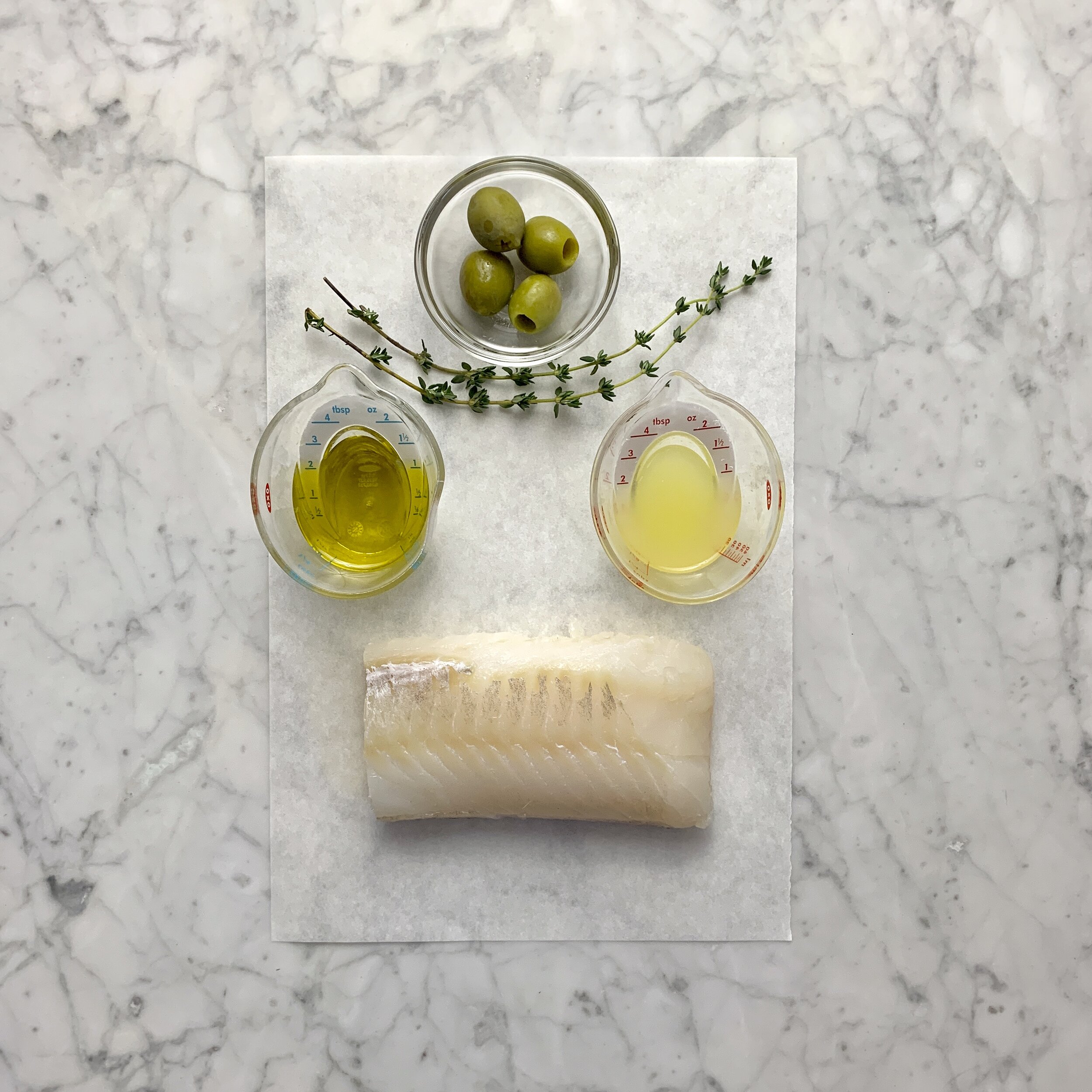
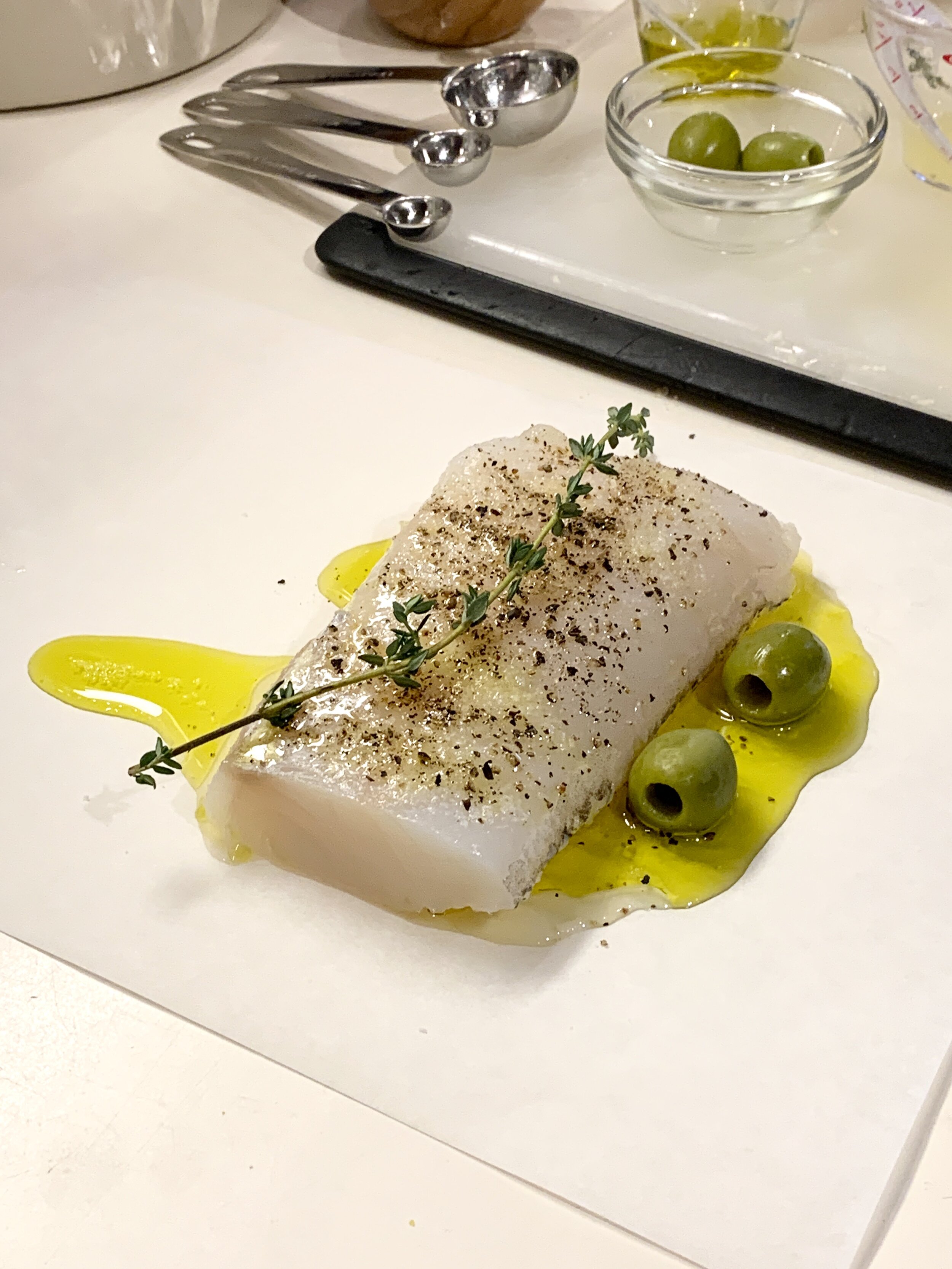
I used Ina Garten's recipe because it's so delicious. I used an 8-ounce piece of cod. I placed the fish on a half sheet of parchment paper. I drizzled the fish with one tablespoon of lemon juice and one tablespoon of olive oil. I then seasoned the fish with ½ teaspoon of kosher salt and ¼ teaspoon of pepper. I laid one stem of fresh thyme on top of the fish and put two Cerignola olives on the side of the fish.

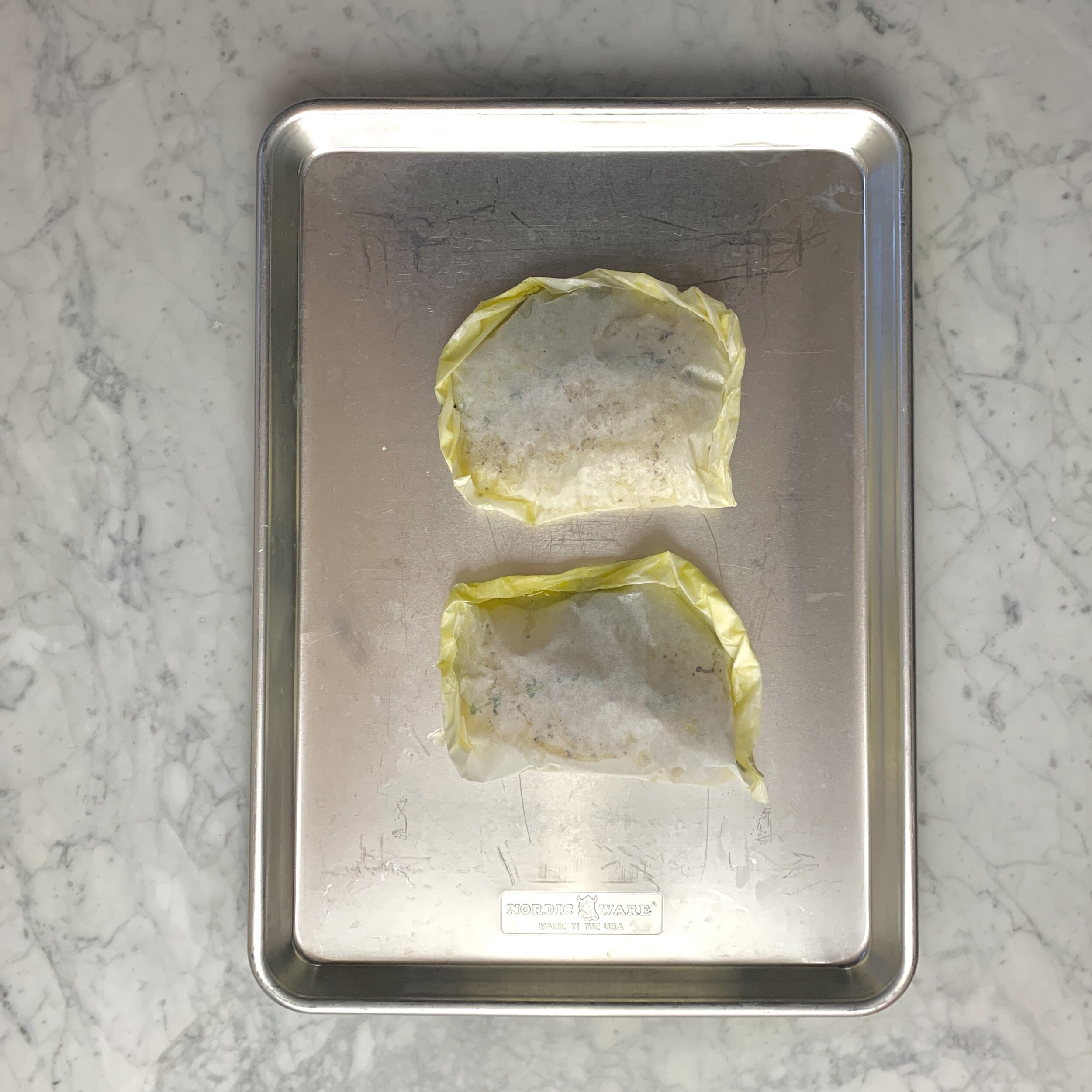
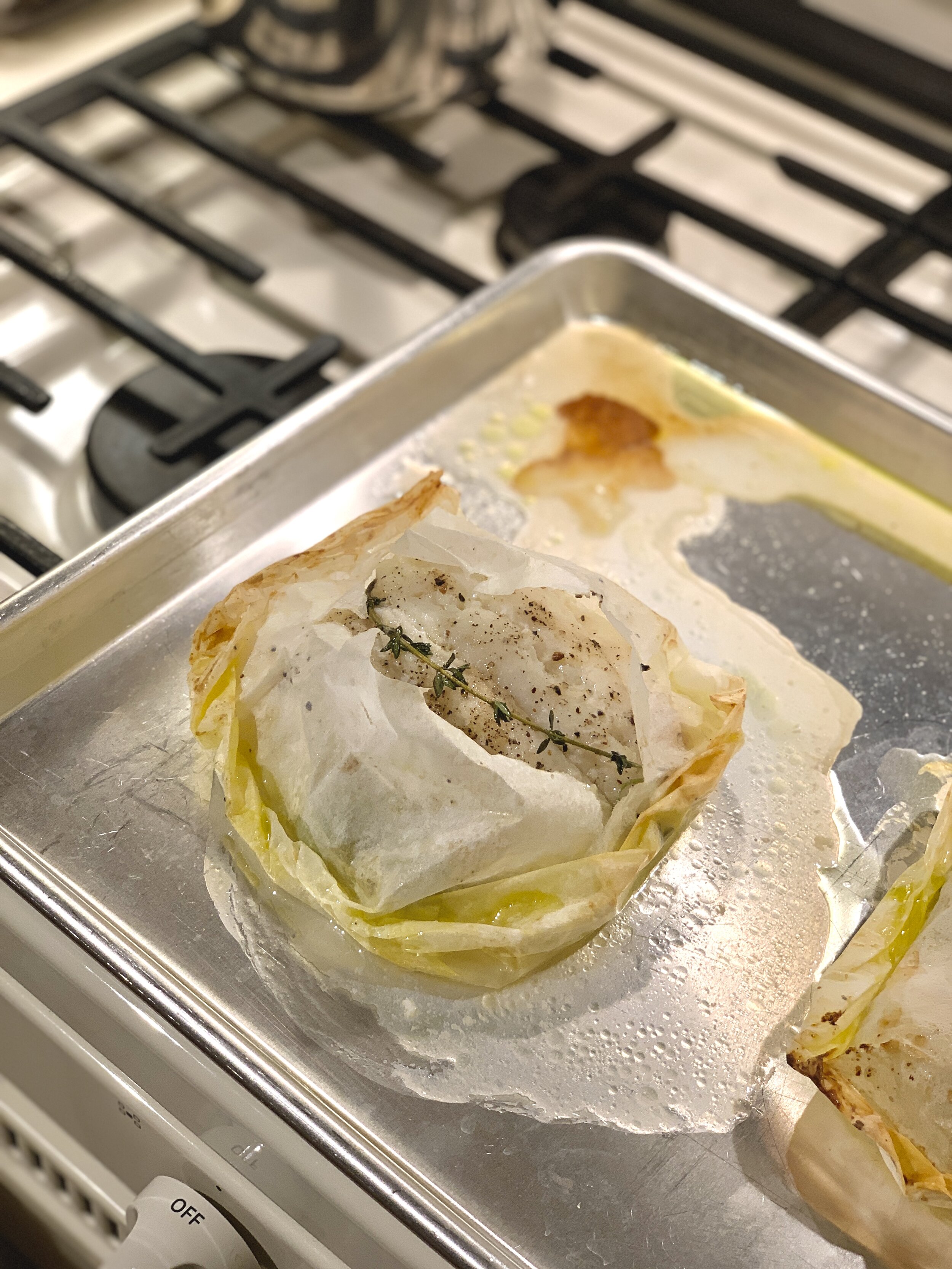
I beat an egg with one tablespoon of water and brushed it around the edge of the parchment paper. I then carefully folded it in half and folded the edge in on itself, making a tight package. I placed the packet on the sheet pan and cooked it for about 15 minutes in a 400˚ oven.

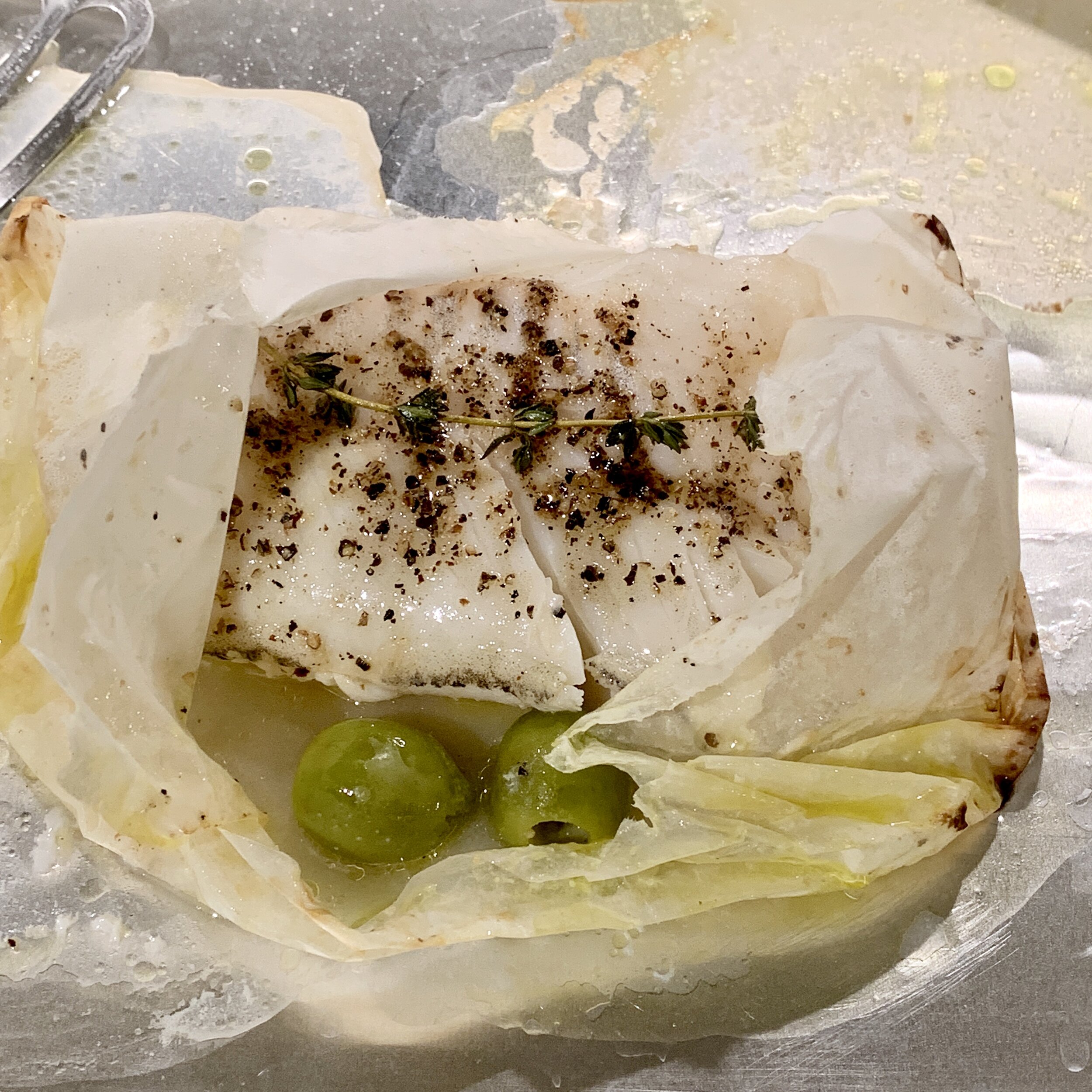
The fish was cooked well and had so much flavor. I tried to serve the fish in the parchment paper, but it had so much liquid in it. It was a mess. So, I ended up taking the fish out of the parchment and serving it on a plate with the olives. I also served this dish with creamy polenta and a spinach salad with a lemon vinaigrette. It was a great little dinner.

Next week I'll be making roast chicken, which might be my all-time favorite dinner.

Week 29 | Gruyère and Chive Soufflé

This week I made a soufflé! I have always wanted to make one but had never taken the time. I was intimidated because I always hear how difficult they can be to make. Cooking with eggs is a little fussy. Eggs are powerhouse proteins, and they are very easy to overcook.

I opted for a Gruyére and Chive Soufflé. Egg dishes tend to be very rich, especially when you add cheese. I like to use the bite of either chives or green onion to cut the richness of eggs.

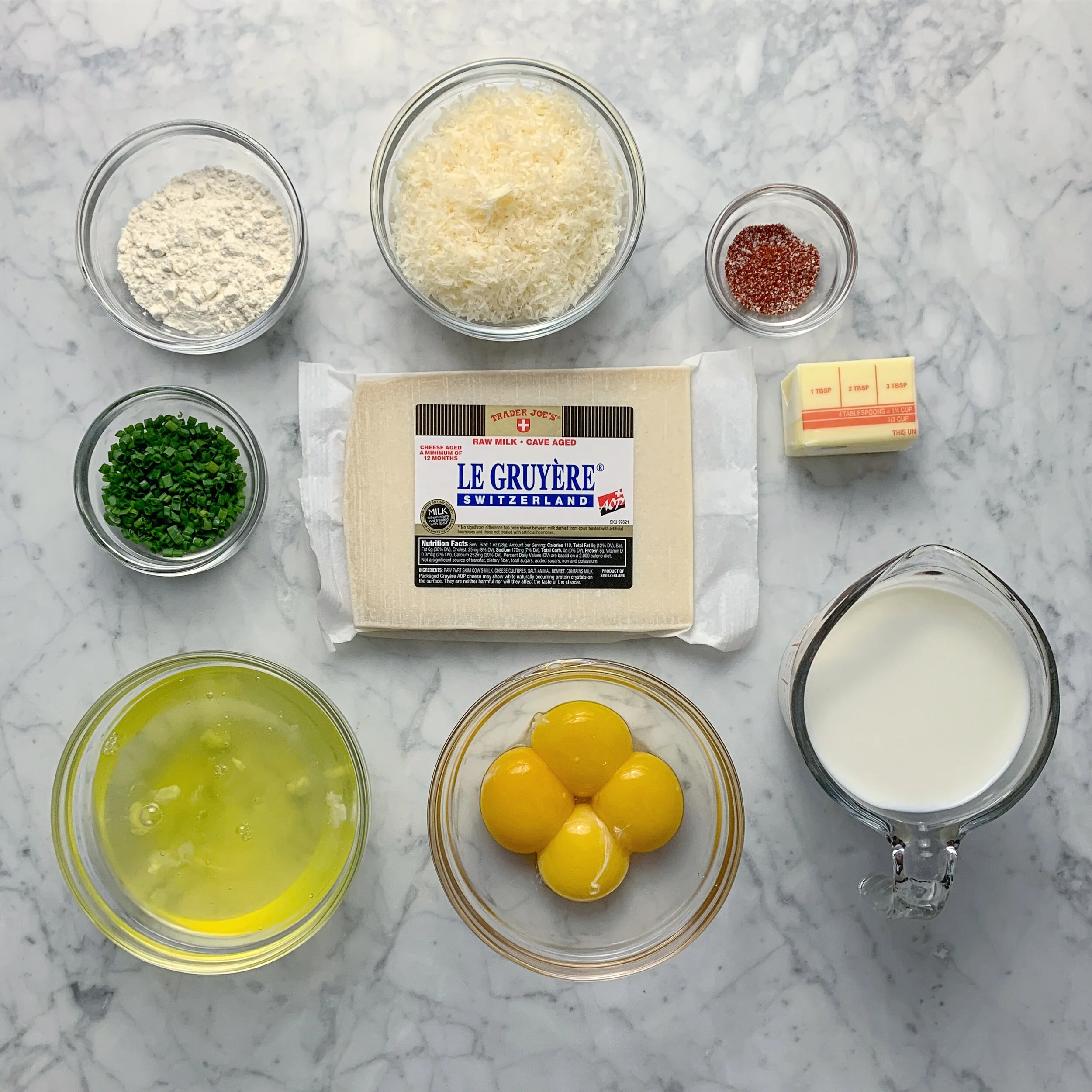
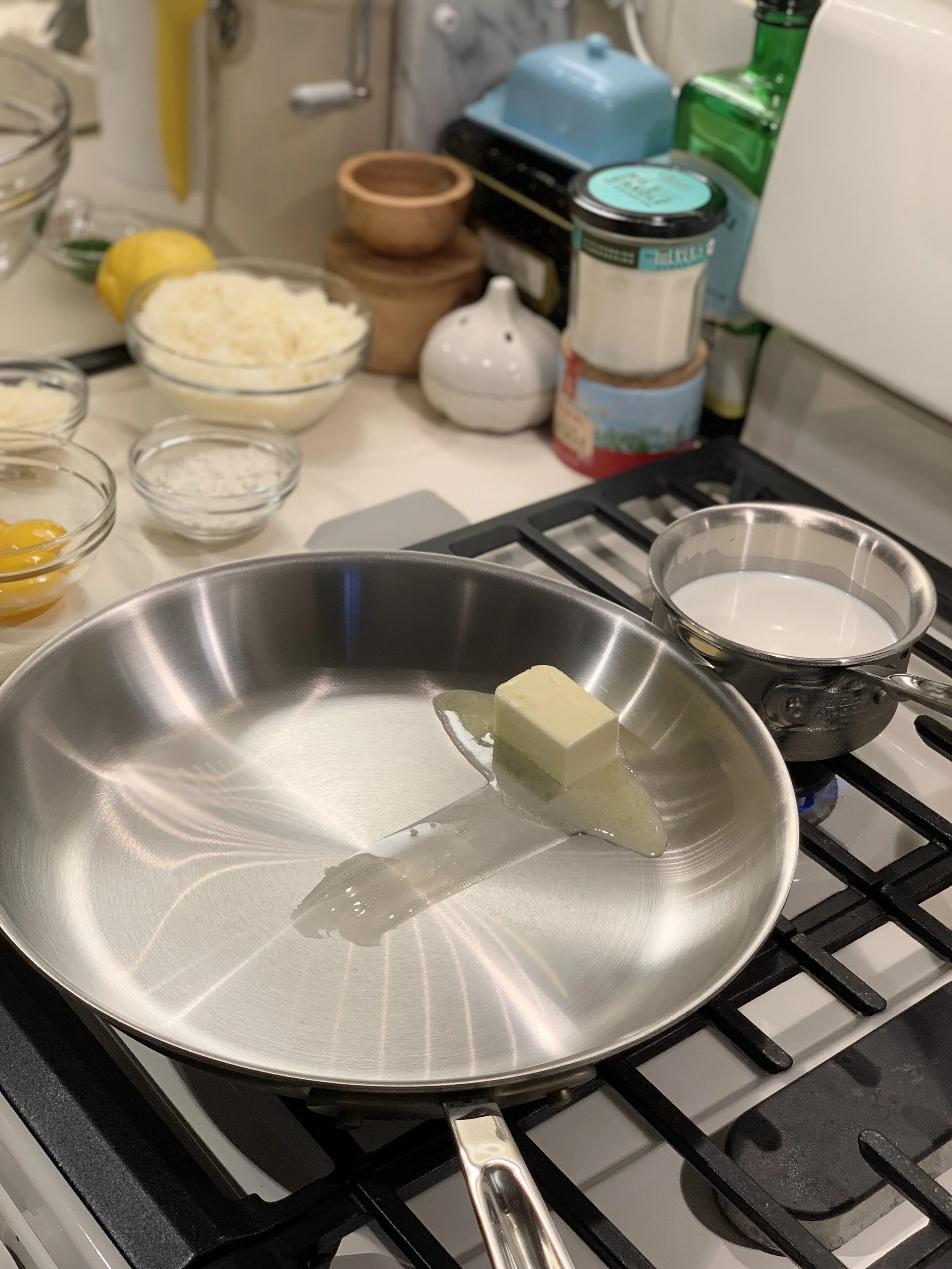
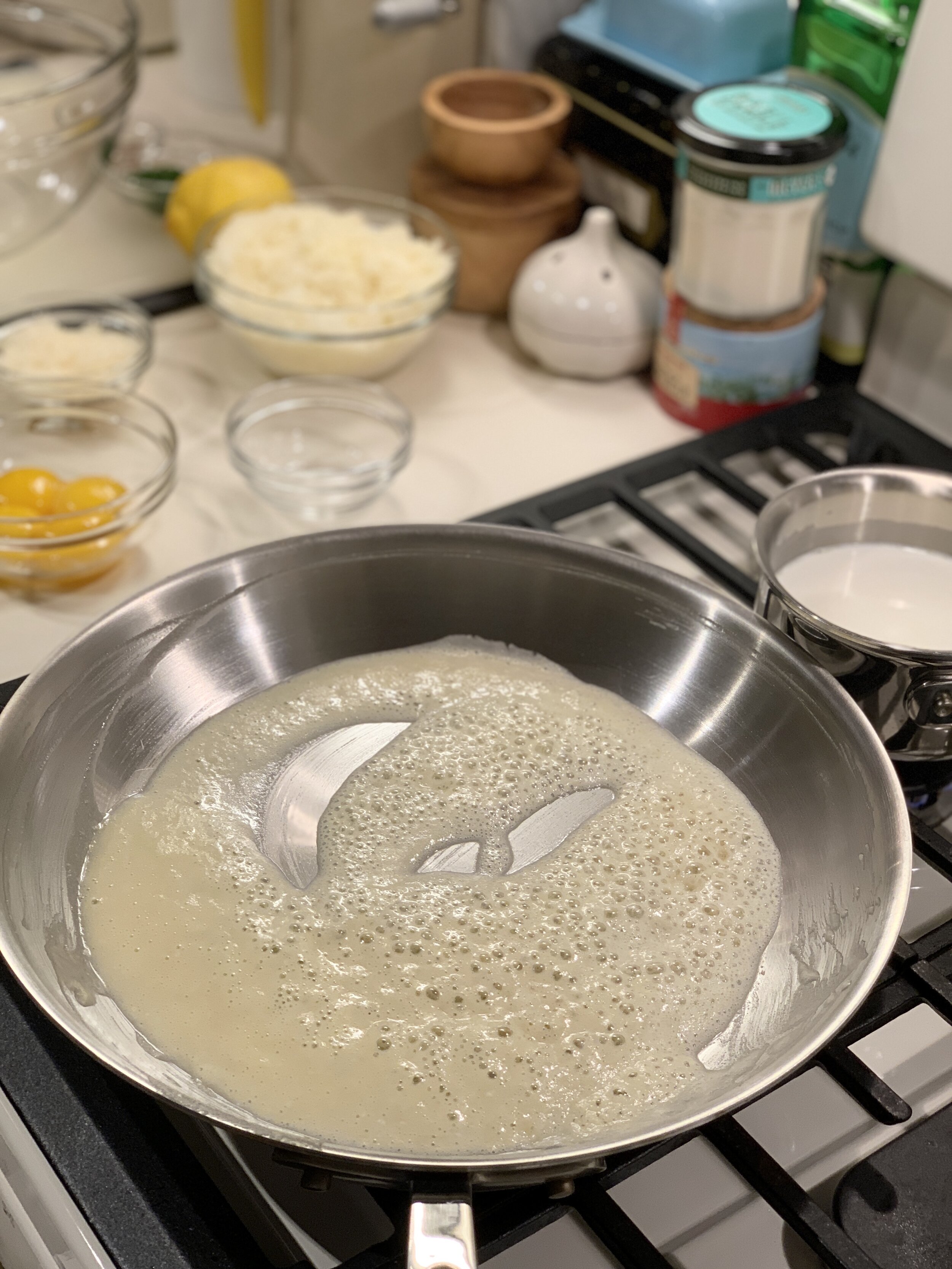
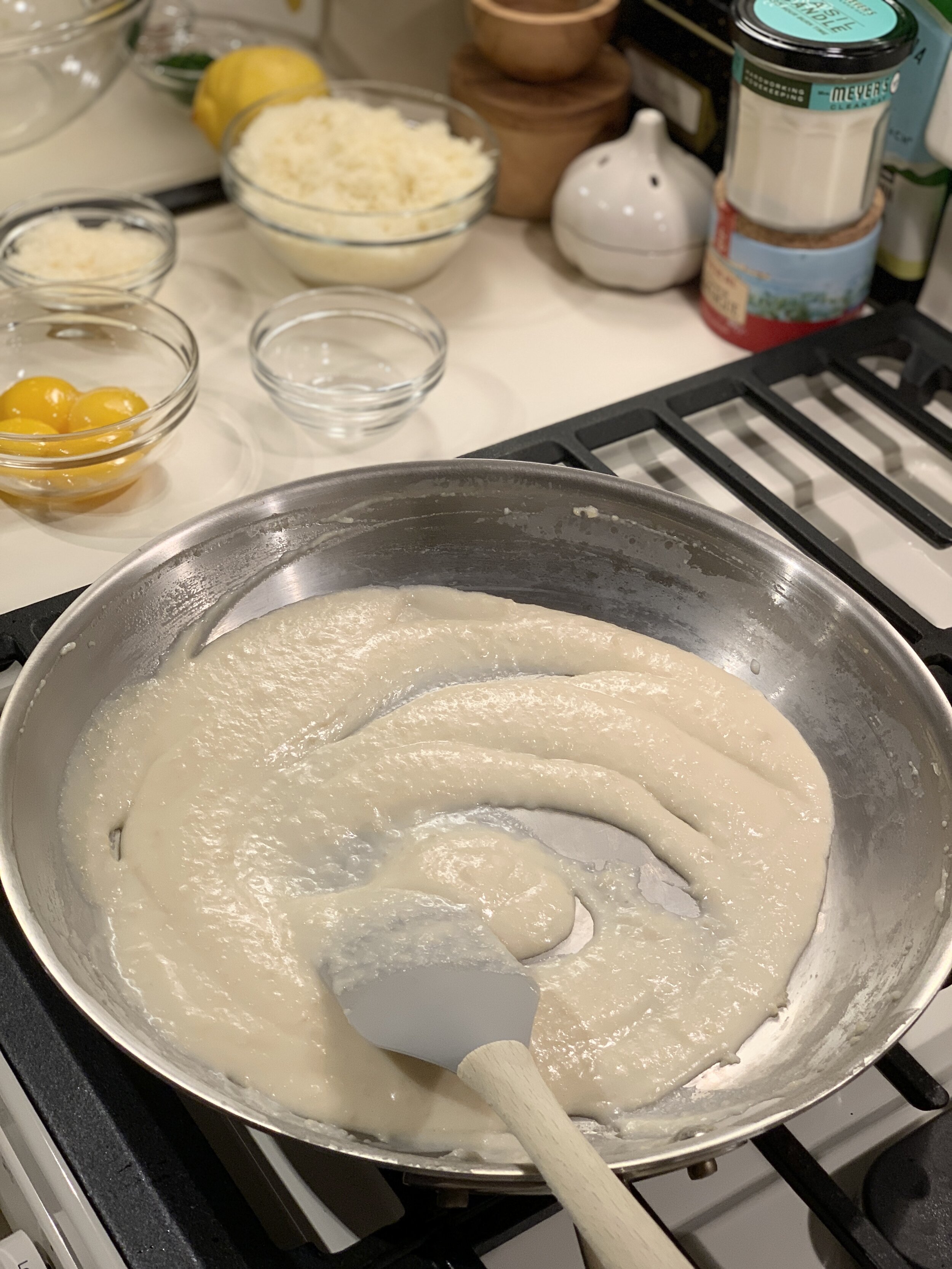
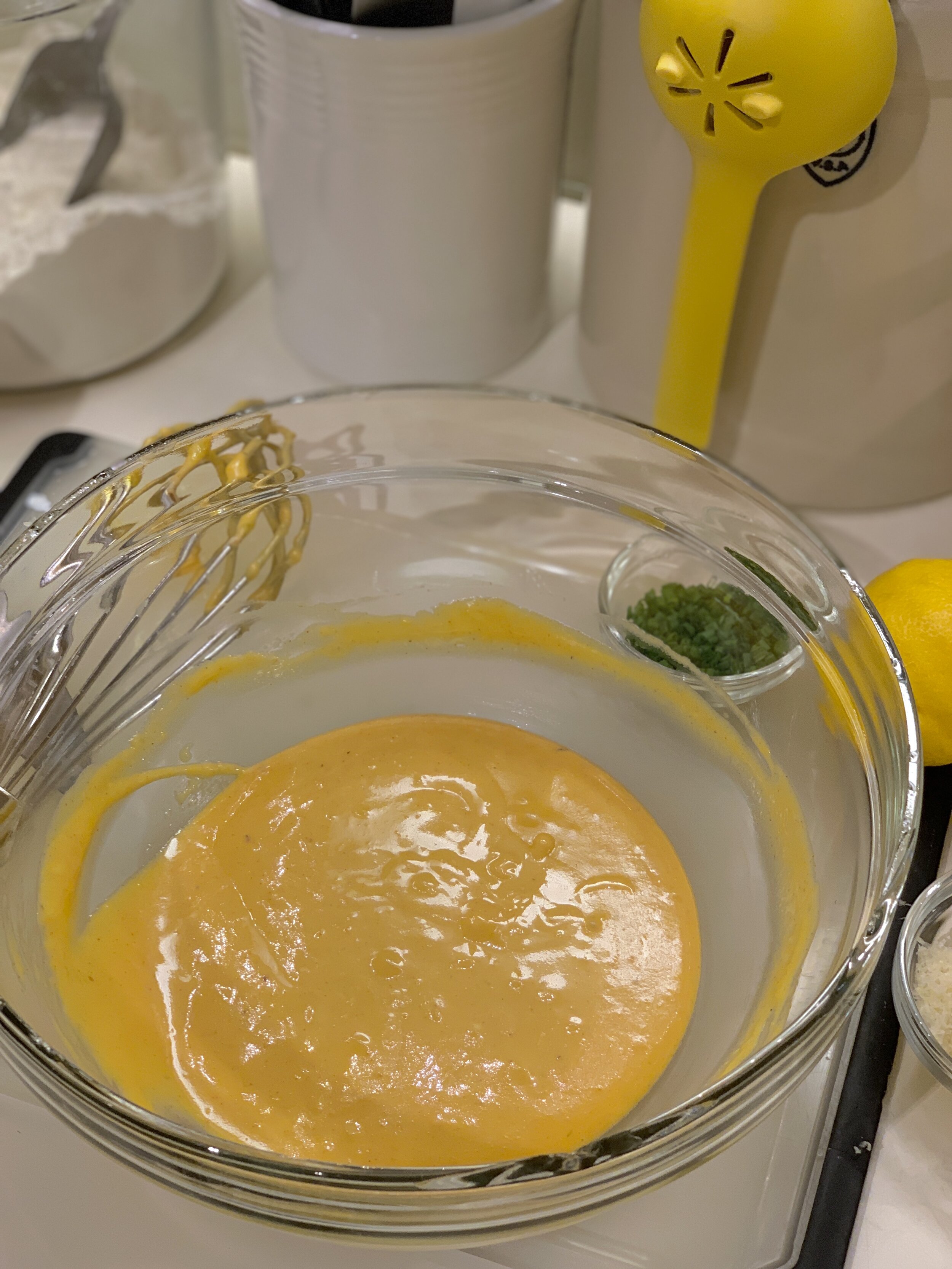
I started by heating a cup of whole milk until steaming in a small saucepan. While the milk was heating, I melted three tablespoons of butter in a large skillet. I whisked in three tablespoons of flour and cooked for about three minutes. I turned off the heat and whisked in the warmed milk, making a roux. I turned the heat back on and cooked the roux for another three minutes. I then added salt, paprika, and a pinch of nutmeg. I turned the heat off and whisked in four egg yolks, one at a time, making sure they were thoroughly combined. I transferred the egg yolk to a large bowl and set aside.

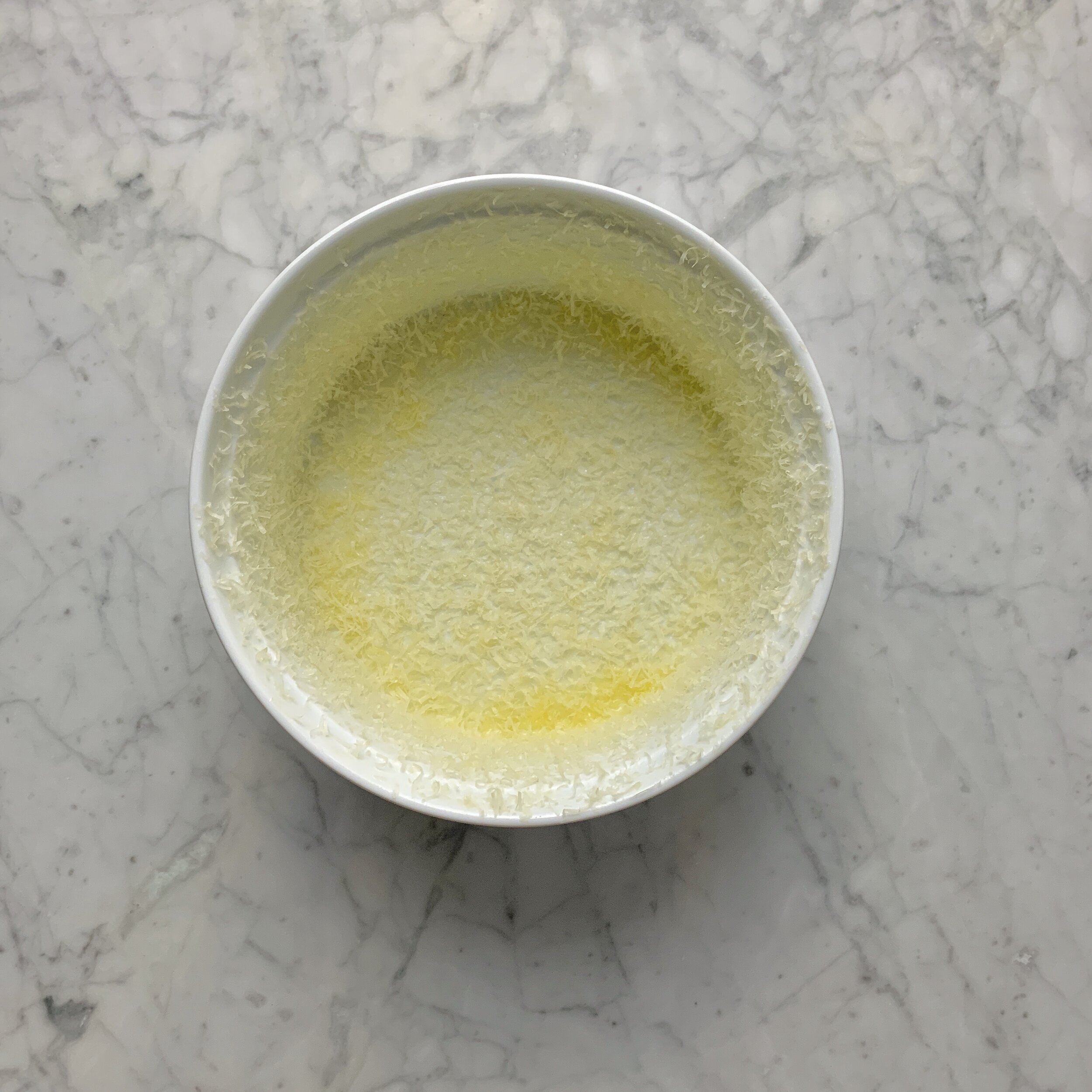
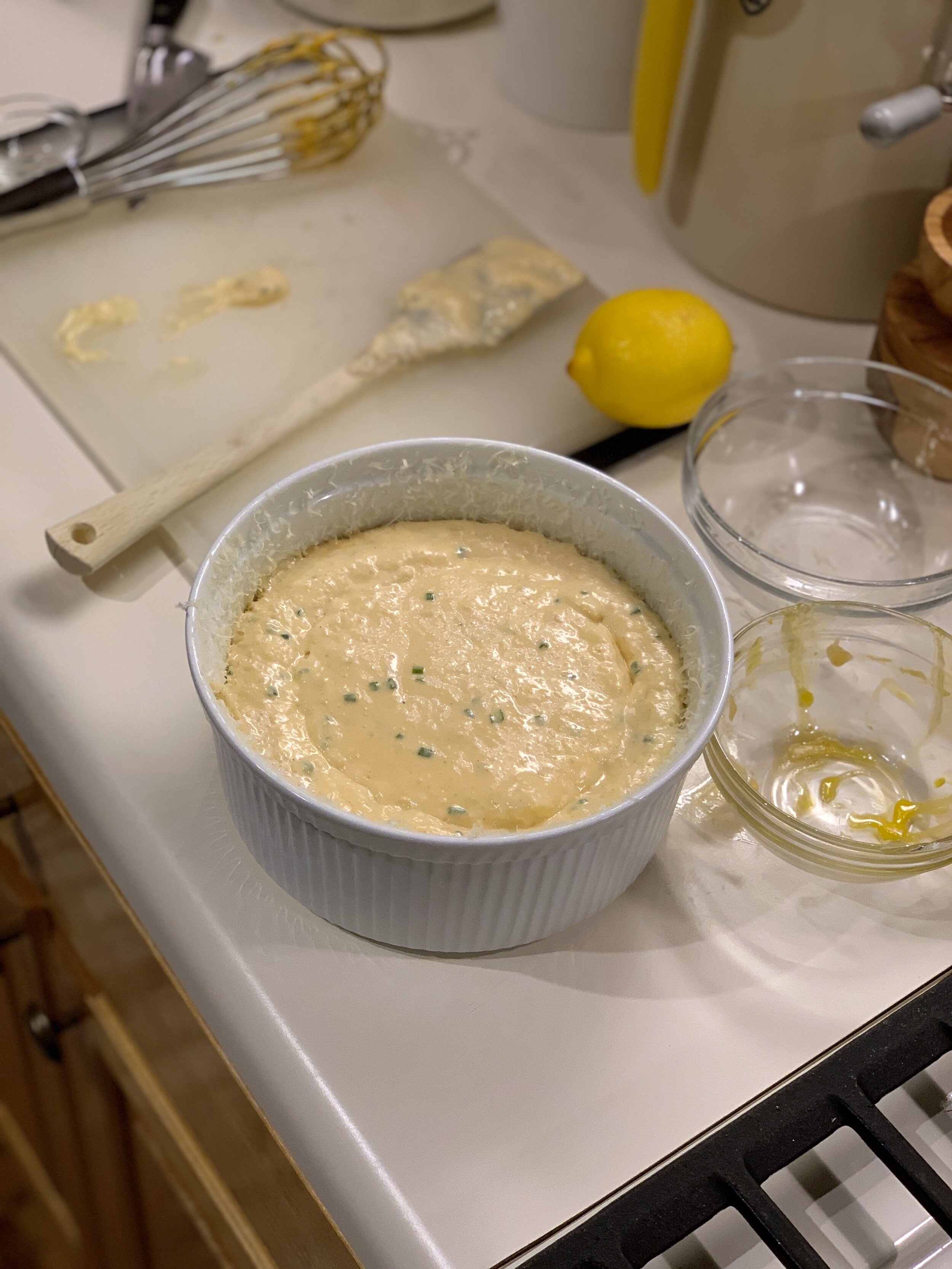
Now, I beat five egg whites with cream of tartar in a stand mixer until the egg whites held a stiff peak. I whisked a quarter of the egg whites in the yolk mixture. I then added a remaining egg white mixture, folding gently, while also adding gruyére, parmesan cheese, and chives. Once this was all combined, I added the mixture to a prepared one and one half quart soufflé dish. I prepared this dish by coating the inside with melted butter and grated parmesan cheese. The parmesan cheese helps the soufflé to rise, and the butter creates a nice brown crust. Sooooooo yummy. You then run a spoon around the top of the souffle, to create a little channel, about a quarter of an inch from the side. I then put it into a 400˚ oven on the lowest rack, immediately reducing the oven temperature to 375˚. It took about 30 minutes to bake, and I did not open the oven door once.

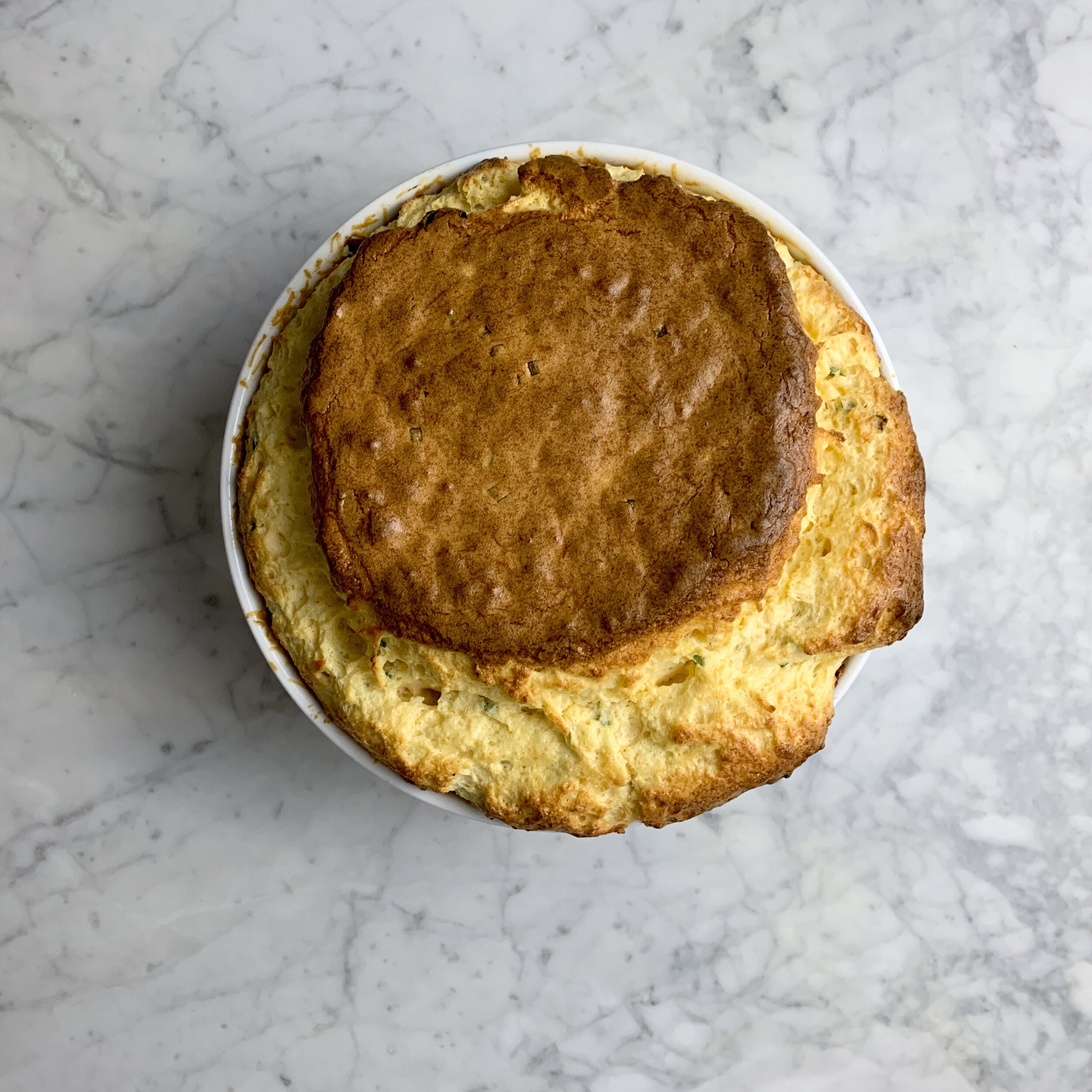
Amazingly, it turned out perfect. It was delicious. The top was brown and crusty, and the sides were golden brown. The middle is soft and tender. I served it with a spinach salad with lemon vinaigrette.

For this recipe, I used the New York times recipe for Gruyére and Chive Soufflé. I did follow Julia Child's soufflé instructions.

I have now wrapped up the egg chapter. Hooray! Next week I'll be moving on to fish. I'll be making Fillets De Poisson Pochés Au Vin Blanc or Fish Fillets Poached in White Wine. This fish will be poached en papillote or in paper. Basically, you cook the fish in a little parchment paper envelope with herbs and liquid, and the fish steams. I have never cooked this way and am looking forward to it.

Week 28 | Flamiche Aux Poireaux (Leek Tart)

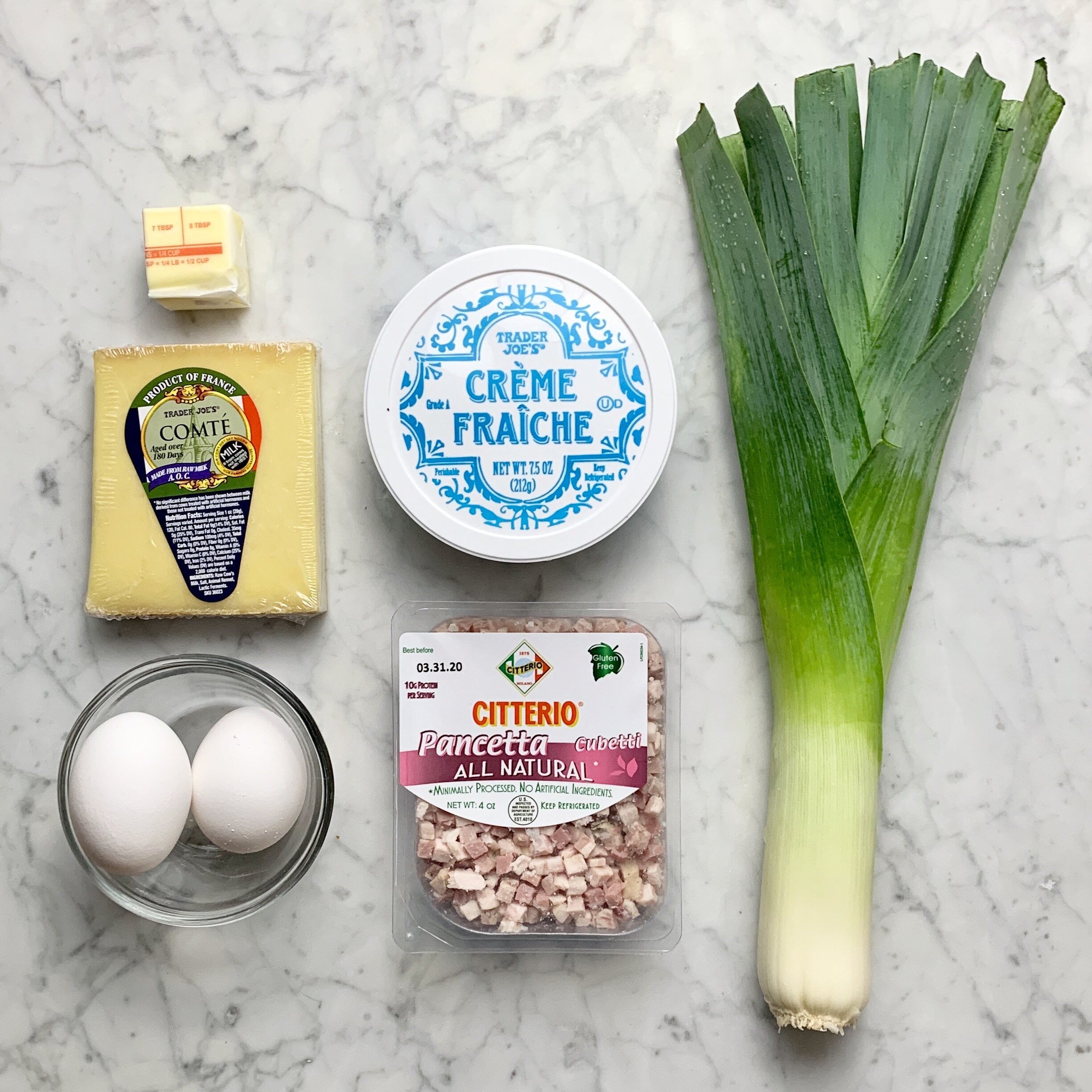
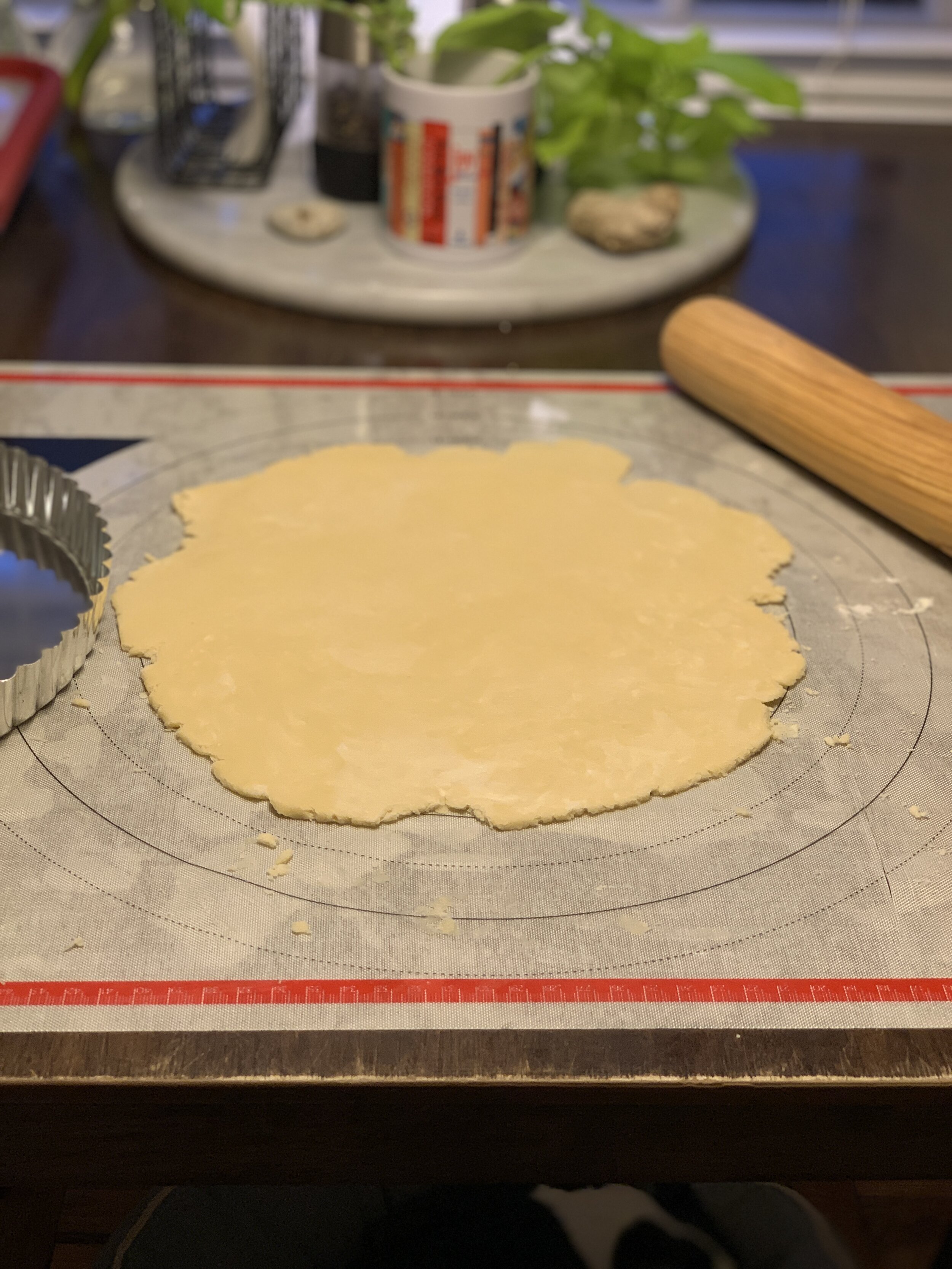
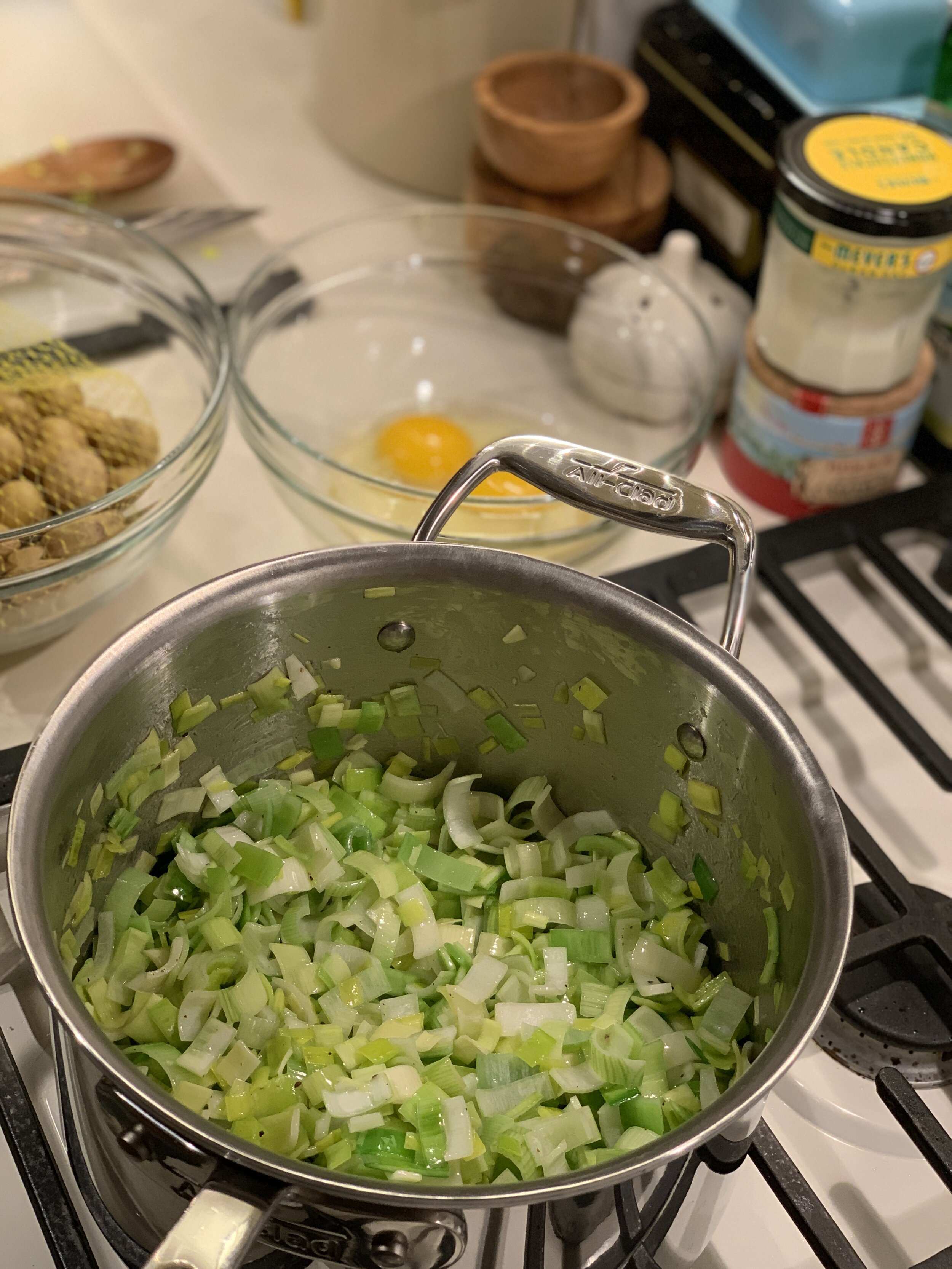
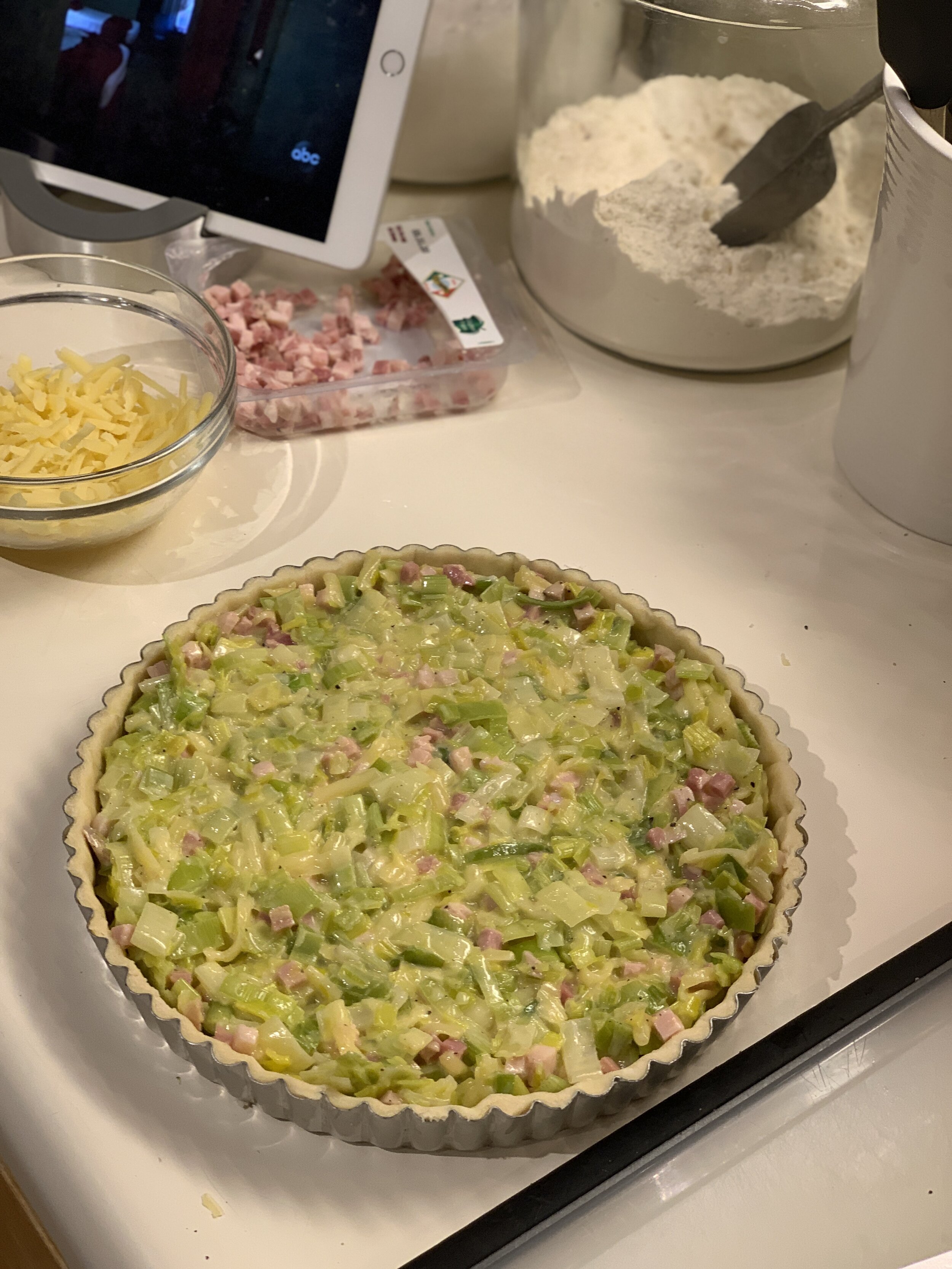
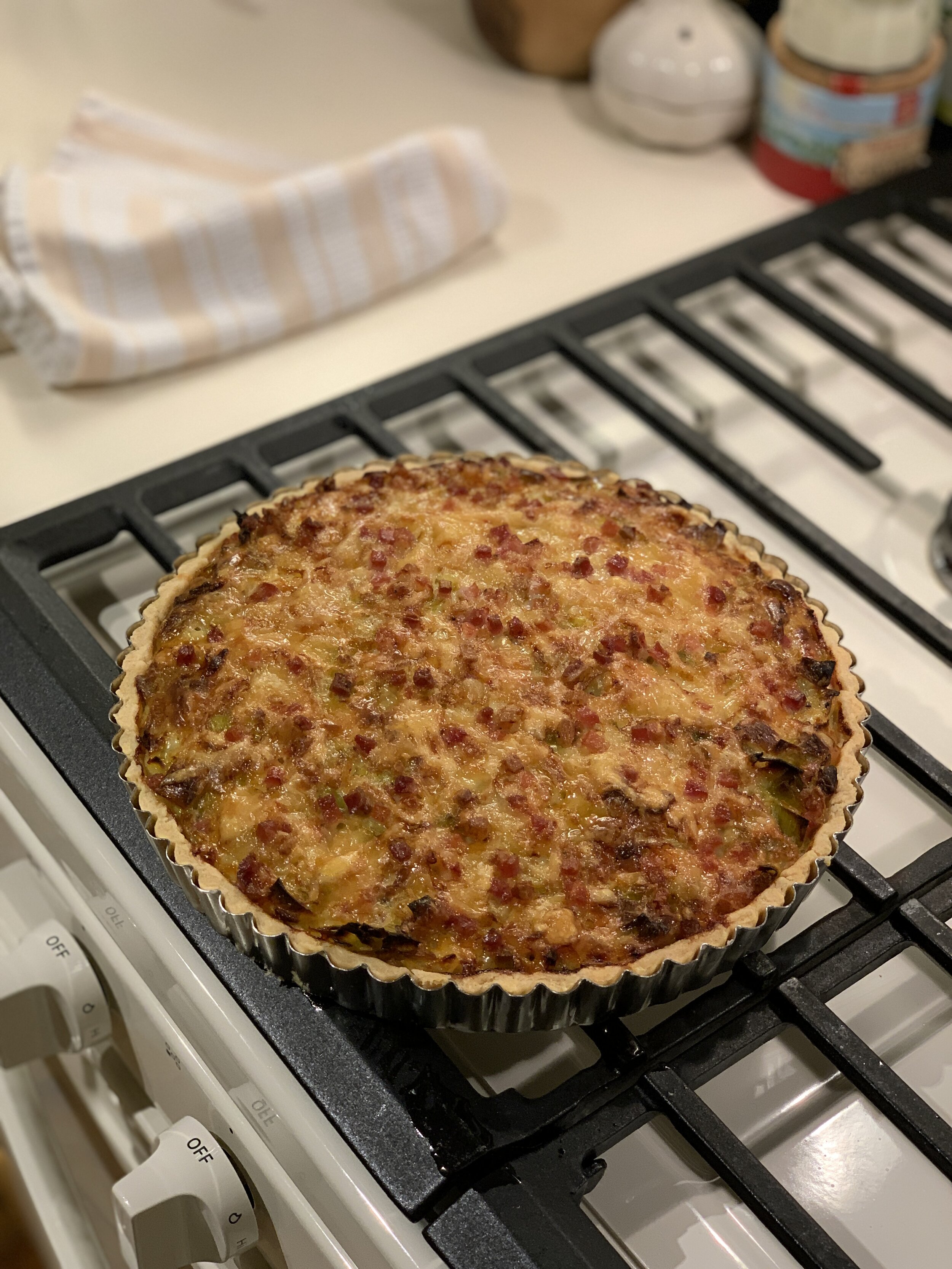
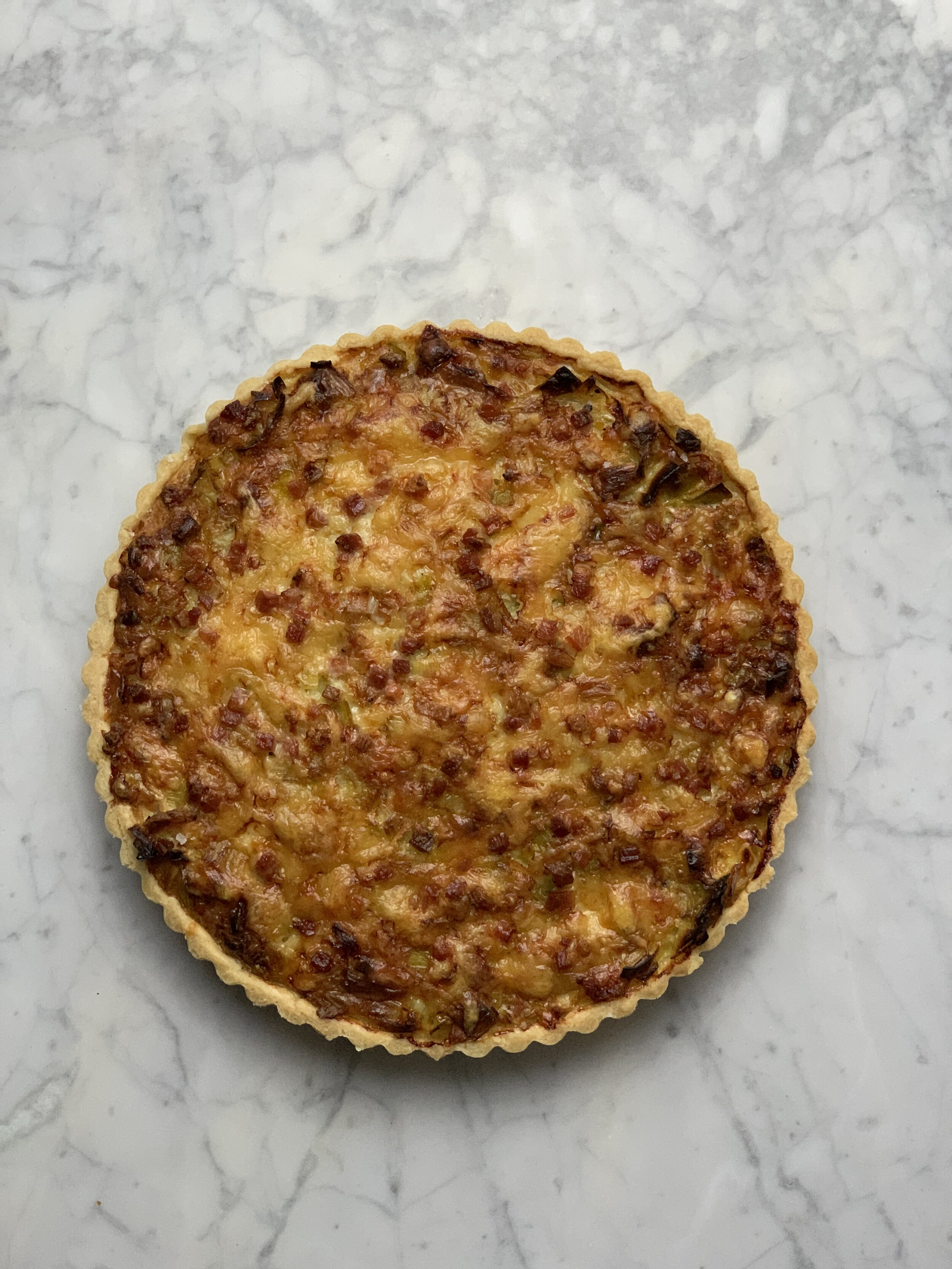
This week I made a Flamiche Aux Poireaux or, in English, a Leek Tart. This recipe was pretty straight forward, however, it was delicious. I used the New York Times recipe for this Leek Tart; since it was very similar to the Julia Child's recipe. I recommend all recipes from the New York Times. They are simple, classic, and delicious. I have an updated version of their classic cookbook and a subscription to their website, cooking.nytimes.com. It's $5 a month, and I use it quite a bit.

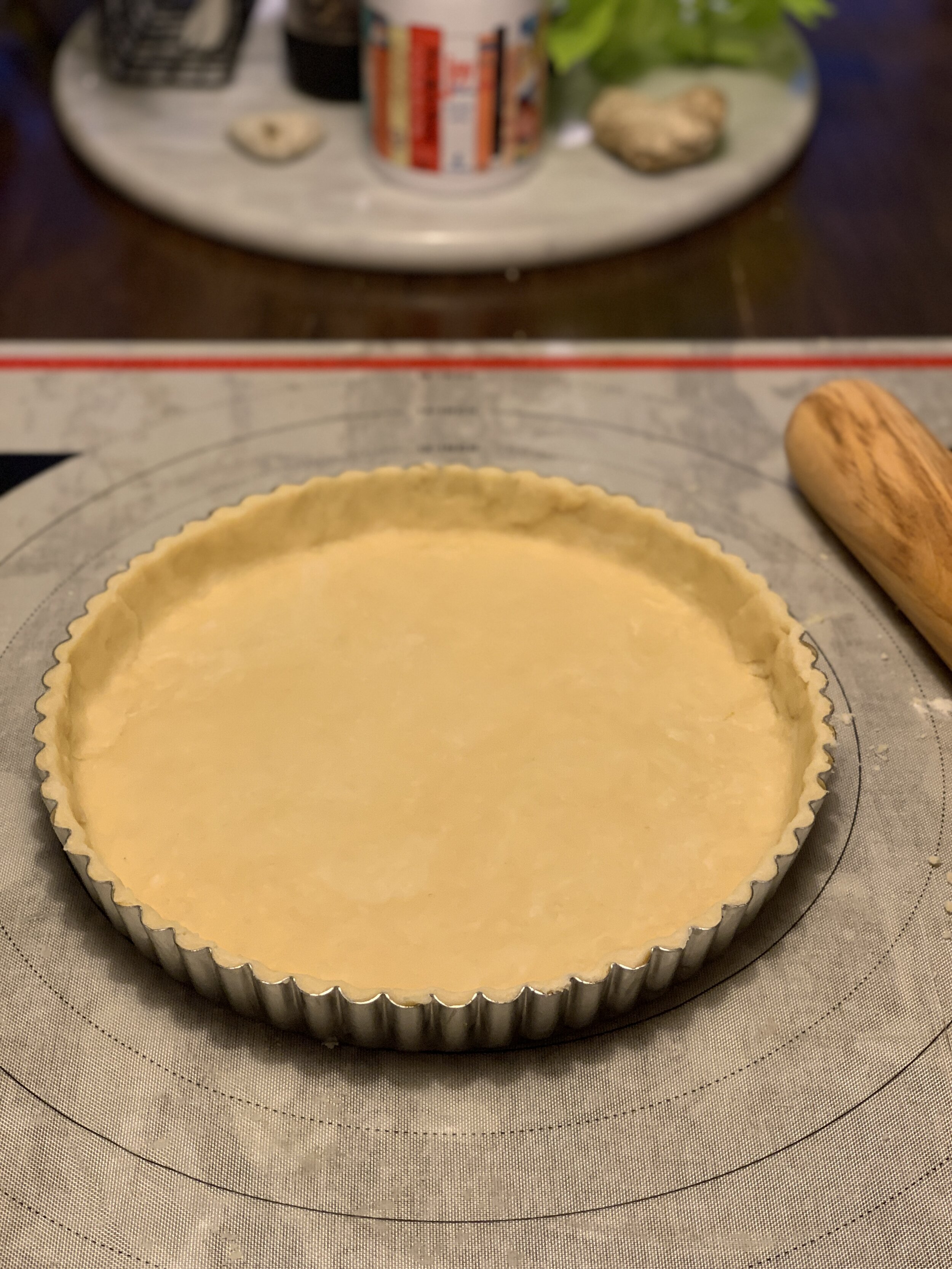
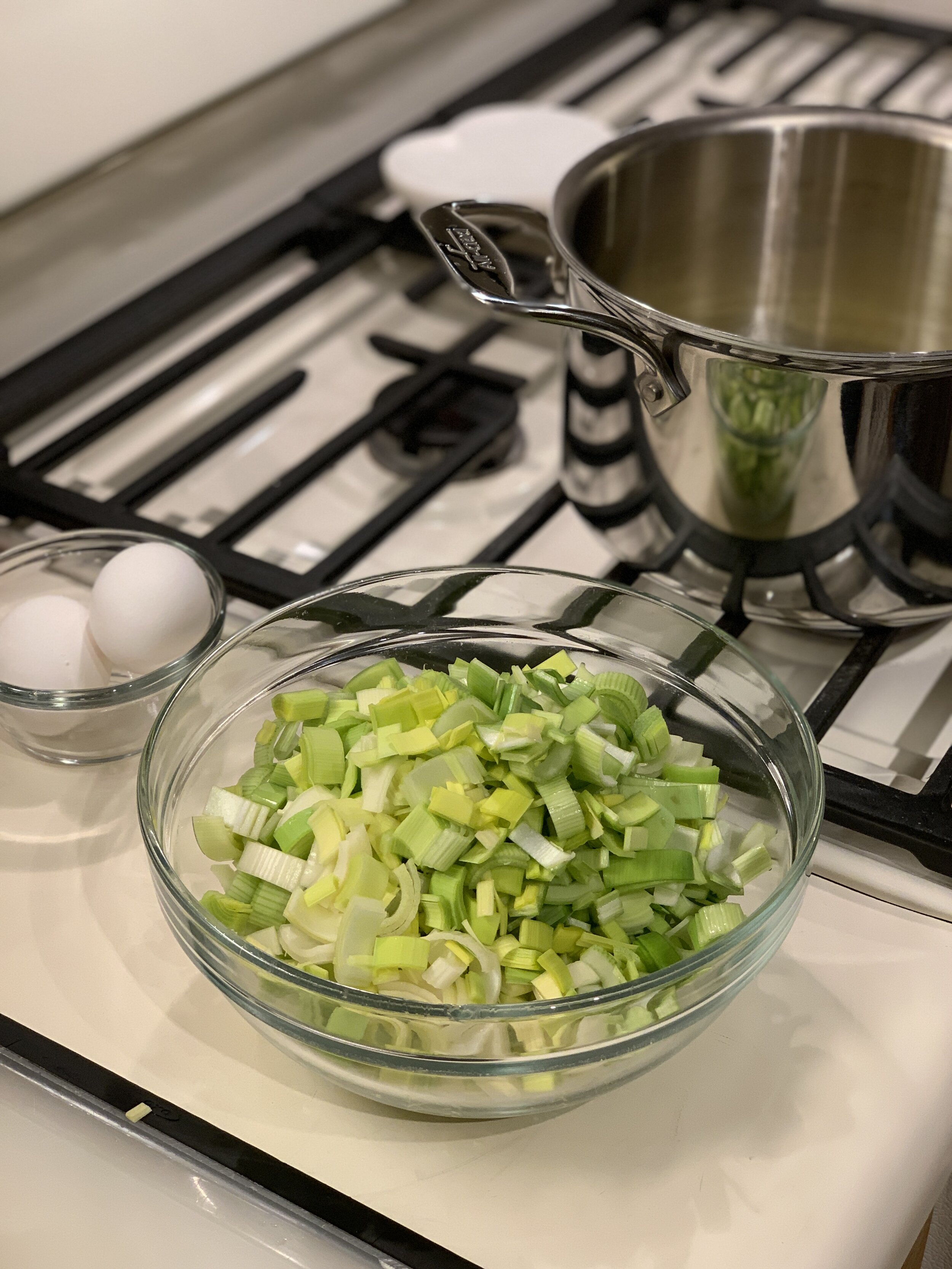
Back to the tart, it was simple to construct. The pastry was easy to pull together in a food processor. The leek just needed to be cooked gently, and then everything combined and baked. My biggest problem with this recipe is that the pastry was undercooked on the bottom. Not a soggy bottom, necessarily, but not as brown as I would have liked. When I make this recipe again, I will blind cook the pastry, which means to cook the pastry for a few minutes, maybe ten or so, before filling it. Blind cooking allows the pastry to finish cooking at the same time as the eggs.

Other than the slight change I'd make to cooking the pastry, I thought this recipe was great. A good egg tart or quiche recipe is an extremely versatile recipe to have in your repertoire. You could use almost any combination of cheese, herbs, and vegetables. I plan to write a quiche recipe this summer with cherry tomatoes, chives, and Prairie Breeze cheese. Have I mentioned I am so excited about my garden this summer?! Because I am.

Next week I'll be making the highly awaited soufflé. I have never made one, and they are notoriously difficult, so wish me luck!

Week 27 | Omelets

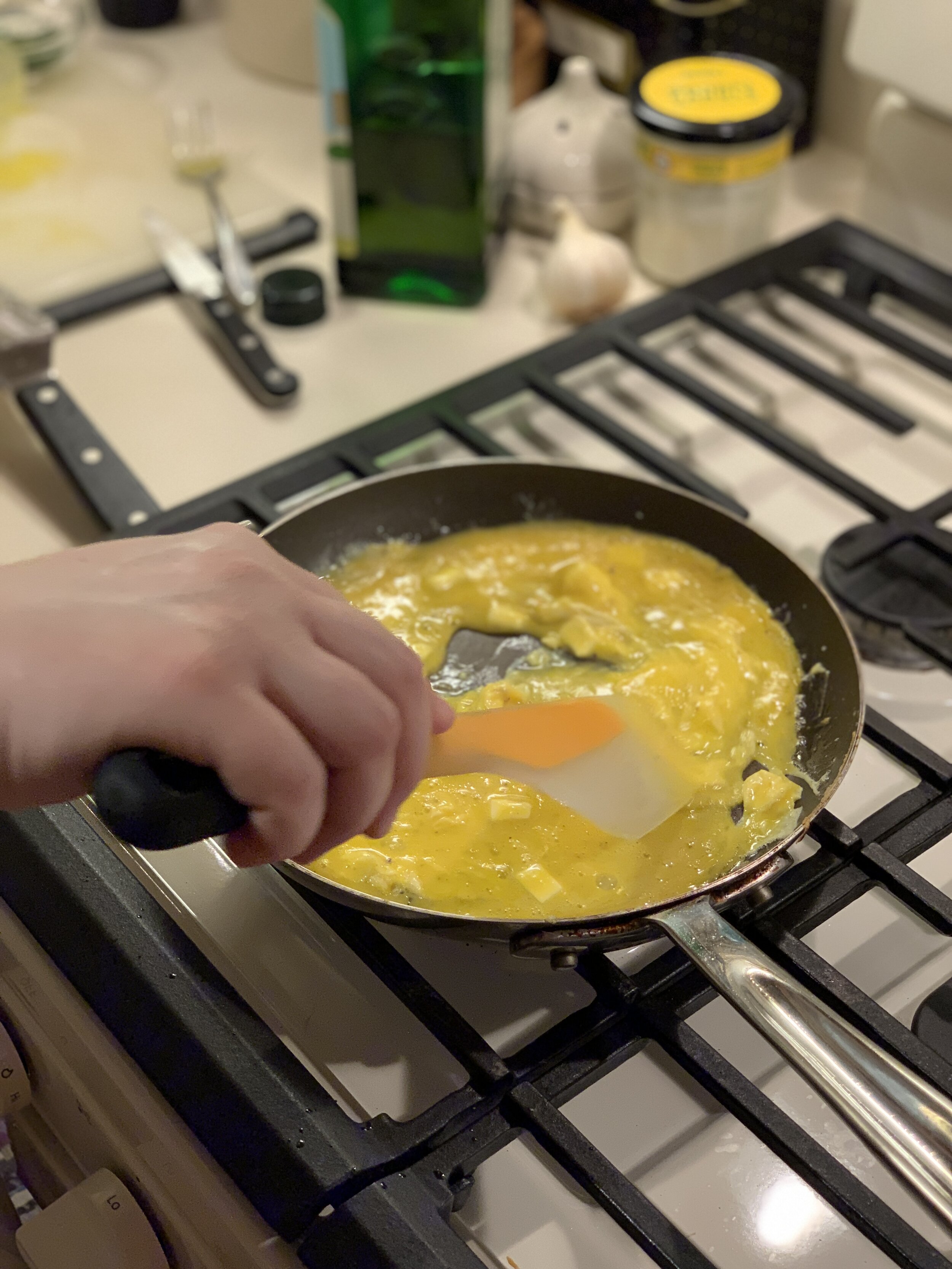
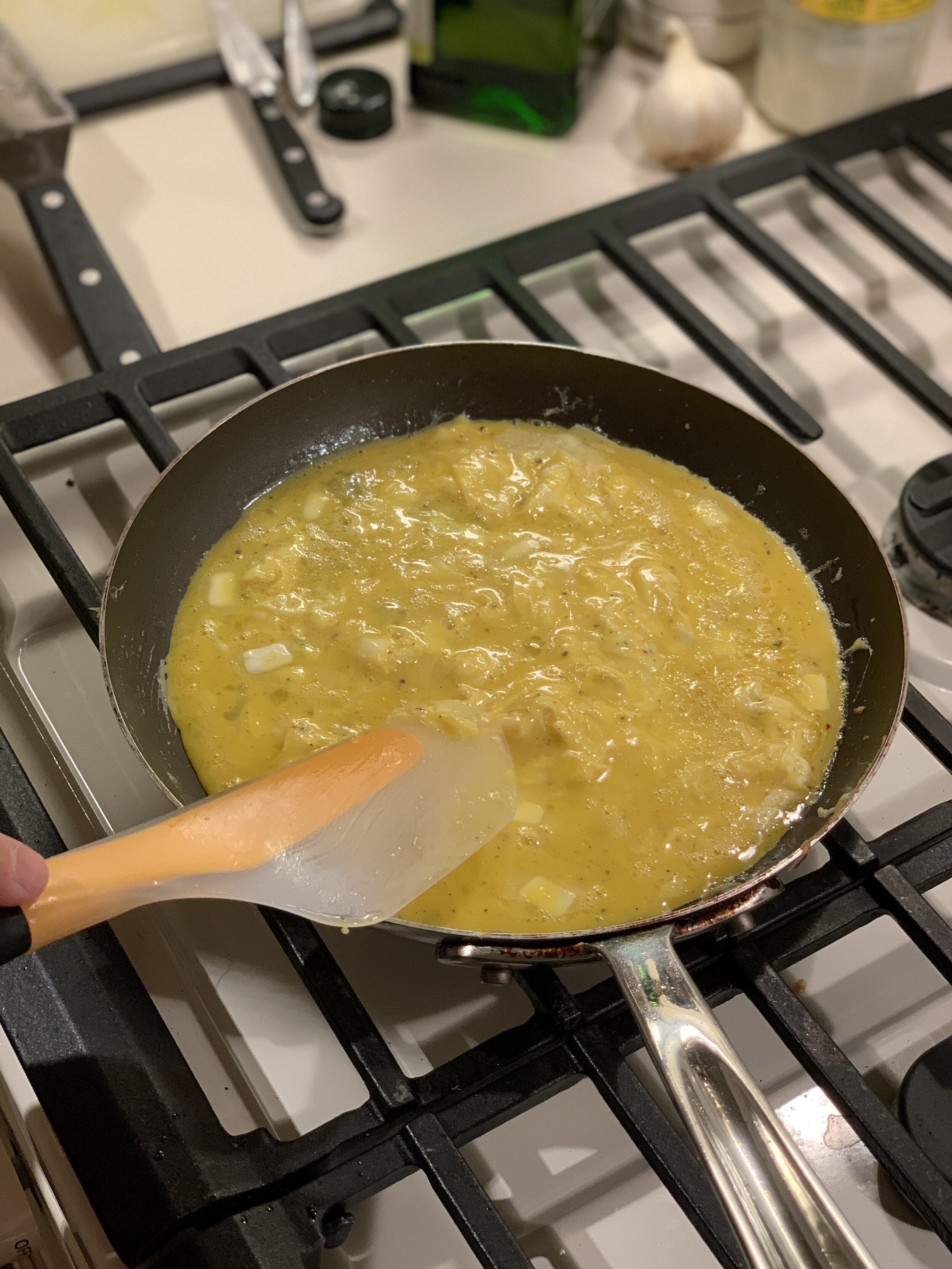
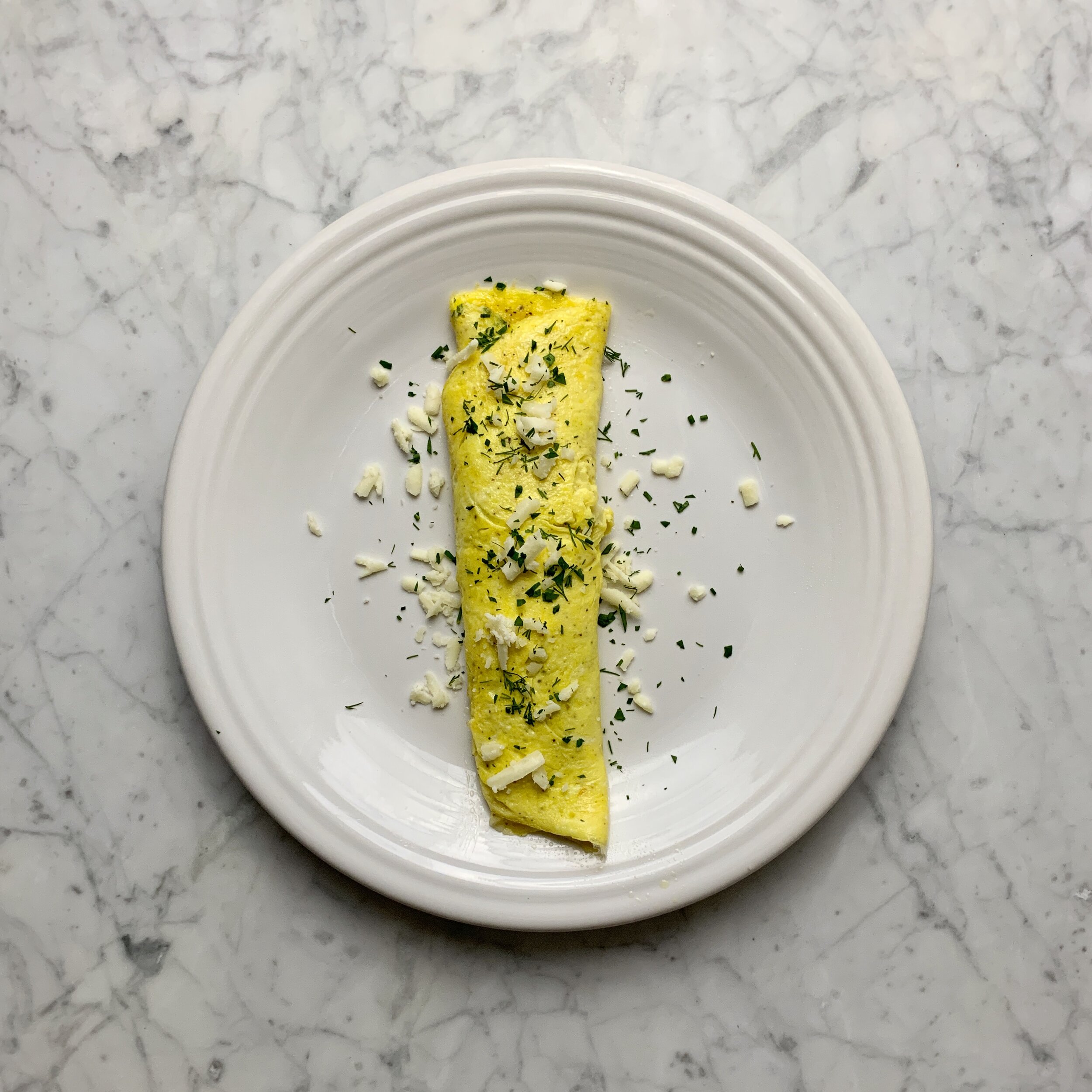
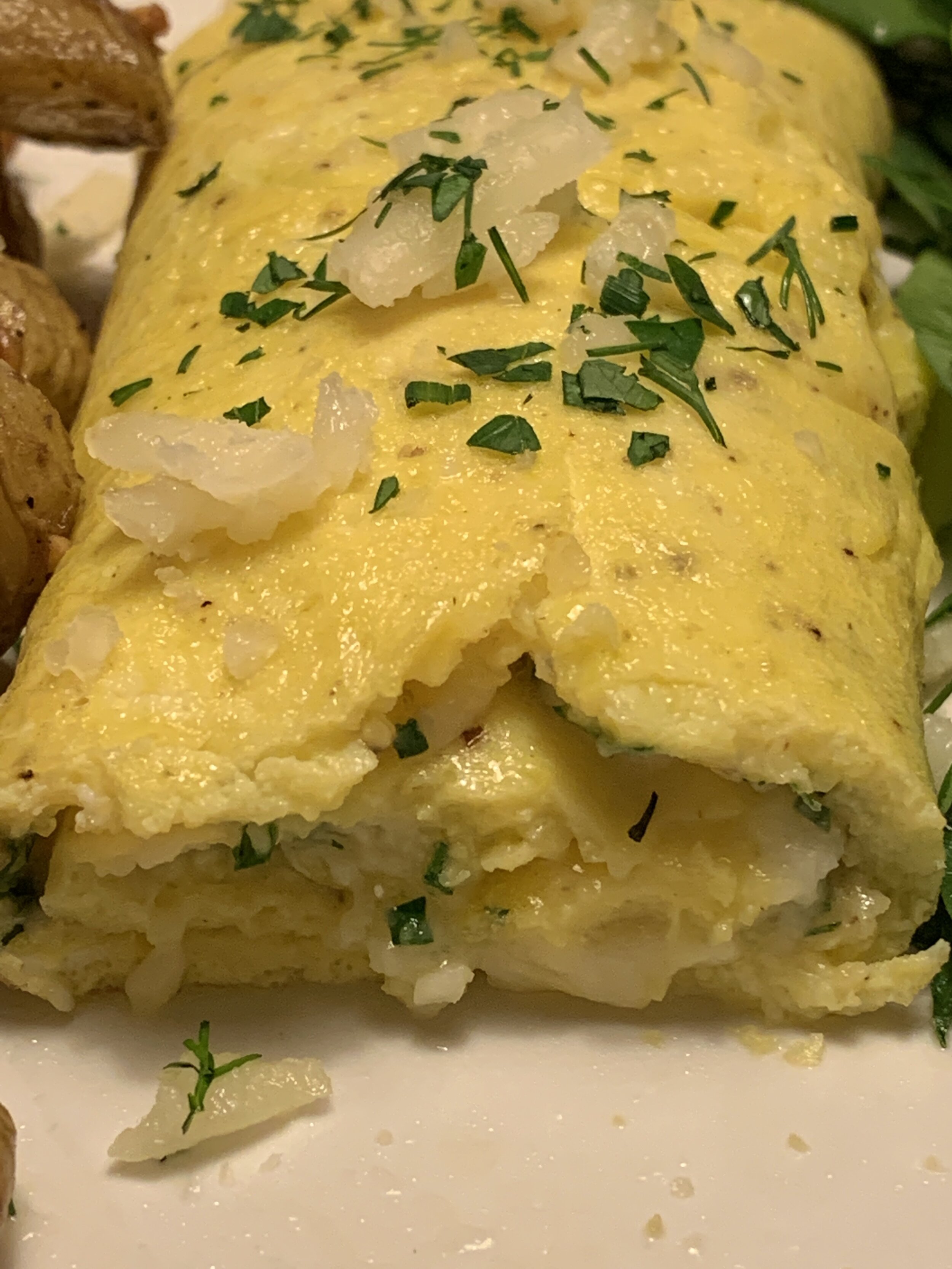
This week I made omelets. I used Julia Child's recipe and method to the letter. It is difficult to make a perfectly cooked egg; it takes a lot of practice. For years, I made scrambled eggs for breakfast. I currently make fried eggs for breakfast most mornings. The daily repition helps me to perfect my technique. I cook eggs on low or residual heat. If you use medium or high heat, the eggs get tough. I prefer them to be soft and tender.

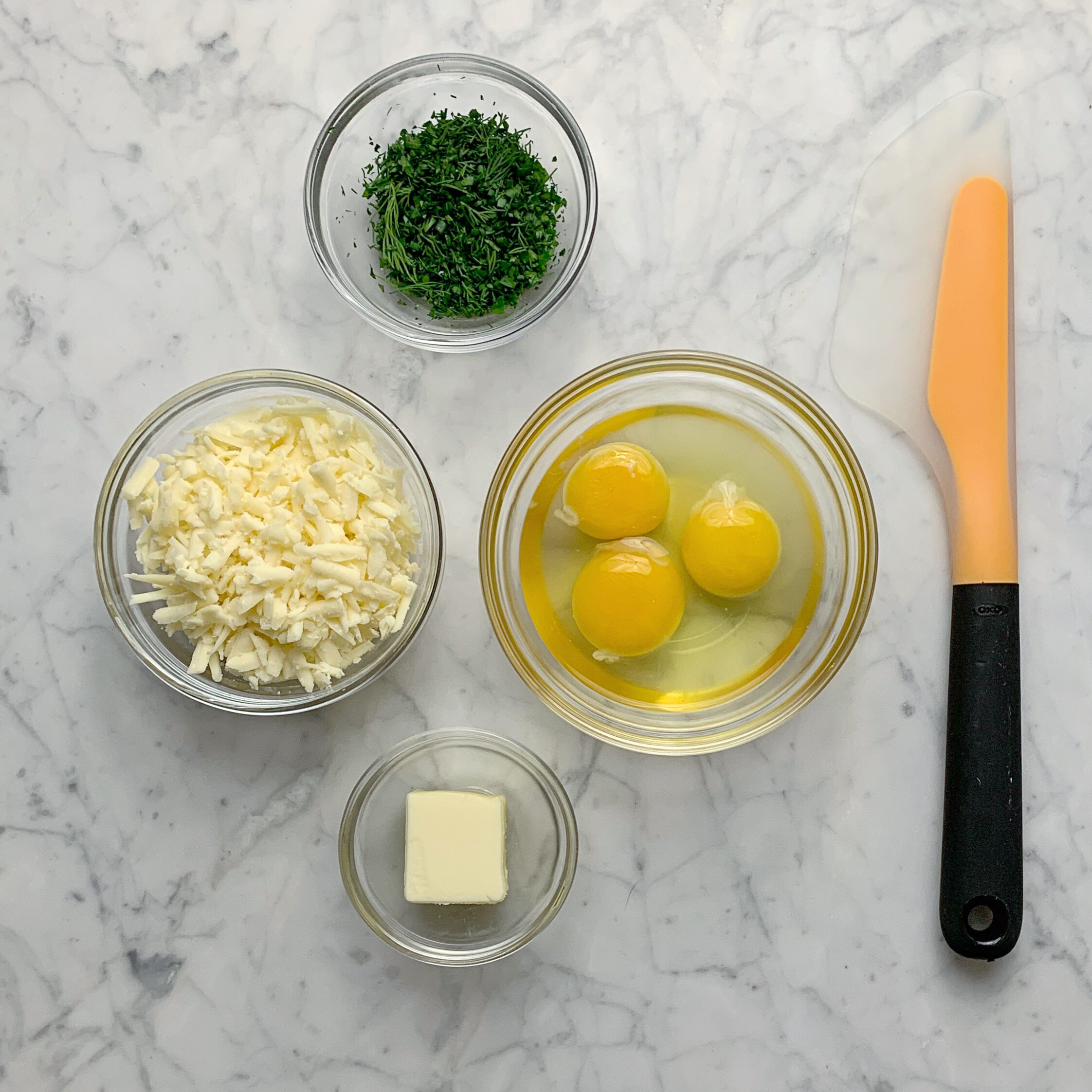
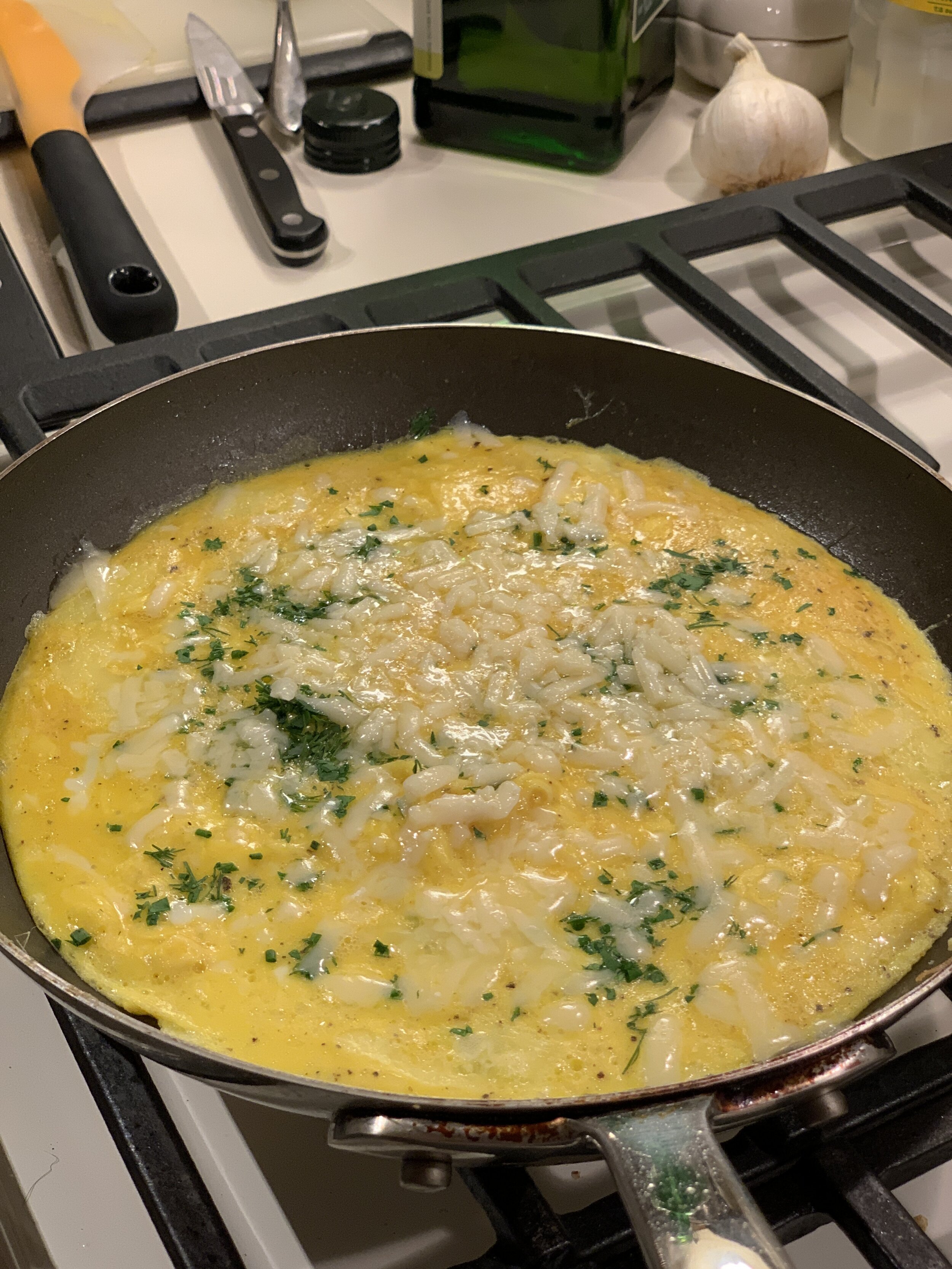
Back to the omelet, I started with two whole eggs, one egg yolk, and one tablespoon of butter. I chose to make an herb and cheese omelet. I used a combination of parsley, chives, and dill for my herbs. It's a great combination of herbs. For the cheese, I used Prairie Breeze from Milton Creamery. You've probably noticed that I use that cheese A LOT. It's because it's perfection. It's tangy like sharp cheddar, but it also has crystals and is a little salty like parmesan.

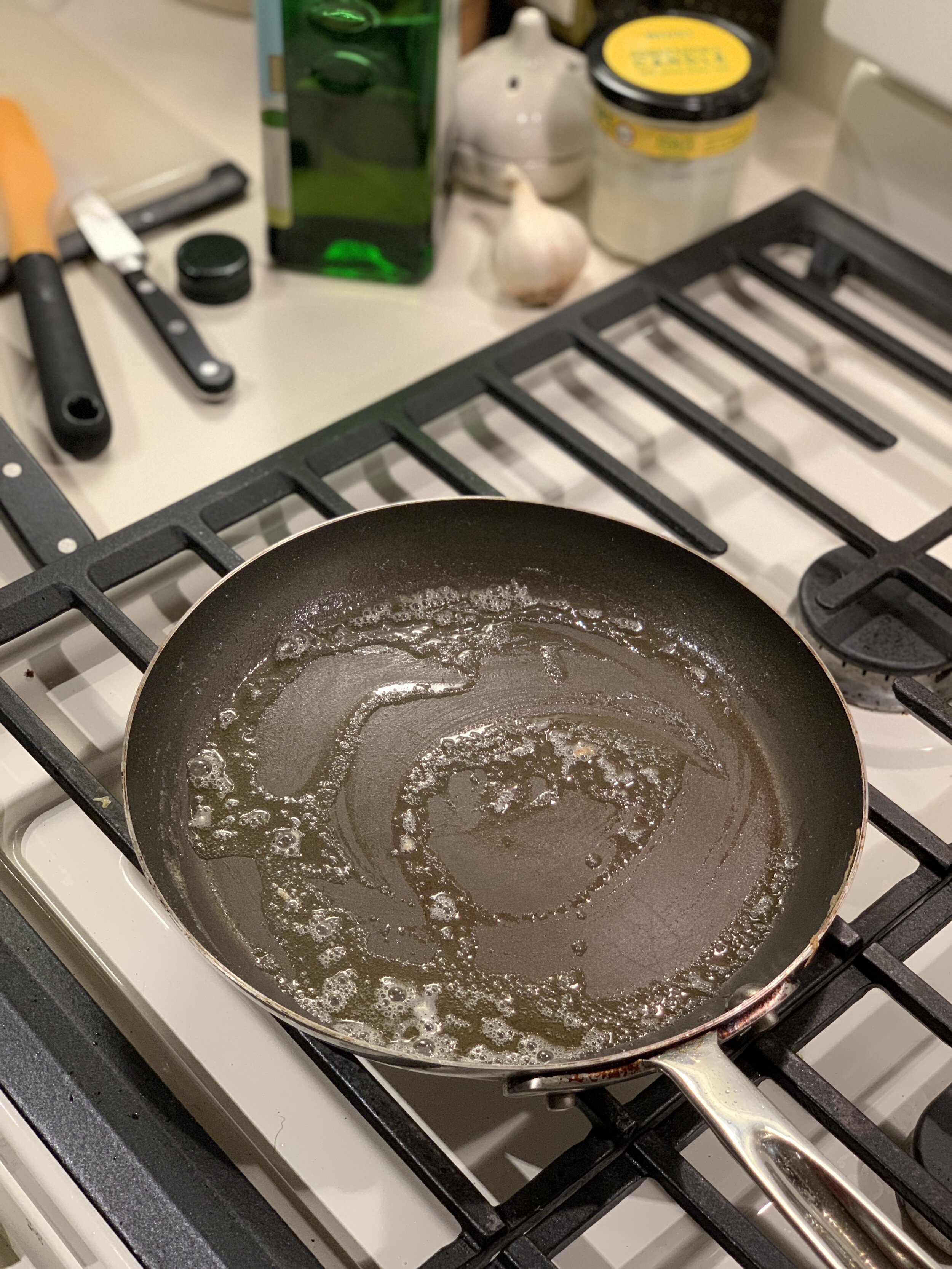
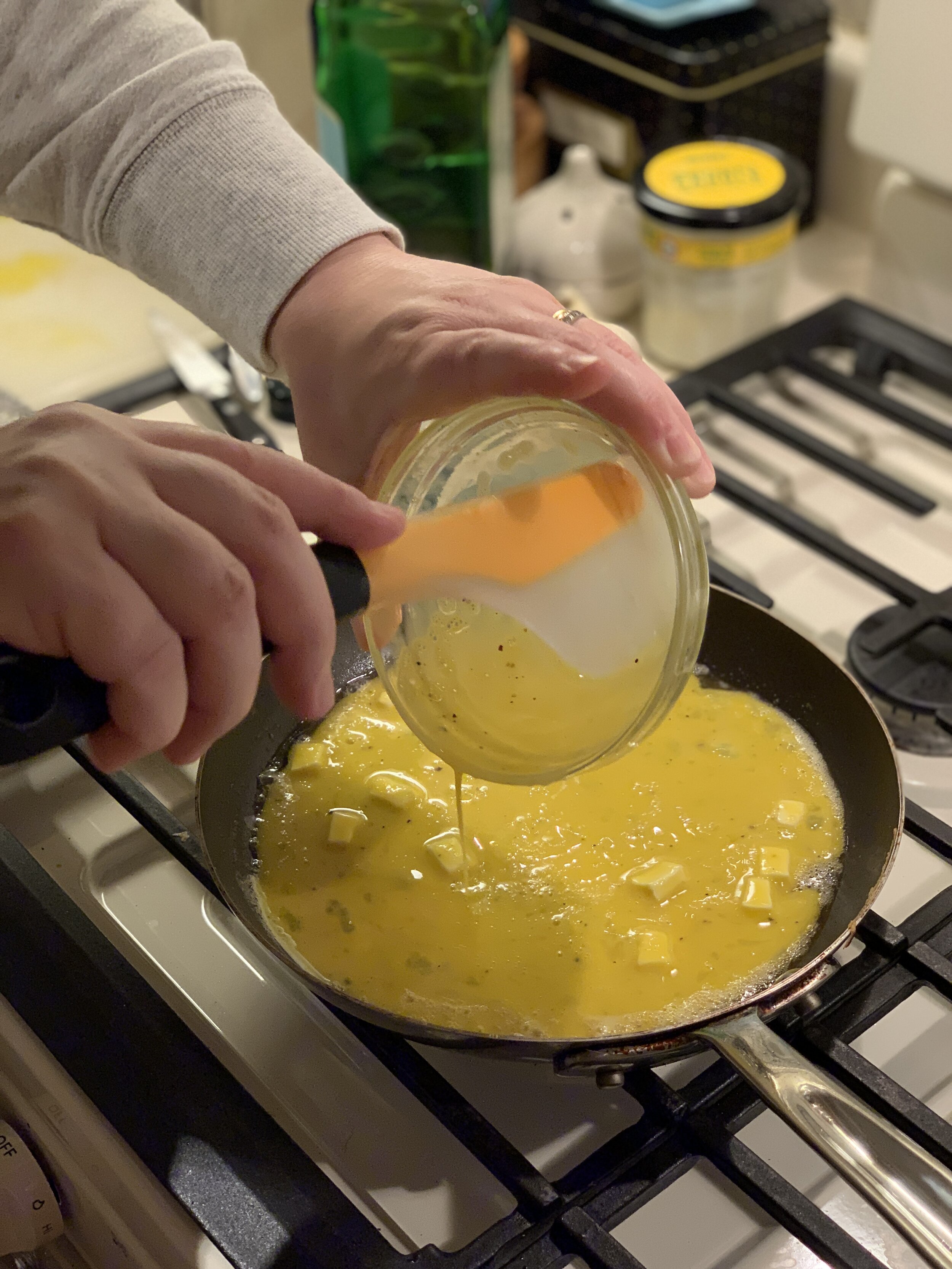
I whisked the eggs until well combined. You want a nice smooth mixture, no tough white bits in the omelet. I added a hefty pinch of salt at this point. Meanwhile, I heated the pan over low heat for about five minutes with a tiny bit of oil. Once hot, I added half the butter. Previously, I cut the other half into small pieces and kept them in the fridge. Now, add the small bits of butter to the egg mixture and pour it into the pan. I use an egg spatula to stir the eggs around a bit and smooth out into a nice even layer in the pan. Oh, I should also mention that I used a 9-inch nonstick pan. You could probably go a little smaller, but the nonstick part is essential. I don't use a nonstick pan much, but always for eggs. After about a minute, I topped the omelet with the minced herbs and grated Prairie Breeze cheese. I cover the pan with a tight-fitting lid and turn off the heat. I let the omelet sit untouched for a few minutes. You want the egg to cook but very gently, so the bottom doesn't brown and the eggs don't become tough.

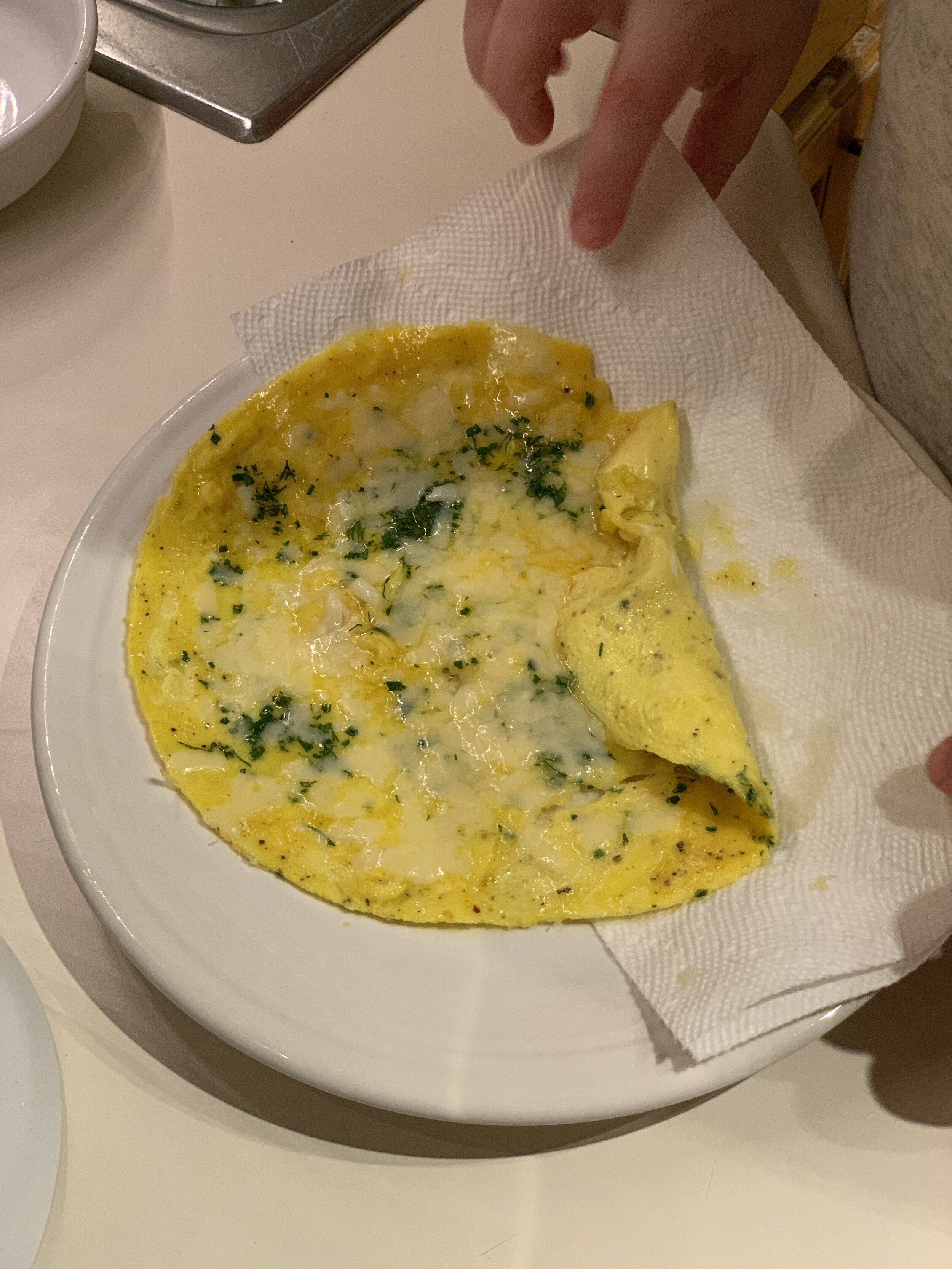
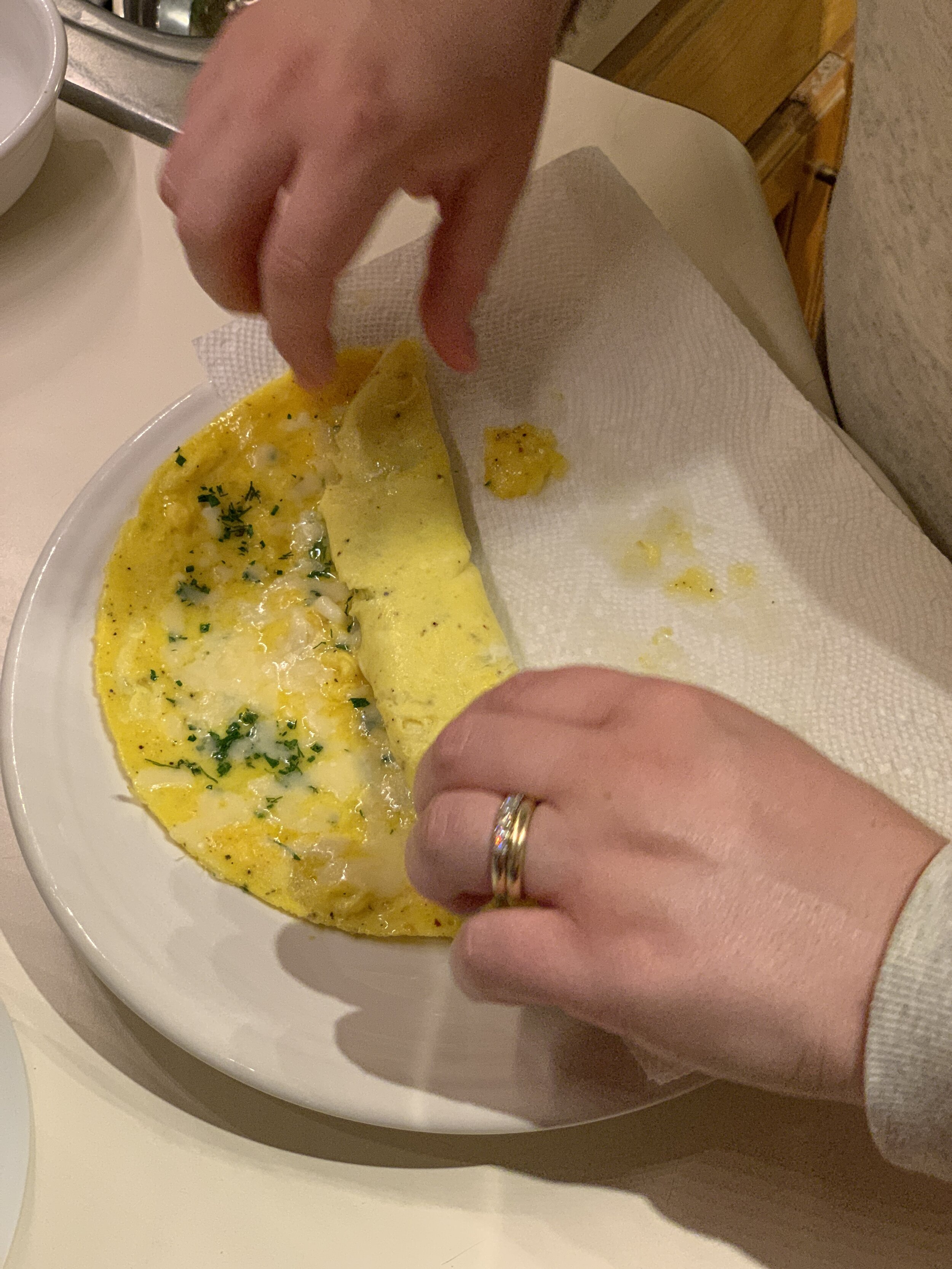
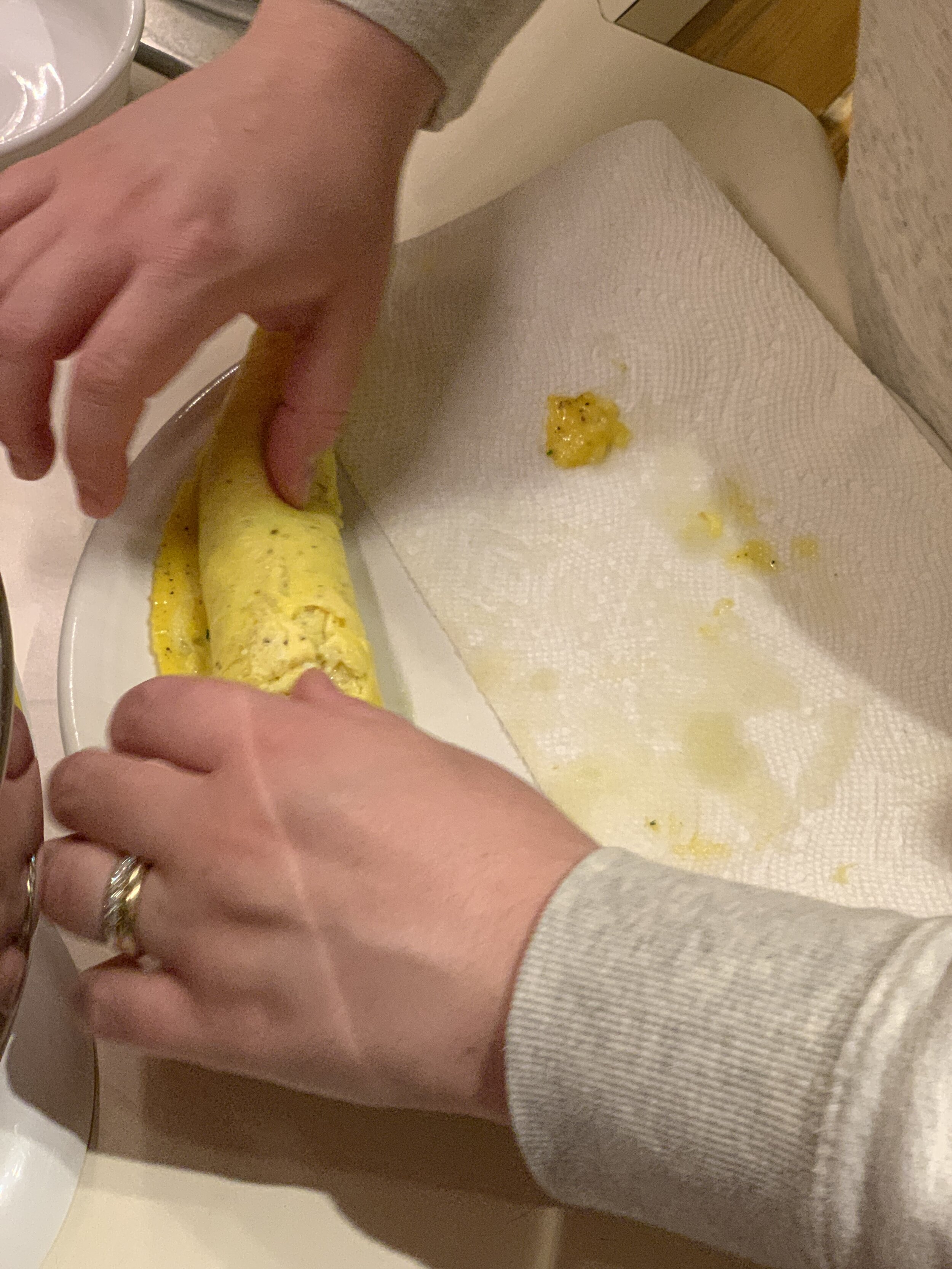
I carefully slide the omelet out onto a plate with a paper towel covering about half of the plate. I use the paper towel to help roll the omelet. This was hugely helpful, and I want to thank America's Test Kitchen for the tip. It makes it MUCH easier to roll the omelet evenly without cracking.

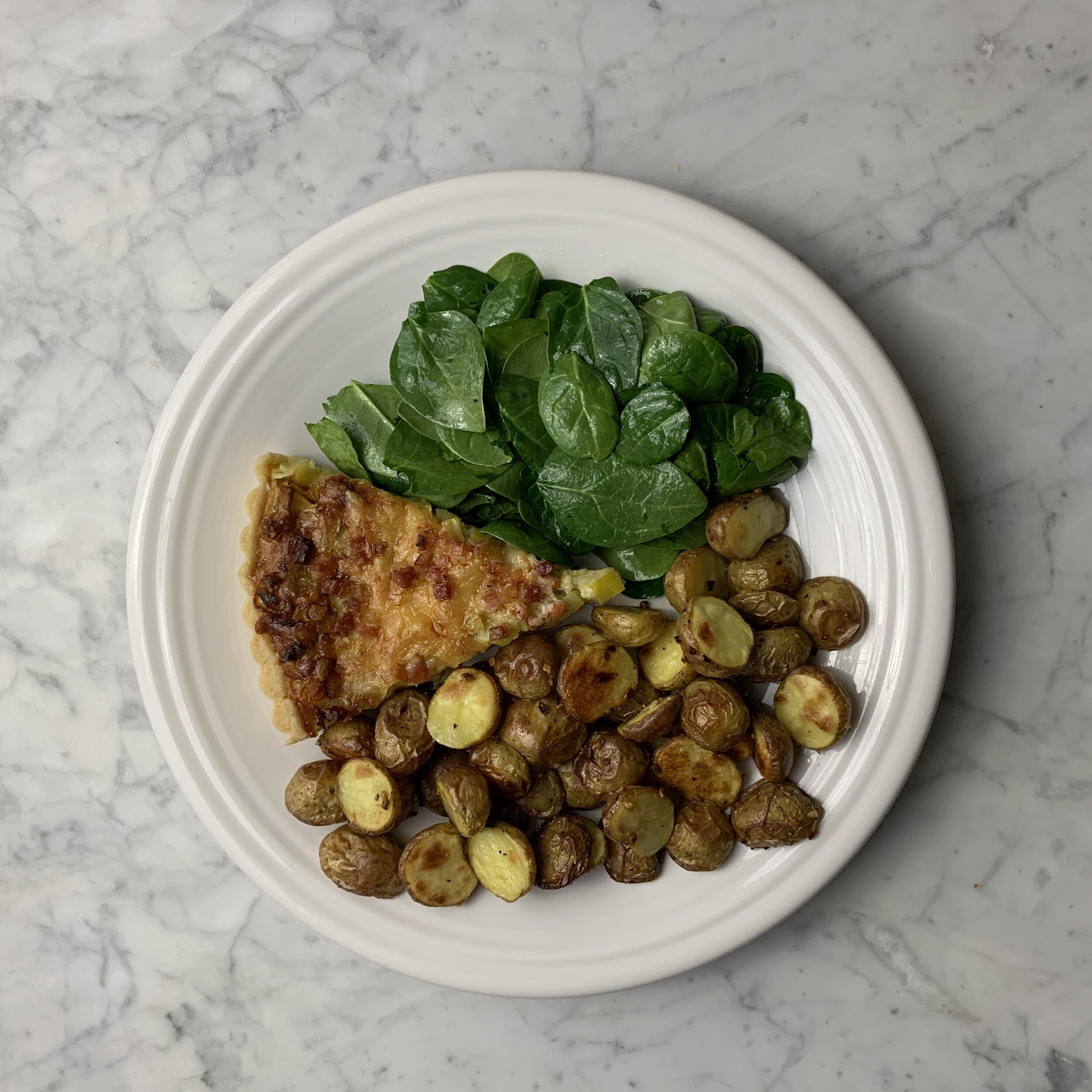
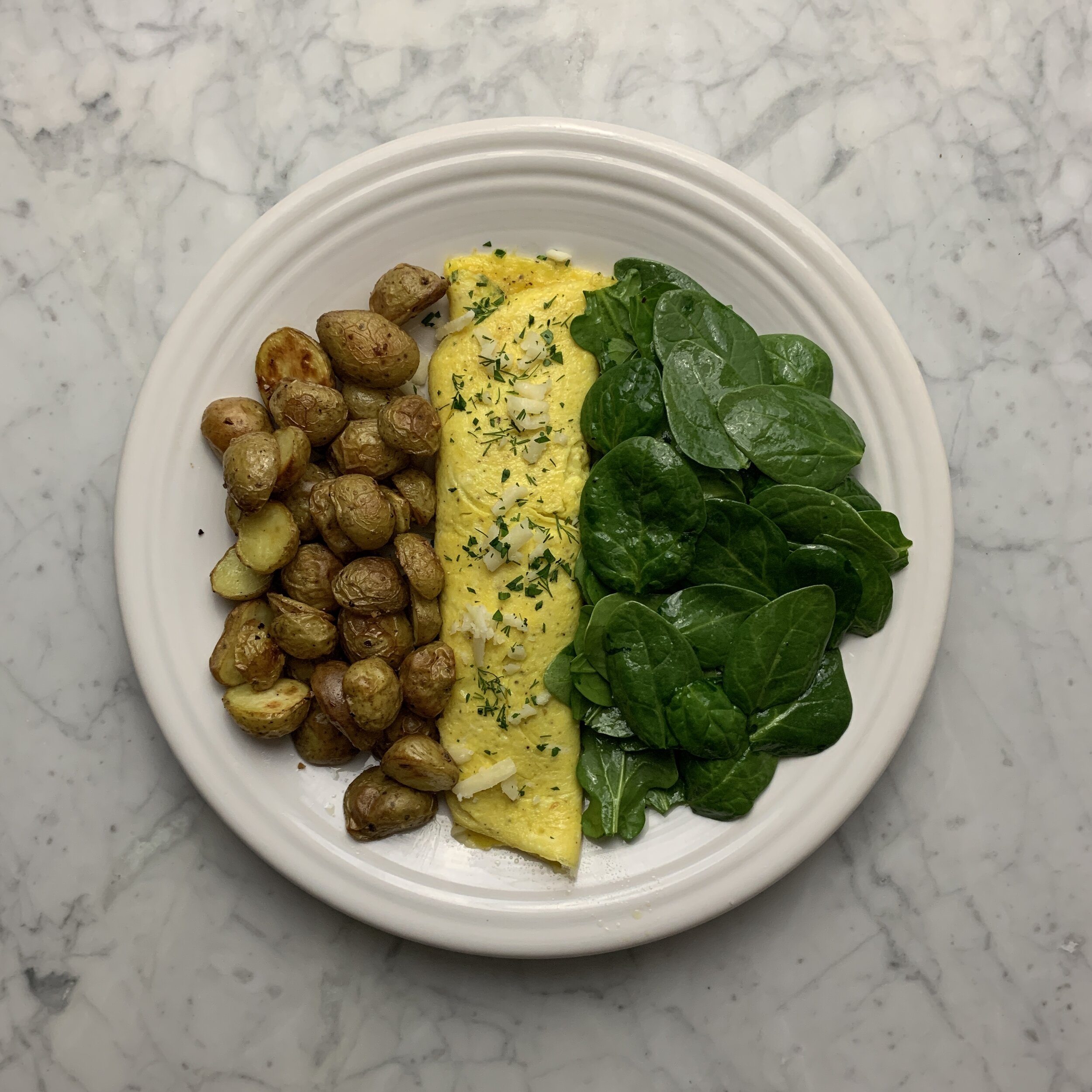
I served this omelet for dinner with garlic roasted potatoes and a spinach salad with a simple lemon vinaigrette. It was a great dinner.

Next week I'm making Quiche!

Week 26 | Hollandaise

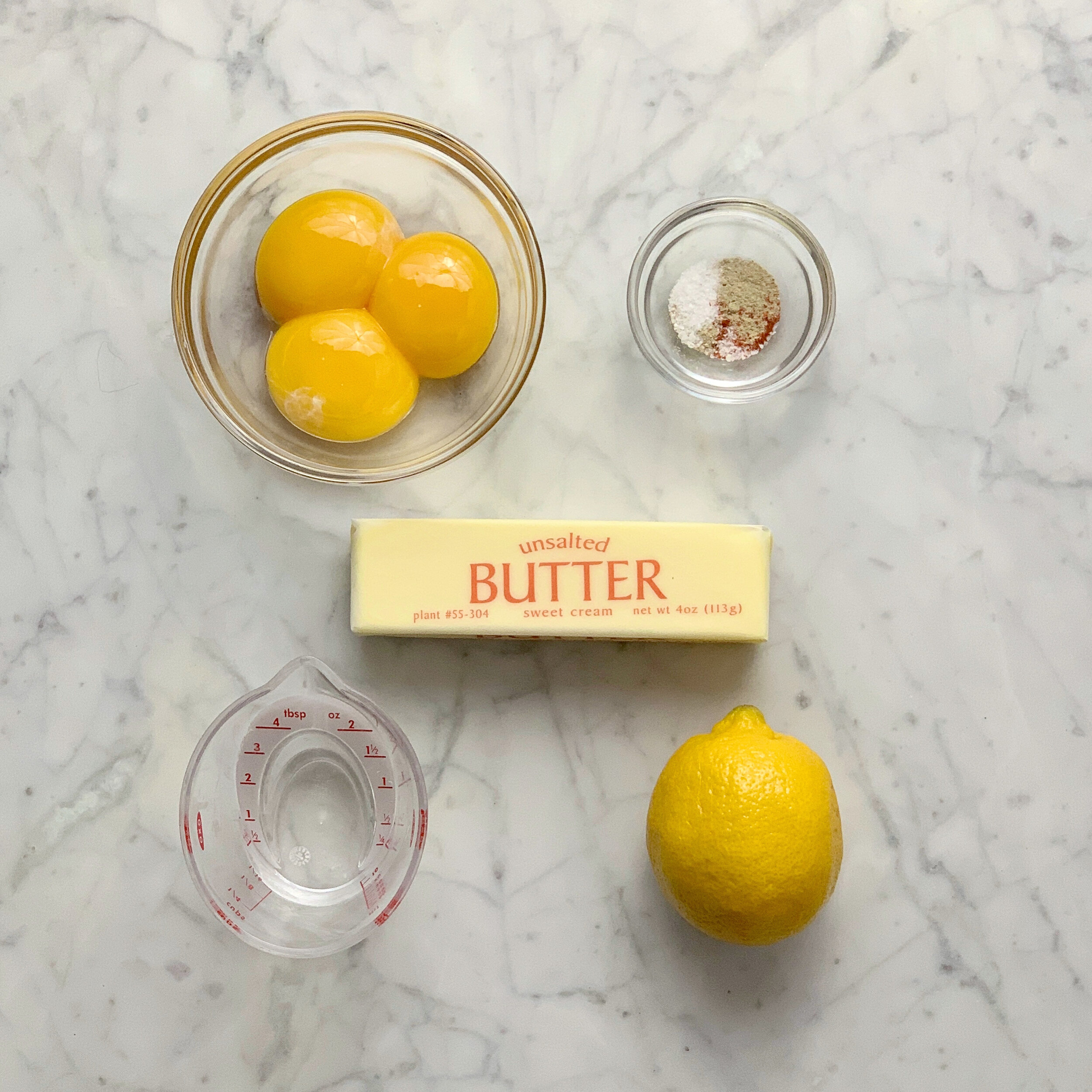
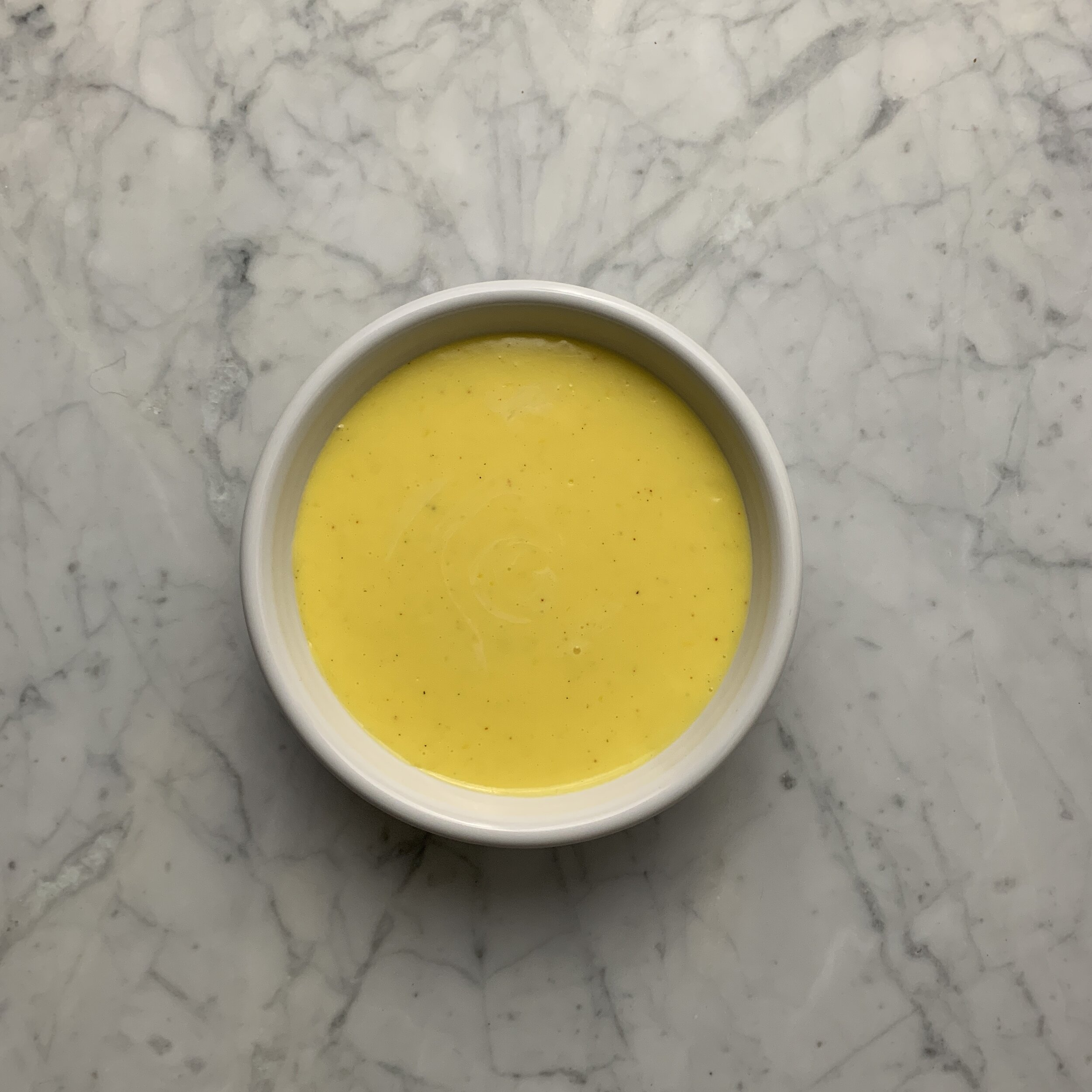
This week I made Hollandaise Sauce, which is a complicated sauce to make. It only has four ingredients, but it's fussy. I have made a foolproof version of Hollandaise a few times before using a blender. It turns out great in the blender, and you can't screw it up. However, I wanted to make Hollandaise the traditional way, so I know I can do it.

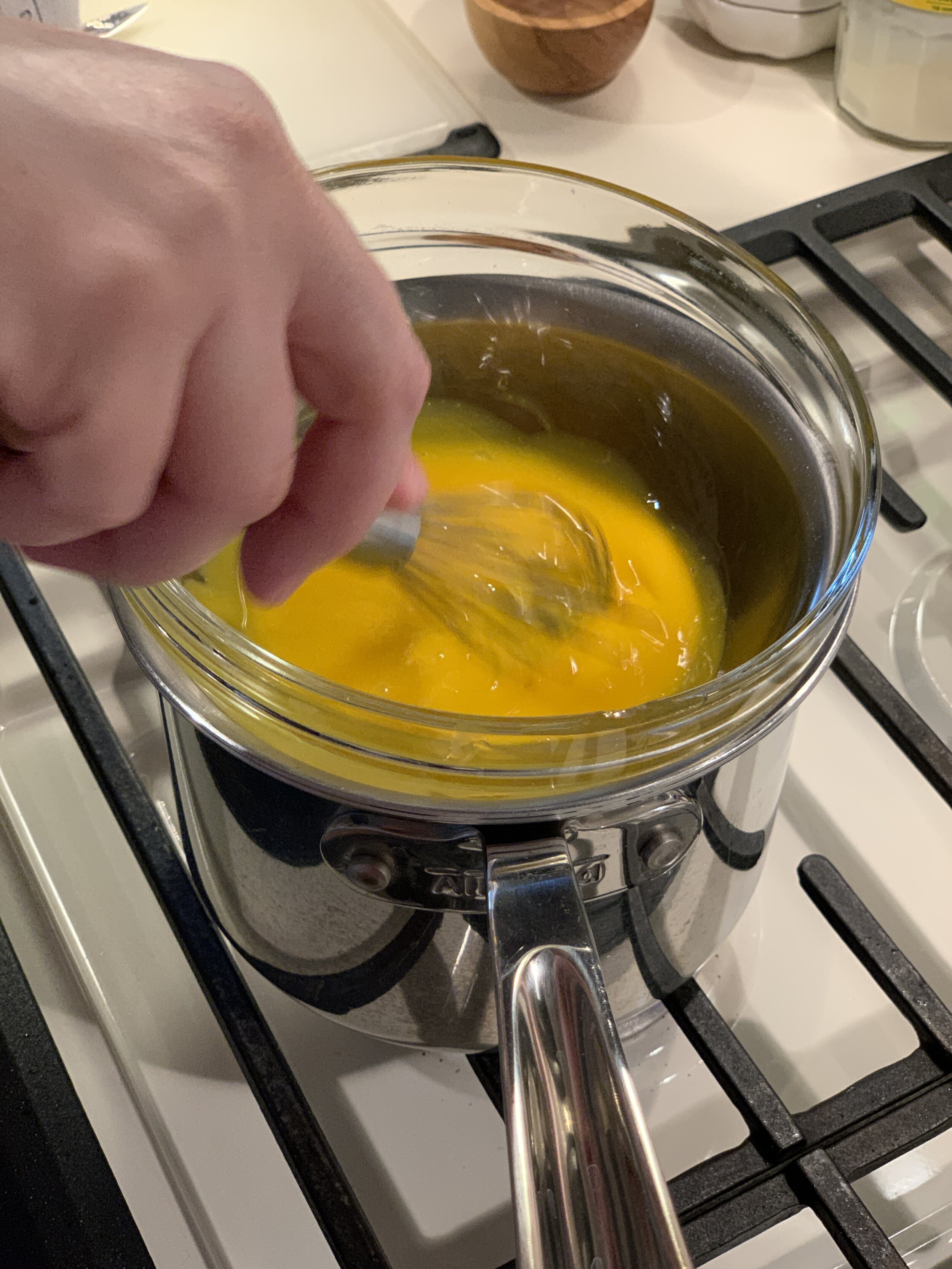
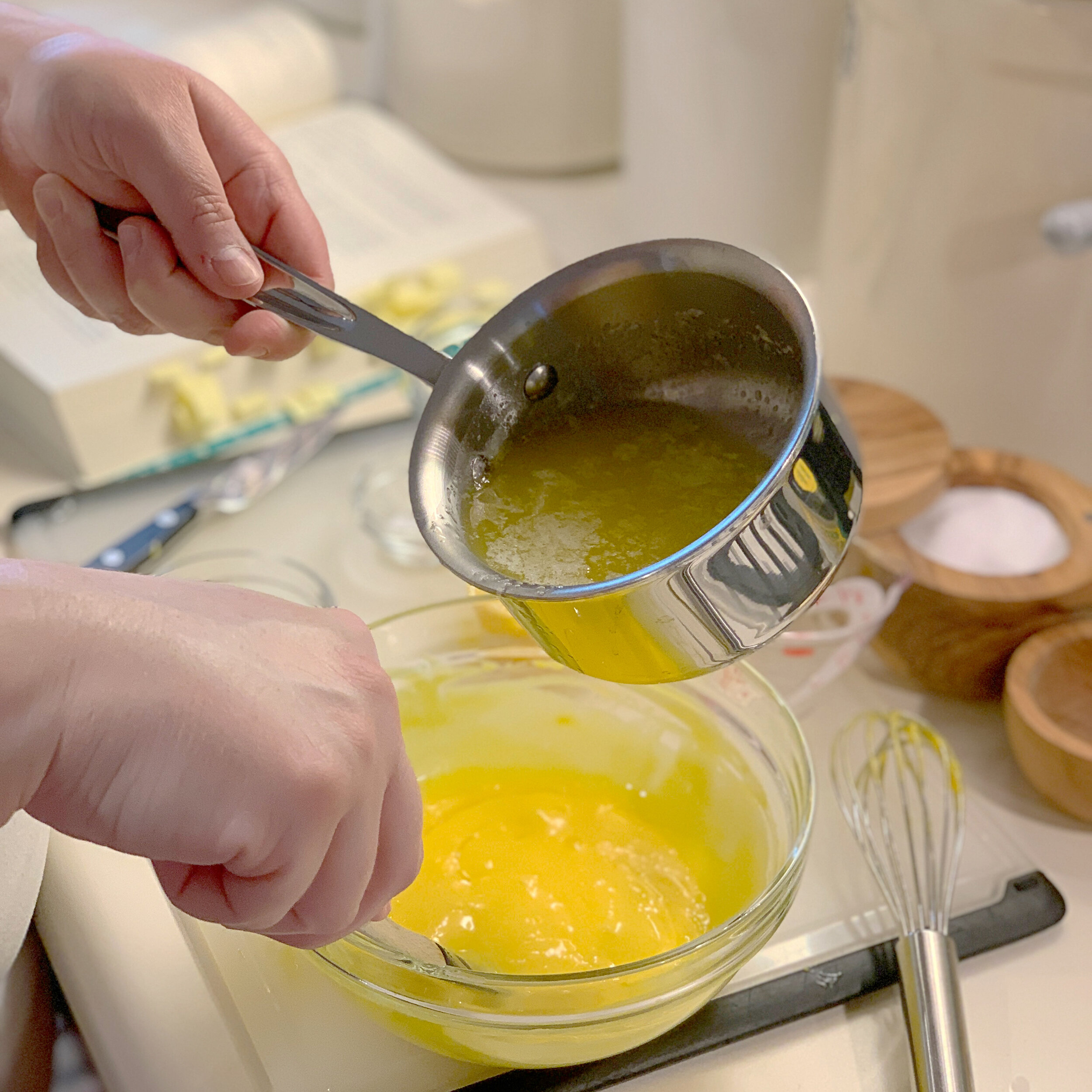
Start by melting butter. Easy enough. Set that aside and beat the egg yolks for about a minute. I did this in a bowl set over a saucepan of simmering water. The egg yolks become thick and sticky. Add water, lemon juice, and salt, and beat for 30 more seconds.

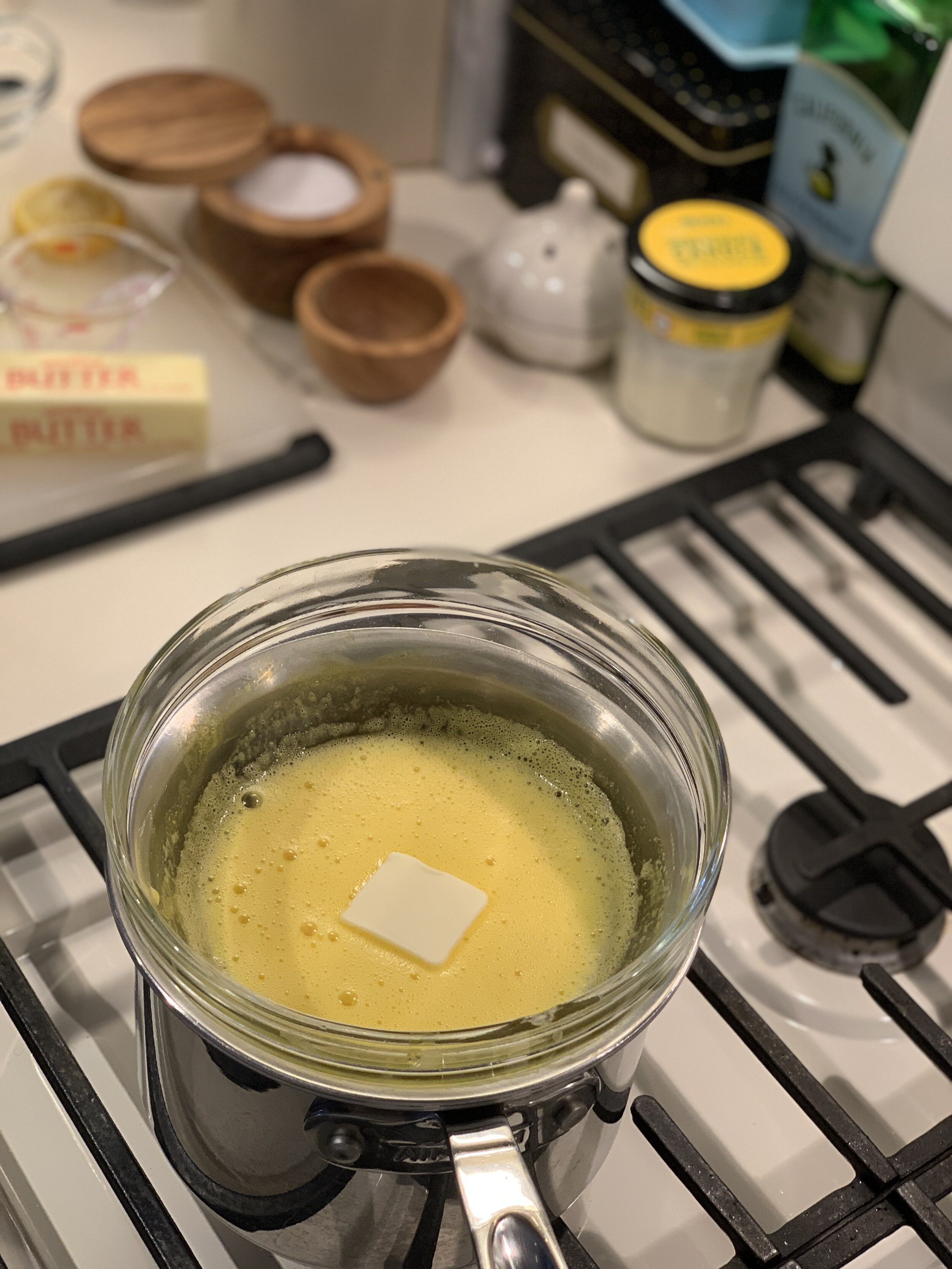
Add a tablespoon of cold butter to the egg mixture. I removed the bowl from the saucepan of simmering water before adding the cold butter. Once the butter melts into the egg mixture, I put the bowl back over the simmering water and whisked until the sauce became very thick and creamy. Once you reach the thick, creamy consistency, remove from the heat, and very slowly whisk in the previously melted butter. Once all the melted butter is incorporated season with salt, white pepper, cayenne, and lemon juice. This sauce will hold for about an hour, but after an hour, the sauce will begin to break.

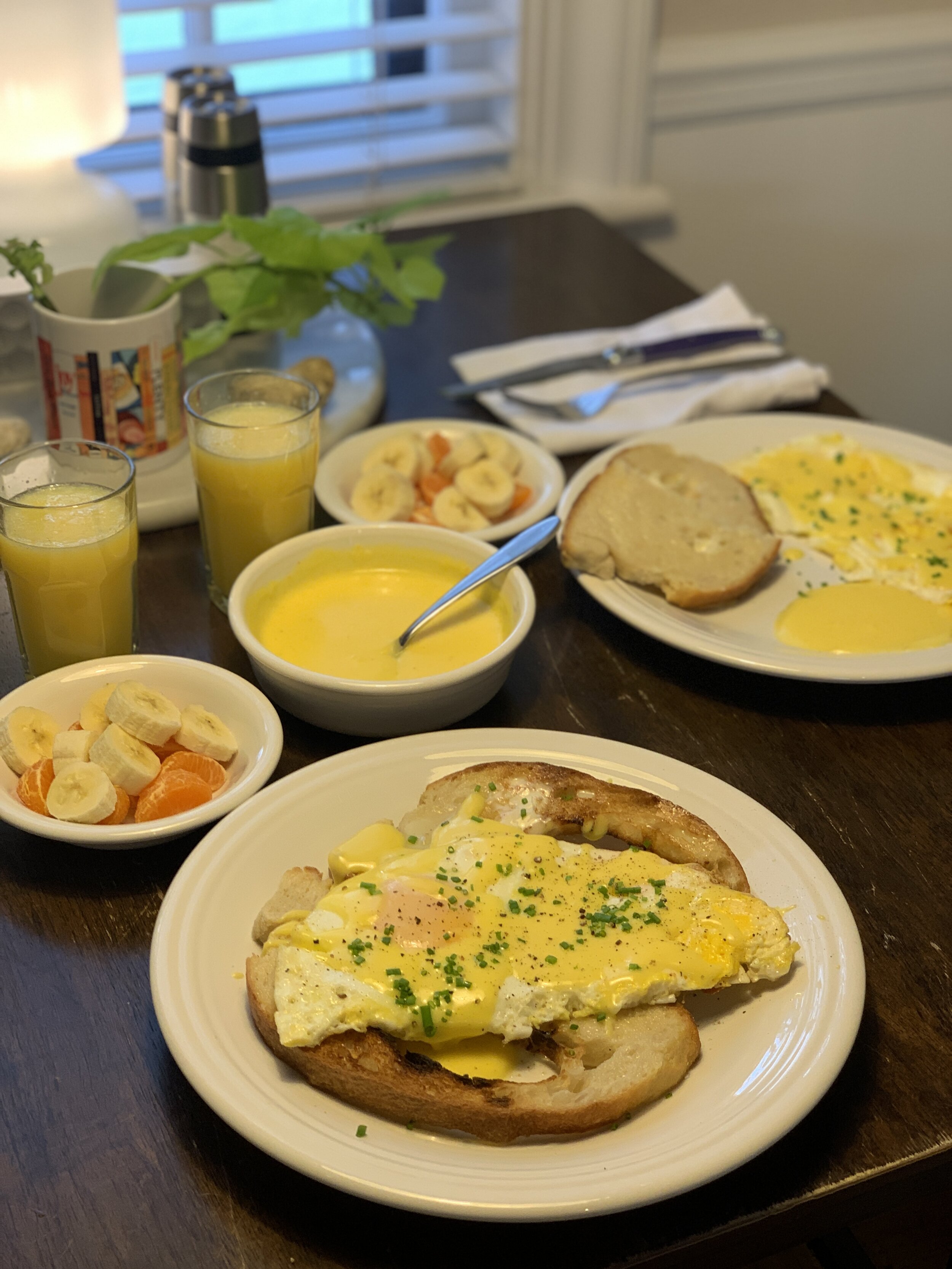
Hollandaise Sauce is extremely rich, and, to be honest, it isn't my favorite. It's too heavy for me. I served it with eggs and toast. It seems weird to serve an eggy sauce with eggs. I wish I had served it with a crisp green vegetable.

Overall, I'm glad I can say I can make Hollandaise Sauce, but I will probably go back to my blender method. It's much less stressful. Another note, I did not write a recipe for Hollandaise, because I didn't make any adjustments to Julia Child's recipe. Next week, I'll be making Omelets. I like to serve omelets for dinner, as opposed to breakfast. They are so good with a light salad and roasted potatoes.

Week 25 | Tomato Sauce

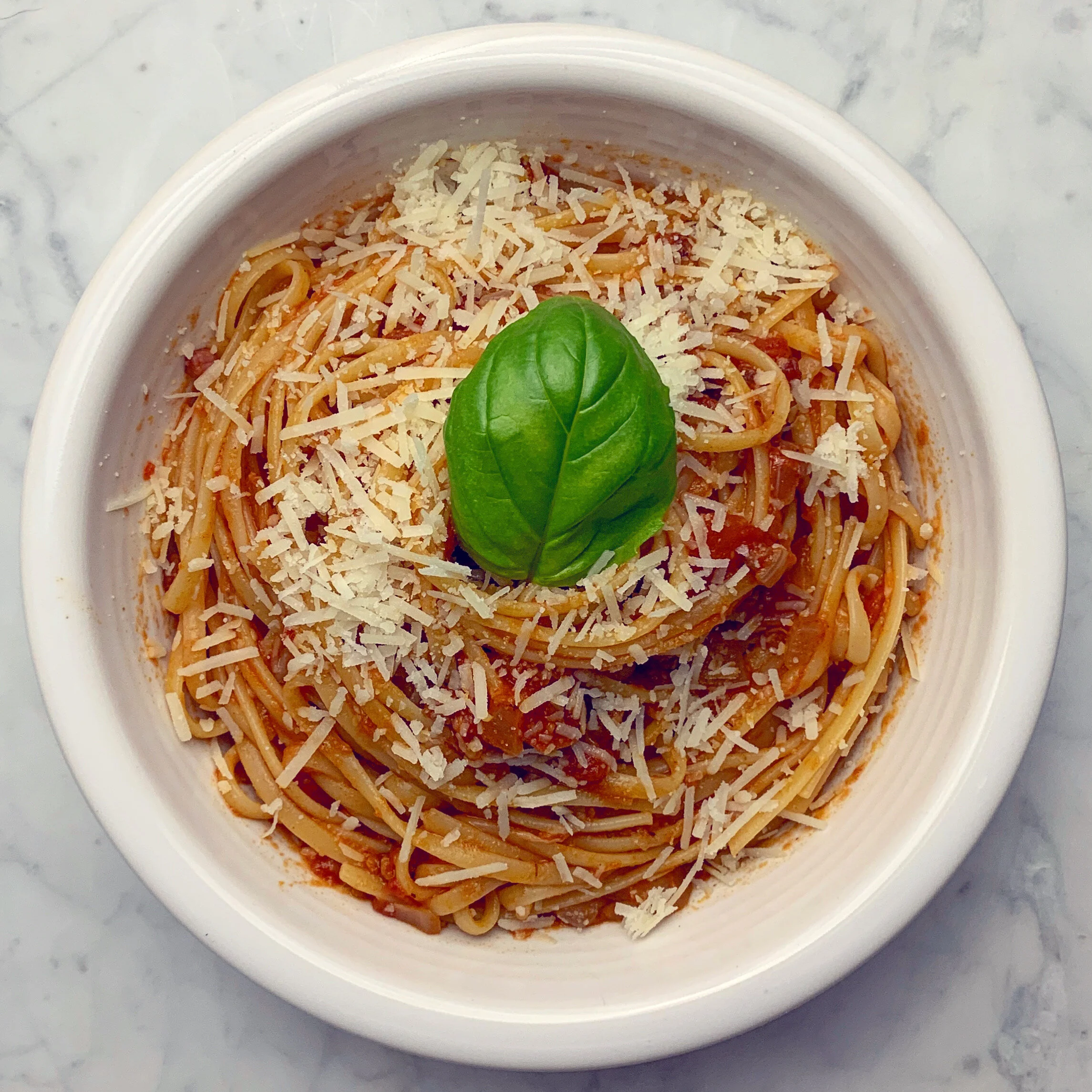
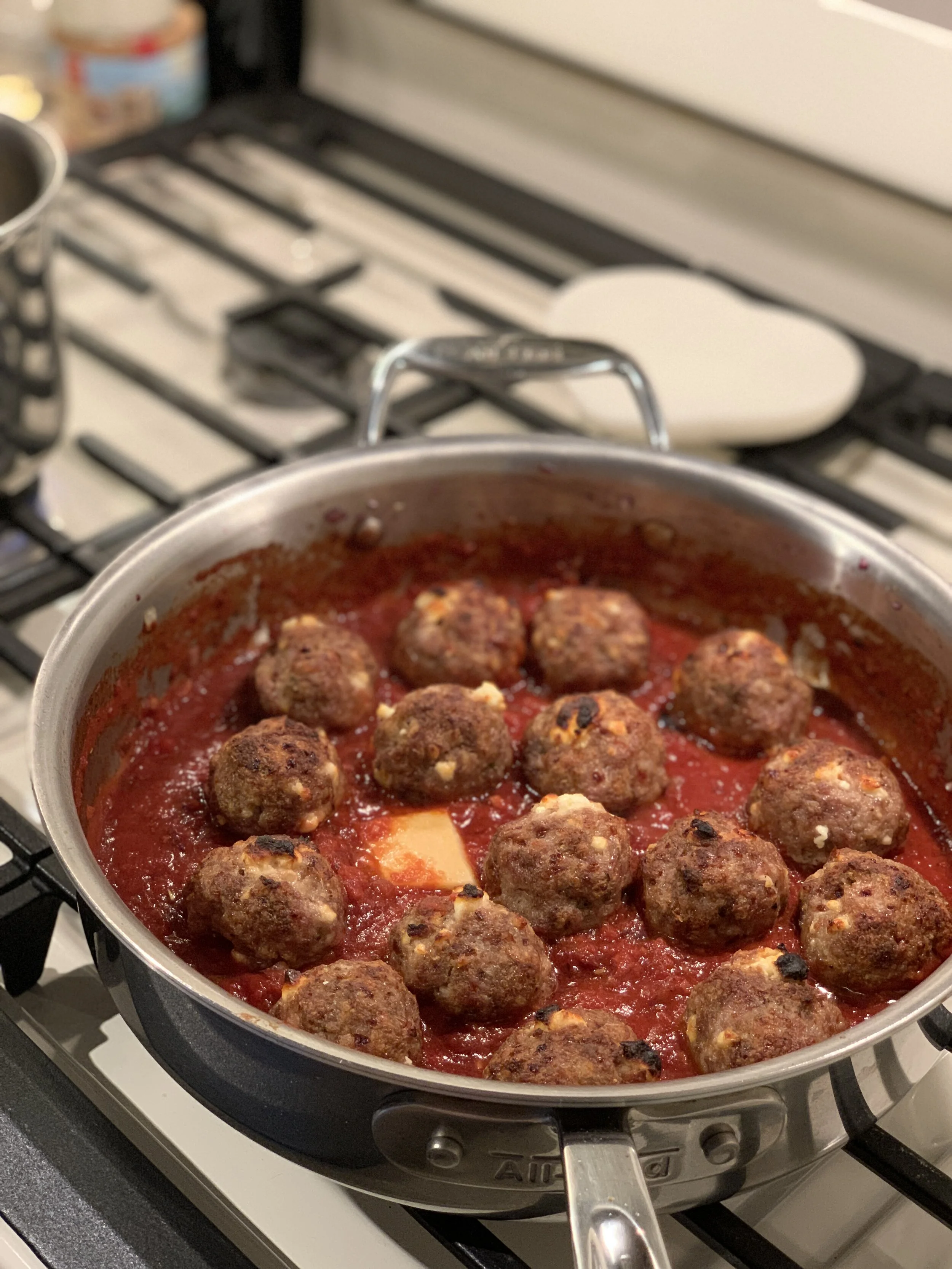
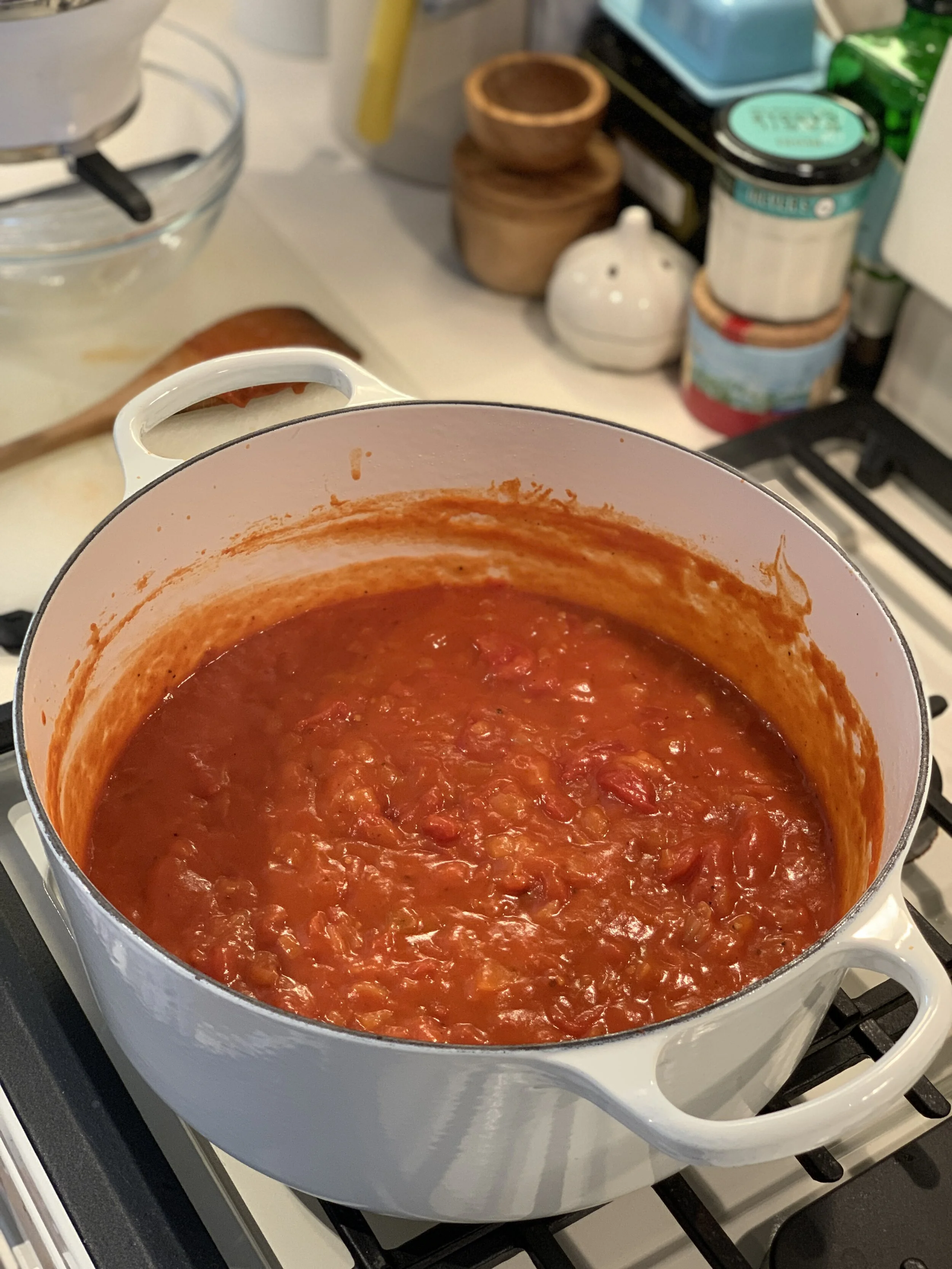
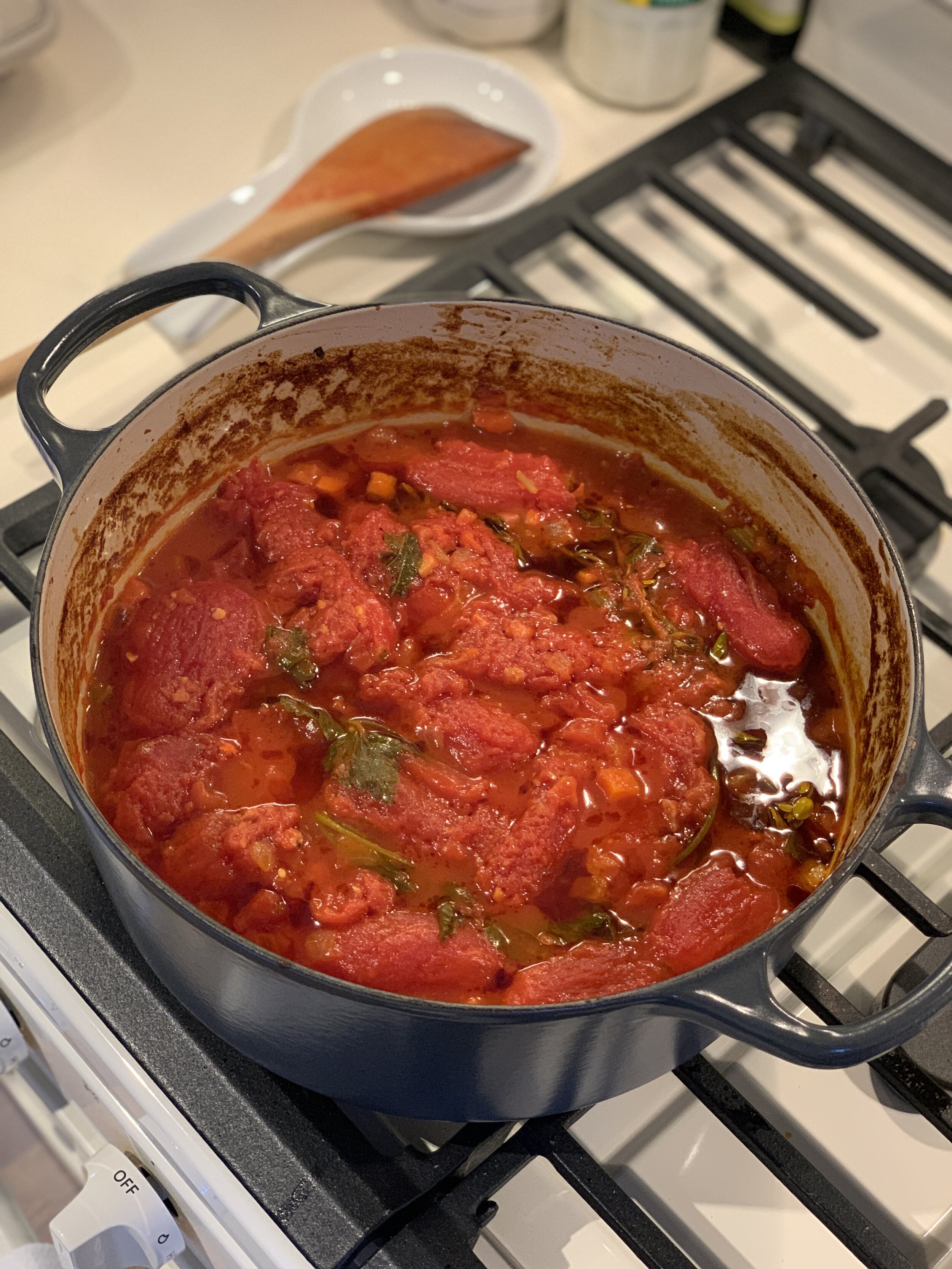
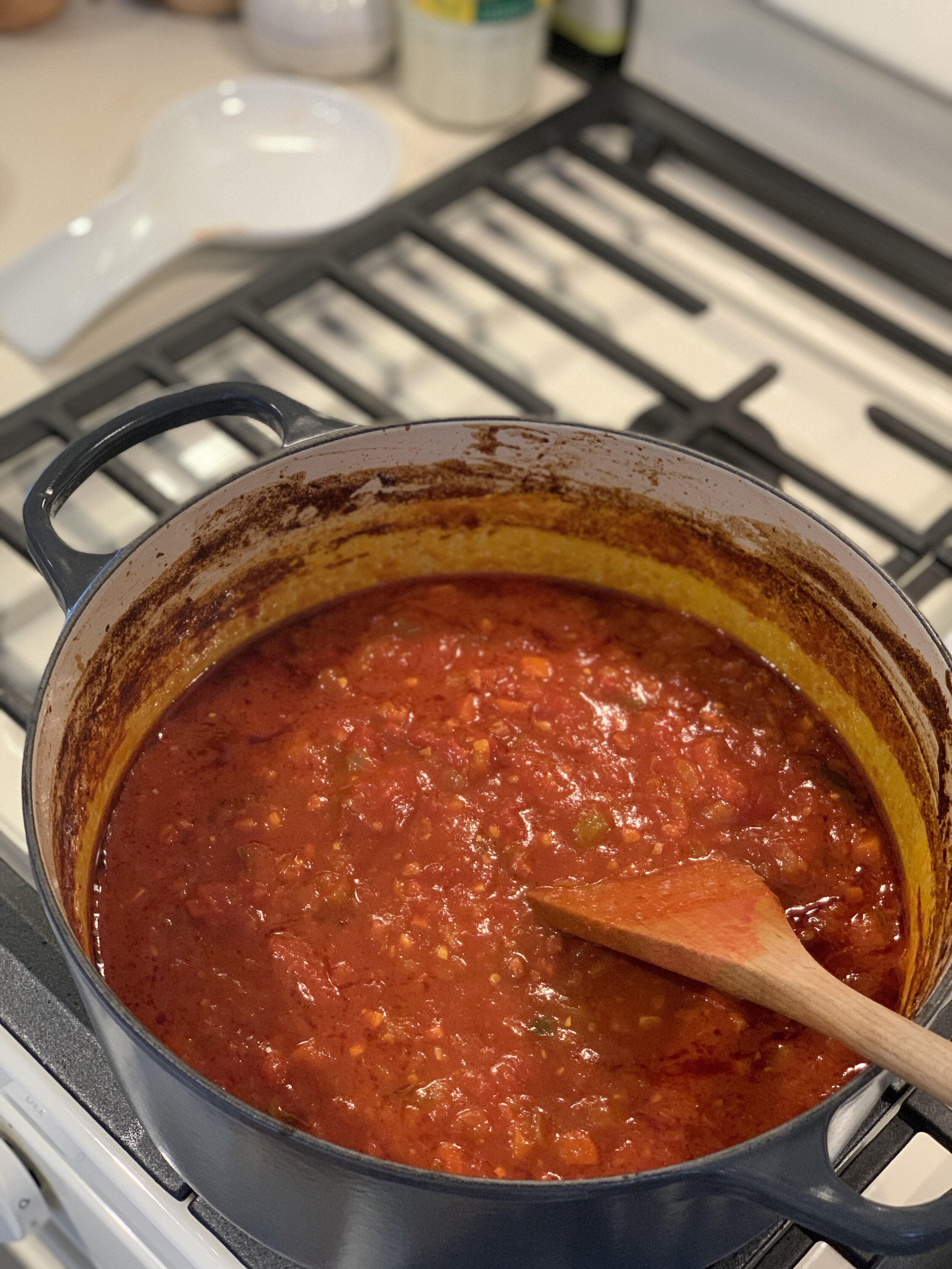
This week I made Tomato Sauce from Julia Child's Mastering the Art of French Cooking. You can buy delicious jarred tomato sauce at the grocery store, but homemade is always better. This recipe makes about 1½ quarts and stores well. Next time, I would double the recipe to have it on hand for quick dinners. Tomato sauce is great on pasta, but I also love it with polenta, garlic bread, meatballs, or chicken.

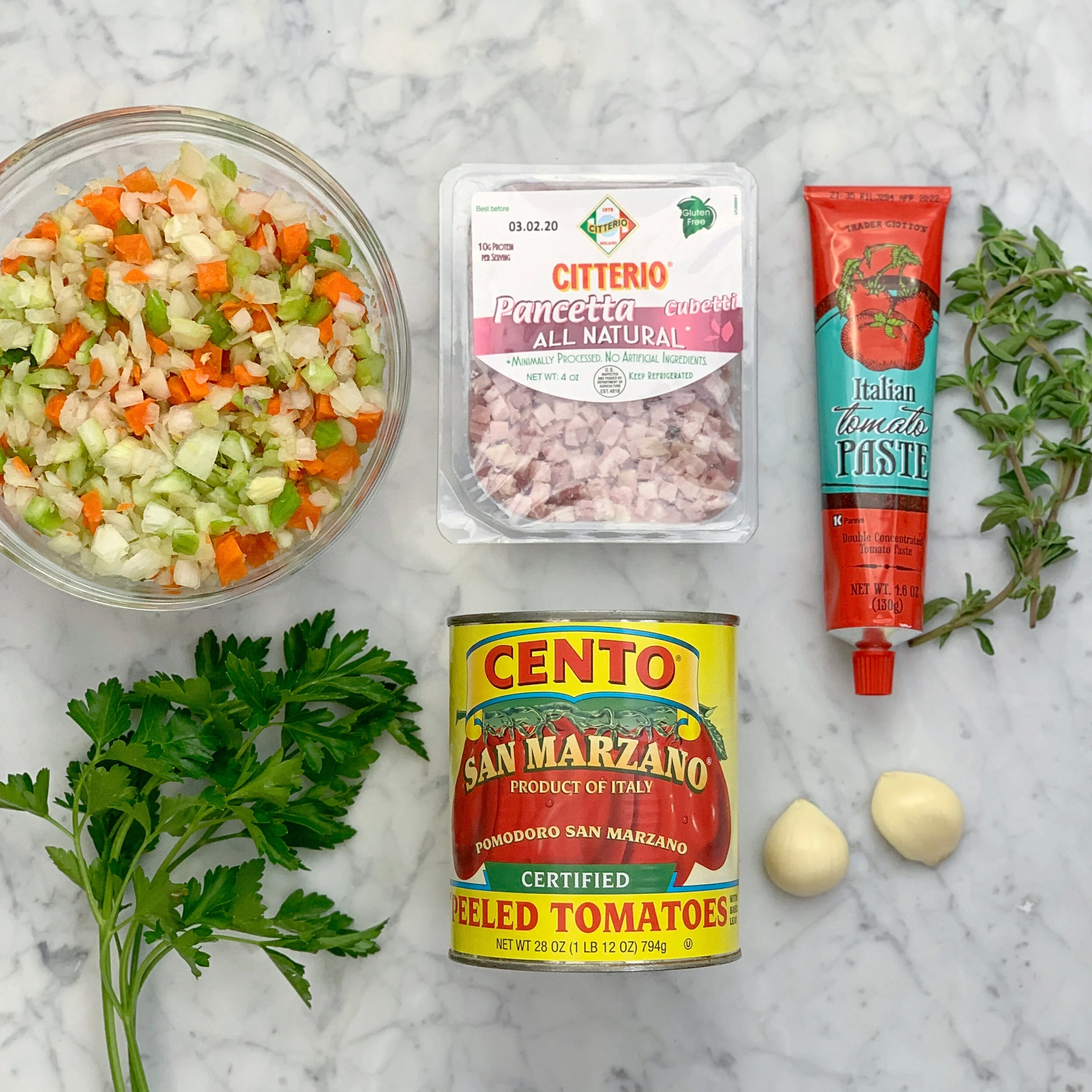
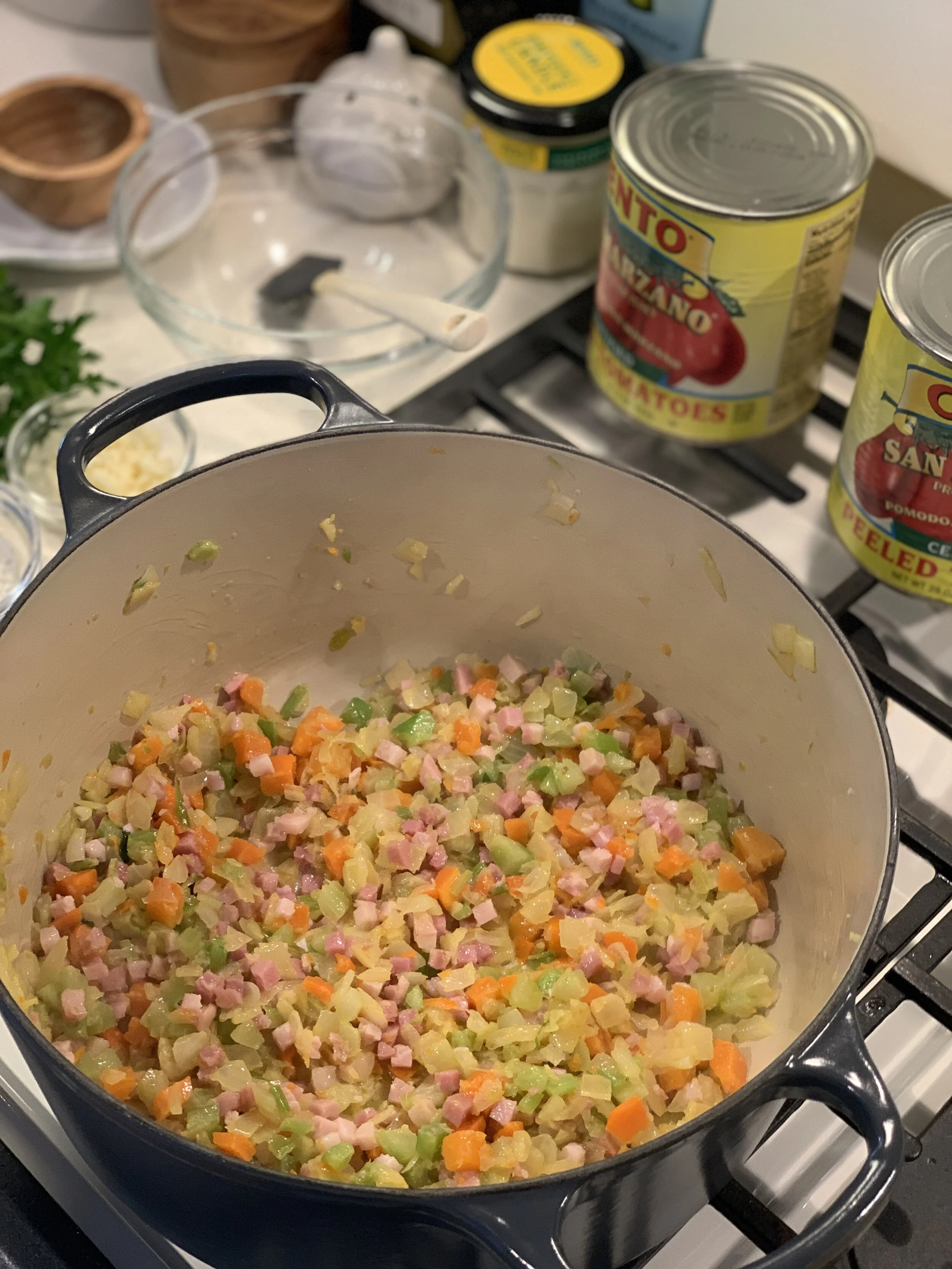
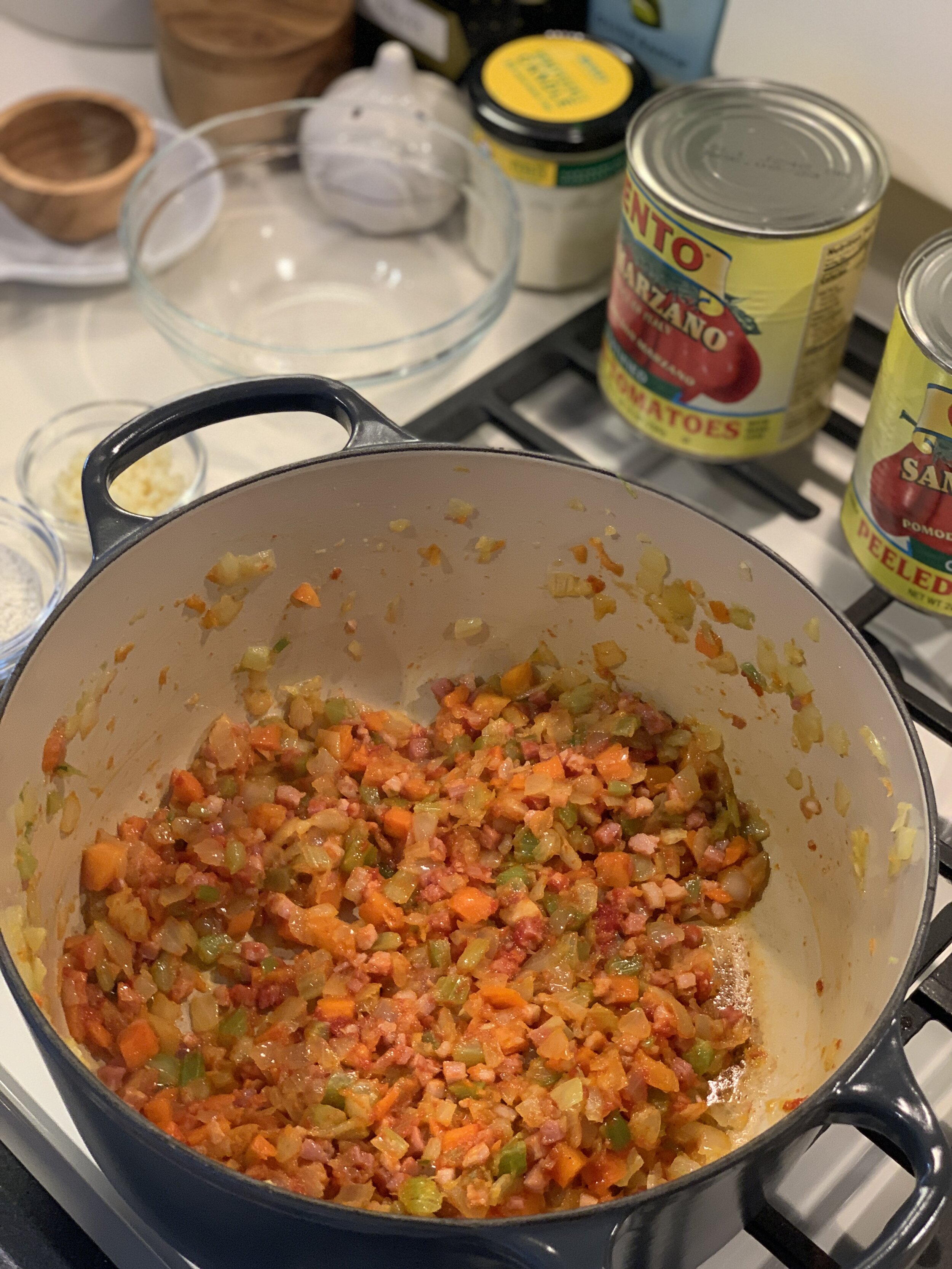
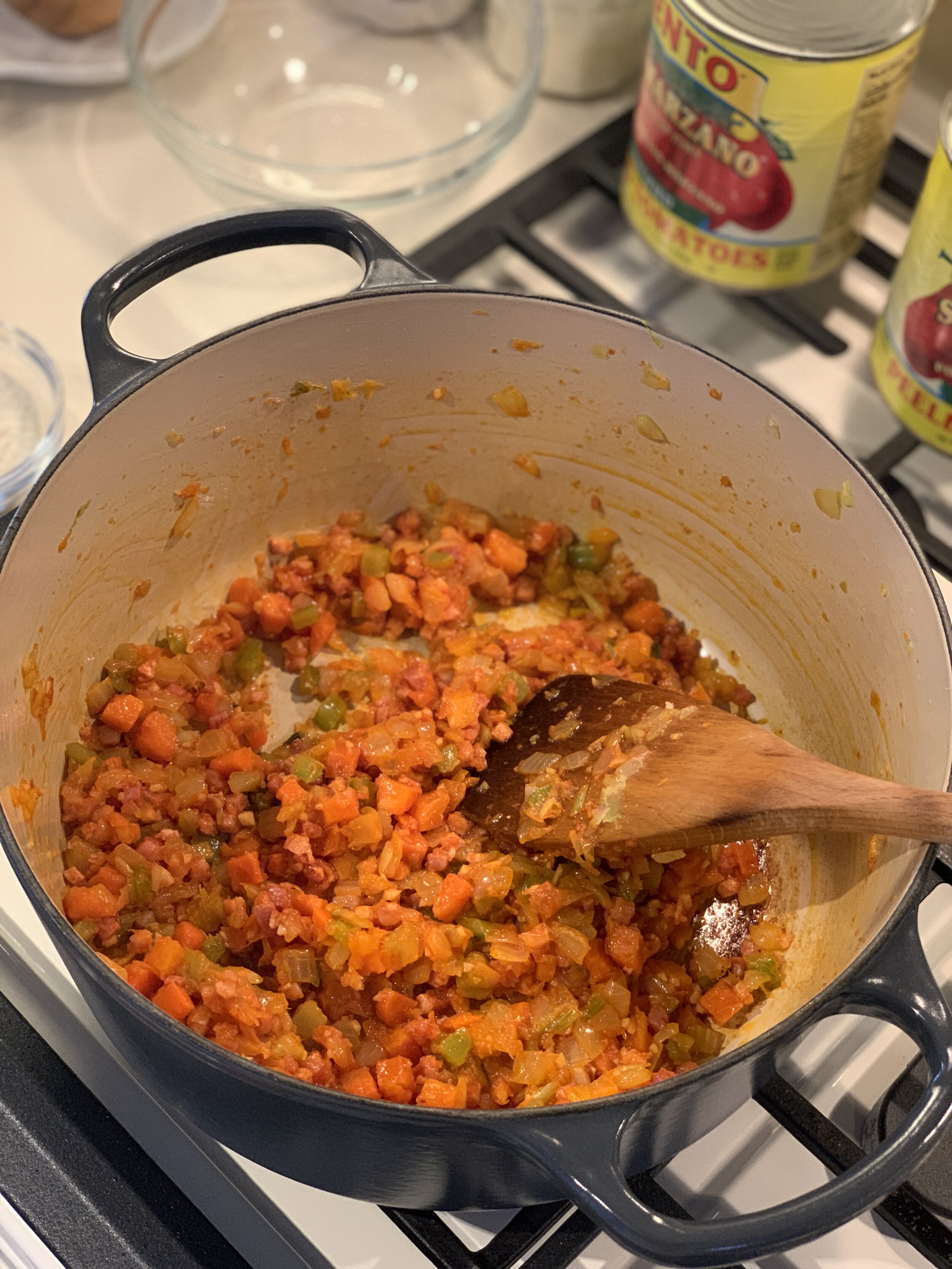
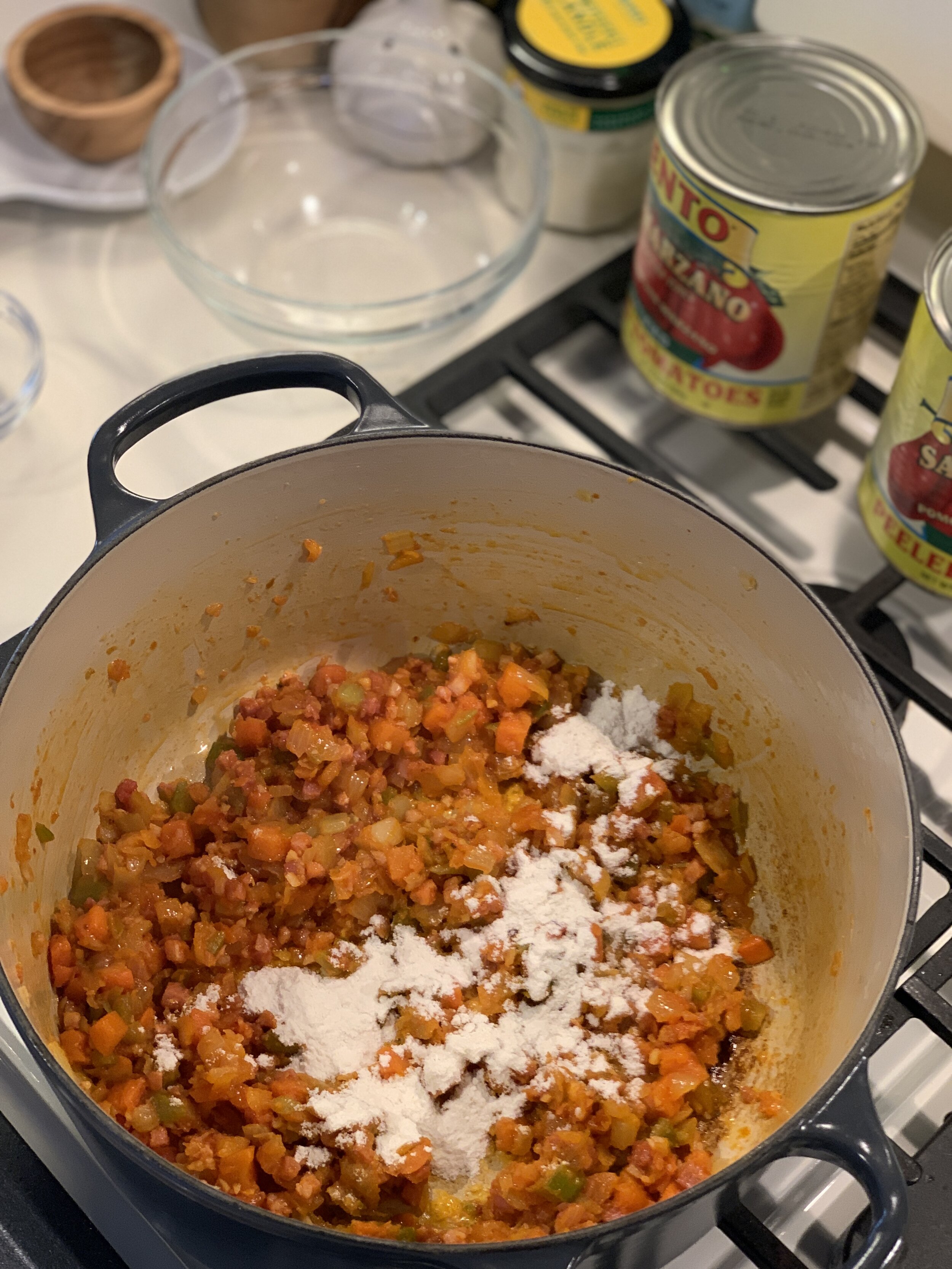
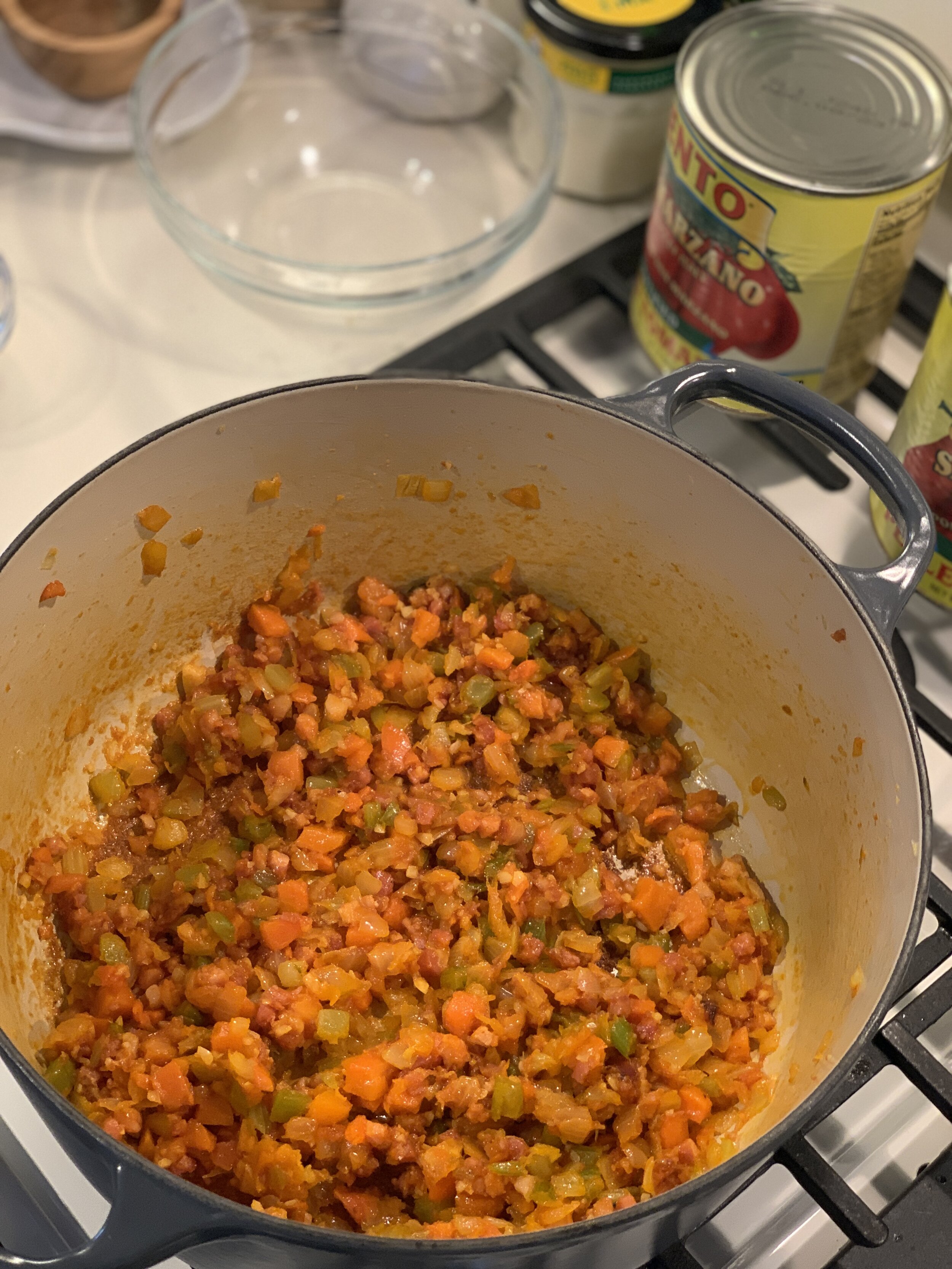
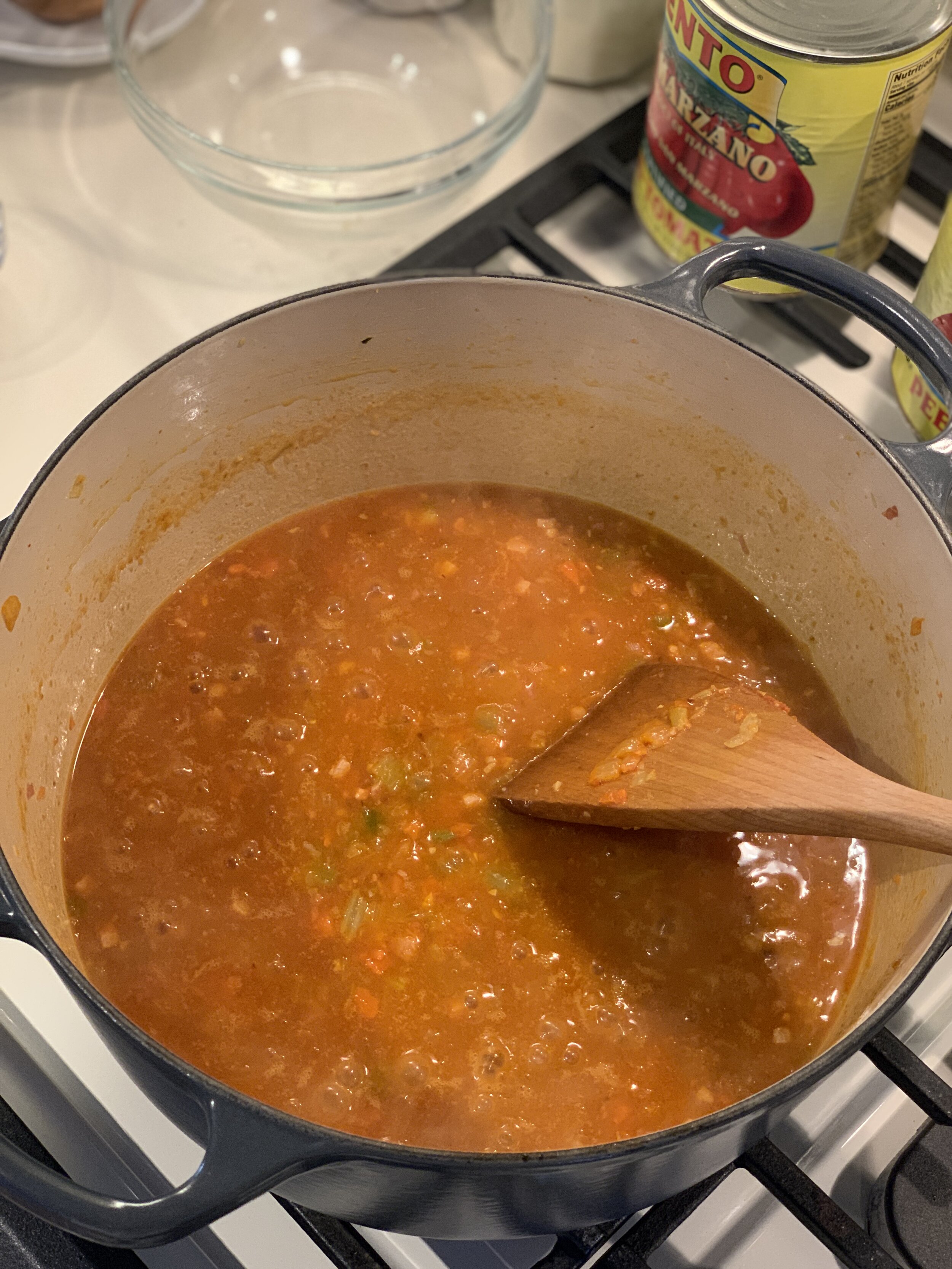
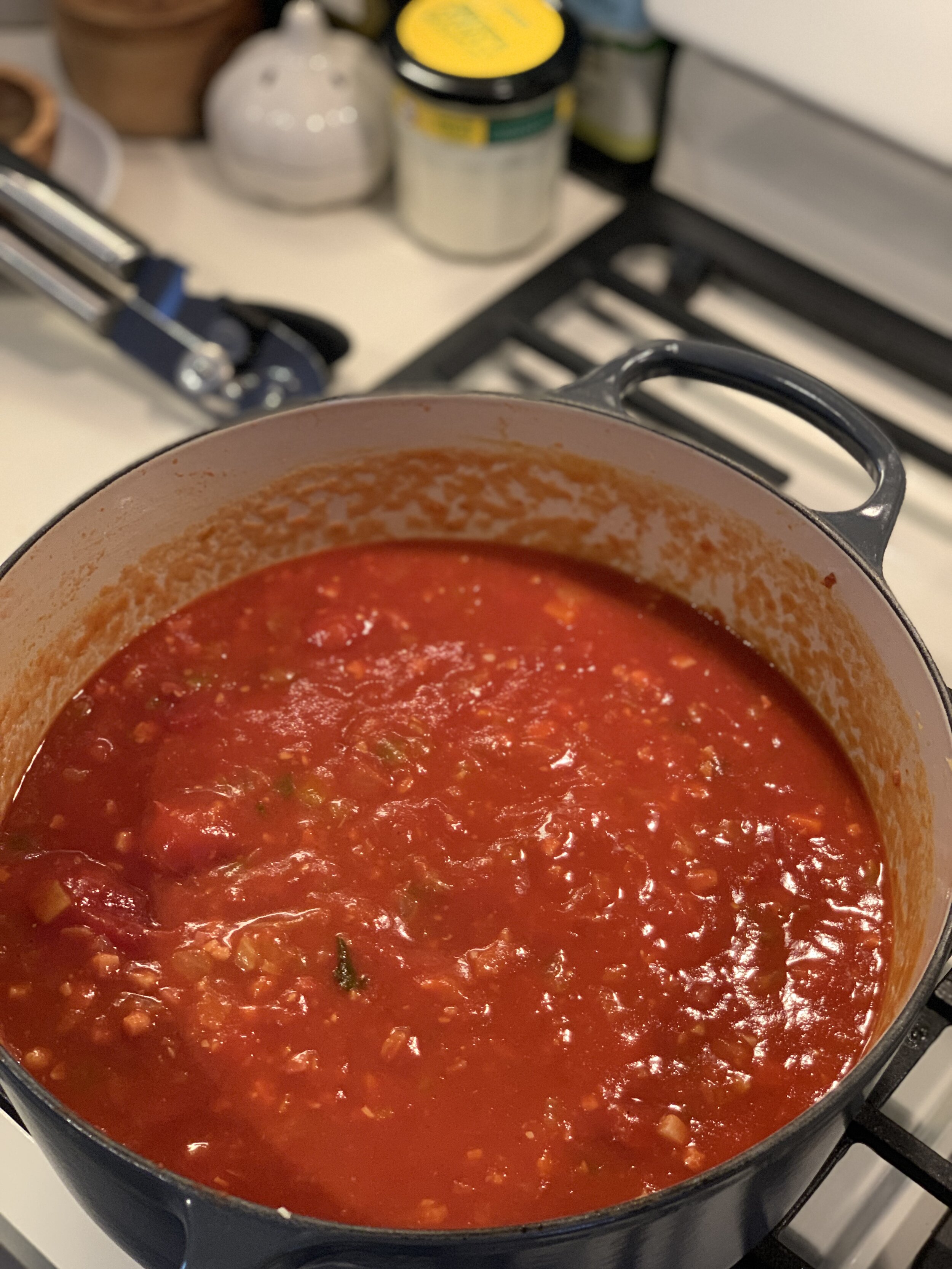
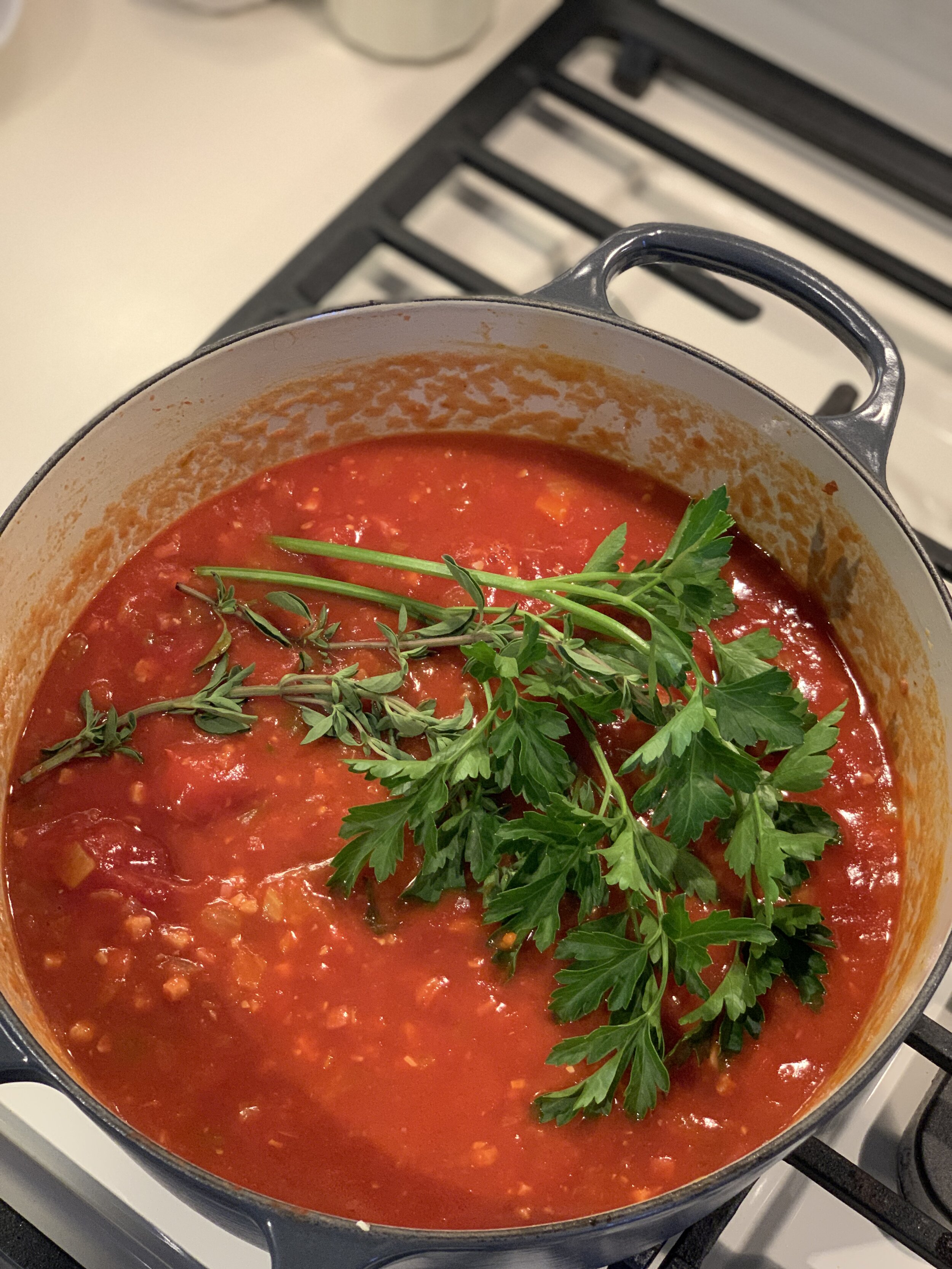
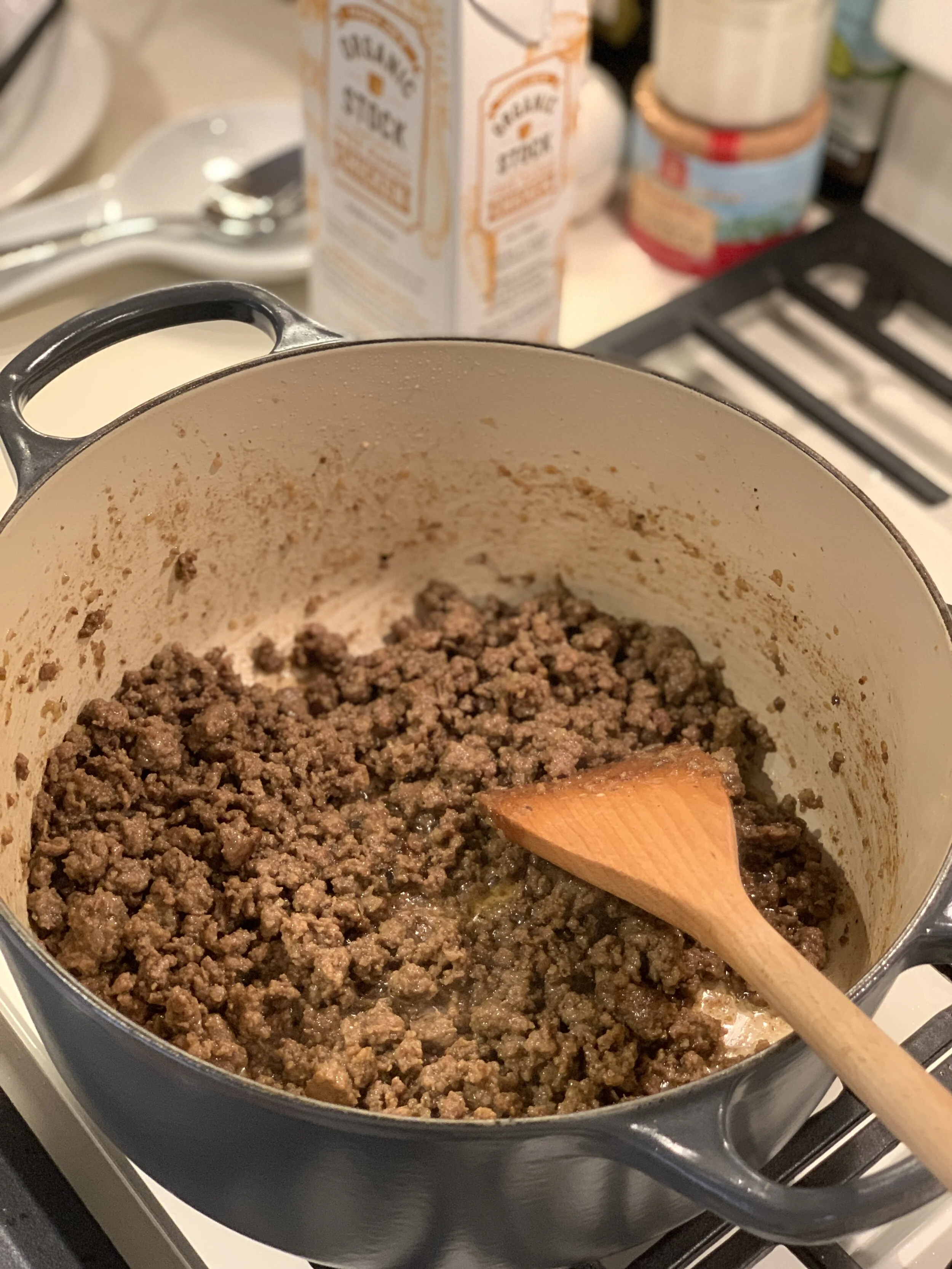
In a Dutch oven, heat olive oil and butter over low heat for about five minutes. Increase heat to medium, and cook until mirepoix is tender and pancetta is beginning to brown, about 10 minutes. Add garlic and cook for an additional minute until garlic is fragrant, but don't let it begin to brown. If the garlic browns, it has a bitter flavor. Add tomato paste and cook for two minutes, stirring constantly. Add flour and cook for another two minutes, stirring constantly. Whisk in chicken stock, slowly at first. Then add canned tomatoes and bring to a full boil. Turn off heat and add parsley and oregano. Cover Dutch oven with lid slightly ajar and transfer to oven.

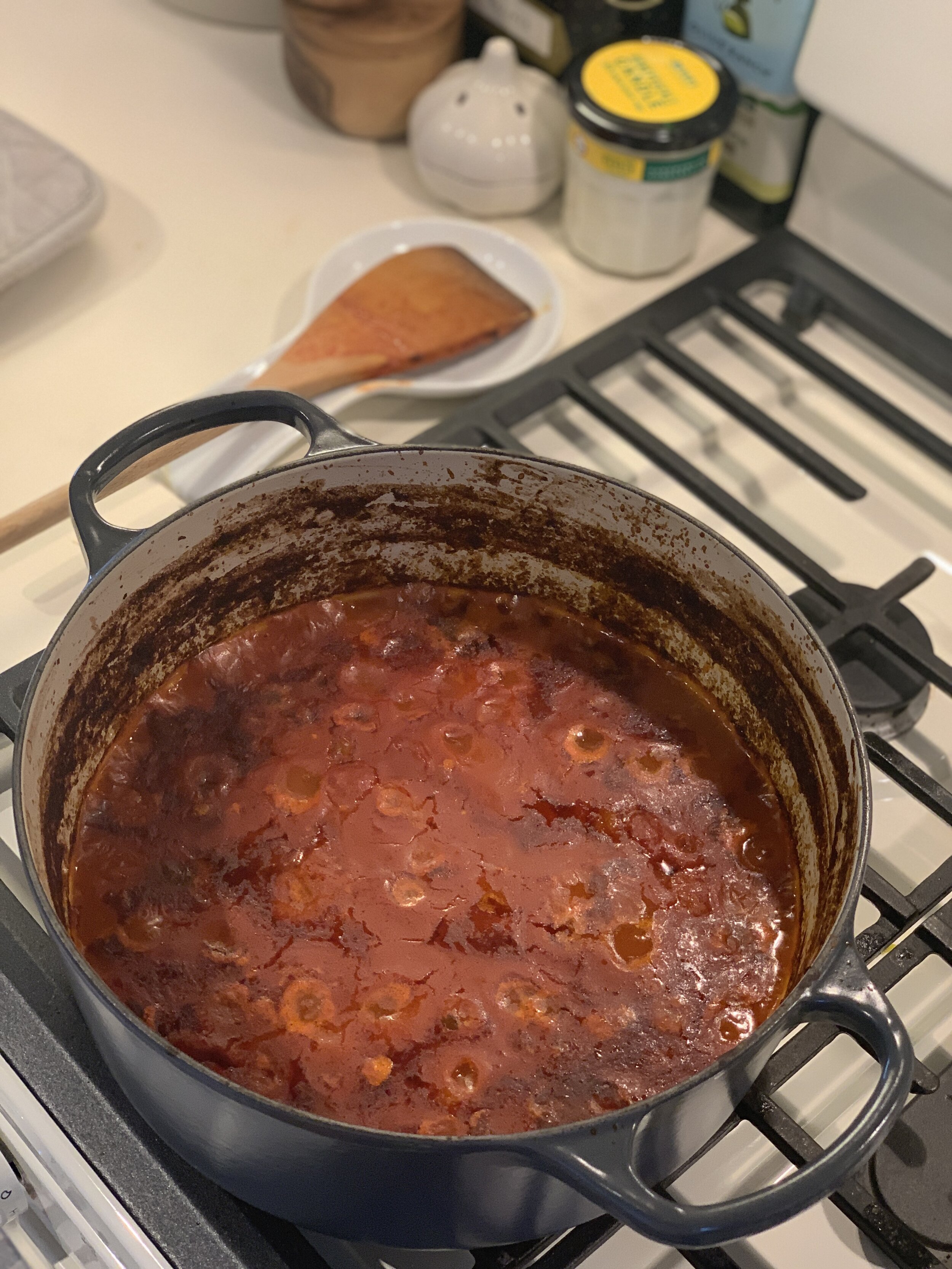
Cook for three hours, stirring every hour. Make sure to keep the lid ajar. Roasting the tomatoes creates a deep rich sweet flavor, which is why I didn't add sugar. In Julia Child's recipe, she adds a little sugar to the tomatoes.

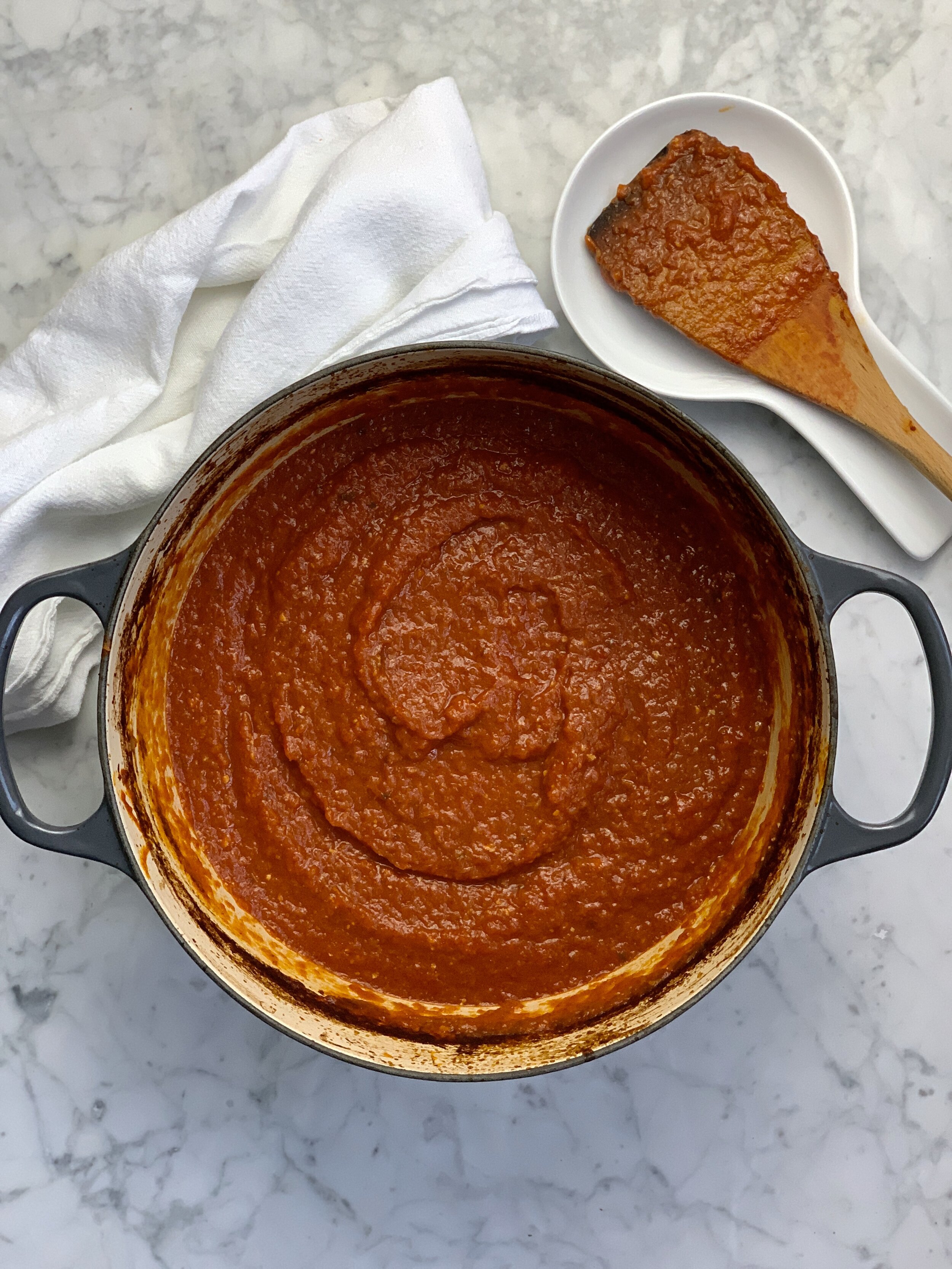
After three hours, remove from oven, let cool slightly, and adjust seasoning. Purée with a food mill, using the medium blade. Puréeing makes a sweet, cohesive sauce with a great texture.

Use immediately or let cool completely and store in the refrigerator for up to one week or freeze for six months.

There are a ton of different ways to make tomato sauce, and they are all pretty great. I tend to prefer the tomato sauce recipes that have minimal ingredients: tomatoes, garlic, and basil. This recipe was much more complicated, so I was a little skeptical. It's a bit outside of my usual way of cooking. However, the flavor was deep and complex. I loved how it turned out, and I will make it again.

Next week I will be making Hollandaise Sauce.